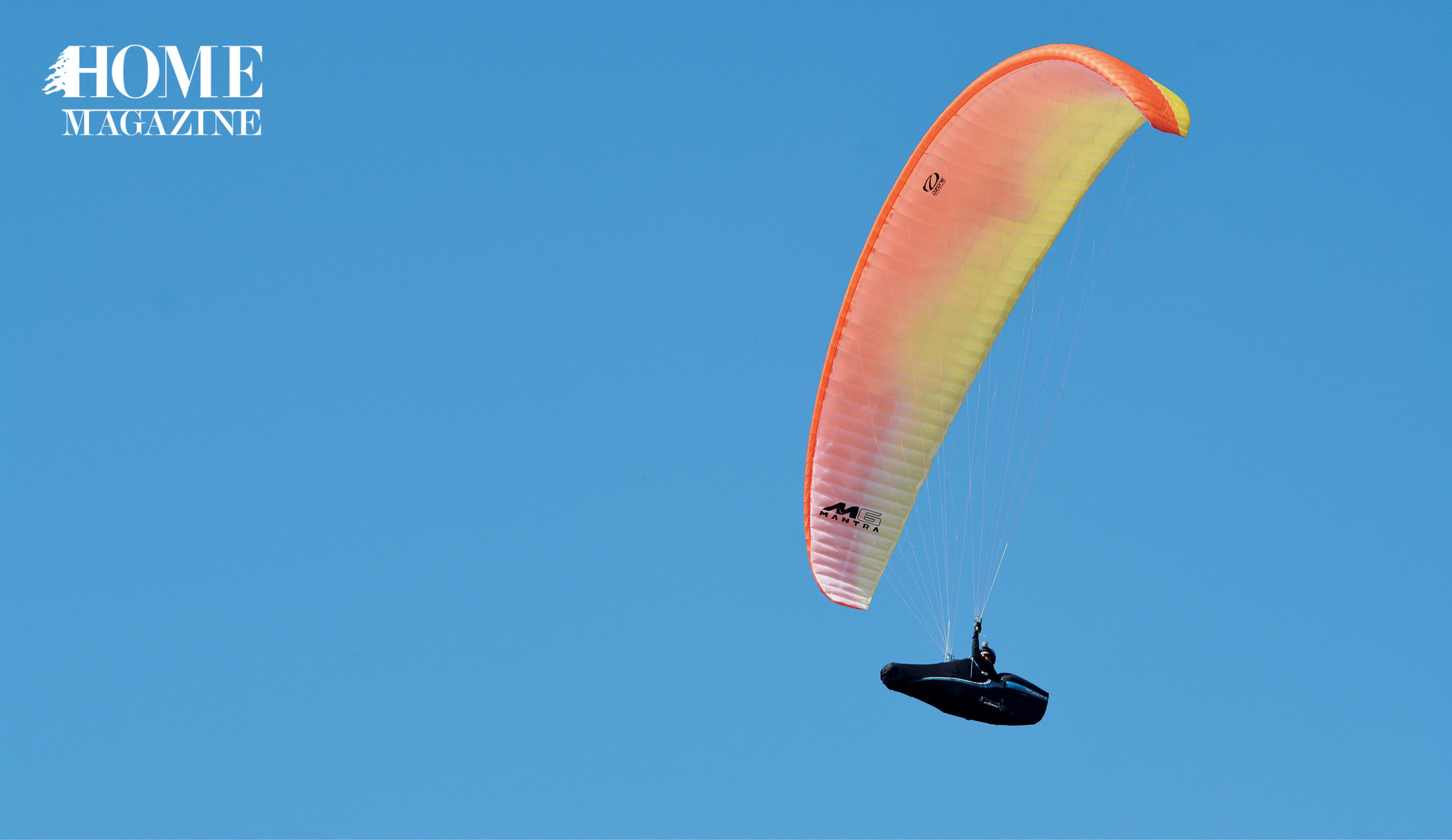
Look up. Shade your eyes. See those specks of vibrant colors — striped red and blue, neon yellow, hot pink— soaring gracefully above your head? Those aren’t birds or planes. They are the paragliders of Lebanon, and they bring new meaning to the phrase, “I am no bird and no net ensnares me.”
Paragliding is a free-flying activity, so-called because it doesn’t require an engine. It depends on wind force, the sun, cloud coverage, and most importantly on hot air currents, called thermals, that allow paraglider to gain altitude. The parachute-like glider is made of strong, durable nylon material. From a starting point on a mountain or point of high altitude, a pilot is strapped into a harness equipped with a backup parachute. The harness connected to the glider lays open on the ground, facing the hill and wind direction. The pilot waits for the ideal wind breeze to be facing the hill to begin running downhill. The crescent-shape of the canopy and the aerodynamic design of the glider allow the pilot to steer and maneuver more freely, to cover vast distances over extended periods of time and to fly from one mountain to another across valleys.
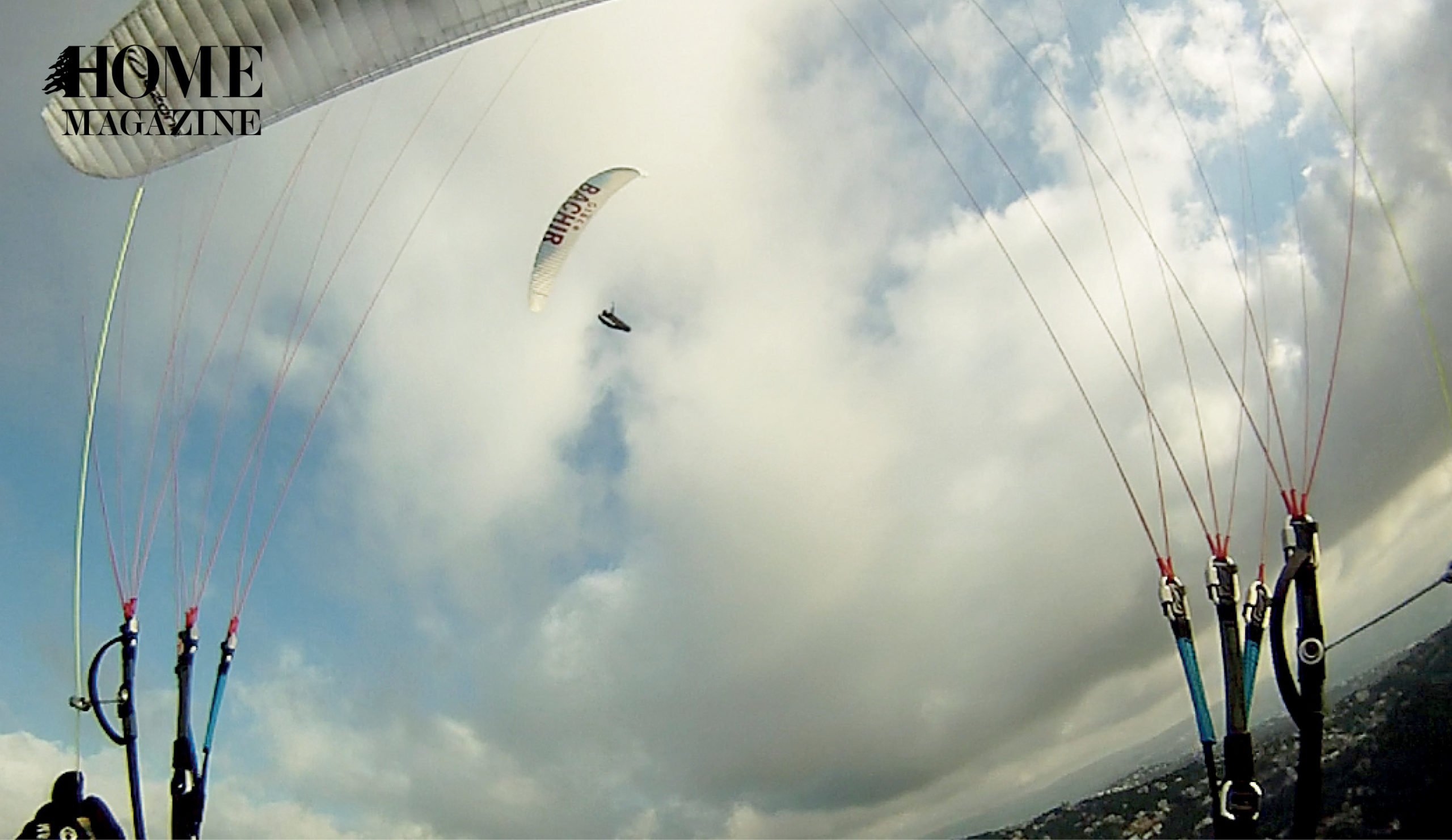 Flying at cloud base over the Jounieh area.
Alan Debs, a paragliding enthusiast and a certified pilot and instructor of the sport, explained the ups and downs, the ins and outs, and the dos and don’ts, of paragliding in Lebanon.
His first experience with what many would call an extreme sport was during his years spent earning his MBA in California back in 1992 when the sport was still young. It wasn’t until he returned to Lebanon for Christmas breaks or summer vacations that he began noticing the mountains everywhere and wondering, “Why don’t I ever fly those mountains?”
Well, that’s exactly what he did.
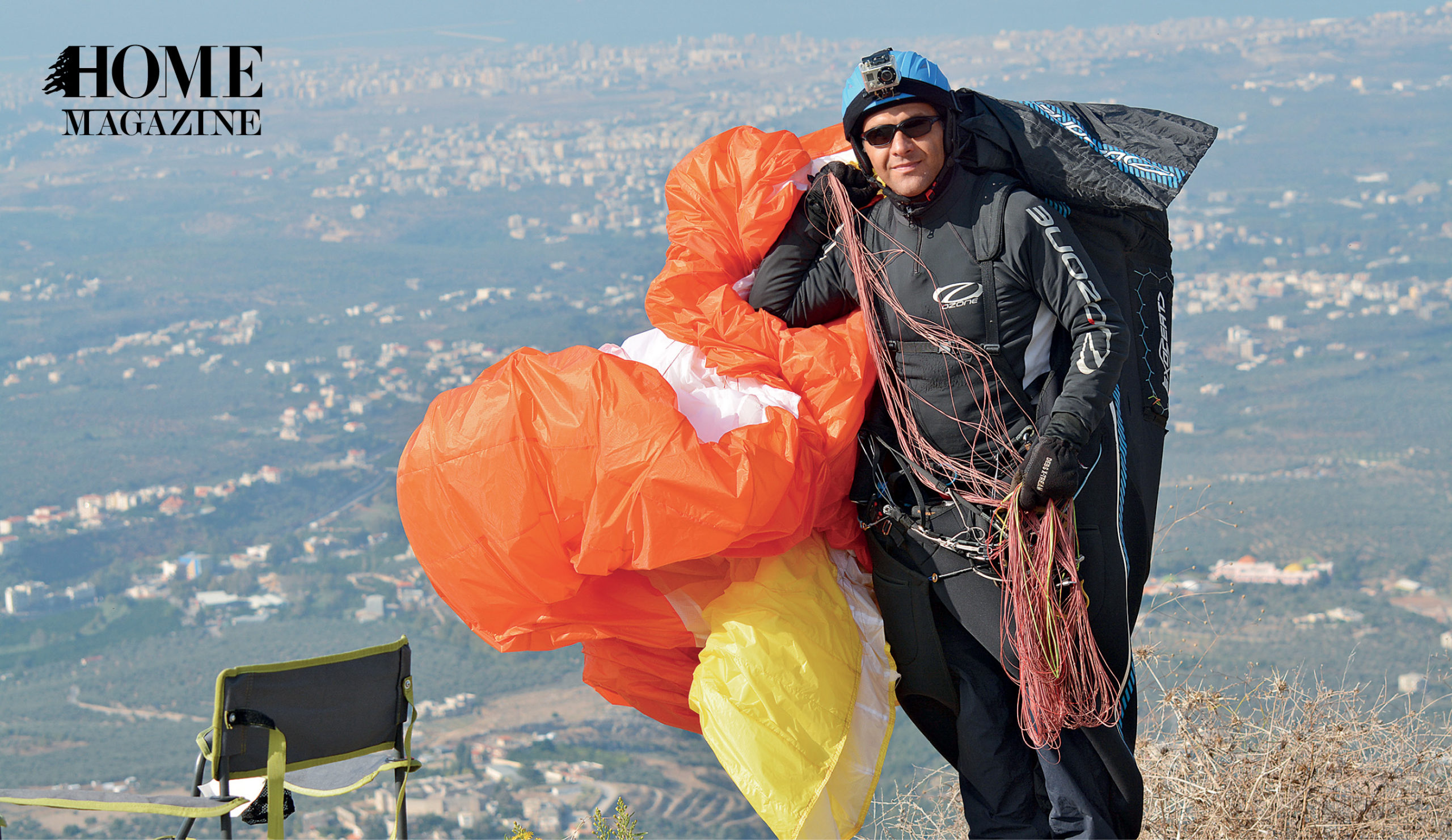
After 27 years and with over 2,000 hours of flying under his belt, Debs described the potential he sees in the glorious landscape of his HOMEland, the unique nature of its rolling hills and mountains, ridges, and bays.
“On a good day, with a high cloud base, we can paraglide from Jounieh to Jbeil or Amchit or even further up north. We have flown several times from The Cedars to Tripoli, which is quite a nice flight,” says Debs, president and founding member of the Club Libanais de Vol Libre (CLVL).
In 2001, Debs hit a personal high note: “My record was during a competition in Spain; I flew a straight line of 135 kilometers across mountains. It took me about five hours and forty minutes!”
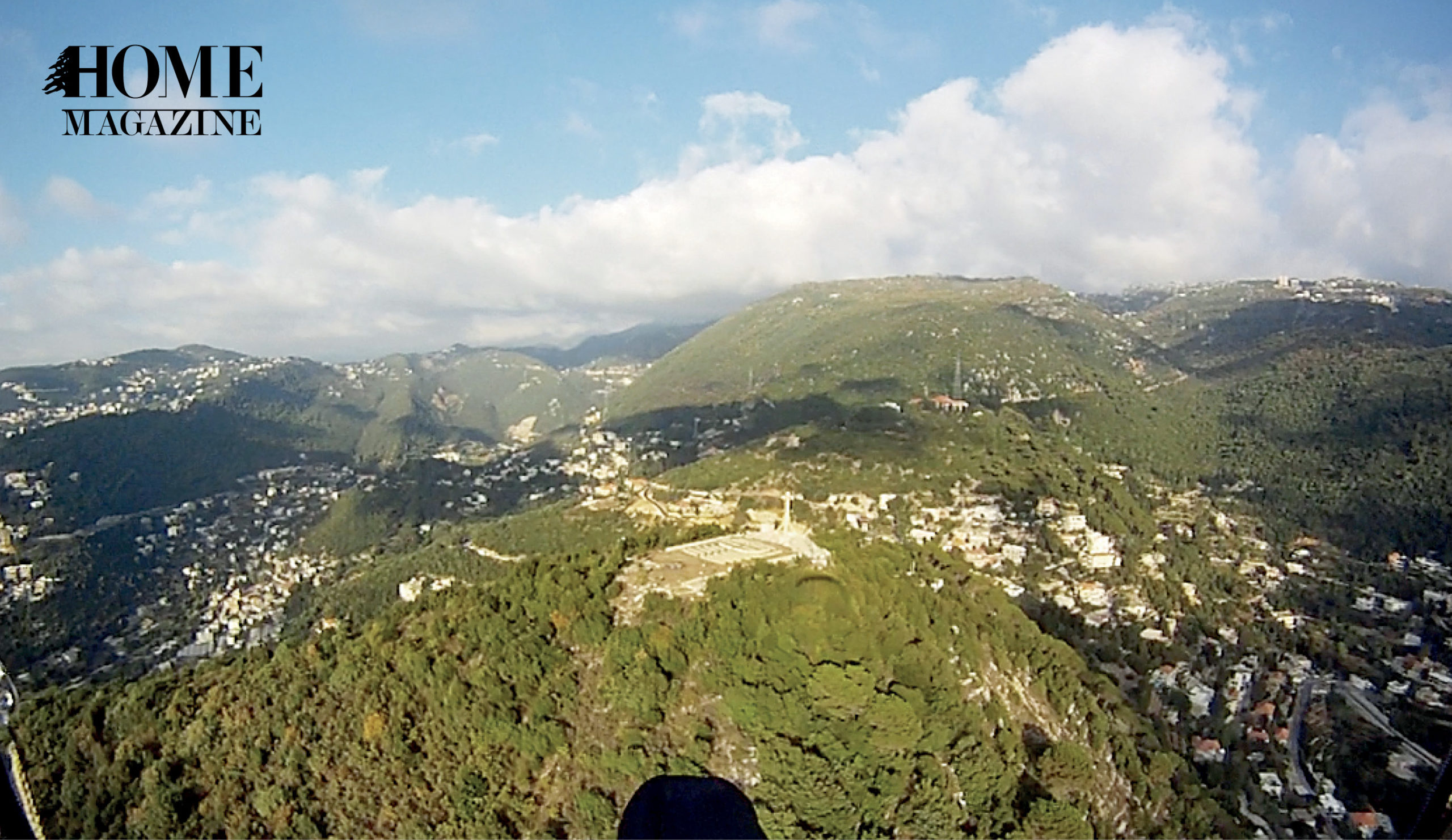 On a good day, climbing high above take off is a common treat.
However, flying cross-country isn’t an option in Lebanon. As a military country, paragliders must coordinate with the Lebanese Army on a daily basis to determine whether they have clearance to fly over certain areas.
They are cleared to fly in places such as Ghosta around Harissa mountain, Baadaran in the Chouf area, Eennaya in Jbeil, Dedde in Balamand, Meziara, The Cedars, Chabrouh near Faraya, Mzar in Kfardebiane, Qanat Bakiche, Zaarour, and Sir el-Doniye. Paragliders must play it by ear each day in case of rain, helicopters flying overhead, or army training on the ground.
Getting a license to fly in Lebanon must be done through a club, and clubs get their license through several ministries.
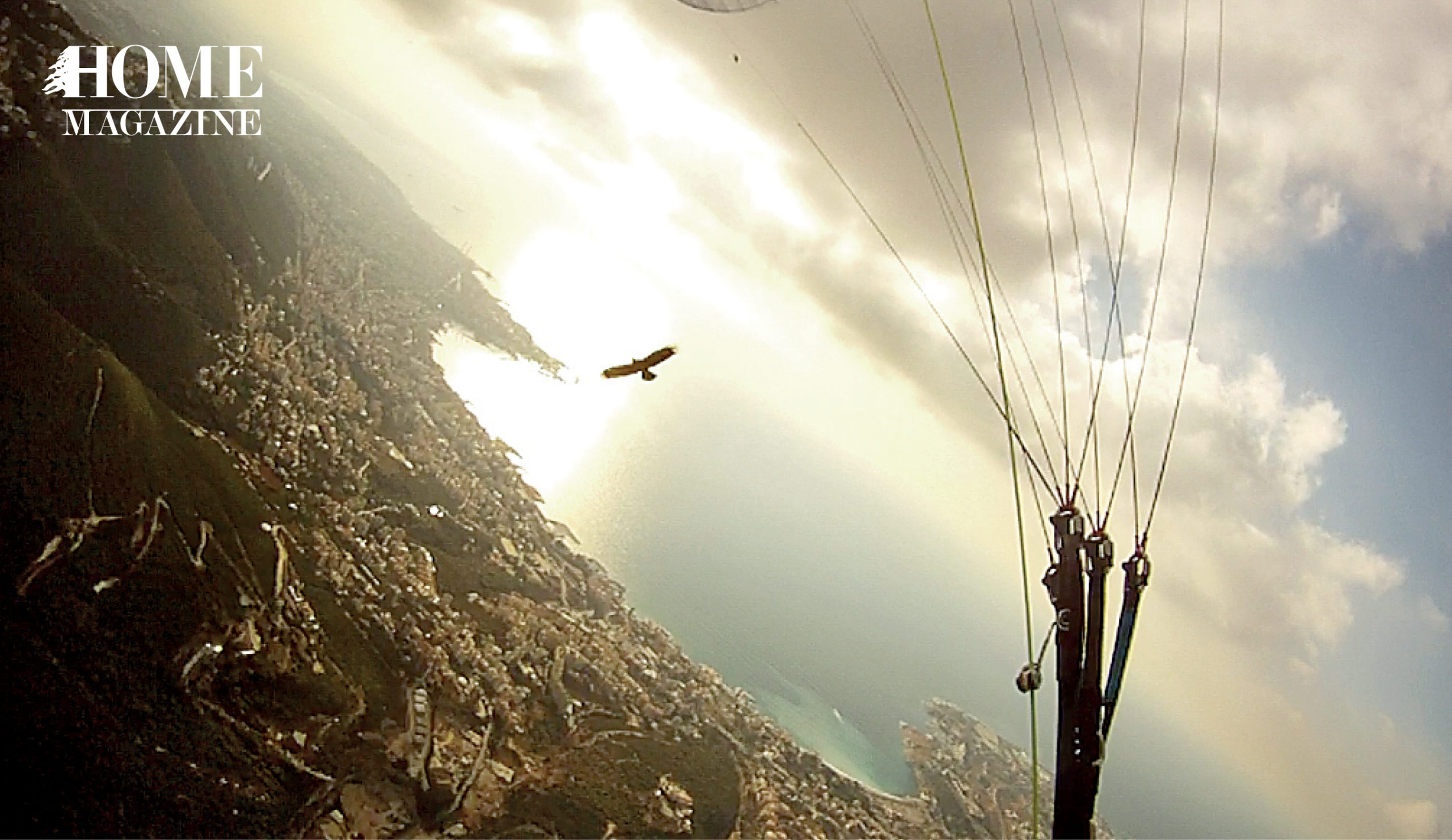 Climbing in a thermal with an eagle over the beautiful Jounieh Bay.
Currently, Lebanon does not have a national federation for paragliders because there are not enough existing clubs. There are a few clubs, such as CLVL and Club Thermique, which are helping paragliders in the country inch their way toward forming a more official entity.
“I think if we want this sport to really expand, we have to open up more sites in more areas. The more sites there are, the better it is. And the most important thing is we need to be able to fly from one area to another. If conditions are better and if we have a higher cloud base, we are able to climb higher. On some days, you can only climb a few hundred meters above takeoff. Some days, we can reach 1,000 or 2,000 meters above takeoff, so we’re able to fly much further.”
Of course, one mustn’t be blasé about paragliding. Certain safety and weather considerations must be adhered to quite religiously. First, it’s essential to take the learning process step by step and not to rush the training or gloss over the instructions. An attitude of excessive risk-taking is also not recommended, as high wind speed, for instance, can turn into wind gusts of 25 to 30 kilometers per hour in seconds. Pilots should avoid flying when there is large cloud formation, which is an indication of a coming storm. Once the storm cloud is overhead, the wind can pick up and it can start raining. Under such conditions, the glider can get wet and sucked into a cloud. Other less favorable elements like hail and lightning can have detrimental results. In such cases, paragliders should keep an eye out for unfavorable weather forecasts and not gamble with their lives.
If procedures are safely followed, the joys outweigh the risks. Debs offered one very helpful piece of advice for first-time gliders: Go for a tandem, or two-person flight.
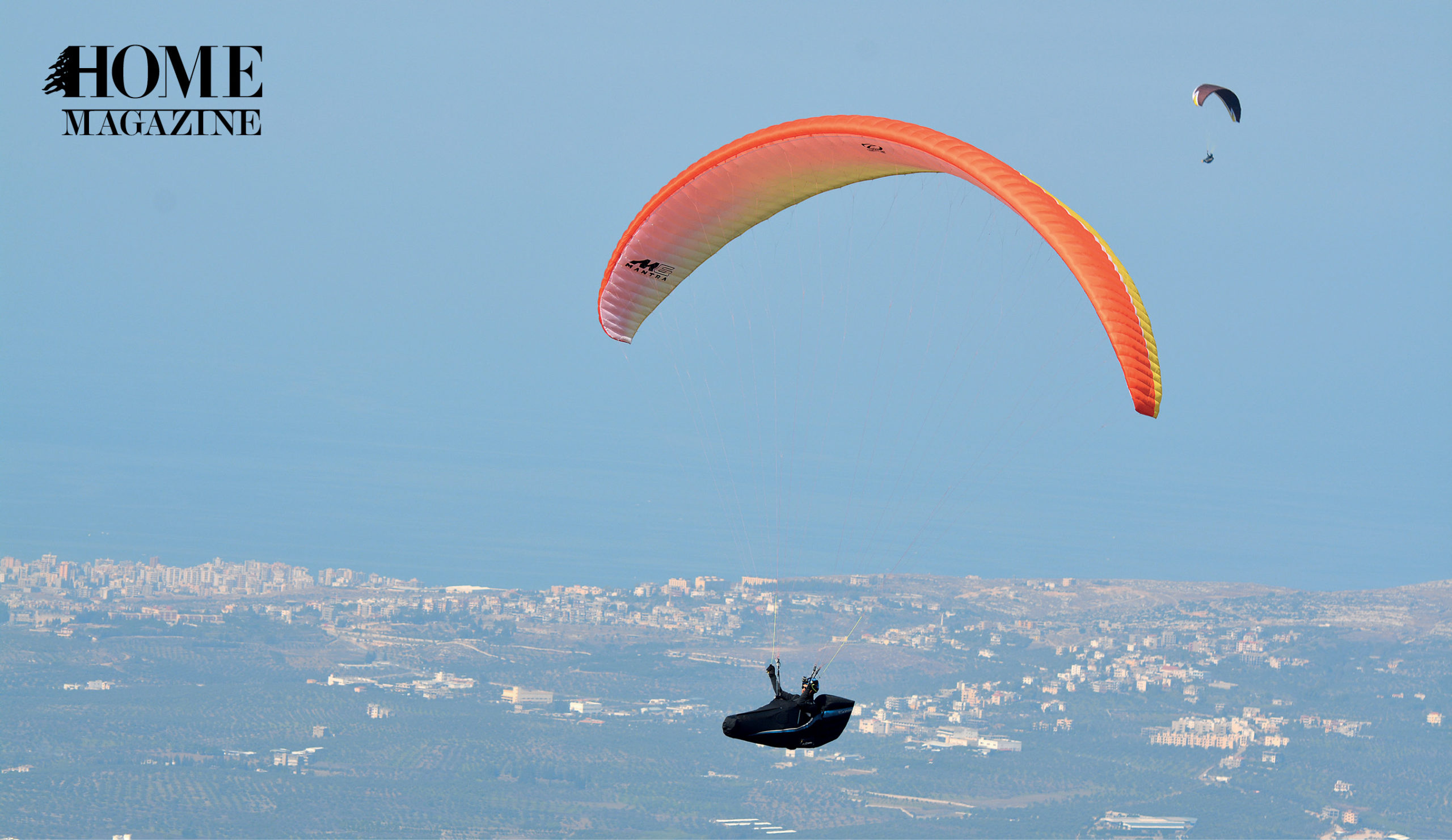 Flying from Meziara town to the flats of Koura, north Lebanon.
“This is the best way to do it since you’ll be flying with an instructor,” he says. “You can just enjoy the view, take pictures, and then you get a taste of the feeling. This is a good way to know your threshold for heights. We’re always happy to get fresh newcomers, and the sport has picked up over the last two years big time.”
When paragliding over Lebanon, one can expect glorious, majestic sights, but it’s the adrenaline rush, the being one with the endless skies that makes it what Debs calls “an indescribable, addicting sport.” Flying is a three-dimensional navigation through thin air — one in which height, depth, and direction intersperse with mountains and flatlands. “It’s almost as though you become a bird,” Debs reminisces. “After a while, you start developing a feeling of the air, the turbulence, where you climb, what keeps you up, what makes you sink and land. You learn from the elements, from the clouds, from the sun, and from the land.”
So, strap up, race the wind, and take to the sky!
For more info:
[instalink id=”26″]
https://www.instagram.com/cloud.base/
https://www.facebook.com/cloud.base.para/

HOMEland THEMES
Coming Soon
HOMEland Events & Collaborations
Coming Soon
 Signature Boutique