ARIJ: Watchdog Journalism that Holds the Powerful to Account
Threats, censorship, and jailed colleagues haven't stopped ARIJ from training a generation of investigative journalism's boldest voices.

Photos by Ala’a Sukhni, ARIJ
“Against the odds, investigative journalism persists in the Middle East,” beams a headline in the Columbia Journalism Review, the leading publication for media industry professionals and academics. And one organization of watchdogs—Arab Reporters for Investigative Journalism—is largely responsible.
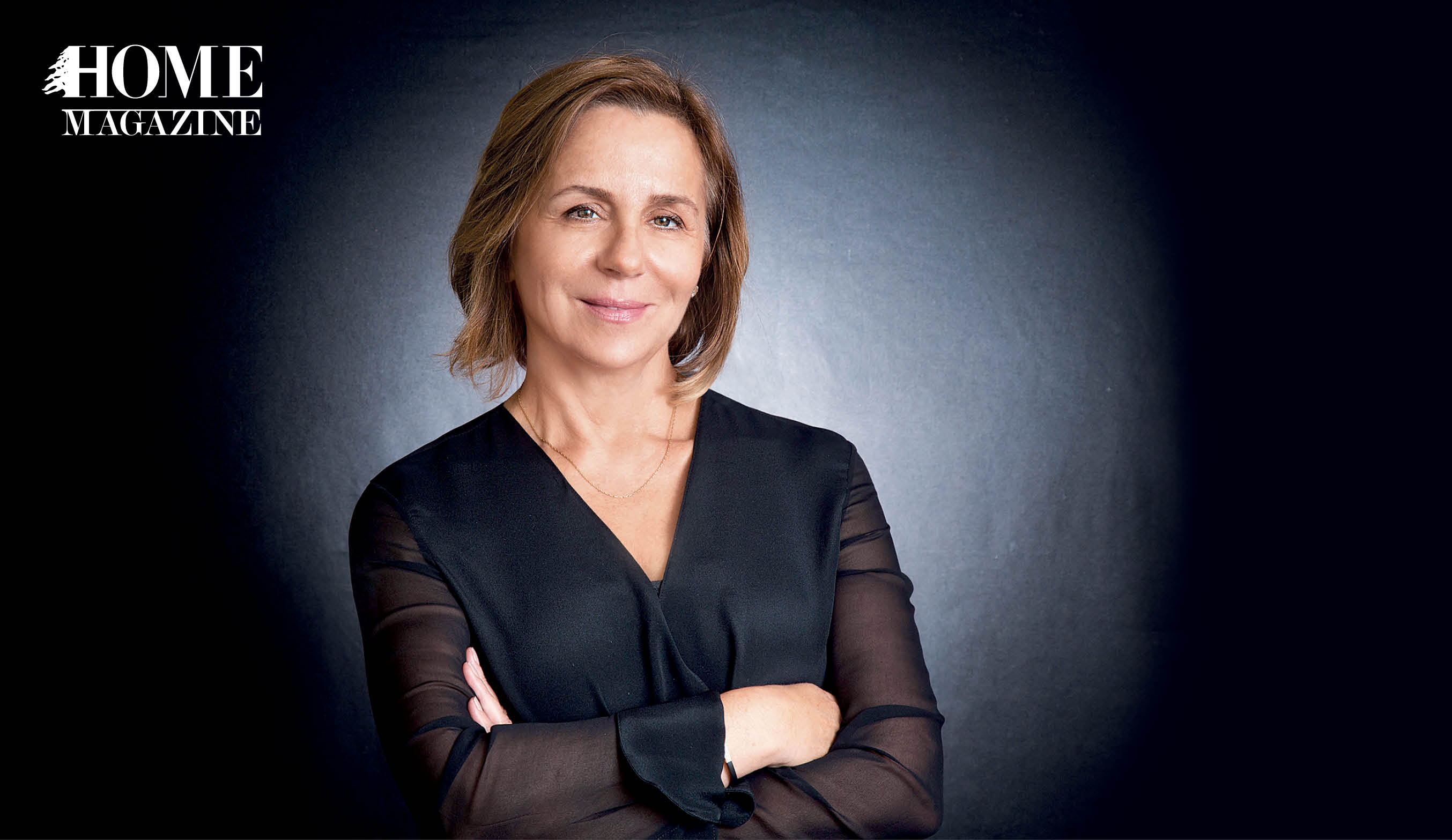
ARIJ Executive Director Rana Sabbagh, a key figure in the Amman-based organization’s history, says, “We won’t remain silent bystanders. We will brace for the worst and keep pushing for media freedom, rule of law, transparency, justice and human dignity.”
At a conference of academics, students and media professionals in Beirut, Pulitzer Prize-winning Washington Post investigative reporter Dana Priest said she admires the courage of Arab journalists. Her own reporting on the United States Central Intelligence Agency and the U.S. military has carried significant risks. But once her stories are published, she no longer feels concerned for her safety, she said. “For Arab journalists, the danger never ends.”
Investigative journalism—reporting facts about important matters that governments, individuals or organizations would rather keep secret—is risky business, particularly in Arab countries, where many journalists not only face government repression and the harassment of intelligence agencies, but also become targets of extremist groups, noted Sheila Coronel, Ph.D., dean of Academic Affairs at the Columbia School of Journalism in New York and author of a 2016 Columbia Journalism Review article assessing the state of investigative journalism in the Middle East. Coronel credits Arab Reporters for Investigative Journalism, known as “ARIJ” (areej), for the growth of investigative journalism in the region.
ARIJ was also the 2018 winner of the Friedrich Naumann Foundation for Freedom’s prestigious Raif Badawi Award for courageous journalists. The independent jury noted: “We have chosen Arab Reporters for Investigative Journalism because it is committed to informing the public and raising transparency in an increasingly difficult environment, often operating at risk to the journalists’ lives. At the same time, it supports journalists’ research projects and offers media trainings. Networks like ARIJ are a role model for journalists throughout the region: journalists who collaborate, cooperate on investigations, offer each other mutual support and publish collectively are stronger together than alone and can achieve more. Arab Reporters for Investigative Journalism is a beacon of light in a darkening world.”
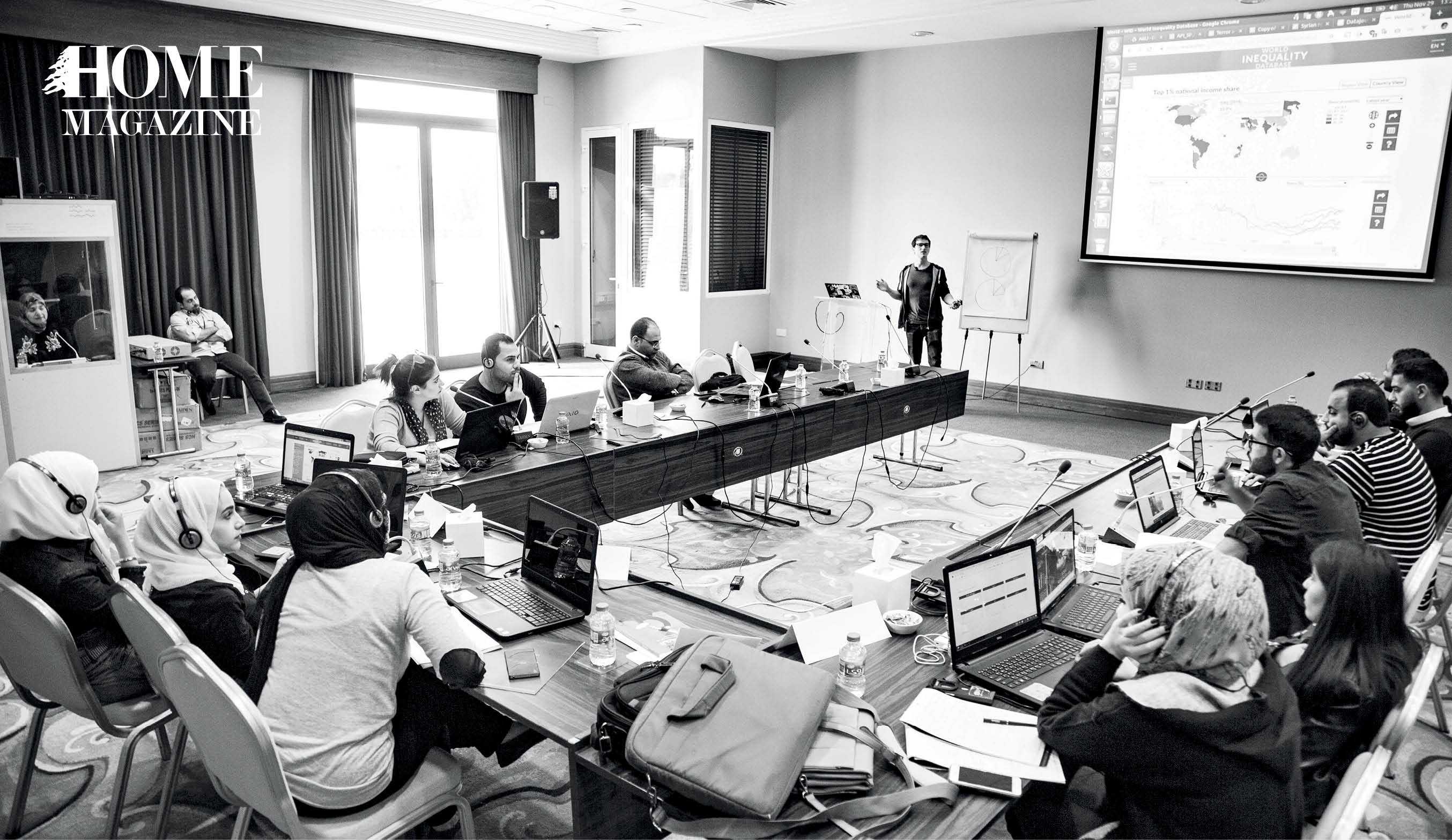
ARIJ promotes a type of journalism that is unique in Arab media. Palestinian journalist Daoud Kuttab, a founder and former chair of ARIJ, told the Columbia Journalism Review, “We used to have only two kinds of journalists. There were either pro-government journalists or anti-government activists posing as journalists.” ARIJ trains journalists to be independent “watchdogs,” journalists who hold governments, institutions and leaders accountable, using documents, data and other investigative techniques.
“There were either pro-government journalists or anti-government activists.”
“Our core achievement has been to help spearhead the emergence of investigative journalism in a region with no such tradition,” said ARIJ Executive Director Rana Sabbagh. ARIJ is in the business of championing journalists who risk everything to produce transparent, well-documented journalism that holds the powerful to account.
With funding from European sponsors, ARIJ trains journalists, bankrolls projects and assists with pre-publication legal screening to mitigate risks. It established benchmarks of excellence and recognizes outstanding journalists at its annual Investigative Journalism Forum.
ARIJ was conceived “on a savagely hot day in August 2004,” Sabbagh recalled. “A group of Arab and Danish journalists sat around a fountain in the courtyard of an ancient Damascus house, sipping fresh lemonade to quench their thirst.
“They had no inkling of the war, the killing or the turmoil that would engulf their region in the years to come. But they had a project in mind that they hoped could bring peaceful change: a Danish-funded investigative reporting program for the Arab world that would boost accountability, free speech and independent media.”
Two months later, ARIJ held its first board meeting. Sabbagh was hired as executive director to run the project in Jordan, Syria and Lebanon, “three neighboring countries with very different political and media environments,” she noted. “In countries with severe press restrictions, they would confine their digging to ‘safe’ topics like health, education, consumer issues, women’s rights and the environment.”
Sabbagh herself models the ARIJ ideal. An accomplished career journalist who fosters professional journalistic standards in aspiring young reporters, she was the first Arab female to run a daily political newspaper, serving as chief editor of The Jordan Times from 1999 to 2002. She lost her job for her courageous editorial choices, yet she has continued, at her own peril, to write columns tackling corruption and human rights violations in The Times (of London), The Huffington Post and other publications.
By 2008, ARIJ had expanded to Egypt, Bahrain, Iraq, Palestine, Yemen and Tunisia. It continues to grow, working with individual journalists, academics and local investigative networks throughout the MENA region.
Longtime board member Yasmine Dabbous, Ph.D., a Lebanese artist and communications/cultural studies scholar, is the chairperson of ARIJ’s board today.
“Reporting facts about important matters that governments, individuals or organizations would rather keep secret—is risky business, particularly in Arab countries.”
Since its founding, ARIJ has trained 2,137 reporters in 14 countries and supported 469 investigative reports.
The organization recruited award-winning journalist and respected academic Dr. Mark Hunter, professor and senior research fellow at the INSEAD Social Innovation Centre in France, to collaborate with universities across the Middle East and North Africa in developing a curriculum suited to the challenges investigative reporters face in the region.

Seven leading universities in the region, including two in Lebanon (the Lebanese American University and Rafik Hariri University), have offered the three-credit ARIJ investigative journalism course on the basics of investigative journalism. At least 20 others are using Hunter’s manual Story-Based Inquiry, which was developed for ARIJ. Since its publication by UNESCO in 2009, it has been translated to 12 languages, making it the first transcultural reference on investigative journalism in the world— one of many ways ARIJ is influencing international practice, Sabbagh said.
More than 500 journalists, academics and students attend ARIJ’s annual Investigative Journalism Forum where they hear from prominent investigative reporters and scholars (recently including the legendary American investigative journalist Seymour Hersh), honor accomplished colleagues and receive training on important skills. Attendees participate in workshops on encrypting their materials, data journalism, safety, storytelling and more.
ARIJ’s Investigative Journalism Forums always conclude with an awards dinner and lively dancing, where the camaraderie among “ARIJeans,” as the young, ARIJ-trained journalists call themselves, is palpable. In 2016, Syrian journalist Hamoud Almahmoud even held his wedding at the forum among those he considers practically family. At the time, Almahmoud lived in Amman, working at ARIJ headquarters, leading its Research & Data Desk and open records project, a database of corporate records, court cases and government tenders from 18 Arab countries. It promises to be “the most comprehensive, searchable database of public records in the Arab world,” writes Coronel.
ARIJ training “was literally a turning point in my life,” said Almahmoud. “I realized that I needed to document my stories, to verify everything, to look for proof for everything, to leave my feelings out and be objective in writing and collecting information.
“I realized that if I did all that, I could do more sensitive stories. I received fewer threats and fewer bad reactions from powerful people because they saw solid evidence in front of them.”
Journalists trained by ARIJ are writing stories that bring positive changes. After one ARIJ-sponsored story, Jordan’s King Abdullah ordered a ministerial committee to strengthen the rights of mentally ill children in line with international standards and to end their abuse at the hands of caregivers behind closed doors, Sabbagh reported.
“In countries with severe press restrictions, they would confine their digging to ‘safe’ topics like health, education, consumer issues, women’s rights and the environment.”
“In Tunisia, it took two years for the government to start closing kindergartens that were preparing children to become Jihadis—but only after a high-risk investigation, involving an undercover female reporter with a hidden camera strapped to her body.”
Among other stories are features on the illegal organ trade in Iraq, corruption linked to the provision of tax-exempt, disabled-friendly cars in Egypt, and colored contact lenses causing blindness among teenaged girls in Jordan. At least 10 Arab journalists, mostly publishing under aliases and in foreign media, exposed a network of offshore companies and bank accounts linked to Arab strongmen and their business partners.
“This was the first time that Arab— not western—journalists, had gone after Arab dictators and uncovered their financial dealings,” Sabbagh noted, calling it, “an important precedent. Across the region, the task of investigating and holding officials accountable is getting more complicated and dangerous. Journalists are being jailed and killed; censors are clamping down on independent reporting.”
In a December 2018 editorial, Sabbagh wrote: “All ARIJeans deserve exceptional support and a medal for courage, integrity and commitment as they pursue their ‘mission impossible’ in the world’s riskiest region.”
With her eyes on ARIJ’s future, in 2018, Sabbagh completed an executive master’s degree in positive leadership and strategy at IE in Madrid, one of Europe’s best business and social science post-graduate schools. Her capstone project was on “succession planning at NGOs focusing on investigative journalism.”
The ARIJ Board granted her a year-long sabbatical in 2019. Sabbagh plans to use it to seek new donors and to research technology and digital tools, considering how they can be integrated into ARIJ’s strategy beyond 2020.
For more info: https://en.arij.net/


 Signature Boutique



Speaking Truth to Power: Pierre Sadek Foundation