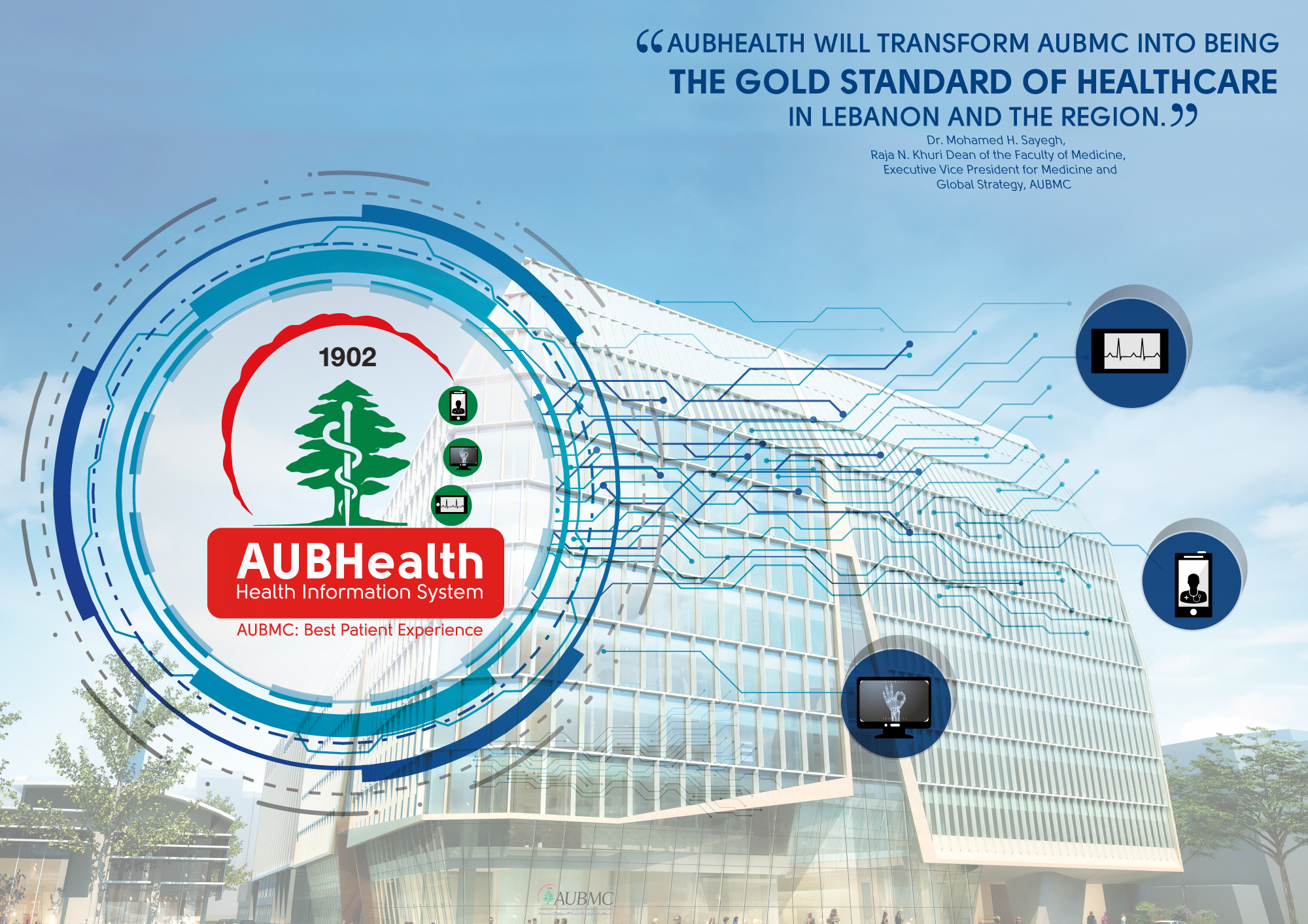
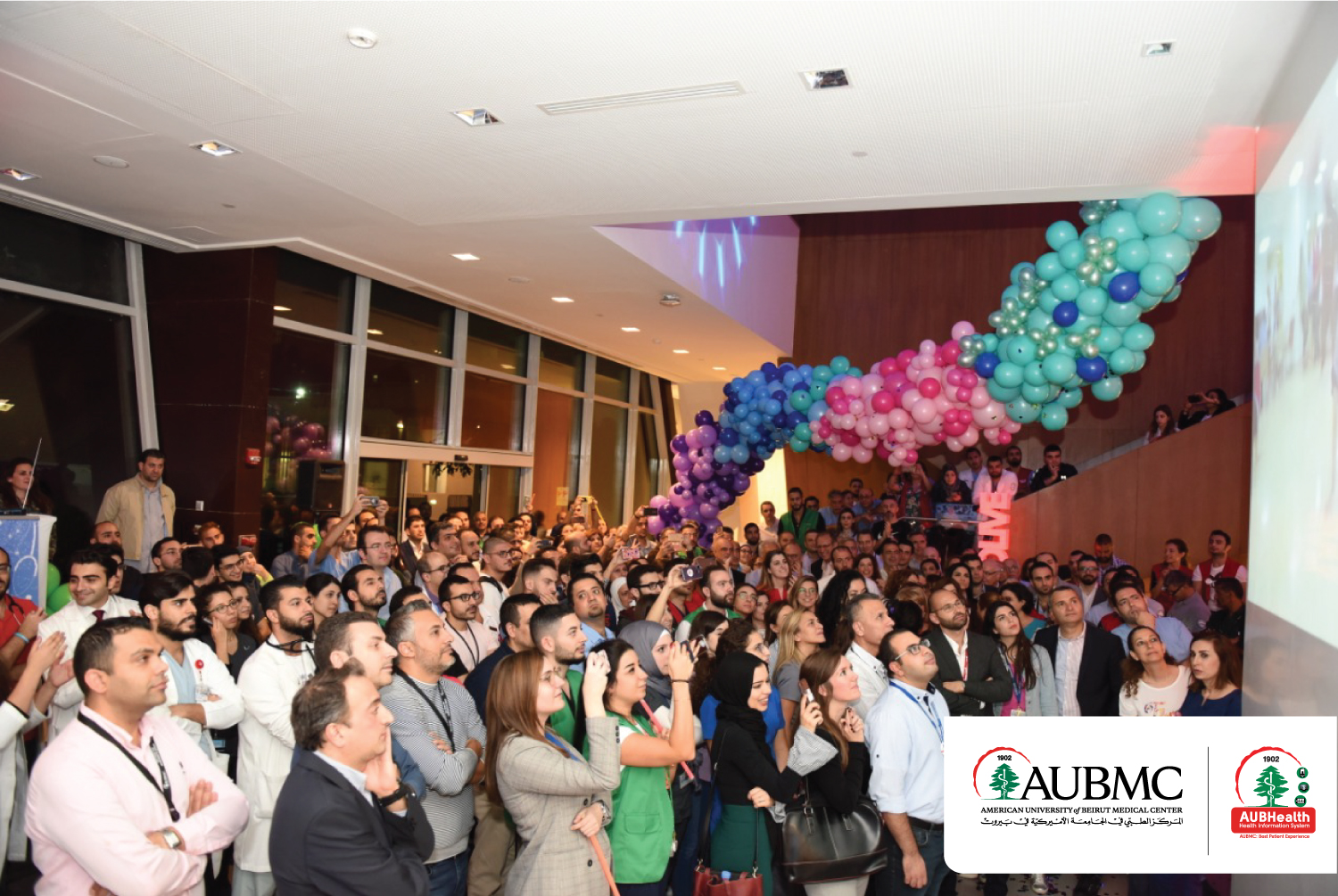
Beirut, November 5, 2018:- The American University of Beirut Medical Center (AUBMC) launched AUBHealth on November 3 to replace its existing home grown electronic health record.
AUBHealth was developed by Epic, the provider of the most widely-used and comprehensive health records system and it will provide a platform for integrated care, ensuring patients have convenient digital access to their health information.
Epic is used by many of the most advanced medical centers worldwide including the top ten hospitals in the US according to US. News & World Report Ranking. The system allows these hospitals to work collaboratively every day to improve patient care & innovate healthcare. AUBMC will be the first organization in Lebanon to use Epic.
“AUBHealth will transform AUBMC into being the gold standard of healthcare in Lebanon and the region,” said Dr. Mohamed H. Sayegh, Raja N. Khuri Dean of the Faculty of Medicine, Executive Vice President for Medicine and Global Strategy at the American University of Beirut. “It also reflects the core of our AUBMC 2020 Vision, which is transforming medical education, research, and practice, and most importantly, medical care in the region, bringing them to new levels of excellence.”
Within AUBHealth, physicians will have access to real-time patient data and information, which saves time, avoids duplicate diagnostic tests, and could reduce clinical costs. AUBHealth empowers patients and their designated caregivers with easy access to health records. Using Epic’s patient portal, MyChart, patients can connect with their healthcare providers, schedule appointments, and access test results easily. The paperless system provides a secure and seamless patient experience using PatientSecure™, a cutting-edge biometric palm-scanning technology used for patient identification at registration and check-in.
“AUBHealth is a transformational initiative that aims at improving and standardizing the delivery of healthcare services in Lebanon,” said Raed Rafeh, Project Director of AUBHealth. Following 3 years of planning, preparation, and training, this significant step advances patient care practices at all levels. Several AUBMC staff traveled to Wisconsin, USA, to visit Epic’s headquarters and attend training for the new system. Hundreds of caregivers across AUBMC will use AUBHealth, which integrates clinical documentation with ancillary systems such as radiology, pharmacy, laboratory, ambulatory, perioperative, patient transport, blood bank, and billing. current and previous medications, allergies, lab results, medical history, and appointments. It will also allow healthcare providers to access their clinic schedules and activities remotely, so they can better plan and collaborate with their teams, whether at the Medical Center or at one of the private clinics.
“Healthcare is changing at a faster rate than ever before, meaning we have to meet the expectations of our patients and providers in this digital age,” said Dr. Ziyad Ghazzal, MC Director and Chief Medical Officer. “Hospitals around the globe are undergoing mass-scale changes to digitize their services. We’re joining the leaders in technology, data security, quality of care, and state-of-the-art development.”
Dr. Ghassan Hamadeh, Chief Medical Information Officer, AUBMC considers this move as a qualitative one primarily. AUBMC has been using electronic health records since 2000 but now, it is moving to a high caliber integrated system that would allow it to reach stage 6 in Healthcare Information and Management Systems Society (HIMSS) classification and at the same time become more patient centered in its delivery of care. When the Lebanon government implements e-government legislations, we will be able to move to HIMSS stage 7.
“AUBMC’s newest undertaking marks the first clinical installation of Epic in Lebanon and a major milestone in the expansion and harmonization of core information technology systems across the entire center,” said Mr. Joe Max Wakim, IT Director. “This gigantic step will surely reinforce Lebanon’s position on the regional map of healthcare as well as technological innovation.”
Epic forms the technology foundation for for AUBMC for years to come. The qualified and highly trained healthcare team will be able to assess, design, and update AUBHealth to incorporate the evolving needs of the Medical Center. This team will be an asset to AUBMC and to Lebanon by sharing their knowledge and expertise with the government and private health information sectors.
About AUBMC
Since 1902, AUBMC has been providing the highest standards of care to patients across Lebanon and the region. It is also the teaching hospital for the Faculty of Medicine at AUB (established in 1867), which has trained generations of medical students and physicians, and whose graduates can be found at leading institutions around the world. AUBMC is the only medical institution in the Middle East to have earned the five international accreditations of JCI, Magnet, CAP, ACGME-I and JACIE attesting to its superior standards in patient-centered care, nursing, pathology/laboratory services and graduate medical education.
The Faculty of Medicine has graduated over 4,000 medical students and physicians; the Rafic Hariri School of Nursing provides excellent education for the nursing staff, and the Medical Center meets the healthcare needs of over 360,000 patient visits annually.
For more information, please visit our website www.aubmc.org or contact:
The AUBMC Office of Communications at 0096 1 350000 ext. 4732 – Email: praubmc@aub.edu.lb
Memac Ogilvy Public Relations at 01-486065 ext.131
Carmen El Hajj/ Hadi Al Attar – hadi.alattar@ogilvy.com

HOMEland
Coming Soon
HOMEland Events & Collaborations
Coming Soon
 Signature Boutique
 Signature Boutique