
HOMEland
Coming Soon
HOMEland Events & Collaborations
Coming Soon
 Signature Boutique


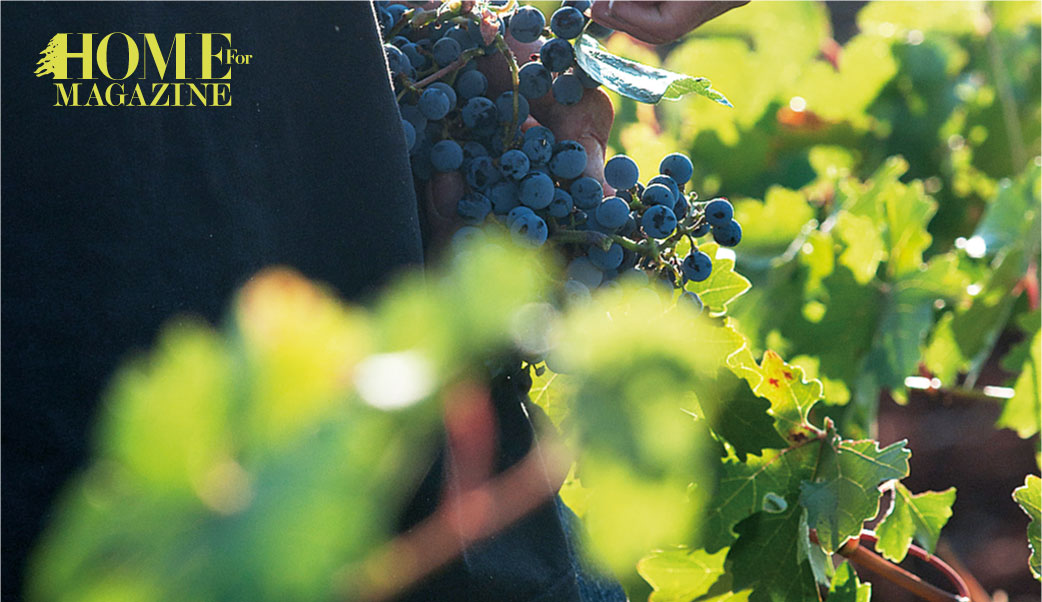
“Excellent grapes do make excellent wine” is the motto adopted by the Hark family who owns Batroun Mountains winery. Asaad and Katy Hark decided to come back from Minnesota to Lebanon in 2004. Asaad Hark moved from Batroun to the USA at the age of 19 to pursue mechanical engineering studies. He got married to Katy, native of Batroun and worked for many years in the trade field. They moved to Batroun and brought with them a dream, having in mind to make it a reality which is to establish their own winery. This Batrouni couple wanted to come back to their roots and share the love of the land with their six children.
The Hark family spent the first three years of the implementation of their project establishing the fields and equipping the winery. They had to wait until 2007 to produce the first bottle of wine which was made from their grapes, planted in their own vineyards located in the mountains of Batroun district in six different towns on altitudes from 400 to 1500 meters above sea level.
The passion of wine making is viral in the Hark family, as their parents kids have decided to put wine in the center of their lives and future projects. Hala, 17 years old daughter, is planning to study oenology at UC Davis. She has been making her own wine since the age of 13. Mira would like to study marketing in order to promote –the product –. As for Yara, her passion for the fields will lead her to study agronomy. At the age of 40, Asaad decided to refine his love to winemaking by pursuing one of the most respected academic programs in the field of winemaking at the University of California-Davis. He is now a certified winemaker.
One of the main characteristics of Batroun Mountains wine is that it is made from grapes grown organically and certified by IMC. IMC (Instituto Mediterraneo di Certificazione) is the certifying institute that controls the quality of grapes and wines produced by Batroun Mountains. Thus the grapes are carefully selected and the whole process of *winemaking respects the conditions and criteria of organic *winemaking. Katy and Assad do believe that a quality bottle of wine is made in the vineyards and not in the winery and for that reason they grow their grapes. The Harks believe that seeking outside consultancy is crucial in improving the quality of wines in Lebanon. This is a good way to benefit from the consultant broad experience in this field.
“On the international level, the only competitive characteristic about the Lebanese wine is its quality,” Assad mentions. Due to high production costs, the very expensive energy consumption and the absence of trade strategies entrepreneurs are discouraged to venture in this field.
“International fairs and exhibitions do help a lot in promoting the Lebanese wine,” Katy highlights. She stresses on the fact that the “Lebanese Wine Day” events,organized by the Agriculture Ministry that took place in Germany and France, were a big success for all the Lebanese wine producers, hoping that such initiatives will take place more often because the international market offers the best opportunities for Lebanese wine makers.
It is very important to mention that the cooperation between the wineries of the “La Route des Vins du Nord” helps them provide the best experience for the visitors and a good business opportunity for all the nine producers in Batroun district: it is about a strategy of cooperation in order to create a healthy competition.
Starting with 3,000 bottles in their first year, the story of passion and success lead the Hark family to produce 50,000 bottles of wine each year. 50% of the production is exported to France, Belgium, Germany, Australia, Congo and the USA. You may find Batroun Mountains wine in Lebanon at the winery in Batroun, in most of the organic products store and in many restaurants in Lebanon as well.
Signature Boutique
Lebanon, in your inbox

HOMEland Magazine
We firmly believe that the internet should be available and accessible to anyone, and are committed to providing a website that is accessible to the widest possible audience, regardless of circumstance and ability.
To fulfill this, we aim to adhere as strictly as possible to the World Wide Web Consortium’s (W3C) Web Content Accessibility Guidelines 2.1 (WCAG 2.1) at the AA level. These guidelines explain how to make web content accessible to people with a wide array of disabilities. Complying with those guidelines helps us ensure that the website is accessible to all people: blind people, people with motor impairments, visual impairment, cognitive disabilities, and more.
This website utilizes various technologies that are meant to make it as accessible as possible at all times. We utilize an accessibility interface that allows persons with specific disabilities to adjust the website’s UI (user interface) and design it to their personal needs.
Additionally, the website utilizes an AI-based application that runs in the background and optimizes its accessibility level constantly. This application remediates the website’s HTML, adapts Its functionality and behavior for screen-readers used by the blind users, and for keyboard functions used by individuals with motor impairments.
If you’ve found a malfunction or have ideas for improvement, we’ll be happy to hear from you. You can reach out to the website’s operators by using the following email
Our website implements the ARIA attributes (Accessible Rich Internet Applications) technique, alongside various different behavioral changes, to ensure blind users visiting with screen-readers are able to read, comprehend, and enjoy the website’s functions. As soon as a user with a screen-reader enters your site, they immediately receive a prompt to enter the Screen-Reader Profile so they can browse and operate your site effectively. Here’s how our website covers some of the most important screen-reader requirements, alongside console screenshots of code examples:
Screen-reader optimization: we run a background process that learns the website’s components from top to bottom, to ensure ongoing compliance even when updating the website. In this process, we provide screen-readers with meaningful data using the ARIA set of attributes. For example, we provide accurate form labels; descriptions for actionable icons (social media icons, search icons, cart icons, etc.); validation guidance for form inputs; element roles such as buttons, menus, modal dialogues (popups), and others. Additionally, the background process scans all the website’s images and provides an accurate and meaningful image-object-recognition-based description as an ALT (alternate text) tag for images that are not described. It will also extract texts that are embedded within the image, using an OCR (optical character recognition) technology. To turn on screen-reader adjustments at any time, users need only to press the Alt+1 keyboard combination. Screen-reader users also get automatic announcements to turn the Screen-reader mode on as soon as they enter the website.
These adjustments are compatible with all popular screen readers, including JAWS and NVDA.
Keyboard navigation optimization: The background process also adjusts the website’s HTML, and adds various behaviors using JavaScript code to make the website operable by the keyboard. This includes the ability to navigate the website using the Tab and Shift+Tab keys, operate dropdowns with the arrow keys, close them with Esc, trigger buttons and links using the Enter key, navigate between radio and checkbox elements using the arrow keys, and fill them in with the Spacebar or Enter key.Additionally, keyboard users will find quick-navigation and content-skip menus, available at any time by clicking Alt+1, or as the first elements of the site while navigating with the keyboard. The background process also handles triggered popups by moving the keyboard focus towards them as soon as they appear, and not allow the focus drift outside it.
Users can also use shortcuts such as “M” (menus), “H” (headings), “F” (forms), “B” (buttons), and “G” (graphics) to jump to specific elements.
We aim to support the widest array of browsers and assistive technologies as possible, so our users can choose the best fitting tools for them, with as few limitations as possible. Therefore, we have worked very hard to be able to support all major systems that comprise over 95% of the user market share including Google Chrome, Mozilla Firefox, Apple Safari, Opera and Microsoft Edge, JAWS and NVDA (screen readers).
Despite our very best efforts to allow anybody to adjust the website to their needs. There may still be pages or sections that are not fully accessible, are in the process of becoming accessible, or are lacking an adequate technological solution to make them accessible. Still, we are continually improving our accessibility, adding, updating and improving its options and features, and developing and adopting new technologies. All this is meant to reach the optimal level of accessibility, following technological advancements. For any assistance, please reach out to