
Many of us write off prison inmates as society’s outcasts, but Zeina Daccache sees individuals who need help and tries to give them a voice.
Iron bars may imprison a person’s body but not necessarily their thoughts and creativity. Thoughts remain the property of the mind. Even notorious prisons like Roumieh or Baabda cannot lock up a person’s ideas. Every inmate, regardless of their conviction, has a story to tell when given the chance. Thanks to Zeina Daccache’s drama therapy projects, prisoners were given a voice to express themselves and deliver a message that was once strangled by prison dust.
“We are all prisoners of our thoughts and it takes us sometimes a lifetime to understand that it’s all about fear, and fear is not real,” says Zeina Daccache, an actor, director, drama therapist and executive director of Catharsis, a group who do drama workshops with prisoners. Catharsis works with disadvantaged people such as substance abusers, survivors of trauma and other negative experiences, as well as prisoners.
“We are all prisoners of our thoughts”
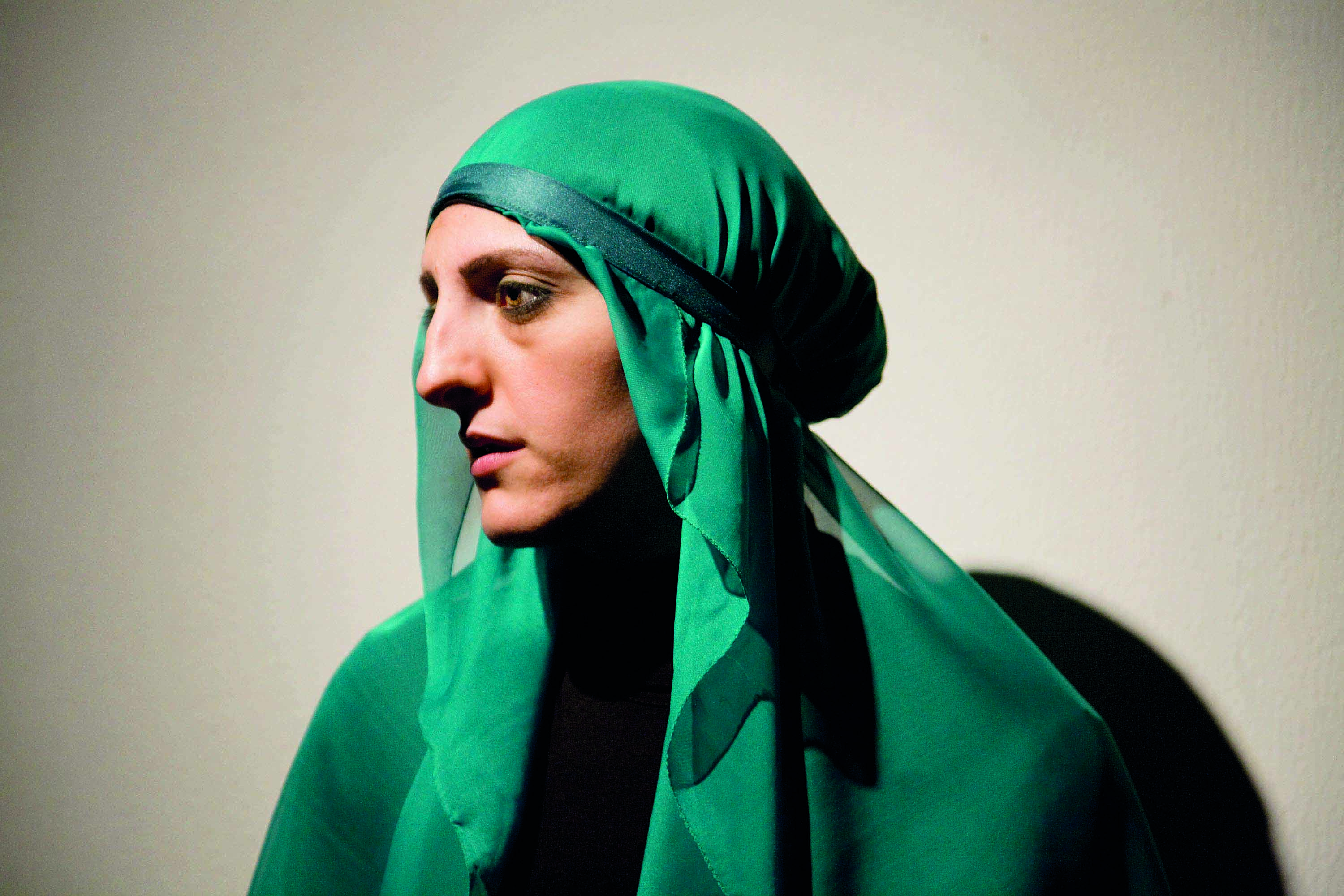
Drama therapy
Drama therapy has proven that even prisoners are able to deliver beauty. Such therapy is different than talkative therapy, it involves tools such as drawing, role play, and using the imagination for performing. It also involves the body to help a person express his emotions and reflect his painful experiences. Combining drama techniques with psychotherapy constitutes the keystone for drama therapy.
“Some people don’t talk easily and therefore talkative therapy doesn’t suit them, whereas drama therapy helps a lot in expressing emotions and making meaning,” says Daccache.
“Drama therapy helps a lot in expressing emotions and making meaning.”
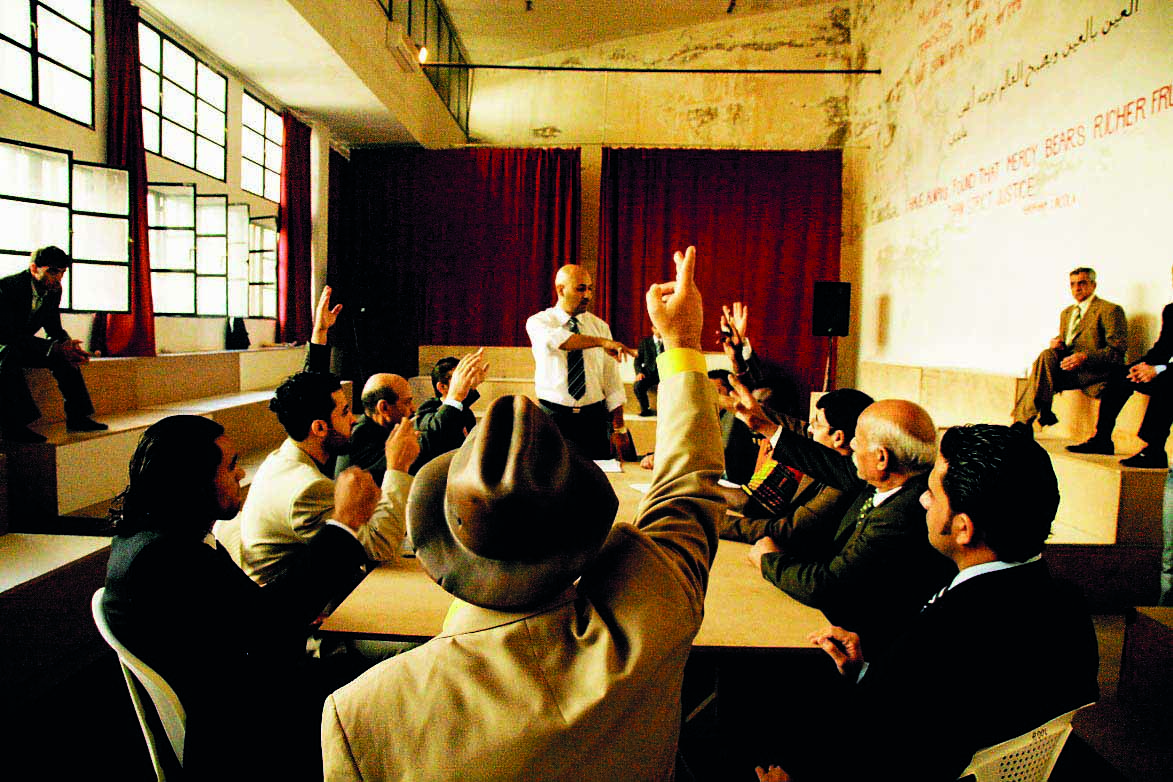
Drama therapy Plays inside prison
A play inside a Lebanese prison might seem like a crazy idea but Daccache is convinced by her creativity and belief that theater has the ability to challenge limitations and achieve greater goals. Her experience with Armando Punzo, an Italian theater director who does plays in Voltera Prison, inspired her to bring the idea home. But this decision wasn’t easy.
“It’s a different planet inside prison, so the difficulties laid mostly in the setting: you are inside a prison where all governmental rules and regulations have to be respected. There is a lot of bureaucracy,” explains Daccache.
“I get inspired by inmates, it’s their play, not mine. It is their message not ours. They benefited a lot on a personal and policy level,” asserts Dacccache.
This was just the beginning. Catharsis, the Lebanese center for drama therapy established in 2007, is preparing a new play and documentary inside Roumieh prison in a project funded by the EU.
“Some of the participants in this project are inmates with life sentences or facing the death penalty. Others are mentally ill inmates who suffer at the hands of a law that seems to lead them to life sentence too, as they have to ‘stay inside prison until cured’ which is not possible,” says Daccache.
“The project shall lead to a new draft law for both groups: those with life sentences and the mentally ill,” she adds.
Zeina’s experience in prison was not easy and she faced endless problems along the way. One actor didn’t know how to read so they had to secure a permit to provide him an mp3 player with his lines on it recorded by other prisoners. This actor was then diagnosed with cancer and died, a tragedy for Zeina and other inmates. There were occasional fights between inmates and, to top it off, the theatre room was set on fire after a riot in Block D. These were just some of the problems Zeina faced but nothing could stop her from fighting to overcome these difficulties.
“After this experience you learn a lot. Patience … then patience and then patience.” Daccache concludes.
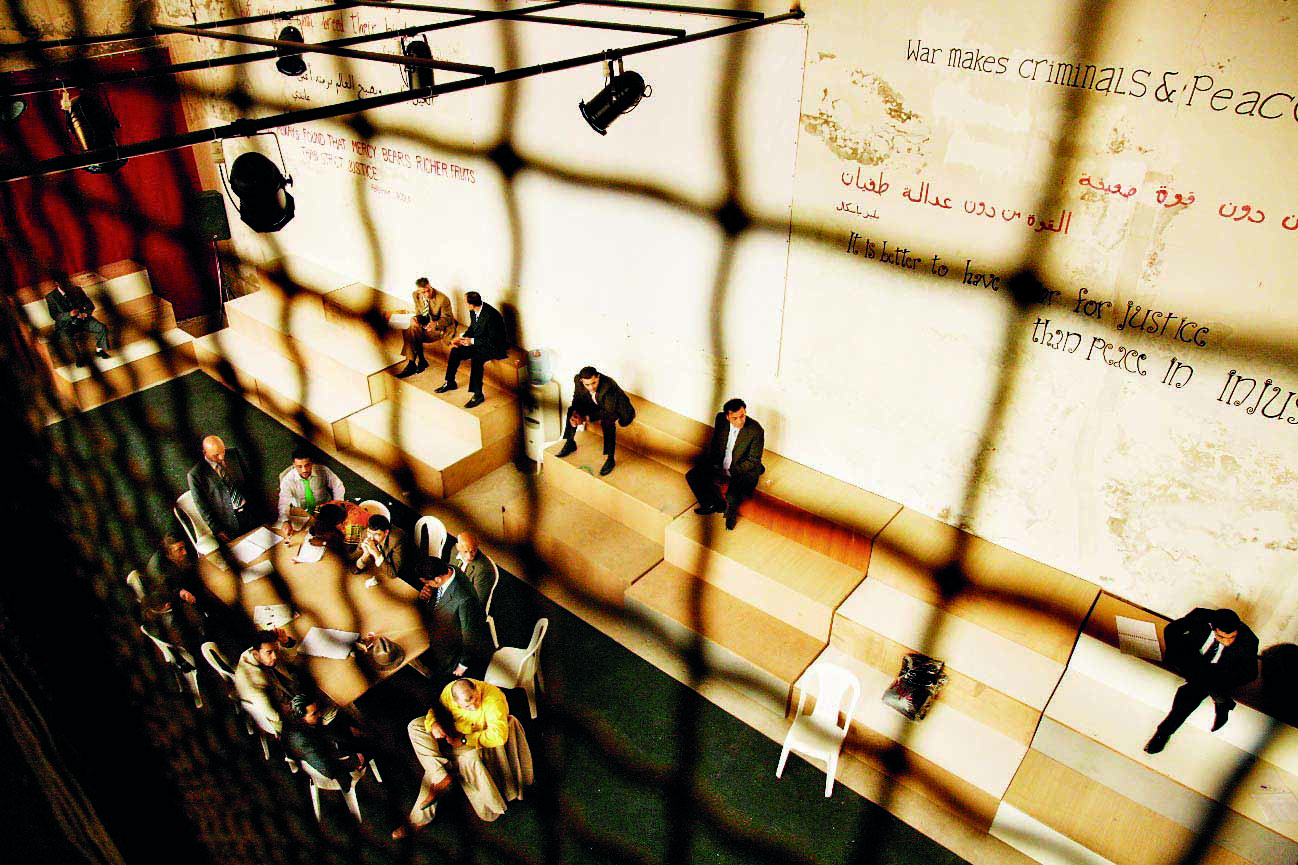

Performances by prisoners:
The first was “12 Angry Lebanese” (2009) performed by Roumieh inmates.
The play actually led to the implementation of an early release law. “Scheherazade’s Diary” (2013), performed by female inmates from Baabda, was a play based on prisoners’ personal stories and shed light on the oppression that women face in Lebanon. The monologues were influenced by prisoners’ experiences and were performed to the audience with no barriers or iron bars in between.
The theater room in block D was set on fire during a prison riot.
“After this experience you learn a lot. Patience, then patience and then patience.”
HOMEland Magazine
We firmly believe that the internet should be available and accessible to anyone, and are committed to providing a website that is accessible to the widest possible audience, regardless of circumstance and ability.
To fulfill this, we aim to adhere as strictly as possible to the World Wide Web Consortium’s (W3C) Web Content Accessibility Guidelines 2.1 (WCAG 2.1) at the AA level. These guidelines explain how to make web content accessible to people with a wide array of disabilities. Complying with those guidelines helps us ensure that the website is accessible to all people: blind people, people with motor impairments, visual impairment, cognitive disabilities, and more.
This website utilizes various technologies that are meant to make it as accessible as possible at all times. We utilize an accessibility interface that allows persons with specific disabilities to adjust the website’s UI (user interface) and design it to their personal needs.
Additionally, the website utilizes an AI-based application that runs in the background and optimizes its accessibility level constantly. This application remediates the website’s HTML, adapts Its functionality and behavior for screen-readers used by the blind users, and for keyboard functions used by individuals with motor impairments.
If you’ve found a malfunction or have ideas for improvement, we’ll be happy to hear from you. You can reach out to the website’s operators by using the following email
Our website implements the ARIA attributes (Accessible Rich Internet Applications) technique, alongside various different behavioral changes, to ensure blind users visiting with screen-readers are able to read, comprehend, and enjoy the website’s functions. As soon as a user with a screen-reader enters your site, they immediately receive a prompt to enter the Screen-Reader Profile so they can browse and operate your site effectively. Here’s how our website covers some of the most important screen-reader requirements, alongside console screenshots of code examples:
Screen-reader optimization: we run a background process that learns the website’s components from top to bottom, to ensure ongoing compliance even when updating the website. In this process, we provide screen-readers with meaningful data using the ARIA set of attributes. For example, we provide accurate form labels; descriptions for actionable icons (social media icons, search icons, cart icons, etc.); validation guidance for form inputs; element roles such as buttons, menus, modal dialogues (popups), and others. Additionally, the background process scans all the website’s images and provides an accurate and meaningful image-object-recognition-based description as an ALT (alternate text) tag for images that are not described. It will also extract texts that are embedded within the image, using an OCR (optical character recognition) technology. To turn on screen-reader adjustments at any time, users need only to press the Alt+1 keyboard combination. Screen-reader users also get automatic announcements to turn the Screen-reader mode on as soon as they enter the website.
These adjustments are compatible with all popular screen readers, including JAWS and NVDA.
Keyboard navigation optimization: The background process also adjusts the website’s HTML, and adds various behaviors using JavaScript code to make the website operable by the keyboard. This includes the ability to navigate the website using the Tab and Shift+Tab keys, operate dropdowns with the arrow keys, close them with Esc, trigger buttons and links using the Enter key, navigate between radio and checkbox elements using the arrow keys, and fill them in with the Spacebar or Enter key.Additionally, keyboard users will find quick-navigation and content-skip menus, available at any time by clicking Alt+1, or as the first elements of the site while navigating with the keyboard. The background process also handles triggered popups by moving the keyboard focus towards them as soon as they appear, and not allow the focus drift outside it.
Users can also use shortcuts such as “M” (menus), “H” (headings), “F” (forms), “B” (buttons), and “G” (graphics) to jump to specific elements.
We aim to support the widest array of browsers and assistive technologies as possible, so our users can choose the best fitting tools for them, with as few limitations as possible. Therefore, we have worked very hard to be able to support all major systems that comprise over 95% of the user market share including Google Chrome, Mozilla Firefox, Apple Safari, Opera and Microsoft Edge, JAWS and NVDA (screen readers).
Despite our very best efforts to allow anybody to adjust the website to their needs. There may still be pages or sections that are not fully accessible, are in the process of becoming accessible, or are lacking an adequate technological solution to make them accessible. Still, we are continually improving our accessibility, adding, updating and improving its options and features, and developing and adopting new technologies. All this is meant to reach the optimal level of accessibility, following technological advancements. For any assistance, please reach out to