
Most of today’s youth feel alienated from political life, and it’s easy to see why. Lebanon arguably has one of the most mind-boggling political arrangements in the world. Eighteen different sects with shifting alliances haggle over a tiny country whose wounds from the Lebanese Civil War have far from healed. Tracy Nehme has been pushing back against this generational apathy through small gatherings that discuss big ideas.
Like many others, Tracy Nehme’s mind swam with contradictions and confusion while attempting to solve the Rubik’s cube of local politics. Whenever Nehme asked others how she could become better versed on the subject, aligning with one sect seemed to be the consensus. “That can’t be the only way — there has to be another path,” thought Nehme. She wasn’t the only one to yearn for grassroots gatherings. In a similar spirit, there has been a snowball effect of informal meet-ups in Beirut, such as Sidewalks Beirut weekly open mic, Philosophy Café, Café Scientifique, Cliffhangers storytelling night, among others.
Nehme was less interested in putting on party colors and learning the prescribed chants than learning through casual conversation. “There’s a richness when you talk with your friends that you don’t have with other channels. I was like, why not do these political discussions with people of different backgrounds to discuss a topic?” says Nehme.
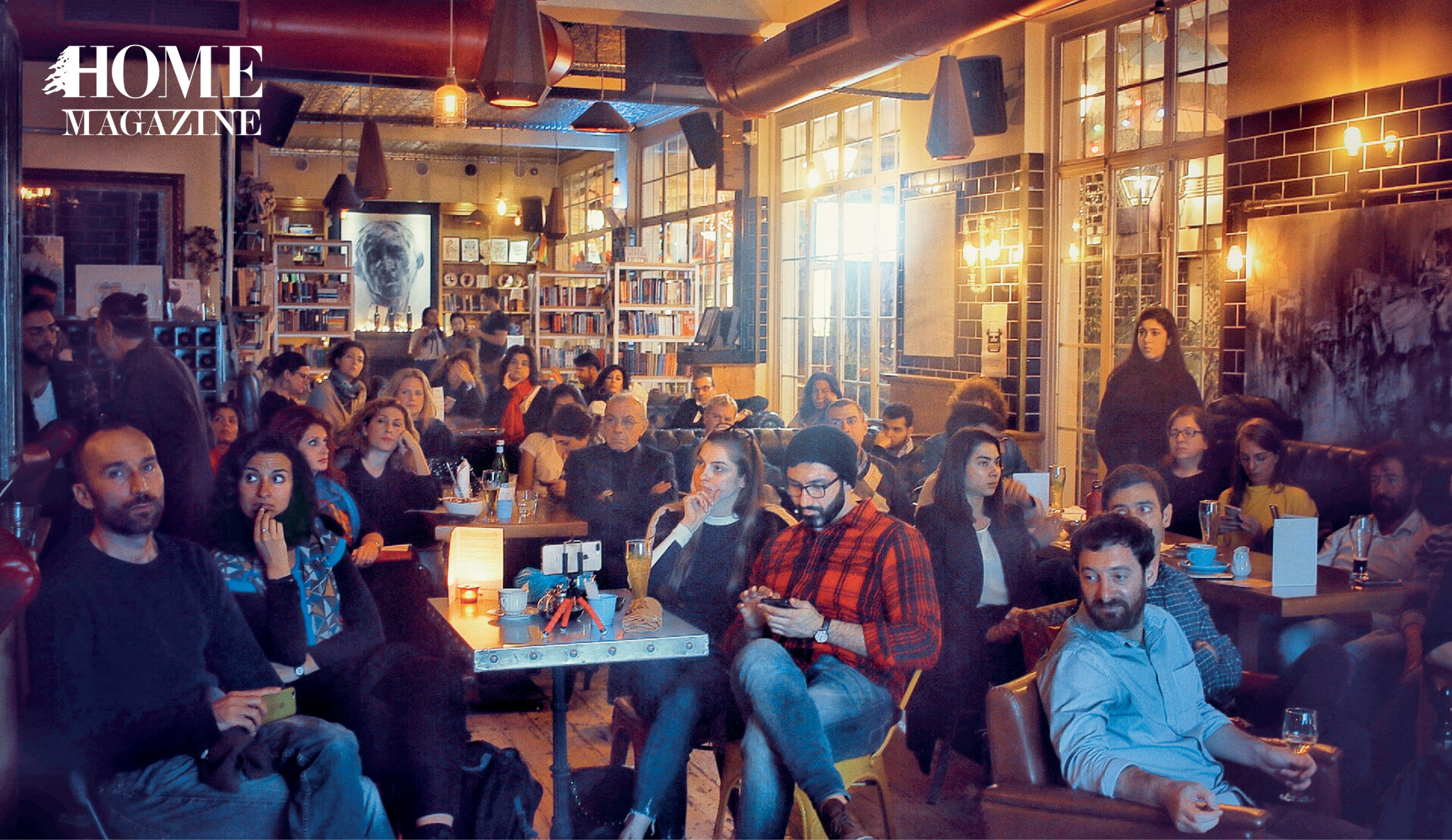
Coffee & Politics is a non-sectarian meet-up that attracts inquisitive minds of all ages and walks of life. Typically, each event sheds light on a specific theme within Lebanese politics. Coffee shops typically provide the backdrop, maintaining an informality that is lacking in academic settings. In the spirit of knowledge being a universal right, participation is free and should not cost more than a cup of coffee.
At first, Nehme was afraid that apathy would get in the way and that people would not care enough to attend. Coffee & Politics kickstarted to a handful of people showing up, all of whom belonged to her direct network. Now, two years later, a swarm of more than 50 people, friends, and strangers alike, flock toward her events. Her last gathering at Aaliya’s Books welcomed a full house of people wanting to learn about the Lebanese Civil War. It turned out that her initial hunch was wrong: Coffee & Politics was resonating with the public in a major way.
“It’s easier not to think about politics because it is a chaotic topic that brings sadness and other strong emotions,” says Nehme. “It takes a lot of courage to open up to it, to approach it with curiosity, to put cherished beliefs into question and to take a stand. It’s not easy but it’s very important.”
After receiving her bachelor’s in electrical engineering, Nehme pursued her master’s degree in public policy and international affairs at the American University of Beirut, centering her research around abandoned houses in Lebanon. Scouting and photographing these bullet-ridden and derelict buildings of times past has become a hobby of hers. “The Civil War is a big taboo that nobody wants to talk about. I started questioning and learning about it when I discovered these houses. I saw them as a metaphor for the war and our repressed memory of it,” says Nehme.
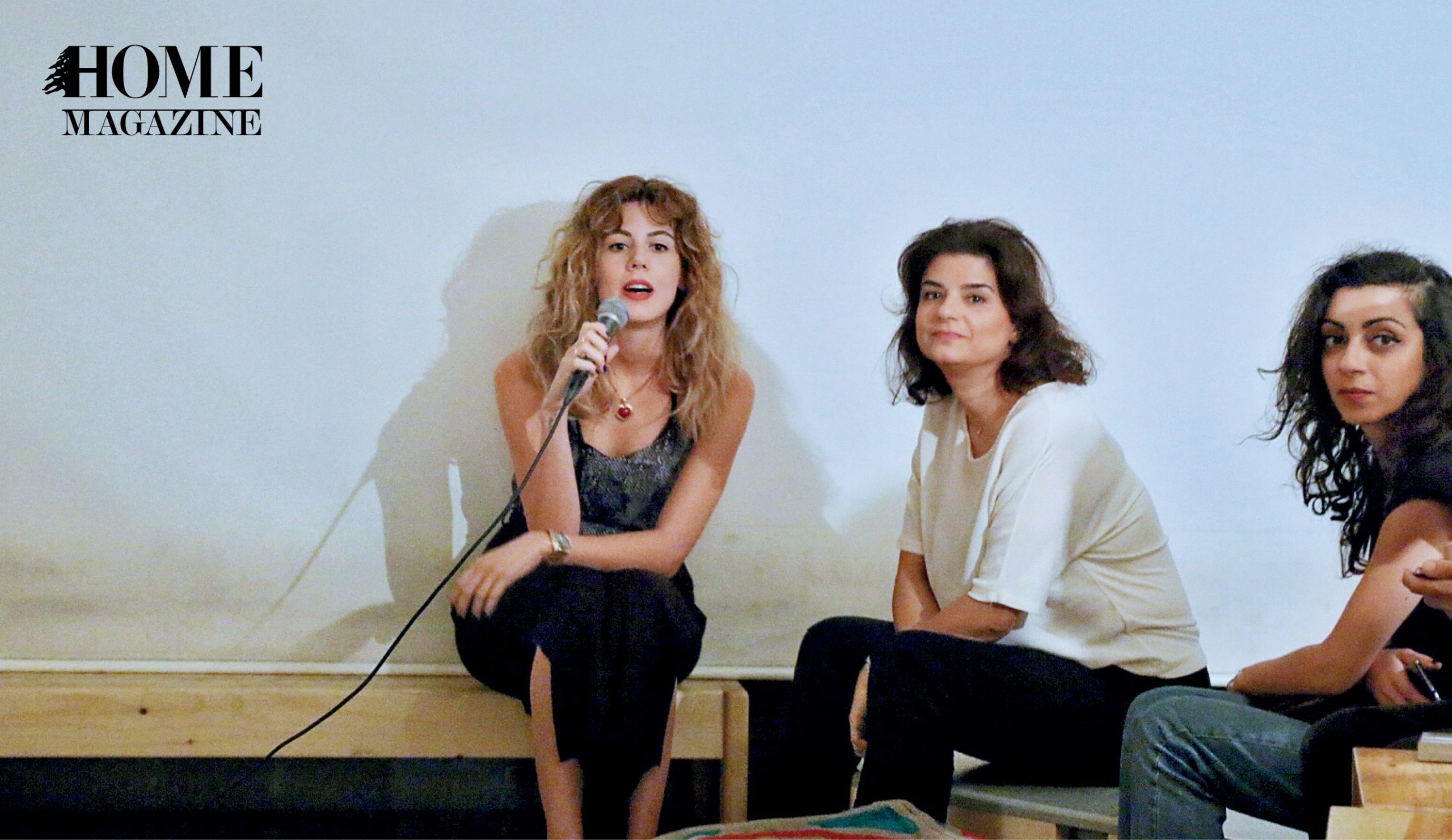
The topics covered are broader than the title indicates. “It’s not purely political.
History, war, transitional justice, women’s rights and more are a part of the conversation. You know, it’s a way to rehabilitate politics,” says Nehme. “People are discovering a new way to talk about this.” She wanted to take these important conversations outside of the ivory towers of academia into the mental landscape of the layperson.
During the first hour, an expert takes the floor to present a topic — be it the Lebanese constitution and Taif Agreement or the impact of sectarianism and future solutions. Nehme works closely with academics, thinkers, researchers and the like to suitably develop the topic for the audience while keeping in mind the unspoken red lines one should not cross.
“I am careful about what is said because I have to be. The speakers and I make sure that there are no direct accusations or naming involved because I think that this lowers the level of the discussion. We live in a free country but it’s not 100 percent free. I don’t think the discussion should be about people, but rather concepts,” says Nehme.
NGOs and civil society groups have tapped into this network. “I’ve been working with Youth Against Corruption. We joined forces and organized an event against corruption,” says Nehme. Other collaborators include Kamashtak, an initiative that names and shames traffic violators, as well as the Lebanese Transparency Association, an NGO that curbs corruption and promotes good governance, and Nahnoo, a youth-led group that defends public space and cultural heritage.
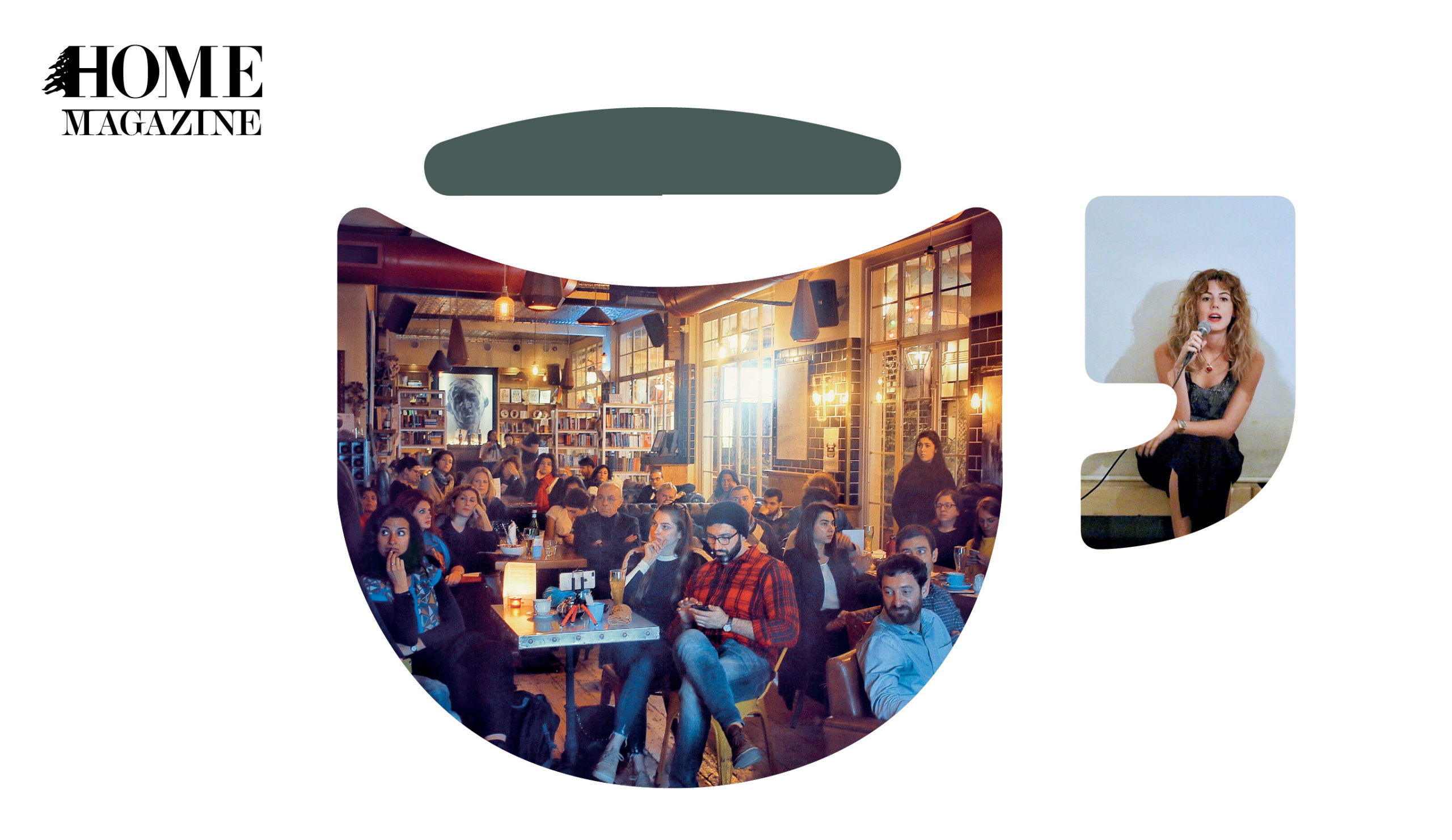
After the presentation, the discussion opens up to those present. Attendees are encouraged to voice their questions, observations, and reflections. The audience represents a melting pot of ideologies, ranging from leftist students to die-hard conservatives — a diversity that enriches the conversation since healthy political debate requires a plurality of opinions. “I personally find this part more interesting, like when I see a 60-year-old debate with someone in their mid-20s. I also like it when a member of the hezb shows up because I know that it will add another dimension to the conversation,” says Nehme. While English dominated the earlier discussions, it excluded some from participating. “I feel like I need to re-appropriate Arabic culture and language,” says Nehme, who has since switched to Arabic.
Beyond Beirut, Coffee & Politics has cropped up in Bekaa, Metn, and Tripoli. “Each place has a different crowd and interests,” says Nehme. She is pushing for the gathering to also form in Paris as Nehme would like to tap into the sizeable Lebanese diaspora living there. “I want this to be a platform that is open for all and to bring politics back to the people,” says Nehme.
For more info: https://www.facebook.com/coffeeandpoliticslb/
HOMEland
Coming Soon
HOMEland Events & Collaborations
Coming Soon
 Signature Boutique
 Signature Boutique


Speaking Truth to Power: Pierre Sadek Foundation