Dualities: Engineer By Day, Actor By Night – Mohammad N. ElBsat Explores His Potential
By day a principal engineer at Johnson Controls, by night a stage actor — Mohammad ElBsat lives two lives, rooted in Lebanon.

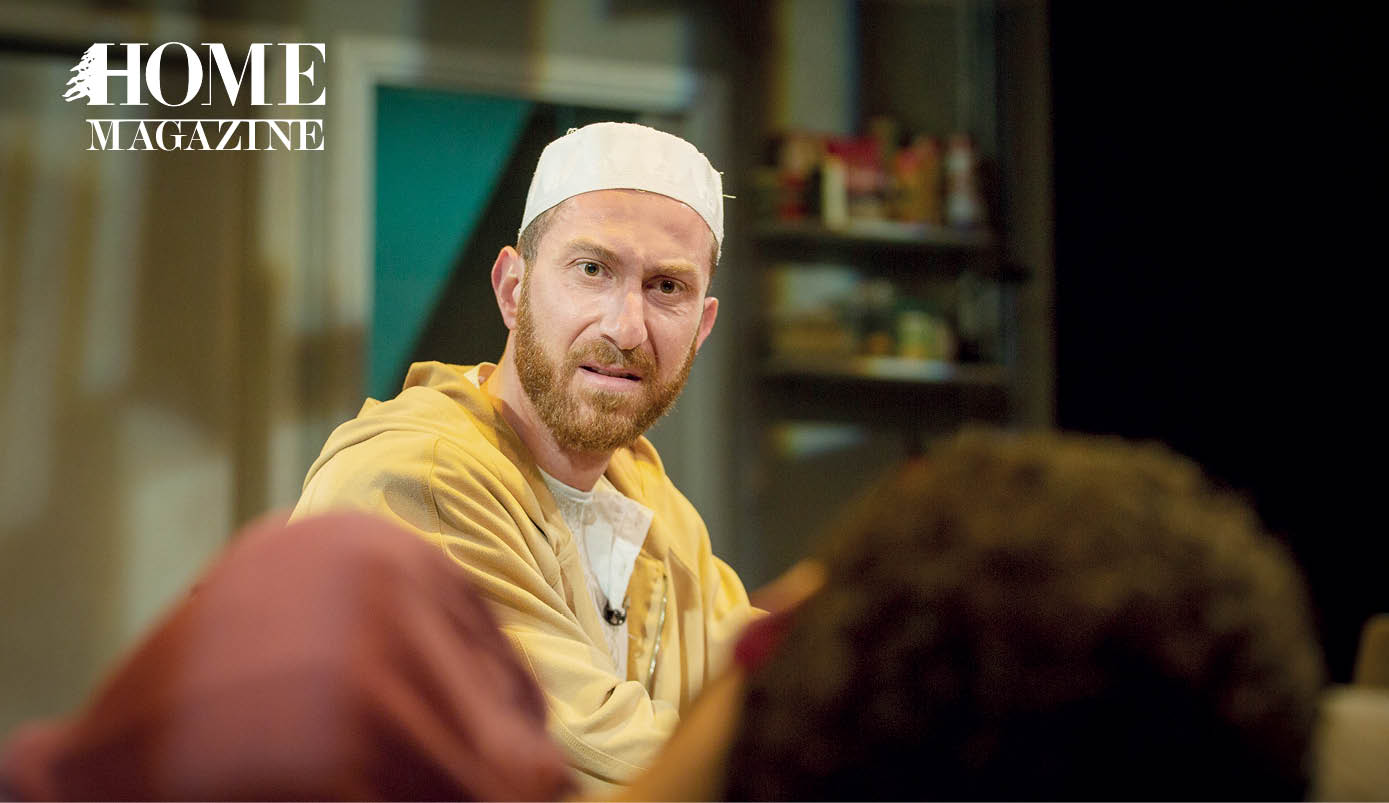
A principal engineer in a multinational corporation by day, a professional actor by night, Mohammad N. ElBsat leads two lives simultaneously.
Article by: Hailey Danielle
Photo by: Matt J. Asmus
In 2006, Mohammad N. ElBsat traveled from Saida, Lebanon, to the Midwest United States for graduate studies in electrical engineering at Marquette University. Soon he noticed his fellow students had negative perceptions of Lebanon. His solution — invite everyone to dinner.
“My main goal was to educate people about Lebanon and the culture I was raised in. I wanted to show people that Lebanon was not unbearable!” said ElBsat.
ElBsat contacted Marquette’s Office of International Education and proposed hosting “Lebanese Nights.” Filled with Lebanese cuisine and entertainment, ElBsat’s annual Lebanese Nights proved popular and became an ongoing university tradition.
Awarded a doctorate degree in electrical engineering in 2012, ElBsat soon found work in the corporate headquarters of Johnson Controls, a multinational conglomerate recognized as a global leader in building products and technology, integrated solutions, energy storage and transportation.
During his Ph.D. studies, he also discovered the stage.
ElBsat’s life is characterized by its dualities. He is a proud Lebanese immigrant who feels he fits well in American culture. And he divides his time, almost exactly in half, between his corporate work and acting.
“During his Ph.D. studies, he also discovered the stage.”
By day, ElBsat works as a principal engineer, designing and developing algorithms; at night, he is in a theater, rehearsing or performing.
In every production he is in, ElBsat hosts Lebanese dinners for his castmates. And his fellow corporate colleagues have had their share as well.
“I found myself in America, and even more when I started acting,” said ElBsat. “Moving to the U.S. made me grow as a person; I became a proud Lebanese immigrant.”
ElBsat was born and raised in Saida, Lebanon. While attending the Evangelical Institute for Girls and Boys, he knew what he had to do to be successful.
“Growing up, my uncle represented my perception of what success is,” said ElBsat. “He is an engineer with a Ph.D. who found success in America. As a child, I had dreams to come to the United States; so that is what I decided to do.”
After graduating at the top of his class in high school, ElBsat studied engineering at the Lebanese University, where qualifying to attend is very competitive. “Going to the Lebanese University was a privilege, but my main goal was to work hard, graduate and move to America to get a master’s degree,” he said.
Two hours before the cease-fire of the July War in Lebanon in 2006, ElBsat traveled from Beirut to Damascus, Syria, to catch a plane to the United States. “My family was concerned for me because I was on the road before the ceasefire took effect. They didn’t know how safe it would be, but you could say I was determined to pursue my goals,” said ElBsat. “And as the only son, given our culture, they didn’t want me to be far away from them, but at the same time, they wanted the best for me.”

Mohammad N. ElBsat as Asfoor in Next Act Theatre’s “Back of the Throat”
Photo by: Timothy Moder
ElBsat moved to Milwaukee, the largest city in Wisconsin, an hour and a half on the highway north of Chicago. There he began graduate school at Marquette University, a prominent private Jesuit university.
After the first two years of studying and building a community of friends, he began to worry about losing his sense of identity. “It is easy to get lost and lose your identity when you move to a new place,” he said. “Cooking is one way I stay connected to Lebanon.”
In 2008, ElBsat attended Marquette University’s production of “Winter’s Tale.” He met the director Maureen Kilmurry, and that later led to an audition. “I had zero experience as an actor, but I had an interest in theatre,” said ElBsat.
He decided to take a four-weekend acting class. After that he auditioned for a role in the play “The Cherry Orchard.”
ElBsat won the roles of the servant and station master, and his love of acting began to grow. Since then, he has worked regularly in theaters in Milwaukee while completing his doctorate and beginning his professional career.
He was recently an understudy in the production of “The Who & The What” at the Milwaukee Rep, the top theater in Milwaukee.
“Acting helped me explore more of who I was and who I was becoming,” he said. “Working in theater made me less shy and introduced me to so many people I call friends,” added ElBsat. “I have grown in my communication skills and channel that strength when I work at Johnson Controls.”
At Johnson Controls, ElBsat is also making his mark. In 2016, he was granted two U.S. patents relating to reducing uncertainty in energy use models, and currently has over eight pending patents in the energy efficiency and central plant optimization fields. He was an integral part of the Enterprise Optimization Solution (EOS) developed by Johnson Controls to optimize the central energy facility at Stanford University. As part of the EOS team, he received the JCI Chairman’s Award. Currently, ElBsat is helping commission EOS at Kent State University.
“I constantly push myself outside my comfort zone. It is the only way to know what my potential is.”
Maintaining these two careers is not easy. ElBsat’s day begins at 7:15 a.m. with his corporate hat on and ends at 10 p.m. in costume. He said working as an engineer and as an actor brings a level of productivity and hard work that is exhilarating. “As an expat, I had to work harder than others to prove myself in a foreign country,” he said. “This feeling is also what has driven me over the past years.
“I am still discovering who I am. I don’t think that ever ends,” said ElBsat. “I constantly push myself outside of my comfort zone. It is the only way to know what my potential is.”

 Signature Boutique



Speaking Truth to Power: Pierre Sadek Foundation