
Hummus, refugees, New York City, food and HOME. Eat Offbeat is all that and more.
Since November 2015 Eat Offbeat has been challenging New Yorkers taste buds with a new food fare that covers a range of cuisines and traditional dishes that only refugee chefs from Syria, Iraq, Eritrea and Nepal could make. For these refugee chefs, HOME is associated with homemade food, and at Eat Offbeat they’ve been generously sharing it with others. New Yorkers who’ve eaten Eat Offbeat at private parties or business functions have come back for more and more.

It all started when Manal Kahi and her brother Wissam Kahi couldn’t find hummus that tasted anything remotely close to what grandma makes back HOME in Lebanon. Manal started making her own homemade chickpea dip based on her grandma’s recipe. It became all the rage at dinner parties, and among colleagues and friends. Wissam insisted that Manal’s amazing hummus should be marketed.
There was something else that weighed on Manal’s conscience more than the lack of good hummus in New York. “In 2013, when I left Lebanon to start my masters degree at Columbia, the Syrian refugee crisis had hit its peak. I had always felt that I wanted to do something about it. I had to do something,” explains Manal. Seeing the necessity of homemade food and doing something to help refugees inspired Manal and Wissam to realize Eat Offbeat. “Instead of just making hummus we thought that we could introduce a variety of foods,” says Manal. “That’s when we thought of employing refugees as chefs.” Eat Offbeat’s food service provides a variety of cuisines to parties of ten or more people. It affiliates with the International Rescue Committee of New York in order to seek outpotential employees, refugees who cook traditional food and more importantly who are passionate about cooking. “Because refugees have no HOME to go back to, food is an important connection to their HOME,” says Manal. Working as chefs, refugees have an opportunity to share a part of themselves and their culture. It also provides them with a steady income and helps them adjust to their newly adopted HOME.
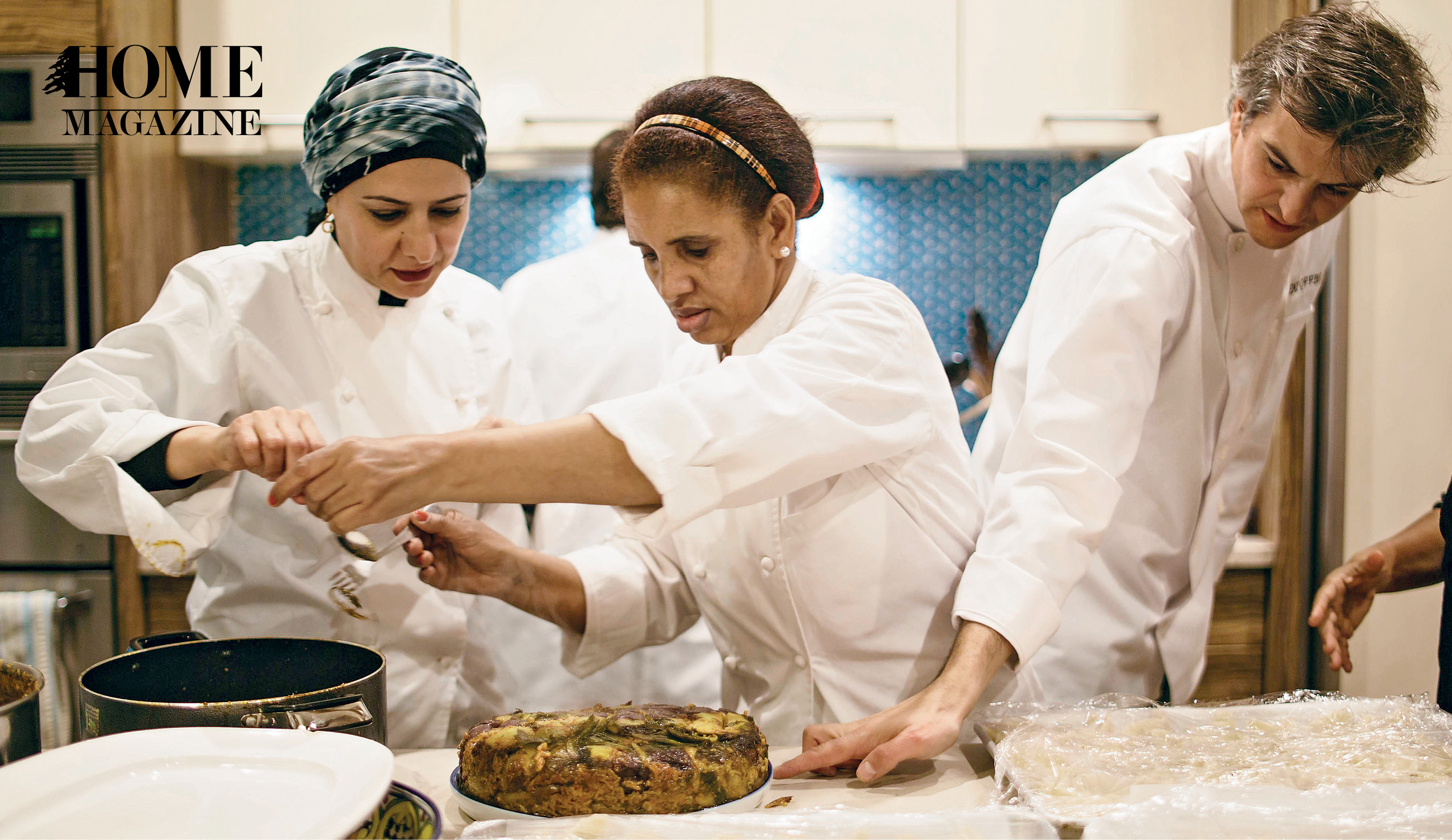

The refugee chefs and Juan Suarez de Lezo, a three star Michelin chef, and third partner in Eat Offbeat, make the kitchen come alive with upbeat activity and savory aromas. While chefs create the traditional dishes Juan guides them on how to work and function in a larger kitchen generating larger portions. “Juan makes minor adjustments to the dishes, making sure the flavors are balanced, and ensuring that they’re appropriate for large parties,” relates Manal. She compares walking into Eat Offbeat’s kitchen to preparing for a Sunday meal in Lebanon. She admits that it’s sometimes stressful because of the number of orders but the vibe is always positive.
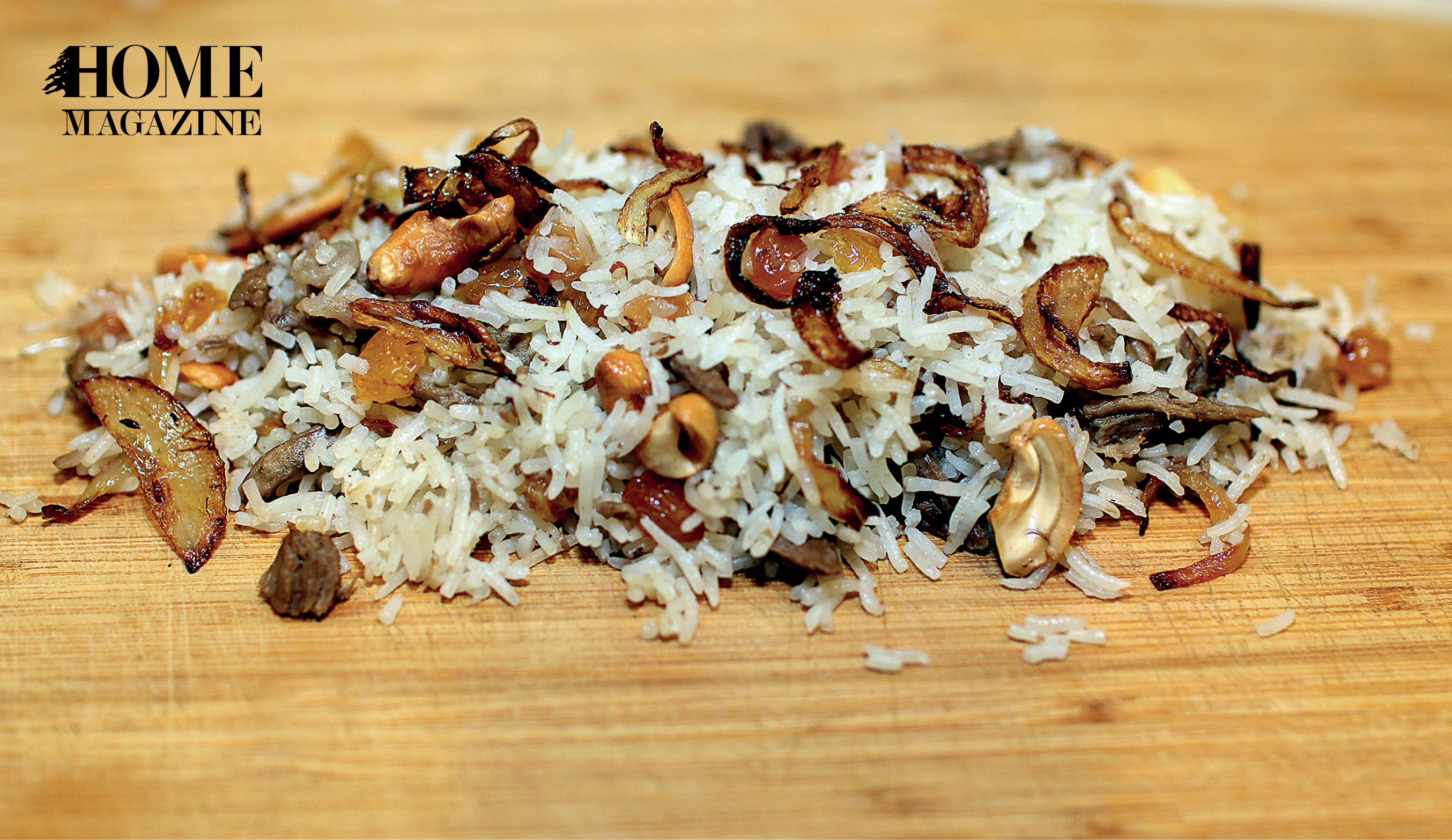
Manal and Wissam realize that New Yorkers actually benefit most from this culinary cultural experience. New York was a great birthplace for Eat Offbeat because it is an epicenter for cultural and culinary diversity. No restaurant, caterer or food service in New York offers such a variety of authentic homemade dishes. Eat Offbeat started out as an endeavour to help refugees but became a refuge for people who love good food and aren’t afraid to try new fare. “People come to Eat Offbeat because of the mission but those who come back always come back for the food.” Some of the most popular dishes are Iraqi deep fried Potato Kibbe stuffed with meat, Manchurian a Nepalese dish of fried cauliflower with sweet sauce, and an Armenian Iraqi salad made of bulgur, tomato and drizzled with pomegranate syrup. Hummus and Tabbouleh are requested at almost every meal served. “When I see the hummus, tabbouleh, kibbe and bulgur I’m reminded of HOME,” admits Manal, “but to be totally honest, when I walk into the kitchen at Eat Offbeat I am at home. This is my HOME.”
[instalink id=”18″]
Although Eat Offbeat is still in its early stages, its business is in full bloom, and is expected to blossom even more. Manal, Wissam, Juan and the Eat Offbeat team are looking to gain a stronger foothold in New York, and define a clear model for the company. Once that is accomplished then Eat Offbeat will likely branch out to other cities where foodies and adventurous eaters dwell.
To find out more about Eat Offbeat or place an order visit their website: eatoffbeat.com

HOMEland Magazine
We firmly believe that the internet should be available and accessible to anyone, and are committed to providing a website that is accessible to the widest possible audience, regardless of circumstance and ability.
To fulfill this, we aim to adhere as strictly as possible to the World Wide Web Consortium’s (W3C) Web Content Accessibility Guidelines 2.1 (WCAG 2.1) at the AA level. These guidelines explain how to make web content accessible to people with a wide array of disabilities. Complying with those guidelines helps us ensure that the website is accessible to all people: blind people, people with motor impairments, visual impairment, cognitive disabilities, and more.
This website utilizes various technologies that are meant to make it as accessible as possible at all times. We utilize an accessibility interface that allows persons with specific disabilities to adjust the website’s UI (user interface) and design it to their personal needs.
Additionally, the website utilizes an AI-based application that runs in the background and optimizes its accessibility level constantly. This application remediates the website’s HTML, adapts Its functionality and behavior for screen-readers used by the blind users, and for keyboard functions used by individuals with motor impairments.
If you’ve found a malfunction or have ideas for improvement, we’ll be happy to hear from you. You can reach out to the website’s operators by using the following email
Our website implements the ARIA attributes (Accessible Rich Internet Applications) technique, alongside various different behavioral changes, to ensure blind users visiting with screen-readers are able to read, comprehend, and enjoy the website’s functions. As soon as a user with a screen-reader enters your site, they immediately receive a prompt to enter the Screen-Reader Profile so they can browse and operate your site effectively. Here’s how our website covers some of the most important screen-reader requirements, alongside console screenshots of code examples:
Screen-reader optimization: we run a background process that learns the website’s components from top to bottom, to ensure ongoing compliance even when updating the website. In this process, we provide screen-readers with meaningful data using the ARIA set of attributes. For example, we provide accurate form labels; descriptions for actionable icons (social media icons, search icons, cart icons, etc.); validation guidance for form inputs; element roles such as buttons, menus, modal dialogues (popups), and others. Additionally, the background process scans all the website’s images and provides an accurate and meaningful image-object-recognition-based description as an ALT (alternate text) tag for images that are not described. It will also extract texts that are embedded within the image, using an OCR (optical character recognition) technology. To turn on screen-reader adjustments at any time, users need only to press the Alt+1 keyboard combination. Screen-reader users also get automatic announcements to turn the Screen-reader mode on as soon as they enter the website.
These adjustments are compatible with all popular screen readers, including JAWS and NVDA.
Keyboard navigation optimization: The background process also adjusts the website’s HTML, and adds various behaviors using JavaScript code to make the website operable by the keyboard. This includes the ability to navigate the website using the Tab and Shift+Tab keys, operate dropdowns with the arrow keys, close them with Esc, trigger buttons and links using the Enter key, navigate between radio and checkbox elements using the arrow keys, and fill them in with the Spacebar or Enter key.Additionally, keyboard users will find quick-navigation and content-skip menus, available at any time by clicking Alt+1, or as the first elements of the site while navigating with the keyboard. The background process also handles triggered popups by moving the keyboard focus towards them as soon as they appear, and not allow the focus drift outside it.
Users can also use shortcuts such as “M” (menus), “H” (headings), “F” (forms), “B” (buttons), and “G” (graphics) to jump to specific elements.
We aim to support the widest array of browsers and assistive technologies as possible, so our users can choose the best fitting tools for them, with as few limitations as possible. Therefore, we have worked very hard to be able to support all major systems that comprise over 95% of the user market share including Google Chrome, Mozilla Firefox, Apple Safari, Opera and Microsoft Edge, JAWS and NVDA (screen readers).
Despite our very best efforts to allow anybody to adjust the website to their needs. There may still be pages or sections that are not fully accessible, are in the process of becoming accessible, or are lacking an adequate technological solution to make them accessible. Still, we are continually improving our accessibility, adding, updating and improving its options and features, and developing and adopting new technologies. All this is meant to reach the optimal level of accessibility, following technological advancements. For any assistance, please reach out to