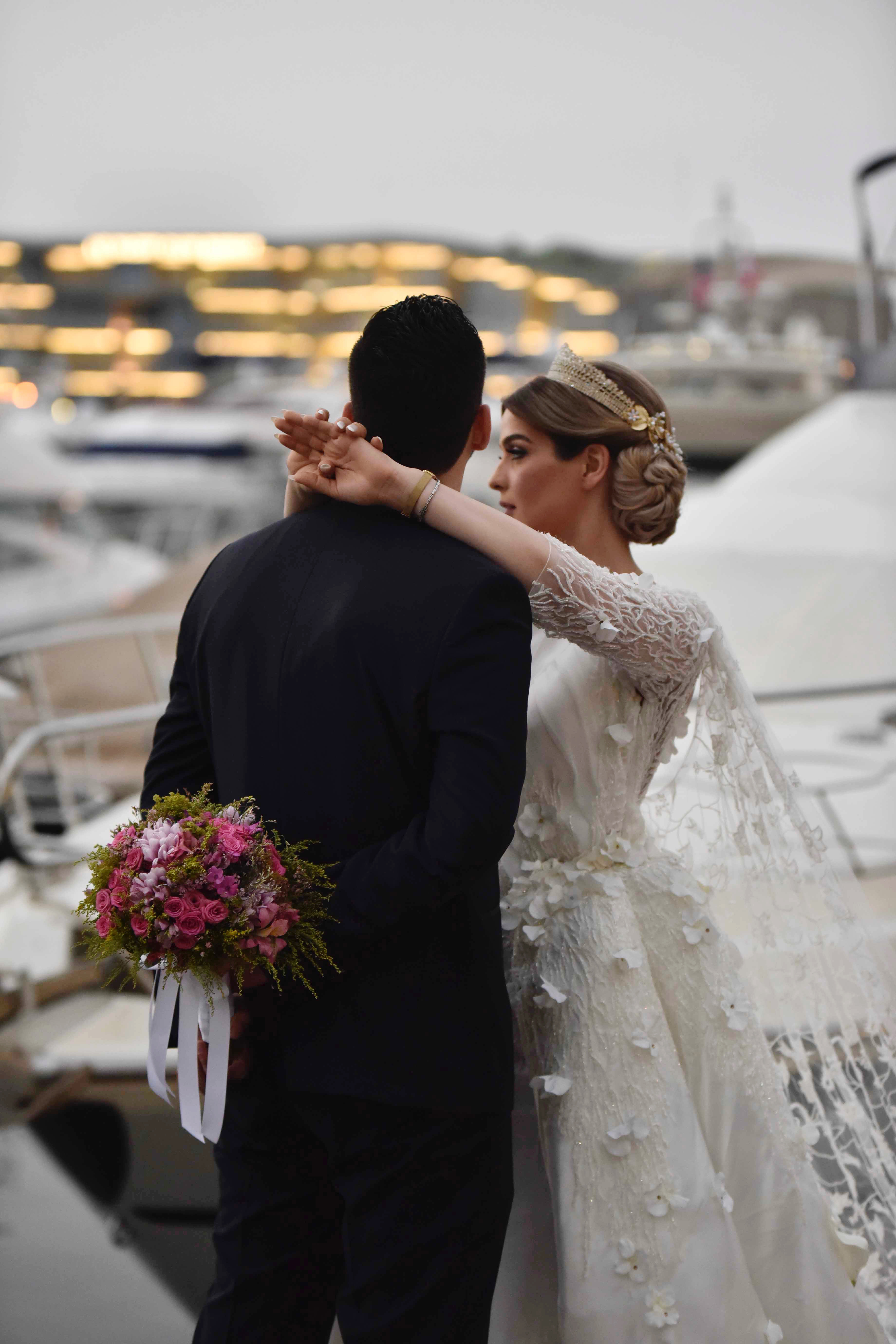
Three new brides share tips on finding the right dress for their Lebanese weddings.
Choosing the dress is a pivotal milestone in every bride’s journey toward her wedding, but it’s also one of the most challenging. Need advice on how to select a gown for your big day? You’ll learn some excellent firsthand tips from these new brides’ personal experiences.
Do your research
The heroine of our first story is Aisha Aleiou, a Syrian-American marketing and communications manager/ producer, who married her Lebanese husband, director Abdulaziz Kabalan, in August. Aisha met her future husband in her first year in Lebanon as a university student. After a five-year friendship, they began a three-year engagement so she could complete her master’s degree in international law at the University of London. She began her search for her wedding dress early on.
“I went to top-notch boutiques and made appointments with designer houses, doing research about two years before my wedding,” she told HOME.
“I tried on different styles of dresses of the highest quality so that I could see how the best dresses would look on my body. From that, I was able to decide what shapes I like and the ones that didn’t work for me.”
Aisha wasn’t planning to buy an expensive designer dress. This research helped her while she was searching for the right dress within her budget. After taking close friends and family on many “say-yes-to-the-dress” excursions, they all came back as nos. She ultimately decided to have her dress made.
“I liked both mermaid dresses and ball gowns, so I wanted a combination of these two,” Aisha said. “I had a skirt that clipped on top of my mermaid dress that I could remove during the reception.”
“We didn’t borrow any money for the wedding, so we came out feeling free.”
“I designed it, then went to different tailors to see their work and assess how our styles would merge. You can’t fight a tailor’s natural style; we had to be on the same page from the beginning.”
The ready-made bridal gowns Aisha found on the market were often too elaborate for her simple, elegant taste.
“I wanted something with long sleeves and an open back that had character, not just a white dress with a lot of beading just for the sake of it.
“Here in the Middle East, people tend to go bigger and shinier. They plan very expensive weddings that would make the average person go into debt. We wanted a big wedding, but decided to be smart about it. We didn’t want to have to pay it off for years. We didn’t borrow any money for the wedding, so we came out feeling free.”
In harmony with yourself
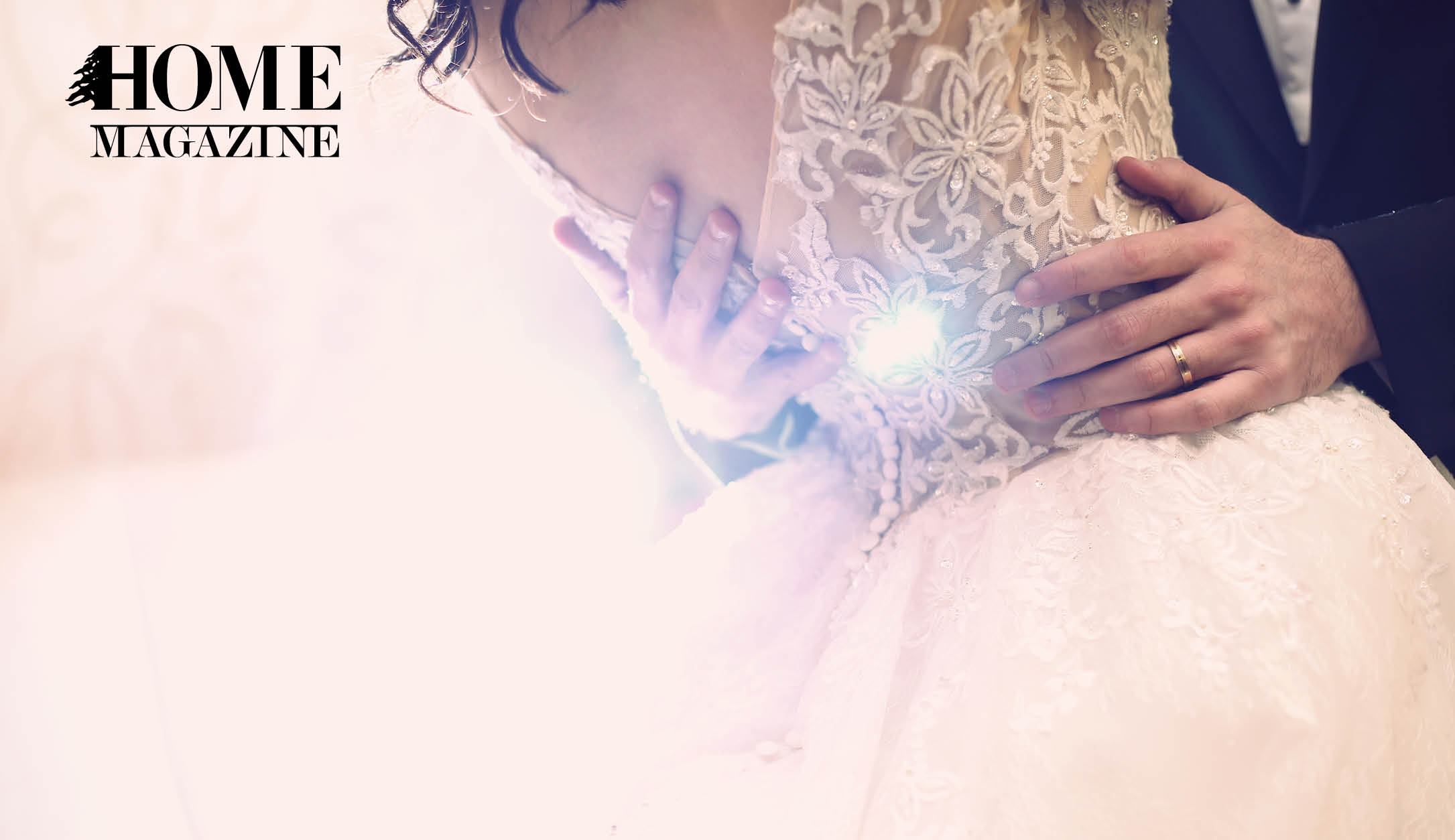
Dyana Makhoul, a clinical psychology graduate turned fashion designer, is preparing to tie the knot. She knows the importance of appearance as a tool of communication and self-expression.
“It is very important that the way the bride looks on her wedding day reflects her personality and showcases her own personal style,” she said. “I advise any bride to go for something she likes as opposed to following fashion trends. It allows her to express her identity and character.
“The bride should take her morphology into consideration, but this should not stop her from wearing what she likes either,” said Dyana. “At the end of the day, she’s not trying to be top model; she’s a bride enjoying her special day.”
At the same time, “the bride should not marginalize details such as the choice and quality of material; such things can make all the difference. And pay special attention to the neckline,” she advised. “It is the most important part of a wedding dress because it puts the face into perspective. It is the face, at the end of the day, that translates the bride’s identity more than the dress she is wearing. The dress should not be the star of the evening; it’s the bride herself who should shine.
“Don’t seek to please everyone. There will always be a percentage who will not like whatever it is you’re wearing, so no need to be preoccupied with other people’s opinions.”
When it comes to fittings, Dyana said, “don’t take 100 people along; it can be just you and someone to take photos.
And go early in the day,” she added, “as bridal shops are less crowded in the morning. You will be more relaxed and taken care of.”
Despite being a fashion designer herself, Dyana did not take long to choose a wedding dress. “I didn’t search too much. I picked one of the first ones I tried.
“What’s most important to me is for the bride to be happy with herself. Nothing is more essential.”
“No need to be preoccupied with other people’s opinions.”
It’s your day!
Our final story belongs to Mélissa Abdo, a 24-year-old senior accountant who recently married mobile app and game developer Tawa Nicolas. The couple initially met on Twitter. They had planned to marry in August; Mélissa bought a summer wedding dress for the occasion.
“Then Tawa got a job opportunity in Berlin and we had to do the wedding sooner,” she said. “Can you imagine pulling a wedding off in less than a month?”
The rescheduling left Mélissa in a rush to choose a new wedding dress – a winter one. “I always pictured the perfect wedding dress as one with lace sleeves and an open back, and that’s what I went for,” she said.
While such an unexpected move would be problematic to many, it turned out to be a blessing for Mélissa. “Now that I think about it, I’m so happy for the way things went because I was able to wear the dress I had always dreamed of.”
Her advice: “Wear what you love. After all, it’s your day!”
HOMEland THEMES
Coming Soon
HOMEland Events & Collaborations
Coming Soon
 Signature Boutique