
HOMEland
Coming Soon
HOMEland Events & Collaborations
Coming Soon
 Signature Boutique


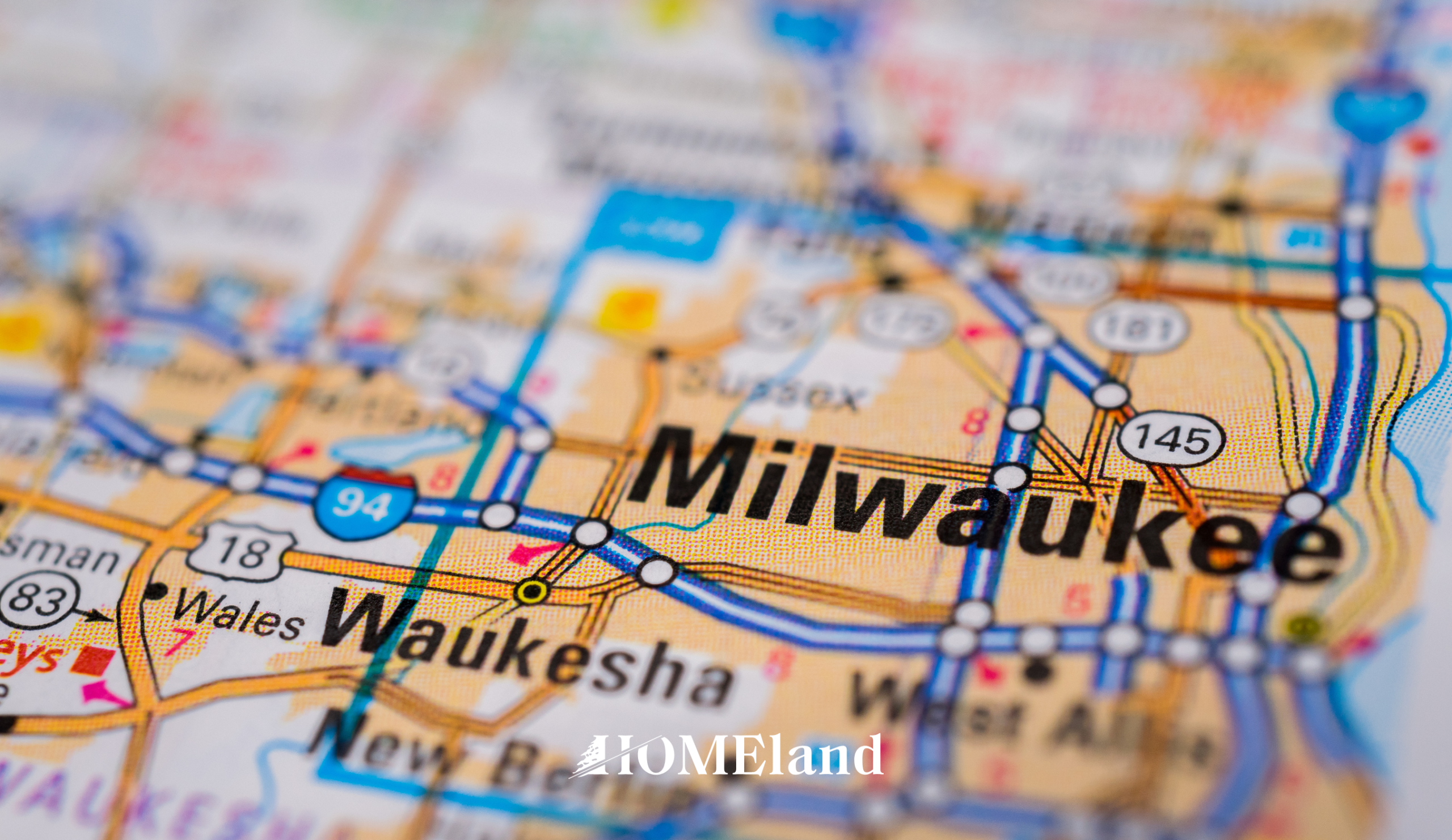
When Michel Bitar moved from east Beirut to Milwaukee, Wisconsin, U.S.A., in 1969 to go to the acclaimed Milwaukee School of Engineering, he found fellow Lebanese through the American Lebanese Syrian Club of Milwaukee and joined the club in 1971. (Early Lebanese immigrants to the U.S. called themselves Syrians.)
When it began in 1915, the Milwaukee lodge helped Lebanese immigrants get a start in a new country. “Now things have changed,” said Bitar. “We don’t have so many coming like we did in the early 20th century, except a few as students.”
“Our mission now is to help not only Lebanese coming to America – and we help them by providing scholarships – but to give back to the Milwaukee community and to those in need in the Middle East,” said Bitar, who has served as president of the Milwaukee lodge three times. Since the Lebanese have assimilated so well into mainstream American life, some families look to the club as a way of helping future generations maintain their Lebanese heritage, he added.
Similar Lebanese social organizations developed in every state in the United States. The chief purpose of these groups has been to unite the Lebanese American community, as well as those who appreciate Lebanese culture. The Milwaukee lodge’s current membership includes Palestinians, Iraqis, Lebanese and Syrians, in addition to American-born descendants of earlier immigrants.
Individual groups participate in regional conventions that bring together Lebanese Americans from several states for educational, charitable and social purposes. The Milwaukee lodge is part of the Midwest Federation of American Syrian Lebanese Clubs, Inc., which “is a non-political, social and fraternal organization which was organized to promote and preserve the ethnic heritage of its members, to advance the scholarship of its youth, and to support humanitarian causes.” Its newsletter is mailed to more than 2,000 families.
It convenes yearly at different sites throughout the Midwest. Prominent Lebanese-Americans such as the late Casey Kasem, the famous radio celebrity; former U.S. Secretary of Health and Human Services Donna Shalala; and the 10th U.S. Secretary of Energy Spencer Abraham have addressed its membership at annual conventions.
The Midwest Federation has awarded hundreds of undergraduate scholarships over its 80 years of existence. It has supported orphans in Lebanon and humanitarian efforts by the U.S. government in Lebanon and Palestine, as well as aiding the victims of the 9/11 disaster. It has intervened to protect the rights of its ethnic community and has promoted Lebanese culture through regional cultural activities, as well as local events planned by its member clubs in their respective cities.
The first big wave of Lebanese immigrated to the U.S. between 1881 and 1925. Most were from Mount Lebanon who suffered deprivation that peaked during World War I. They also feared persecution from Ottoman Turks. Many intended to return to Lebanon. They thought that, like their ancient ancestors, the Phoenicians, they would return with wealth from abroad for their families.
After entering through Ellis Island, they scattered throughout the country. Many became peddlers, selling door-to-door. Some moved to industrial centers like Milwaukee to work in factories. When the peddling profession began to fade by around 1910, the peddlers became small shop owners. Numerous shopkeepers went on to own bigger stores, becoming famous for their entrepreneurship. Two of the most successful Lebanese immigrants made their fortunes selling men’s apparel: Mansour Farah and Joseph Marion Haggar. Wherever Lebanese Americans went in the U.S. and whatever they did, a Lebanese Syrian Club was probably there, ready to support the new immigrants by helping them find jobs and accommodations.
Many of the second generation of Lebanese, born in America, became so successful in assimilating in American culture that the struggles they faced changed. For second and third generations, the challenge became how to maintain their Lebanese culture. Lebanese social organizations became tools to help keep traditions alive.
Maintaining a Lebanese Identity
Through regular meetings, charity work and social events, members of the American Lebanese Syrian Club maintained ties to their heritage and each other. Michel Bitar’s wife, Linda Bitar, is the current president of the Milwaukee lodge. Although she is of Polish and Swiss-German descent, she says she has long recognized Lebanese generosity and hospitality.
“I’m not really a joiner, but when Michel was president, I was impressed by the charity work – serving meals at the Milwaukee Rescue Mission and at the church, helping HOMEless people, collecting money for organizations serving the needy in Lebanon. This work is an important part of my life,” she said.
There are currently 36 members of the Milwaukee lodge, who hold eight business meetings a year, as well as two major social events: a summer picnic and a Christmas party. “The purpose of the lodge is charitable, educational and fraternal. We sponsor scholarships for children of members and do fundraising. We have a Sunshine Committee to visit members who are sick or injured and usually take them a gift. We are a very social group. We like to get together and have fun events,” she said.
Lebanese Americans have a lot to be proud of, say the Bitars. The problem is that Lebanese American youth are not all aware of the Lebanese’s many contributions to the world, including the alphabet, mathematics, astronomy, agriculture, calligraphy and many musical instruments.
Lebanese have also played important roles in U.S. Society. Some famous Lebanese-Americans include senators George Mitchell and Spencer Abraham; former White House Chief of Staff John H. Sununu; former Secretary of Health and Human Services Donna Shalala, former Dean of White House Press Corps Helen Thomas; consumer advocate Ralph Nader; and prominent heart surgeon Dr. Michael DeBakey.
Just about every major U.S. city has Lebanese restaurants that serve hummus, tabbouleh and other Lebanese dishes. And pita bread is becoming as common in American HOMEs as Italian loaves.
And two generations of Americans grew up in the 1950s and ’60s with Lebanese-American Danny Thomas as their model of an American father from his popular TV servies “Make Room for Daddy.” His daughter Marlo Thomas became “that Girl” for Americans growing up in the 1970s. The Thomas family’s role in establishing and continuing to support St. Jude’s Hospital in Memphis, Tennessee, a world-leading hospital in treating children’s diseases, is broadly acclaimed.
But not all the youth know or are as proud of their Lebanese heritage as they should be. “We haven’t been able to get them involved,” said Linda Bitar. “They are busy with their own lives.”
“Some of our members with children say one reason to participate is to keep the culture and heritage alive,” she added. Milwaukee has a famous Holiday Folk Fair. Dance troupes of Lebanese youth sometime participate, performing traditional Lebanese dance.
One underlying purpose of these social organizations has been to provide Lebanese American youth with a chance to meet other Lebanese Americans, said David Herro, a past president of the Syrian-Lebanese Midwest Federation Young Adult Network. His organization “was practically a dating service,” he said. Parents felt comfortable with relationships established through the Federation.
With Lebanese Americans now well established in the U.S., the American Lebanese Syrian Club of Milwaukee has turned its attention primarily to helping others.
Last year the club raised funds to help the Milwaukee Hunger Task Force. It also donates to SOS and to CNEWA, the Catholic Near East Welfare Association. “With the Iraq and Syrian wars, more people are suffering. We try to help,” said Michel Bitar. “I went to the Bekaa last year. There are plenty of refugees in great need. In 2014, the Milwaukee lodge held a very successful fundraiser to provide relief to Syrians seeking refuge in Lebanon. The funds went to the Red Cross and Save the Children to buy blankets, food and clothing.”
“We’ve also been in touch with the Coptic Church, to see how we can help,” he added. “We are not sectarian – whoever needs help, we are there.”
Signature Boutique
Lebanon, in your inbox

HOMEland Magazine
We firmly believe that the internet should be available and accessible to anyone, and are committed to providing a website that is accessible to the widest possible audience, regardless of circumstance and ability.
To fulfill this, we aim to adhere as strictly as possible to the World Wide Web Consortium’s (W3C) Web Content Accessibility Guidelines 2.1 (WCAG 2.1) at the AA level. These guidelines explain how to make web content accessible to people with a wide array of disabilities. Complying with those guidelines helps us ensure that the website is accessible to all people: blind people, people with motor impairments, visual impairment, cognitive disabilities, and more.
This website utilizes various technologies that are meant to make it as accessible as possible at all times. We utilize an accessibility interface that allows persons with specific disabilities to adjust the website’s UI (user interface) and design it to their personal needs.
Additionally, the website utilizes an AI-based application that runs in the background and optimizes its accessibility level constantly. This application remediates the website’s HTML, adapts Its functionality and behavior for screen-readers used by the blind users, and for keyboard functions used by individuals with motor impairments.
If you’ve found a malfunction or have ideas for improvement, we’ll be happy to hear from you. You can reach out to the website’s operators by using the following email
Our website implements the ARIA attributes (Accessible Rich Internet Applications) technique, alongside various different behavioral changes, to ensure blind users visiting with screen-readers are able to read, comprehend, and enjoy the website’s functions. As soon as a user with a screen-reader enters your site, they immediately receive a prompt to enter the Screen-Reader Profile so they can browse and operate your site effectively. Here’s how our website covers some of the most important screen-reader requirements, alongside console screenshots of code examples:
Screen-reader optimization: we run a background process that learns the website’s components from top to bottom, to ensure ongoing compliance even when updating the website. In this process, we provide screen-readers with meaningful data using the ARIA set of attributes. For example, we provide accurate form labels; descriptions for actionable icons (social media icons, search icons, cart icons, etc.); validation guidance for form inputs; element roles such as buttons, menus, modal dialogues (popups), and others. Additionally, the background process scans all the website’s images and provides an accurate and meaningful image-object-recognition-based description as an ALT (alternate text) tag for images that are not described. It will also extract texts that are embedded within the image, using an OCR (optical character recognition) technology. To turn on screen-reader adjustments at any time, users need only to press the Alt+1 keyboard combination. Screen-reader users also get automatic announcements to turn the Screen-reader mode on as soon as they enter the website.
These adjustments are compatible with all popular screen readers, including JAWS and NVDA.
Keyboard navigation optimization: The background process also adjusts the website’s HTML, and adds various behaviors using JavaScript code to make the website operable by the keyboard. This includes the ability to navigate the website using the Tab and Shift+Tab keys, operate dropdowns with the arrow keys, close them with Esc, trigger buttons and links using the Enter key, navigate between radio and checkbox elements using the arrow keys, and fill them in with the Spacebar or Enter key.Additionally, keyboard users will find quick-navigation and content-skip menus, available at any time by clicking Alt+1, or as the first elements of the site while navigating with the keyboard. The background process also handles triggered popups by moving the keyboard focus towards them as soon as they appear, and not allow the focus drift outside it.
Users can also use shortcuts such as “M” (menus), “H” (headings), “F” (forms), “B” (buttons), and “G” (graphics) to jump to specific elements.
We aim to support the widest array of browsers and assistive technologies as possible, so our users can choose the best fitting tools for them, with as few limitations as possible. Therefore, we have worked very hard to be able to support all major systems that comprise over 95% of the user market share including Google Chrome, Mozilla Firefox, Apple Safari, Opera and Microsoft Edge, JAWS and NVDA (screen readers).
Despite our very best efforts to allow anybody to adjust the website to their needs. There may still be pages or sections that are not fully accessible, are in the process of becoming accessible, or are lacking an adequate technological solution to make them accessible. Still, we are continually improving our accessibility, adding, updating and improving its options and features, and developing and adopting new technologies. All this is meant to reach the optimal level of accessibility, following technological advancements. For any assistance, please reach out to
