Photo by Charalampos Tsirmpas
From Lebanon to San Francisco, Hind Hobeika has evolved from a young passionate swimmer to a mature entrepreneur.
Ten years of hard work and commitment did not do Hind Hobeika wrong. Over those years, she accepted the mistakes she made, pulled out the lessons she learned and worked harder on fulfilling her dream: Instabeat. When she first pitched her idea of creating smart goggles for swimmers, she was only 19 years old. Today, she is selling her product for the first time, at age 31.
Has she ever given up or hated her job?
Never.
She did this by committing not only to her dream and her passion for swimming, but also to her team, investors and clients who believed in her.
A few weeks ago Hobeika released the Instabeat into the market. Her product is what professional swimmers have been waiting for to make the most of their workout.
The name of the product is an abbreviation of the longer term, instantaneous heartbeat. Putting it in Hobeika’s words, Instabeat is “a real time heart rate trainer for swimming.” She adds, “It’s the only device that can mount on your goggles and give you a real time indication of your heart rate so that you can manage your performance and optimize your training.”
Hobeika’s idea was always fueled by her passion to swimming. As a professional swimmer, she felt the need for a tool that could count her heartbeats — rather than counting them manually — without having to wear an extra accessory on her body. So, she decided to participate in the famous science competition TV program in the Arab world, “Stars of Science,” where she was able to develop the first prototype for Instabeat. Shortly after, Hobeika registered the intellectual property of Instabeat and founded her company at 21. Back then, she was a fresh graduate from the American University of Beirut with a bachelor in mechanical engineering.
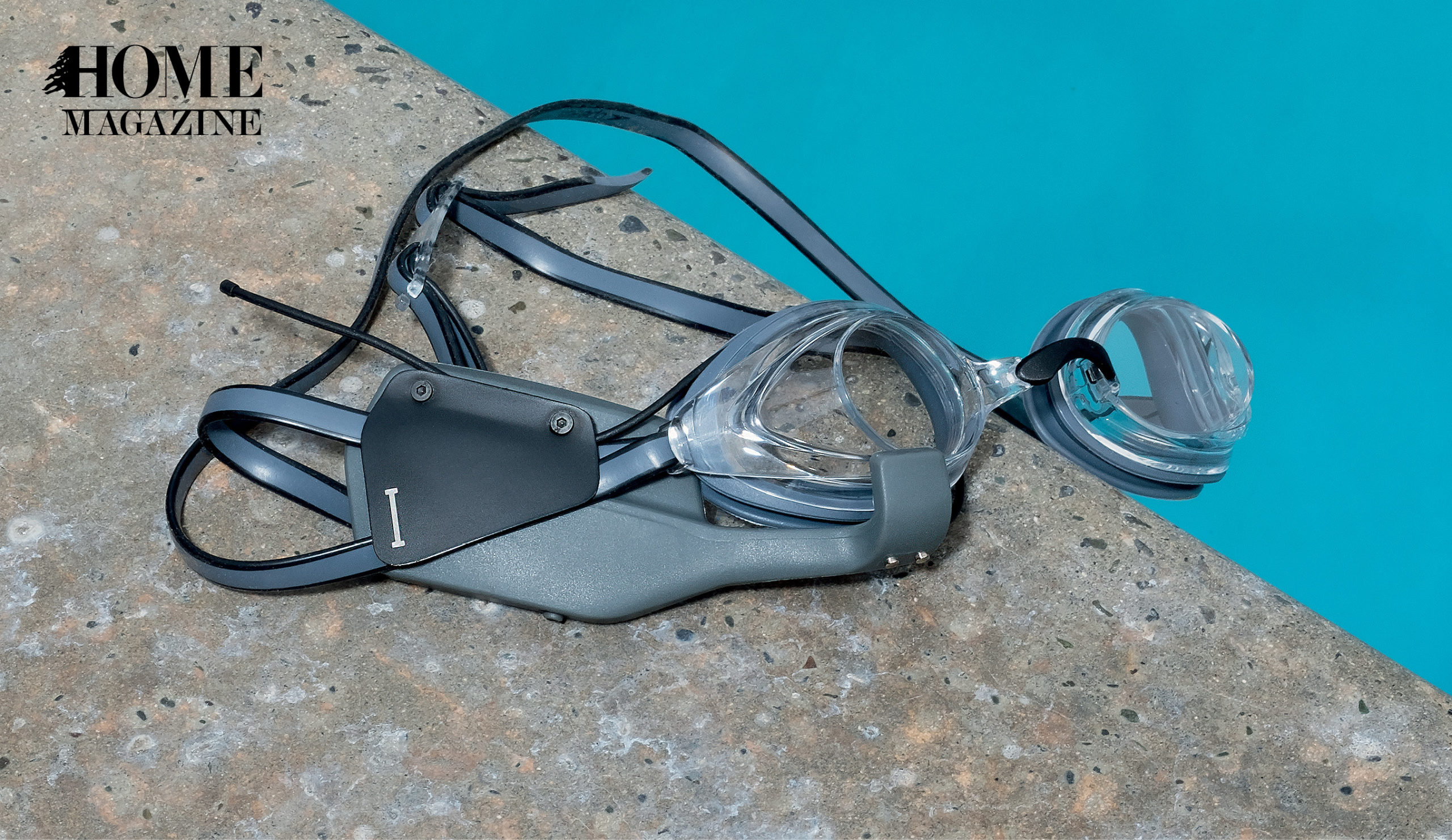
Photo by Sahra Jajarmikhayat
Starting her own business at a young age was everything but easy. She faced several obstacles and had to adjust accordingly. “Hiring people, raising money, developing the application and the website and creating the design and the packaging were all very challenging projects that I had to manage for the first time,” says Hobeika. So, how was she able to overcome difficulties?
“The first step is always to try,” says Hobeika. “The second step is to learn from the mistakes because there will always be an enormous number of those. Then, you need to find supportive mentors because mentorship is very important. I would say I had access to really resourceful ones who helped me at each step of the way.” She adds, “You also need to be around friends who share same interests and ideally who are running their own startups in a similar space.”
During her ongoing journey, Hobeika learned what it is to be resilient. She considers resilience as one of her fundamental keys to success. “You need to have the right attitude to keep trying after each and every mistake,” says Hobeika.
Part of this, according to Hobeika, is also to be wise enough to choose whose advice to take. “Don’t accept advice from anyone. Go only to people that you look up to and who have been successful in the industry,” she says.
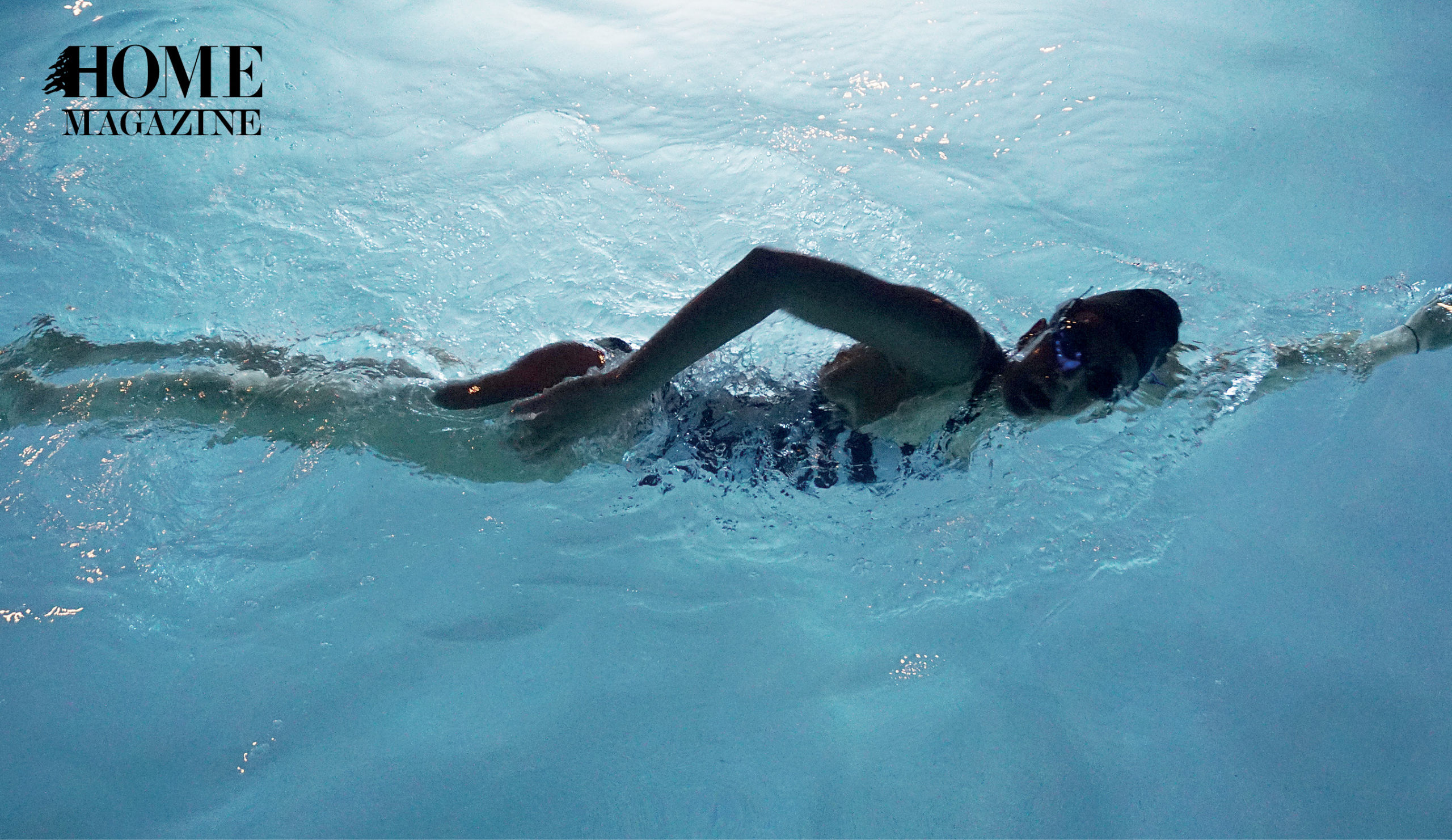
Over the past years, Hobeika has dedicated her swimming to test Instabeat goggles as a user. As she has given all her time to Instabeat, swimming has become part of her job.
She resorts to other types of exercise, like yoga, to escape daily stress.
Today, she manages a team of 10 people from her office in San Francisco, California, which is a hotbed of startups.
Her plans for the future revolve around selling Instabeat globally and developing the best versions of the product, over and over again. “I’m passionate about swimming, and I hope that through Instabeat more people will end up swimming or will enjoy swimming more” she ends with a smile.
[instalink id=”22″]
For more info:
https://www.instagram.com/myinstabeat/
https://www.facebook.com/myinstabeat/

HOMEland Magazine
We firmly believe that the internet should be available and accessible to anyone, and are committed to providing a website that is accessible to the widest possible audience, regardless of circumstance and ability.
To fulfill this, we aim to adhere as strictly as possible to the World Wide Web Consortium’s (W3C) Web Content Accessibility Guidelines 2.1 (WCAG 2.1) at the AA level. These guidelines explain how to make web content accessible to people with a wide array of disabilities. Complying with those guidelines helps us ensure that the website is accessible to all people: blind people, people with motor impairments, visual impairment, cognitive disabilities, and more.
This website utilizes various technologies that are meant to make it as accessible as possible at all times. We utilize an accessibility interface that allows persons with specific disabilities to adjust the website’s UI (user interface) and design it to their personal needs.
Additionally, the website utilizes an AI-based application that runs in the background and optimizes its accessibility level constantly. This application remediates the website’s HTML, adapts Its functionality and behavior for screen-readers used by the blind users, and for keyboard functions used by individuals with motor impairments.
If you’ve found a malfunction or have ideas for improvement, we’ll be happy to hear from you. You can reach out to the website’s operators by using the following email
Our website implements the ARIA attributes (Accessible Rich Internet Applications) technique, alongside various different behavioral changes, to ensure blind users visiting with screen-readers are able to read, comprehend, and enjoy the website’s functions. As soon as a user with a screen-reader enters your site, they immediately receive a prompt to enter the Screen-Reader Profile so they can browse and operate your site effectively. Here’s how our website covers some of the most important screen-reader requirements, alongside console screenshots of code examples:
Screen-reader optimization: we run a background process that learns the website’s components from top to bottom, to ensure ongoing compliance even when updating the website. In this process, we provide screen-readers with meaningful data using the ARIA set of attributes. For example, we provide accurate form labels; descriptions for actionable icons (social media icons, search icons, cart icons, etc.); validation guidance for form inputs; element roles such as buttons, menus, modal dialogues (popups), and others. Additionally, the background process scans all the website’s images and provides an accurate and meaningful image-object-recognition-based description as an ALT (alternate text) tag for images that are not described. It will also extract texts that are embedded within the image, using an OCR (optical character recognition) technology. To turn on screen-reader adjustments at any time, users need only to press the Alt+1 keyboard combination. Screen-reader users also get automatic announcements to turn the Screen-reader mode on as soon as they enter the website.
These adjustments are compatible with all popular screen readers, including JAWS and NVDA.
Keyboard navigation optimization: The background process also adjusts the website’s HTML, and adds various behaviors using JavaScript code to make the website operable by the keyboard. This includes the ability to navigate the website using the Tab and Shift+Tab keys, operate dropdowns with the arrow keys, close them with Esc, trigger buttons and links using the Enter key, navigate between radio and checkbox elements using the arrow keys, and fill them in with the Spacebar or Enter key.Additionally, keyboard users will find quick-navigation and content-skip menus, available at any time by clicking Alt+1, or as the first elements of the site while navigating with the keyboard. The background process also handles triggered popups by moving the keyboard focus towards them as soon as they appear, and not allow the focus drift outside it.
Users can also use shortcuts such as “M” (menus), “H” (headings), “F” (forms), “B” (buttons), and “G” (graphics) to jump to specific elements.
We aim to support the widest array of browsers and assistive technologies as possible, so our users can choose the best fitting tools for them, with as few limitations as possible. Therefore, we have worked very hard to be able to support all major systems that comprise over 95% of the user market share including Google Chrome, Mozilla Firefox, Apple Safari, Opera and Microsoft Edge, JAWS and NVDA (screen readers).
Despite our very best efforts to allow anybody to adjust the website to their needs. There may still be pages or sections that are not fully accessible, are in the process of becoming accessible, or are lacking an adequate technological solution to make them accessible. Still, we are continually improving our accessibility, adding, updating and improving its options and features, and developing and adopting new technologies. All this is meant to reach the optimal level of accessibility, following technological advancements. For any assistance, please reach out to