
A devoted NGO works behind the scenes to build Lebanon’s mental health infrastructure – with legislation, awareness campaigns, advocacy, education, training, care services and, supporting it all, research.
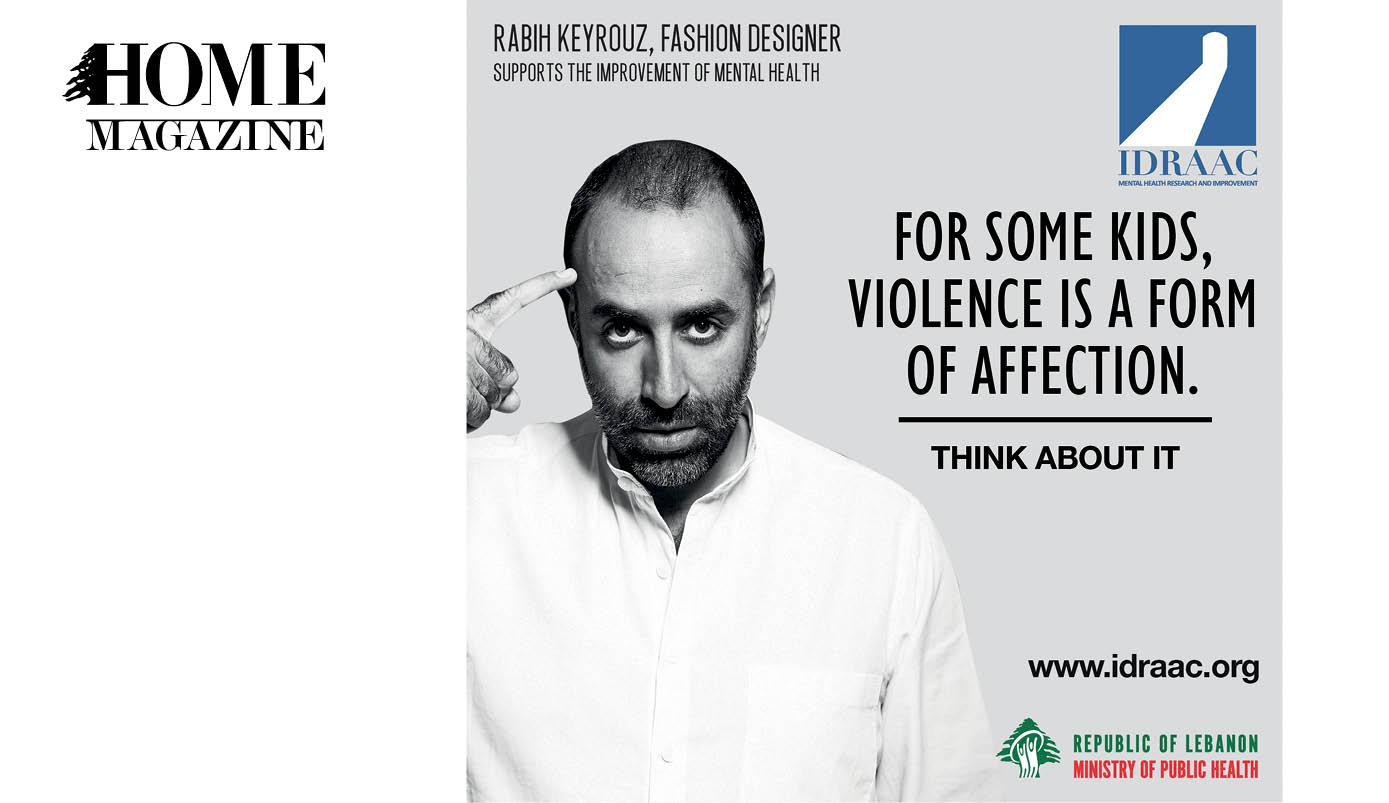
One in four Lebanese will have a mental illness, during their lifetime, according to a 2008 L.E.B.A.N.O.N. (Lebanese Evaluation of the Burden of Ailments and Needs Of the Nation) study, the only national study in Lebanon on mental health. This shocking statistic is within global norms, with 25 percent of people worldwide experiencing mental illness — it’s not just the Lebanese. In fact, there are some very positive statistics. Lebanon has one of the lowest suicide rates in the world, number 195 out of 200 countries.
“The L.E.B.A.N.O.N. study shows 90 percent of Lebanese with mental illness are not treated, compared to 40 percent in the United States and Europe.”
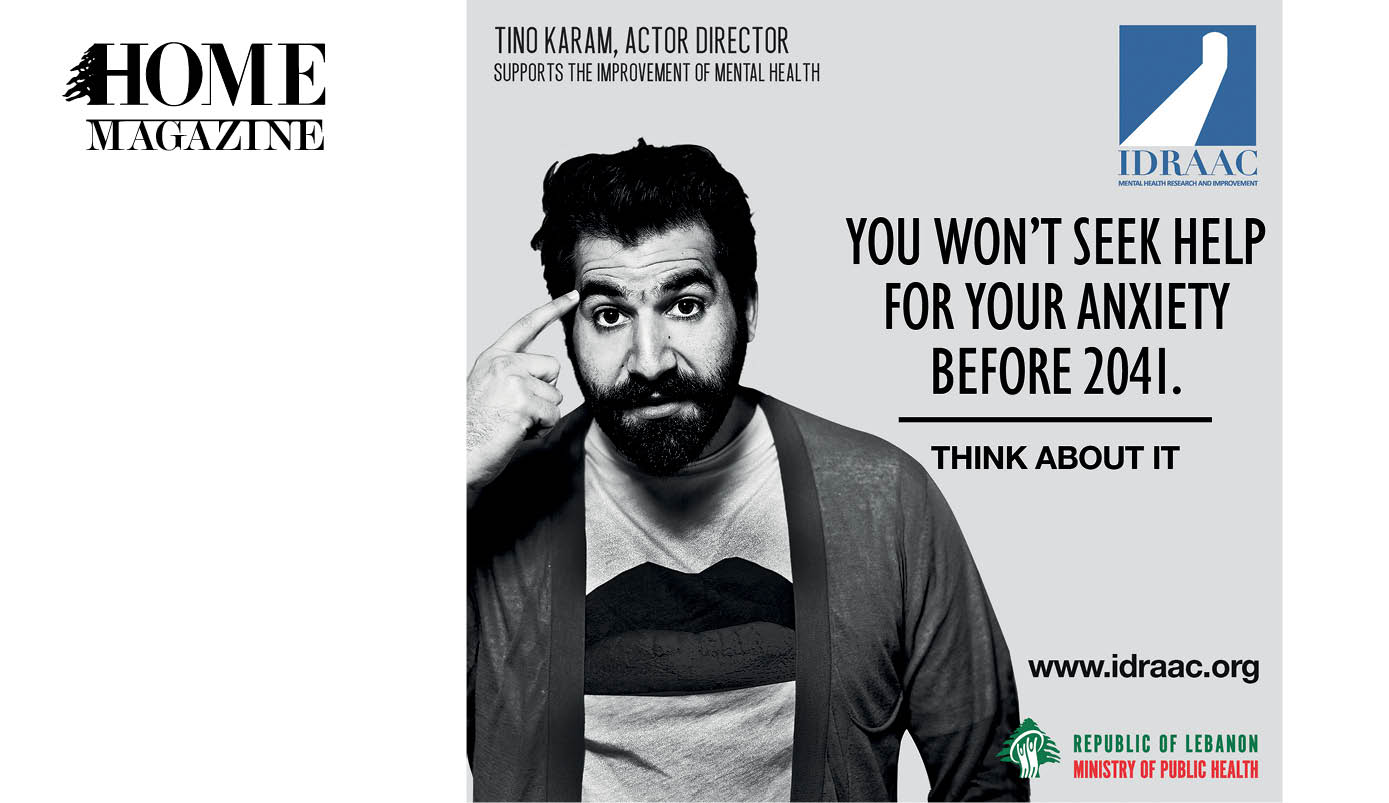
What is exceptional in Lebanon is how few of the people who need help seek treatment, said George S. Karam, M.D., an adult and geriatric psychiatrist, in an interview in his office at St. George Hospital in Ashrafieh. The L.E.B.A.N.O.N. study shows 90 percent of Lebanese with mental illness are not treated, compared to 40 percent in the United States and Europe. It is not for lack of available care, said Dr. Karam. Nor is it because the topic is taboo in Lebanon. The reason, he said, is lack of awareness and, perhaps, denial.
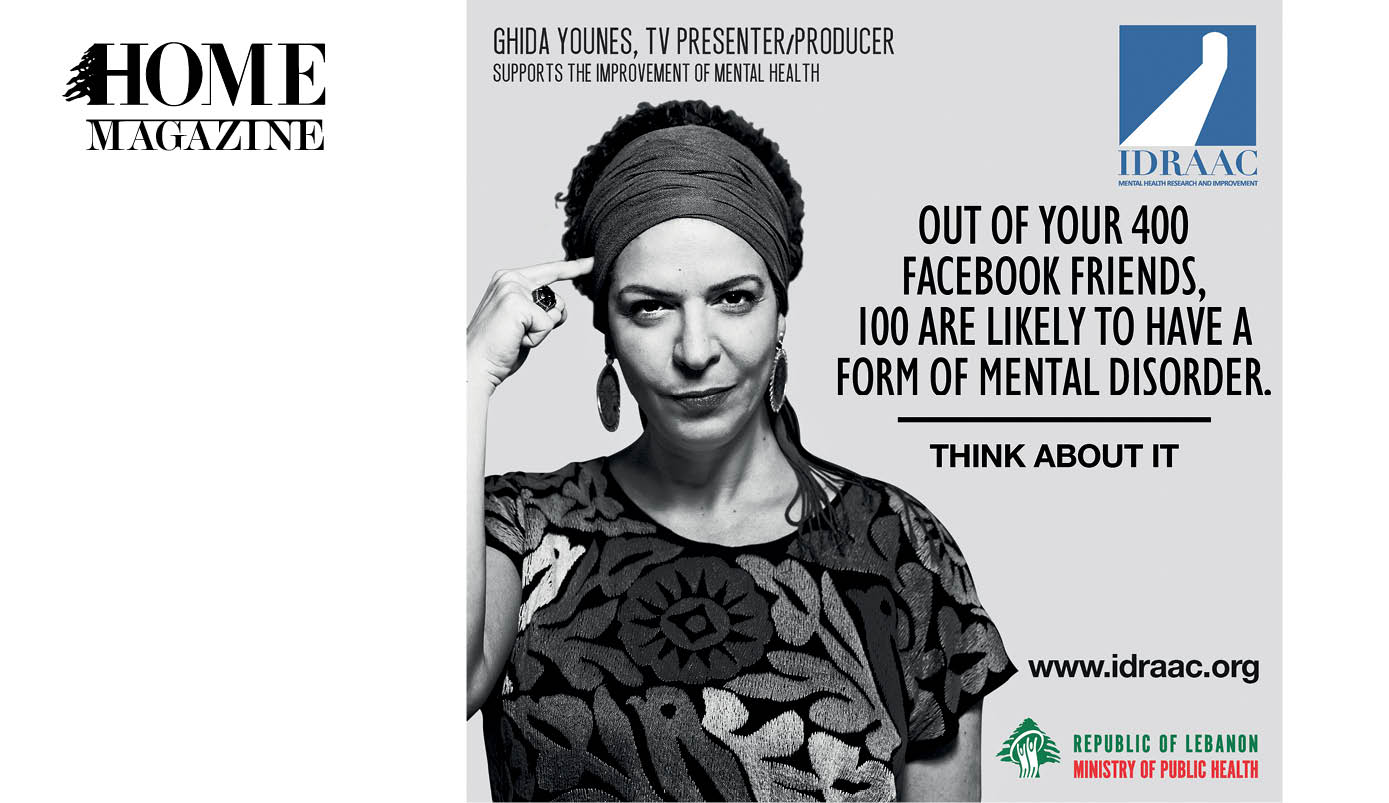
When we hear how common mental disorders are, we always assume it won’t happen to us, he said. But mental illness — from anxiety to obsessive- compulsive disorders to depression to bipolar disorder to schizophrenia to — you name it, the list is long — spreads across all demographics, no matter your ethnicity or social and economic status. And as we age, mental illness is even more prevalent. A whopping 50 percent of Lebanese who reach age 85 will be afflicted with Alzheimer’s Disease, a progressive illness that causes loss of memory and mental function, said Dr. Karam. But many Lebanese will assume forgetfulness is just a normal part of aging, rather than realizing it is dementia. Or that anxiety is a personality trait — just how he or she is. “And anxiety is one of the easiest to treat.”
Dr. Karam is one of the leaders in The Institute for Development, Research, Advocacy and Applied Care, known by its acronym IDRAAC, an NGO that works to provide the social and legal infrastructure and community awareness needed to improve mental health in Lebanon. It was founded by Dr. Karam’s father, Dr. Elie Karam, who is the president. This labor of love works on four fronts: advocacy, services, awareness and research.
” One in four Lebanese will have a mental illness.”
Advocacy
As advocates for people with mental illnesses, IDRAAC fights for a strong legal framework to protect people with mental issues, said Dr. Karam. New laws are desperately needed. The legislation on the books, dating back to the days of Ottoman rule, is named “The Ottoman Law for the Crazy (القانون العثماني (للمجانين
IDRAAC began working with the Ministry of Health in 2008 to revise it. With funding from the European Union, and the help of judges and lawyers, the NGO researched laws from around the world, while simultaneously studying the situation in Lebanon through focus groups of psychiatrists, nurses, insurance companies, hospital management, patients and other stakeholders. The effort resulted in proposed legislation that prevents committing people against their will, while at the same time, provides a way to get help for people who need it. It is now with the parliament, and Dr. Karam hopes, the proposed law “will be passed at any time.”
“We need a law that will protect people from abuses,” he said. There was a man who was mad at his wife, so he claimed she was mentally ill and had her locked up for two weeks. At the same time, we need a legal mechanism for bringing people to the hospital who are really sick, said Dr. Karam.
As if on cue, during HOME’s interview, Dr. Karam’s phone rang. When he returned to the interview, he said, “That was the mother of an influencial Lebanese business man. His family and friends say he has been acting weird for the past few months.”
“And yesterday morning, he became more aggressive. He got in a fight with his girlfriend. When he came in, the maid was in front of him. He pulled her by the hair and threw her down the stairs. He hit his mother on the head with a vase, started beating his sister and destroyed the house. Then he called friends to go out, like nothing was wrong.”
“The family called the police, who didn’t take the issue seriously and didn’t respond. A friend gave them our number, and they called three hours ago.” Someone whose behavior is unusual, who is a danger to others and possibly to himself, needs to be seen by a doctor”, he said.
“The symptoms are psychological, but the cause could be something else.” It could be a brain tumor or he might have a neurological disorder.”
“We are proposing a law that allows for people to decide what they want to happen – who will make decisions on their behalf, how property will be distributed, etc. – before they lose capacity.”
With the proposed legislation, a family can talk to the prosecutor general, who can issue an order to bring someone to the hospital. He or she will be admitted for 48 hours, during which time a doctor and an independent psychiatrist must examine him or her to make a recommendation. A body is being created in the Ministry of Health that can approve keeping a person for up to three weeks, with a new review and decision every three weeks. It also calls for the Ministry of Health to be responsible for the costs, so that money will not be an issue for those who cannot afford it.
On another front, “we are seeing a lot of abuse of the elderly from family members, who take money and belongings and make them sign papers,” said Dr. Karam. “We are proposing a law, which will be submitted to the Ministry of Social Affairs by end of 2017, that allows for people to decide what they want to happen — who will make decisions on their behalf, how property will be distributed, etc. — before they lose capacity.” This is a civil law that would be a step before a case would go to religious law. IDRAAC also mapped all the laws in Lebanon related to the elderly — 80 pages — to provide to any NGO that wants to work in this area in the future.
In addition to the legal work, IDRAAC began working with communities to fight the stigma of older people not being productive.
“We know that after retirement, if an older person is just sitting between four walls, not mentally or socially active, the risk of anxiety or depression increases threefold and, with it, the risk of Alzheimer’s,” Dr. Karam said.
As a pilot project, IDRAAC surveyed the 3,200 businesses registered in Byblos to find out who is willing to provide paid employment or volunteer work to the elderly. They found 165 companies and created a database. Since then, they have been contacted by Jounieh and Aley. “My dream is to grow municipality by municipality until we reach all of Lebanon,” said Dr. Karam.
Services
IDRAAC also provides direct services through community projects, often in response to emergencies and tragic events. “Unfortunately, every year or two we have a disaster in Lebanon,” he said.
- In 1996, during the war with Israel, more than 100 civilians were killed. “A lot of children became orphans. We followed them for a long time and took care of their mental issues.”
- In 2006, “for a whole month, we were live on the radio, providing our crisis hotline number.” IDRAAC psychiatrists and staff answered the phones, responding to Lebanese who were traumatized during the July war.
- In 2010, when an Ethiopian Airlines flight fell into the sea shortly after takeoff from Rafic Hariri Airport, killing all 90 people on board, IDRAAC immediately set up a mobile clinic for families of the victims, first at the airport and then at the Rafic Hariri Hospital for a week.
- In 2012, when a six-story building collapsed in Ashrafieh, killing 27 and injuring a dozen more, IDRAAC was there with emergency services.
- In 2012, an explosion near Sassine Square in Ashrafieh assassinated Wissam al-Hassan, a general at the Lebanese Internal Security Forces, killed seven and injured nearly 100 others. IDRAAC was there with crisis support services.
- From 2015 – 2017, when thousands of Assyrians from Syria, the oldest Christian community in the region, sought refuge in Lebanon, IDRAAC supported them through three community projects:
- Providing weekly medical and psychological screenings for the elderly free of charge (and free medication donated by companies)
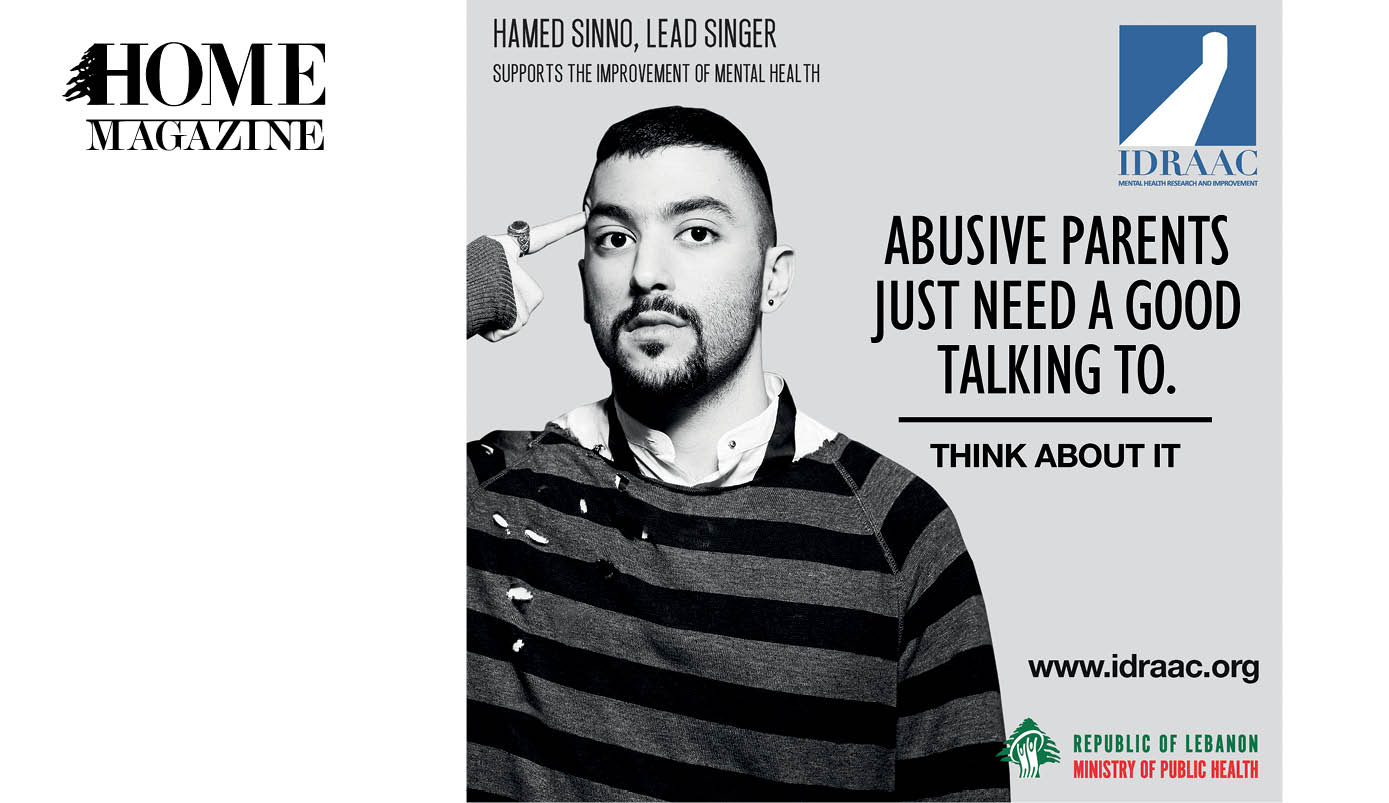
- Training volunteers from the Assyrian community to provide mothers with an eight-module course on caring for their children and dealing with behavioral problems that resulted from trauma. That program, used in other communities since 2011, was proven to reduce corporal punishment (mothers hitting their children) from 46 percent to 6 percent.
- Training teachers to recognize the causes of students’ problems and to use conflict resolution in the classroom. By training lay people to take care of mental issues, “they don’t have to go to psychiatrists, and it’s free of charge.”“We also started working with the Ministry of Health on guidelines for dealing with crises, and with hospitals on their response plans,” Dr. Karam added.In addition, IDRAAC provides free treatment for mental health issues for people who can’t afford it. In 2016, 2,000 received free care. By November 2017, 2,400 had received free care.

Awareness
Creating services and developing laws serve no purpose if people are not aware of them or even of the mental health issues they address, said Dr. Karam.
For example, the elderly need to know they have rights. A recent IDRAAC-sponsored media campaign delivered that message to older adults through billboards, radio and TV ads.
Research
The heart and the beginning of IDRAC was research, said Dr. Karam. “In 1982, my father, Elie Karam, returned from the U.S. to practice here.
“He is very passionate about research and was really surprised that there was no research on Lebanon.” So he started doing his own, until 1997, when it became obvious that he needed to have an NGO to be able to apply for grants and to have the backing of universities. So IDRAAC was born and officially registered in the government in 2002.
The biggest segment of IDRAAC is still the research. A lot of the numbers about mental health in Lebanon came from IDRAAC. To date, it has published more than 200 articles in scientific journals, which makes this NGO one of the most active mental health research organizations in the Middle East. Its research partners include Harvard University and the World Health Organization.
IDRAAC collaborated with WHO on the World Mental Health Initiative. Countries around the world did research on mental health issues at the same time and with the same methodology, which allowed them to compare their results. “We were the first country in the Middle East to participate, and we became the training center for other countries who want to be in this,” said Dr. Karam. So far, IDRAAC has trained researchers from Jordan, Iraq, Palestine and Saudi Arabia.
How they do it
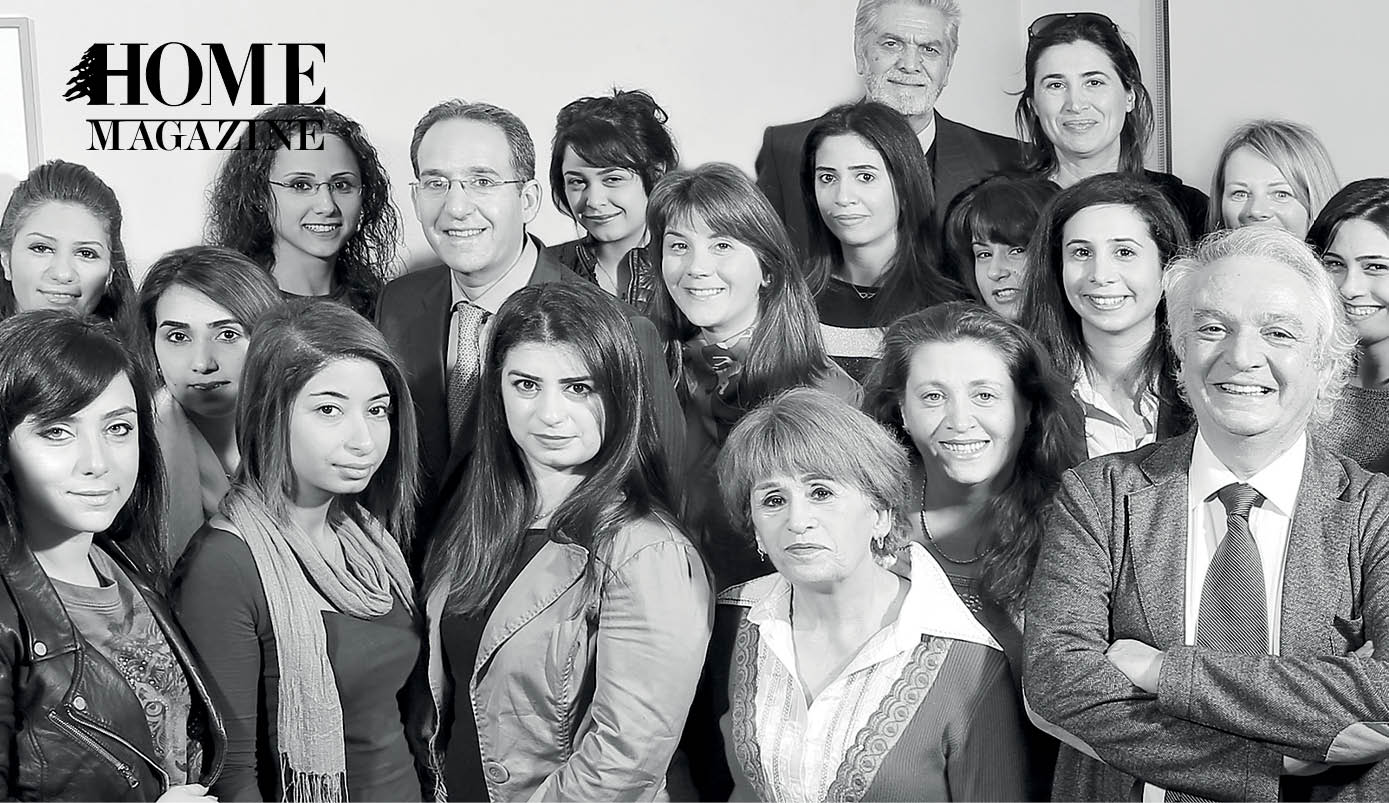
IDRAAC has a full-time paid staff of nine to run their basic operations. They hire more for their various projects. That does not include the senior staff, who are physicians who donate their time. Each of the senior staff gives about three hours per day on a daily basis, said Dr. Karam. “We are not complaining. We love it. We do it blindly. This is the way we improve the situation in Lebanon and give back.”
He estimates the basic running expenses, not including projects, at about $250,000 a year, which comes from private donations, grants and fundraisers, with grants being by far the main source. The organization has been active for about 30 years, “so we are well known and that helps.” It also has sponsors and media partners who contribute free or discounted services.

IDRAAC founder and president Dr. Elie Karam and Dr. George S. Karam, who learned about psychiatry at a young age from his father.
Labor of love
In fact, Dr. Karam showed enthusiasm for every aspect of their work. He had been talking about it nonstop for an hour and a half, only pausing to respond to calls from families of patients.
“In my mind, when you are helping a psychiatric patient, you are not only helping the patient; the job is so much wider. The whole family is suffering.”
“In my mind, when you are helping a psychiatric patient, you are not only helping the patient; the job is so much wider. The whole family is suffering,” he said. “It is different from being, say, a cardiologist, where you are treating an individual.”
Take this case, he said. “The patient’s sister called from Paris, his mother from Beirut, and I have heard from his two best friends. Helping them all — that’s really what I love. You become part of their lives.”
“I have been a psychiatrist for 14 years, and I can swear on the heads of my two kids, there is not a single day I say, ‘Man, I have to go to work today,’” said Dr. Karam. “I absolutely love it.”
For more info: http://www.idraac.org/


HOMEland
Coming Soon
HOMEland Events & Collaborations
Coming Soon
 Signature Boutique
 Signature Boutique



Speaking Truth to Power: Pierre Sadek Foundation