
Advised by his father to learn Arabic, American-Irish John McCarthy fell in love with the language, and with Lebanon from the first time he visited in the summer of 1964. McCarthy has been writing short stories in Arabic since 2015.
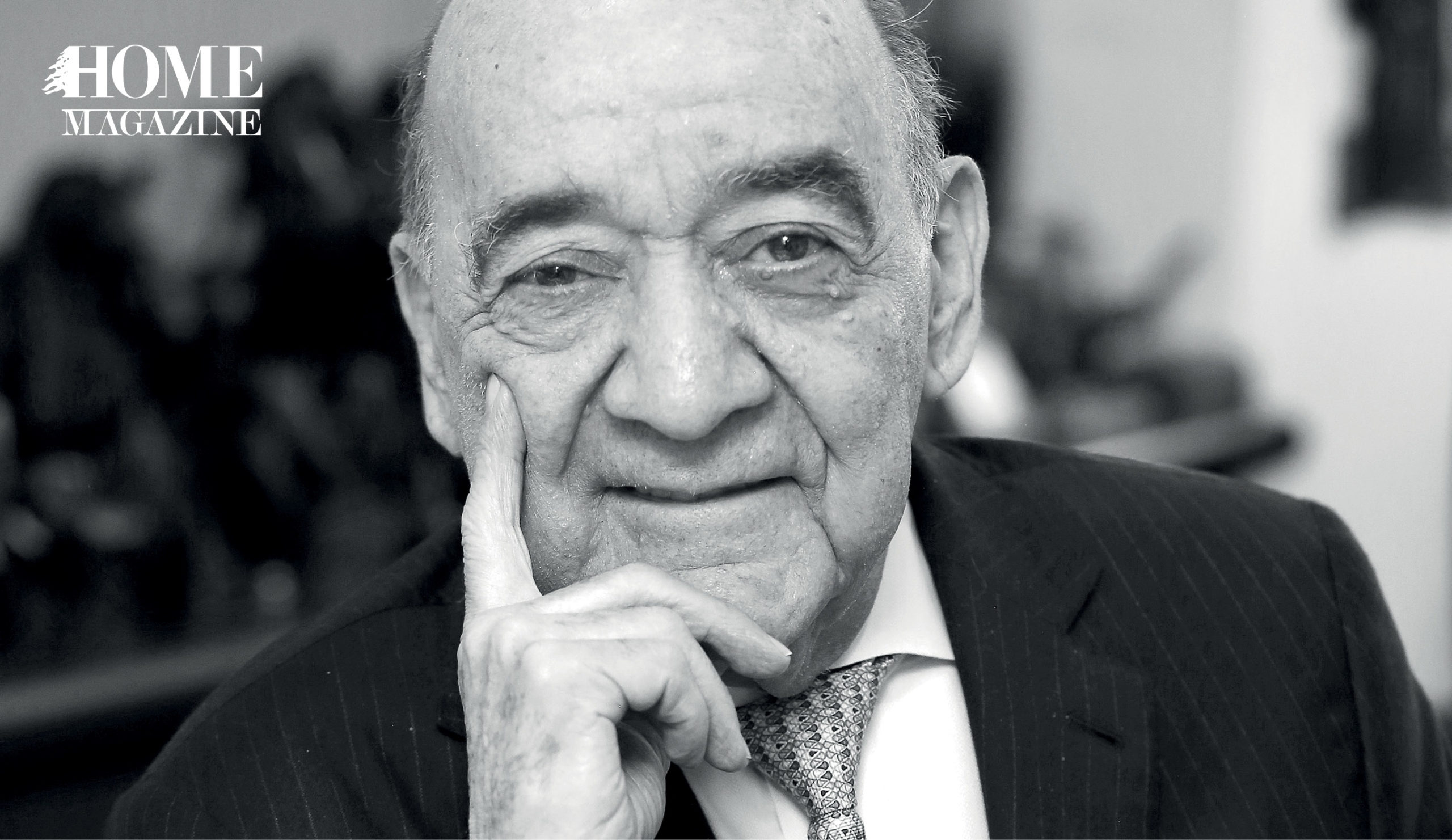
Lebanon has three ambassadors in Switzerland. One ambassador in Bern, one permanent representative to the United Nations in Geneva, and one non-Lebanese called John McCarthy, with no diplomatic role but known for his love for and many deeds in support of Lebanon. McCarthy is an American and Irish dual national. He spent most of his career in international executive search based in London and later Geneva, and ran his own reputable firm for 21 years. He retired in 2014. One year later he started a series of short stories, which he wrote in Arabic.
Who is John McCarthy? Why is he the Godfather of the Lebanese diaspora in Geneva? And, most importantly, why does he like our country so much?
John grew up in Greenwich, CT and Paris and was a serious student and athlete (American football, ice hockey, rowing and tennis). At the age of 17 he participated in an exchange student experience in Turkey. When he returned from his summer there in 1962 all excited about learning Turkish, his father – who had done business in Beirut and Cairo – advised him to put aside learning Turkish and to concentrate on Arabic. He told him, “The place to start is Lebanon, and specifically the American University of Beirut (AUB).” So he visited Lebanon for the first time in the summer of 1964 to take some courses at AUB then lived in Beirut from 1968 to 1975.
How can I help my adopted country?
When you meet him for the first time, this tall, classy man is very impressive. Serious, with very gracious gestures, he picks his words wisely and elegantly. But when asked what he remembers from his years as an AUB student, the dreamy, soft, romantic side of him suddenly appears:
“I remember the cloudless sky and the bright blue Mediterranean stretching to the horizon; the beauty of the AUB campus; the cuisine; the warm hospitality and joie de vivre of the people; and the beauty and friendliness of the Lebanese women,” says McCarthy. Very quickly we understand that his love for Lebanon is shown not only in words, but in actions.
“I loved living in Lebanon in the ’60s and early ’70s and was heartbroken when the civil war broke out in ’75 and the fighting in my neighborhood made it unsafe for my family. I resettled – like many Lebanese – in London, and later Geneva, but kept in touch with Lebanese friends in Lebanon and the diaspora. I kept thinking, how can I help my adopted country?”
“Then one day in ’93 the president of IC, Gerrit Keator, called my office and asked if I knew of any candidates for the IC Board of Trustees. Specifically, they were looking for American citizens who cared about Lebanon and education because the college’s bylaws require a majority of Americans on the Board. He stated that all trustees must provide “The 3 Ws: Wisdom, Work and Wealth.”
“I reflected overnight about how much the Lebanese value a good education and the importance of the formative KG-12 years. Suddenly, I had the answer to my question! The next day, I volunteered to make every effort to deliver on the ‘3 Ws’,” he adds.
From 1993, John’s main activity involving Lebanon has been serving as a volunteer member of the International College (IC) Board of Trustees, and since the start of the college’s $110 million “Campaign for Excellence” six years ago, he has been chairing the Development Committee of the Board.
“We have raised $62 million so far, built three new buildings and have two under construction plus other major projects on the drawing board.”
“The most enjoyable byproduct of this work is coming into contact with the faculty, administrators and students.” He always attends fifth grade Special* Arabic classes when he is in Beirut. (* “Special” refers to Arabic taught to students who have come late to the language.)

“Hanna” the series
Then one day “Hanna” was born. Hanna (“John” in Arabic) is a Lebanese- American teenager whom McCarthy invented to be the hero of a series of short stories which he began writing in 2015 as homework for his weekly private Arabic lesson at École Varadi in Geneva.
For the small, very select circle that has had the opportunity to read Hanna’s series called ‘‘انح تايموي”, there is universal admiration. The style is fluid and attractive, and the story is rich in information and excitement. The unconventional and audacious stories about Hanna are as interesting for teenagers as they are for adult readers. McCarthy talks about Hanna with lots of enthusiasm.
“Hanna is coming of age. He is a cheerful, curious, friendly and romantic fellow, a day student at a school in Ras Beirut like IC, with much to see and learn about Lebanon and life. So far, I have written 25 episodes. I credit my teacher, a couple of helpful Lebanese friends and some readers for encouraging me.” The 25 episodes contain information that shows the seriousness of the research done on every topic. Surprising details arise while reading about Fairuz or the law of attraction, along with other interesting topics about regions in Lebanon, or Hanna having a crush on his teacher!
When asked if the series is going to be published, McCarthy smiles and answers: “I am open to study any proposition if any editor is daring enough to publish those stories.”
Arabic is trendy again
Hanna’s series are written by McCarthy in English and translated into Arabic. “Someday, I hope to reach a level of proficiency whereby I can write directly in Arabic. (I already write in French),” says McCarthy.
While many Lebanese in the diaspora find it enough to teach their children to speak Arabic and do not choose to go on to teach them to write in Arabic, there is a new trend for non-Arabic speaking people to learn our language. Arabic schools in Geneva are witnessing a high number of students with no Arab origins learning Arabic. Parents are advising their children to learn Arabic just as McCarthy’s father did a few decades ago, with the hope that our language will inspire them to achieve big and express themselves freely, just like it did for John McCarthy.


HOMEland THEMES
Coming Soon
HOMEland Events & Collaborations
Coming Soon
 Signature Boutique