Jorge Saade Scaff: Acclaimed Violinist and Cultural Ambassador of Both Ecuador and Lebanon
From a toy guitar in Guayaquil to concert halls on five continents: how one violinist became Ecuador and Lebanon's shared cultural voice.

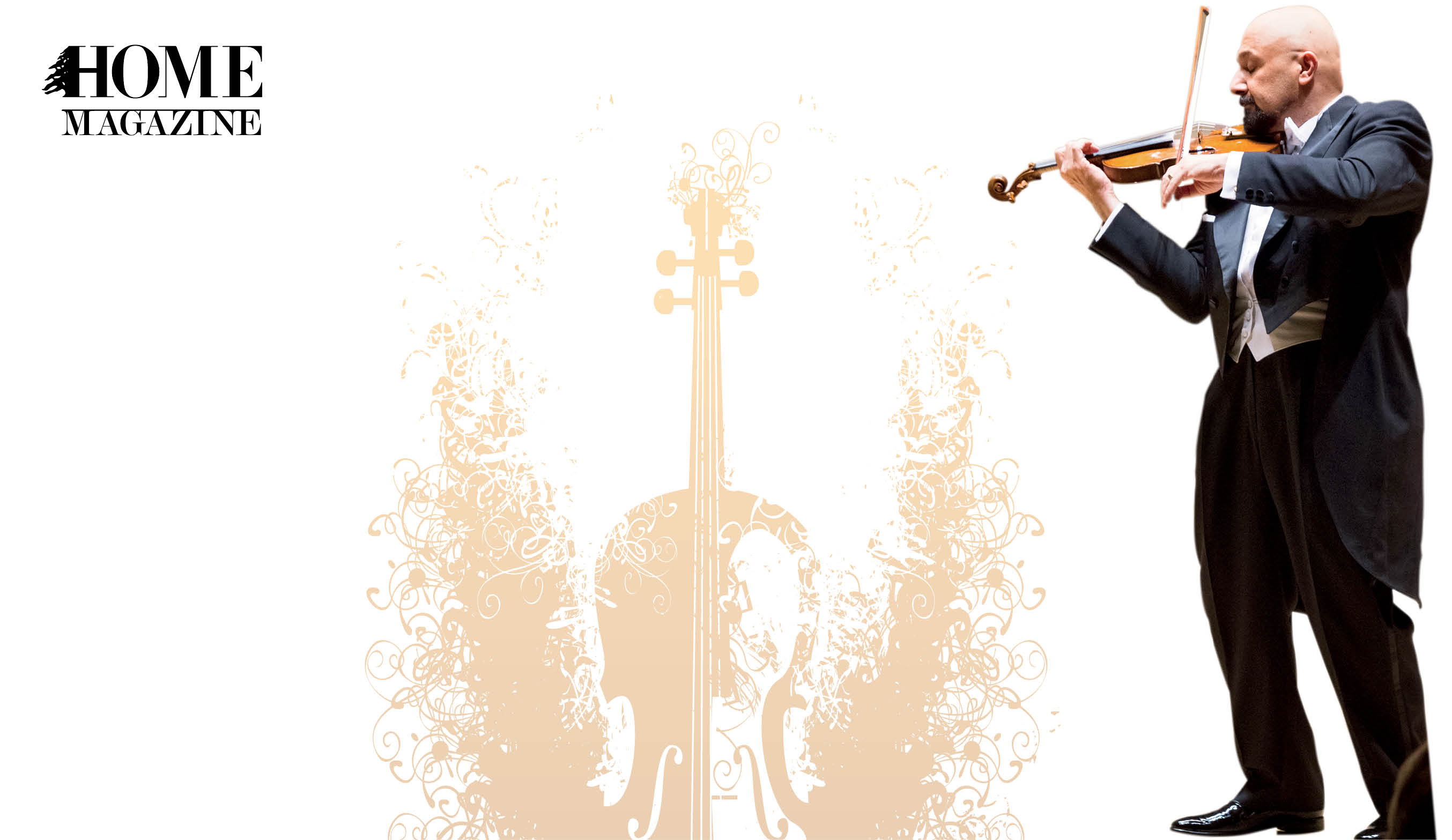
As in many other countries worldwide, the Lebanese in Ecuador form an active community so that the short distances, which may seem unbridgeable in Lebanon, disappear half a world away in their new HOMEland. As a result, it is no surprise that Jean Manzur Saade, who emigrated from Chebtine in the Batroun district of north Lebanon in 1953, and Suad Scaff, a second-generation Lebanese of Zahle heritage, bridged the 100 km gap between Chebtine and Zahle when they met and married over 19,000 km from Lebanon in Guayaquil, Ecuador in 1963. Their first son, Jorge (pronounced khurkhi and meaning George in Spanish), was born there in 1964, followed by his sister Laila and brother Juan. According to Spanish naming practices, the personal name of a child is followed by his father’s family name and then, in general, by his mother’s family name. So that Saade is known as either Jorge Saade or more fully as Jorge Saade Scaff.
While there were no professional musicians in Saade’s family, his mother Suad used to play classical music on the piano and realized that when Saade was very young that he would sit down and listen intently when she played. He started to love the sound of the violin and one day his mother found him with a little toy guitar on his left shoulder and a wood stick in his right hand trying to play the violin. The incident led his parents to find a teacher for him when he was 6, starting Saade on the path that would ultimately take him to concert halls around the world.
Saade became a “Gold Medal” graduate of the Antonio Neumane National Conservatory of Music in Guayaquil where he studied with the Estonian Lemmo Erendi, a pupil of the great Russian violinist Mijail Vaiman and Andrei Podgorni, who became the director of the famous Gnessin Institute in Moscow. In the United States, he earned his bachelor’s degree in music at the Frost School of Music at the University of Miami, where he graduated cum laude while studying with violinist and renowned pedagogue Thomas Moore. In 1995 he was accepted to study with violin virtuoso Ruggiero Ricci at the Mozarteum Institute in Salzburg. And he earned a master’s degree with the famous Hungarian concert violinist and musical educator Robert Gerle, under a full scholarship at the Catholic University of America in Washington, D.C.
Having completed his studies, Saade began his career in performance, becoming an ambassador for classical music within Ecuador and an ambassador of Ecuadorian musical culture worldwide. He has performed recitals and as a soloist with orchestras in 45 countries. These include major orchestras in Egypt, Qatar, the United States, the Czech Republic, Uruguay, Colombia, Panama, Venezuela, Costa Rica, Nicaragua, Hungary, Belarus, El Salvador, Peru, Cuba, Honduras, and Ecuador, among others.
He has given recitals worldwide with the acclaimed Ecuadorian pianist Juan Carlos Escudero, performing the works of both Ecuadorian and Lebanese (as well as European) classical composers. In 2002 he joined with Ecuadorian guitarist Julio Almeida to form the Duo Paganini, which has also traveled worldwide. He has performed four times at Carnegie Hall in New York, the last time in 2017 when he also performed at the Kennedy Center for the Performing Arts in Washington, D.C., with pianist Juan Carlos Escudero.
In addition to his live performances, Saade is the premier recording violinist of Ecuador. In 1993, Saade joined with the Canadian pianist Adam Wegrzynek to become the first Ecuadorian violinist to release a CD recording.
In addition to performing and recording, Saade served as the cultural and press attaché of the Ecuadorian Embassy and cultural representative of Ecuador to the Organization of American States in Washington, D.C. from June 1997 through February 2003. He has also received many rewards from the Ecuadorian government and from Ecuadorian cultural associations abroad in recognition of his role as Ecuador’s cultural ambassador. He has been the honorary consul of Belgium in Guayaquil since 2008. He actively supports the Guayas Youth Symphony Orchestra, a social and cultural program for youth that would otherwise have no chance to pursue classical music in Ecuador.
Saade is currently a violin professor at the Universidad de Especialidades Espiritu Santo (UEES) in Guayaquil, professor ad honorem of violin and viola at the National Conservatory of Music in Guayaquil and honorary professor at the Universidad Ricardo Palma in Lima, Peru. He has also served as president of the Board of the Guayaquil Symphony Orchestra, vice president of the Washington Symphony Orchestra and cultural advisor for the Pan American Symphony Orchestra in Washington, D.C.
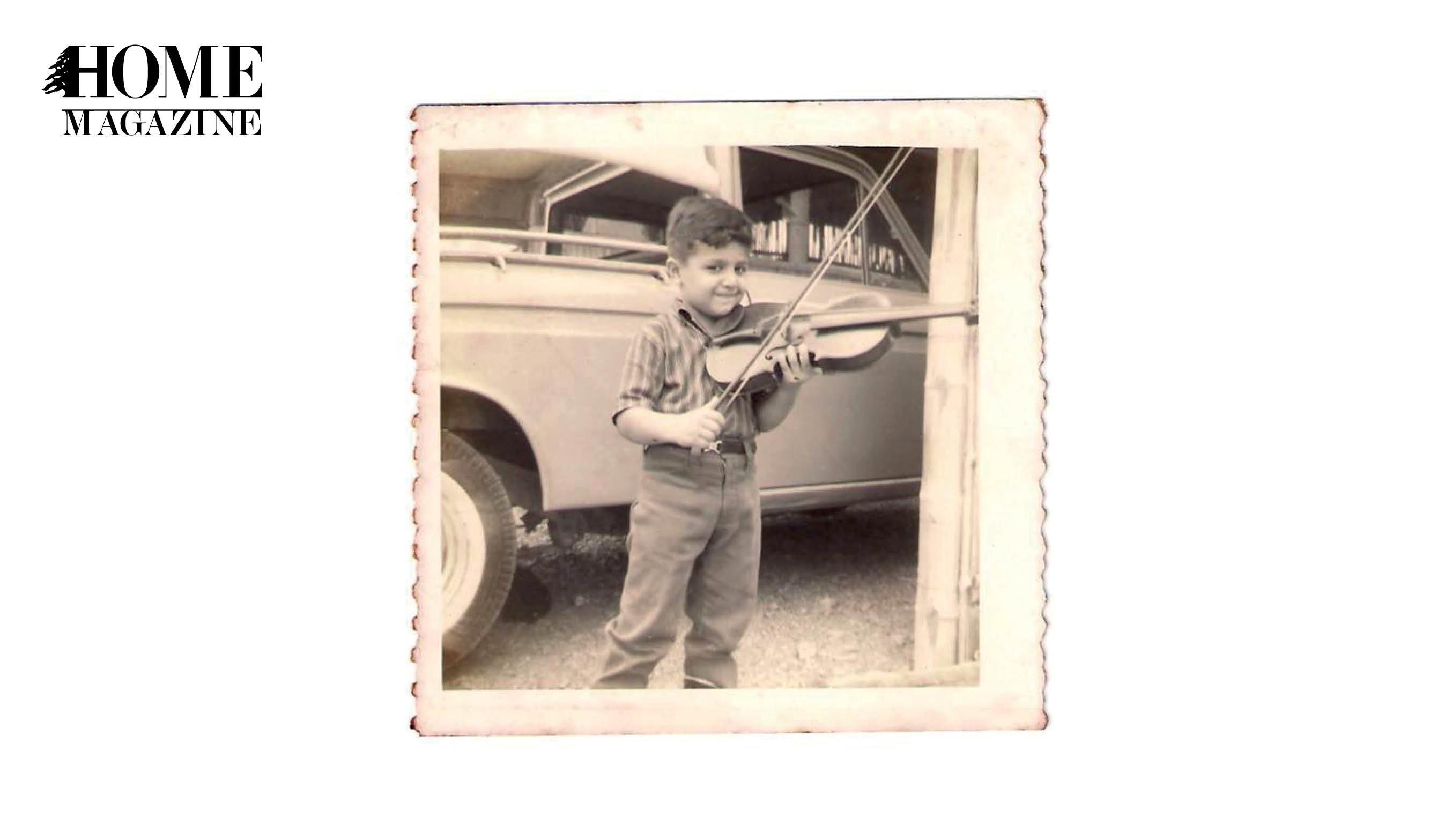
While Saade was born and raised in Ecuador, from the start, his parents gave him a cultural identity in which he feels as Lebanese as he feels Ecuadorian. His parents went back to Lebanon a number of times. His father served as the honorary Lebanese consul in Guayaquil for thirty years, passing the position on to his son Juan in 2018 since Saade was already the honorary consul of Belgium.
Saade himself visited Lebanon for the first time in 2006. While on a concert tour in Europe, one of the concerts was cancelled, so he decided to take a week off and finally visit Lebanon. He recalls that when he saw the coastline of Lebanon from the plane, he started to cry after having heard so much about Lebanon from his parents and grandparents. He returned to Lebanon in 2007, giving two concerts with pianist Tatiana Primak-Khoury at Balamand and Notre Dame universities. On his third trip he performed with Ecuadorian guitarist Julio Almeida (Duo Paganini) at the Assembly Hall of the American University of Beirut. In 2014, he again visited Lebanon before performing with the Cairo Symphony Orchestra. In 2017 he performed with the Lebanese Philharmonic Orchestra under the direction of Maestro Harout Fazlian. He plans to perform another recital at AUB’s Assembly Hall in spring 2019.
Although not Lebanese, his wife Gina loves Lebanese culture and, according to Saade, is great at cooking Lebanese food. In another reflection of his Lebanese heritage, all three of Saade’s daughters have Lebanese names: Amine, Samira, and Salma – and the older two have visited Lebanon.
Saade notes that the whole family gets together every Sunday to enjoy lunch at the Lebanese Club. And on Mondays he plays cards with other Ecuadorians of Lebanese heritage. Until last year, his brother Juan was the president of the Lebanese Union Society that runs the Biblos Club. And he further notes that his house in Guayaquil is in a gated neighborhood called Biblos where the Lebanese Club is located.
“My family is from Chebtine, the most beautiful town in the world.”
In Saade’s own words; “My family is from Chebtine, the most beautiful town in the world! I plan to build a house and retire there!” Saade considers this more than a pipe dream, explaining that he hopes to someday build a house on land their family owns in Chebtine and spend three months there every spring.
Saade’s music and love of Lebanon have combined in important ways over the years.
He has performed music by several Lebanese composers, including music by Boghos Gelalian, George Baz, Houtaf Khoury and Abdallah El Masri. Houtaf Khoury dedicated his first violin concerto to Saade, and Saade performed its world premiere with the El Salvador National Symphony Orchestra, later performing it with orchestras in Ecuador, Cuba, Colombia and Peru. He notes that he is very good friends with flutist Wisam Boustany and composer, singer and oud virtuoso Marcel Khalife. Khalife has also written a violin concerto dedicated to Saade.
Saade has truly become a cultural ambassador of Ecuador and Lebanon, honoring both through his performances of their music and through the legacy of love for both HOMElands that he has instilled in his wife and children.
*Please note that all Lebanese names in this article are spelled according to how Jorge spells them.
You are encouraged to go to your favorite online musical source (like iTunes or Spotify or YouTube), search for “Jorge Saade”, and choose any of dozens of entries by him to listen to as you read about this impressive Ecuadorian violinist of Lebanese heritage.

 Signature Boutique



Speaking Truth to Power: Pierre Sadek Foundation