A Lebanese in Italy
A long time ago during my mid 20s, I had the chance to live and work in Rome. Unbeknownst to me at the time, those few years spent in the eternal city were some of the happiest years of my life. My time there, which also allowed me to explore many different parts of Italy, deeply enriched my soul and captivated my heart. It also gave me so many fond memories that are still vivid today.
I had an instant connection to Italy, one that was visceral in nature. It was almost like when you go to a place for the very first time yet you instinctively feel as if you have been there before. This strong familiarity could be because Lebanon and Italy share quite a few commonalities, especially as the two countries both surround the Mediterranean Sea. Then of course, there is the influence of the Roman Empire, which extended into Lebanon and lasted more than 300 years (64 B.C – 399 A.D). These three centuries surely must have played some role in shaping our unique Lebanese culture. And if we look into our genealogy, there must be some Italian DNA mixed in there somewhere.
Roman historical accents in Lebanon
Let’s start with going back to the distant past. If you walk around some of our coastal cities today, the Roman remnants are abundant. If you are in Beirut, look no further than the Downtown district where remains of a large Roman bath complex and a market area, in addition to plenty of columns and foundations of large buildings, are visible. If you go south to Sour (Tyre) you can marvel at what has remained from the world’s largest Roman hippodrome, an enormous triumphal arch, an extensive necropolis, and the remains of Roman aqueducts. Then there is Jbeil (Byblos) where you are welcomed by imposing tall columns strategically perched at the main thoroughfare of the ancient city. As you walk further toward the port you can admire even more ruins from a Roman theater and nymphaeum. Roman remains are also present further inland, as seen in the iconic Baalbeck temples of the Bekaa Valley. The impressive cluster of temples and city ruins boasts both the Temple of Bacchus (the best-preserved temple in the Middle East) and the columns of the Temple of Jupiter (the largest Roman temple ever constructed).
Let’s say our fertile soil, temperate climate, and hospitable people inspired the Romans to construct their most ambitious temples in Lebanon.
Diversity of Italy: beautiful extremes
We certainly have the historical link between Italy and Lebanon with enough ancient rocks to prove it. However, another striking resemblance is the plentiful diversity in both countries. Of course, Italy is a much larger nation than Lebanon, so you would expect to see more distinct differences going from one region to another, especially in regard to accents, cuisines, landscapes, customs and even physical features of the Italian people. When I visited Naples and Palermo in southern Italy, I could immediately notice the difference when compared to the north. They spoke so quickly that I could not understand much despite speaking a little Italian that I picked up in Rome. When a southerner speaks, words pour out in a hasty staccato of urgency. For example, I want to go to the beach “voglio andare al mare” in Neapolitan would sound something like “aggia anda a mare.” Often, the “re” ending found in the infinitive tense is dropped, so as to create a spoken short cut.
Later on, when I visited Milano, I noticed speech was slower and more elongated in general, like “Sono di Milaaaano” , where every consonant and vowel is clearly and slowly pronounced. I was once told that the most pleasant or “pure” Italian accent is from Tuscany and its surrounding regions. This would make sense as the language that came to be thought of as Italian developed in Tuscany and later spread to the rest of the country.
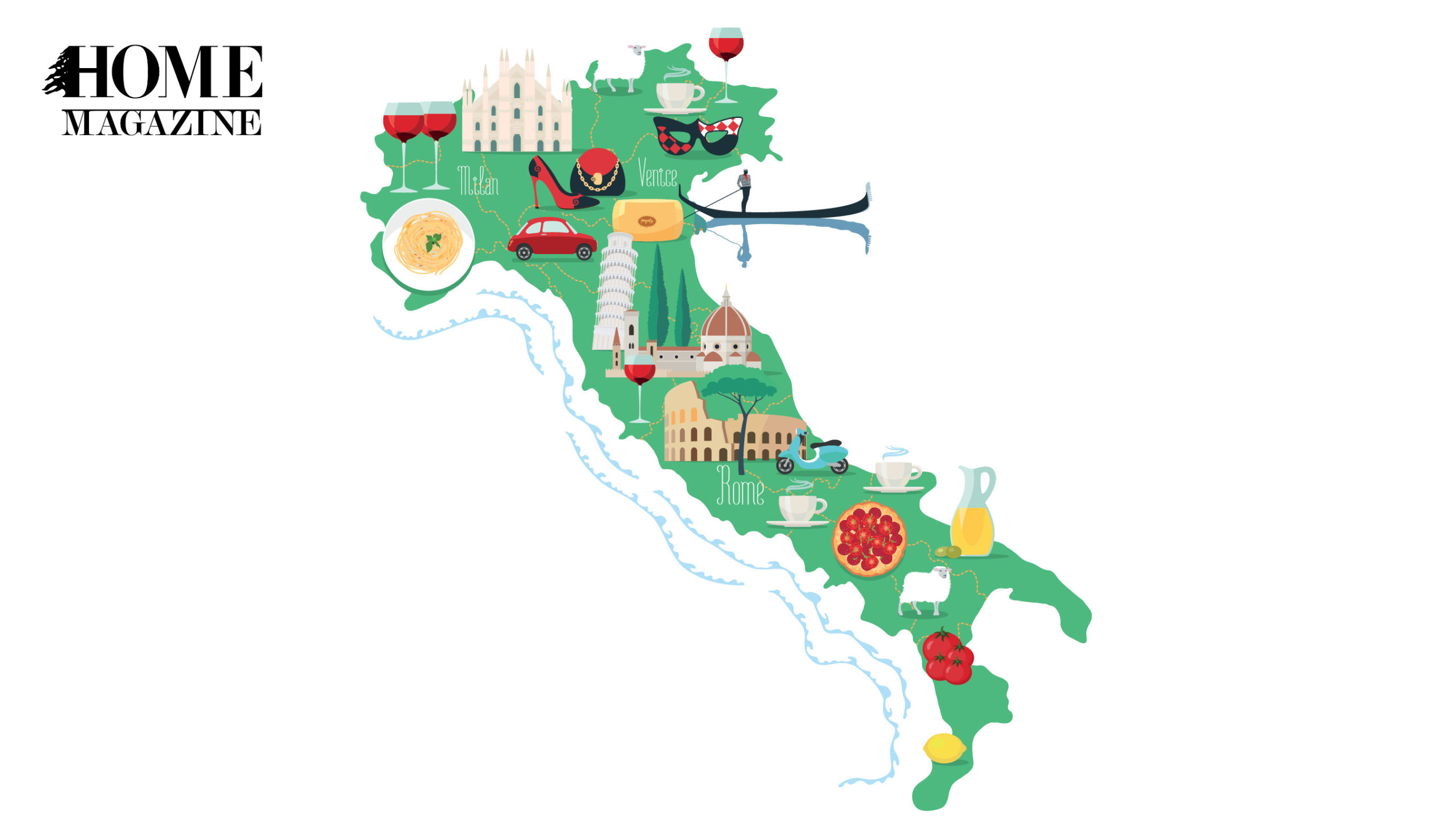
Then there is the food, of course! In the south, tomatoes are prevalent in the cuisine, and a range of spicy tomato-based sauce with pasta is offered. The region of Sicily, for example, is famous for their arancini di riso, which is a dish of large deep-fried balls of rice with meat sauce and a mozzarella cheese filling coated with breadcrumbs. In Roman cuisine they have the Suppli, which is the same concept but smaller and filled with rice, tomato sauce, and mozzarella cheese. Once you go further up north, olive oil and tomato sauce are used less. Instead, butter and cream-based sauces are used and you encounter more meat-based dishes, such as bistecca alla Fiorentina and ossobuco alla Milanese .
I have never had a bad meal in all those years dining out in Italy (unless I stumbled upon a tourist trap restaurant, which are commonly found along the popular tourist attraction areas; my advice is always read online reviews or ask a local if you are not sure). On one occasion, I went to an Italian friend’s wedding in Perugia, a lovely medieval hill town in the Umbria region of Central Italy. The wedding lunch consisted of a 10-course meal (yes, I was counting). The plates kept flowing for almost three hours straight, very similar to the bountiful buffets enjoyed at Lebanese weddings! Needless to say, the Italians take pride in their cuisine and eating is a joyous and almost ritual occasion that brings together friends and family. Indeed, much like the Lebanese.
Italian people feature diverse physical features as well. I must say a Lebanese with olive complexion and dark eyes could easily pass for an Italian southerner and vice versa. My friend Giovanna from Rome (with Sicilian roots) lived in Beirut several years ago. She would tell me how she loved “blending in” in Lebanon, as people she’d meet for the first time would speak to her in Arabic. One can say southern Italy is much more traditional than its northern counterpart. Like Lebanon, family, religion, customs, and community ties play an important role in southern Italy.
Generally speaking, as you travel further north you will spot more Italians that resemble northern Europeans, both in looks and in traits (more punctual, efficient, disciplined), as geographically you are closer to mainland Europe. The spoken language in Sicily has many words of Arabic origin: tabutu from tabut; the Sicilian port Marsala “from Allah’s port,” mars port + ala; and Azzizzari, which means to embellish from aziz .
Italy is simply beautiful wherever you go, from its stunning mountains, remote fishing villages, dazzling coastal cities, to forgotten sleepy towns that are so charming and well preserved. You simply cannot go wrong no matter where you visit in Italy. Funny, every time I am stuck in traffic commuting in Beirut, I just start thinking about my time in Italy. When I do that, I no longer hear blaring horns or screeching tires, nor do I see the faces of tired despondent commuters. My mind is transported to another place. Suddenly, I am meandering along the smooth cobbled lanes framed by blooming bougainvillea.
I am in a gorgeous rustic trattoria enjoying the best pasta and a glass of aromatic and vibrant wine as I watch the world go by. I am on the rugged coast in an open-air café overlooking the glistening sea and slowly sipping my perfectly bitter espresso. I am smiling to myself, feeling peaceful. Yes, la vita è bella.


HOMEland THEMES
Coming Soon
HOMEland Events & Collaborations
Coming Soon
 Signature Boutique