Lebanese Diaspora Energy (LDE) Conference 2016
Nearly 2,000 Lebanese emigrants gather as Minister Bassil launches the nationality law and calls the diaspora home to invest and belong.

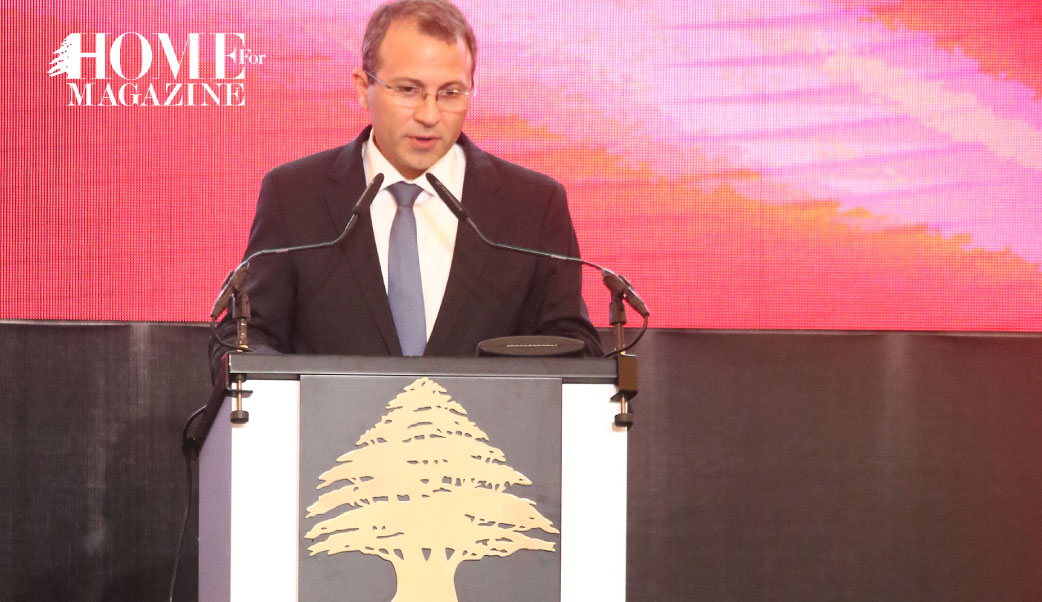
“We announced today the official launching of the implementation of a law for people in the Lebanese diaspora to recover the nationality and now it is a dream that has become a reality,” H.E. Foreign Minister Gebran Bassil said in his opening address to the 2016 Lebanese Diaspora Energy (LDE) Conference.
The LDE Conference, held on May 5, 6 and 7 at the Hilton Grand Habtoor Hotel, was the third annual gathering of the Lebanese diaspora worldwide, hosted by the Lebanese Ministry of Foreign Affairs and Emigrants, under the high patronage of Minister Bassil. LDE was established to strengthen the bonds between Lebanese residents and emigrants, celebrate the successes of Lebanese worldwide, and develop a cultural and social connection between the Lebanese diaspora and their homeland.
Under the bright lights of the wide ballroom, nearly 2,000 Lebanese from an array of countries listened as Minister Bassil reflected on what Lebanon means to them all. With a large Lebanese flag waving on the screen behind him, Minister Bassil said, “Our Lebanity exceeds borders. It is not a geographic entity. It is a human entity that has the world as its borders. It is a love of a nation. It is a passion for public work. It is an oasis of HOME. We are putting all our resources at the ministry to reach Lebanese around the world.” As cameras floated overhead, projecting the diverse faces of the audience on the screen, Minister Bassil put forth the challenge: “If you wish to help us, kindly enroll with the Ministry of Foreign Affairs. We are all soldiers in the defense of our identity, in defense of Lebanon.” He called for the restoration of nationality to Lebanon, noting that his ministry is working to return the Syrian refugees, fight terrorism and corruption, and defeat states of sectarianism “to live as one, united, yet taught by our differences.” In that spirit, he called for the “protection of humanity, justice and equality.” And he invited Lebanese from around the world to “join the Lebanese core to grow the Lebanese nationality.”
“What are you doing for Lebanon?”
He called on the Lebanese diaspora to preserve Lebanese culture and language, to support the creation of the Museum of the Emigrants in the homeland and Lebanese diaspora schools around the world. He encouraged the audience to contribute to the Lebanese Diaspora Fund and “work with us to invest in Lebanon” and to use the Lebanon Connect platform to promote social and economic exchange with Lebanese all around the world. Finally, he spoke about the importance of preserving Lebanese land by preventing the sale of land to non-Lebanese. “When we lose our land we lose our anchor. The land is what keeps us together,” he said. An impressive group of keynote speakers also spoke during the opening ceremony, delivering messages from the diaspora and sharing their stories. Michael Asot, Minister of Tourism, Economic Development Investment and Energy from St. John’s, the capital of Antigua and Barbuda, was visiting the land of his ancestors for the very first time. Finding himself addressing “a room full of successful, extraordinary people,” he noted that he was “a descendent of a strong work ethic. Work is love made visible.” He spoke about the journey of his family from the edge of the Qadisha Valley to Antigua Island. Paraphrasing the great writer Khalil Gibran, he said, “I have not gone away; I have simply moved to another room.” Carlos Maroun, Federal Deputy of the Republic of Brazil, proudly noted that Brazil’s delegation to the LDE 2016 conference was the biggest, with 127 people. “Brazil has more than 10 million people of Lebanese origin,” he said. He delivered a message from Michel Temer, vice president of Brazil at the time, now the interim president of Brazil, that Lebanity created his character and he is very thankful. “We want to create legal conditions that inspire tourism and cultural interchange and investments – we now have the legal foundation needed. We want Lebanon and Brazil closer to each other.”
Joumana Kairouz, Founder and Owner of the Michigan Center for Personal Injury and Law Offices of Joumana Kairouz, PLLC, USA, who has a doctorate from Yale Law School, is the founder of the biggest law firm in Michigan and was named Lawyer of the Year 2012. She spoke about the challenges she faced and her pride in her Lebanese origins. “Lebanon is smaller than the smallest state in the U.S., Rhode Island,” she noted. “And less than 1% of the U.S. people are of Lebanese descent, but so many are very successful.”
“A person’s success is not measured by the size of the wallet, but by the impact on others.” Joumana Kairouz
“I take great pride when it is mentioned that I am of Lebanese origin. I am proud to make Lebanon proud.” She encouraged others to work for a better Lebanon. “If we don’t like what we see, we must change our behavior. If change cannot happen at the state level, it can happen at another level.” “A person’s success is not measured by the size of the wallet, but by the impact on others.”
Faysal El Khoury, Federal Member of Parliament in the House of Commons, Canada, who created the Canadian-Lebanese Friendship Committee, noted that “We are working to make Canada more accessible. The beautiful country of Canada allowed us to prosper. Canada is opened to every culture and allows every citizen to grow.” His goal is to strengthen the ties between Canada and Lebanon.
Mr. Norman Nahas, President of the Lebanese Chamber of Commerce in Nova Scotia, added to his comments, including delivering two messages from Canada, one from Prime Minister Justin Trudeau and one from Hon. Geoff Regan, speaker of the House of Commons of Canada. Nahas spoke about his delight in serving as the chairman of the Canadian committee responsible for the Lebanese-Canadian House in Batroun. He said he was inspired to get involved with the Lebanese Diaspora Village when attending the LDE 2015 Conference. “It will help facilitate the bonds between Lebanon and Canada, and show the impact the Lebanese have had on Canada.”

Lebanity Panel: Identity and Restoration of Nationality
The identity defines the nation. The identity gives the nation power, character and most importantly a HOME. The identity for the Lebanese is ‘Lebanity’. The Identity and Restoration of Nationality panel was moderated by the writer and journalist Mr. Jean Aziz and was broadcasted live. The Minister of Foreign Affairs and Emigrants, Minister Gebran Bassil, was the first to comment. He announced the formation of a committee of both the Ministry of Foreign Affairs and Emigrants and the Ministry of Labor to work on implementing the Nationality Law. All the embassies were informed about the law and were sent applications, which descendants of Lebanese emigrants can fill in to restore their nationality. Minister Bassil emphasized the importance of cooperating with the Lebanese spread out around the world, “We have a ten year deadline to apply this and this will be the main goal of the ministry” Then, Haytham Jomaa, the Director General of the General Directorate of Emigrants, asked all the civil society to put their hands together to help reaching the goal. Addressing the diaspora, he said “each one is a soldier to deliver the message to each emigrant who wants to reclaim his nationality.” And Antonio Hachem, the president of the Beirut Bar Association, explained the importance of the Lebanese nationality in restoring the rights of the diaspora. Then they could practice their political rights even when they are away from their HOME. By getting back their nationality, Lebanese can get the Lebanese passports and preserve their rights of inheritance and ownership inside Lebanon. “They can call the Beirut Bar Association which will help free of charge,” he added.
Sayed Nabil Abbas, the Representative of the High Shiite Council in Canada, focused on the role of the religious and spiritual institutions in encouraging the diaspora to restore nationality. “We want to bring back the Lebanese with Lebanese origin, not only from the six continents but also from the moon,” he said. Moving on, civil society and NGOs also have a role in helping to implement the new law. In this regard, Hiam Boustany, the CEO of the Maronite Foundation in the World, presented the organization to the Lebanese people. The organization was established in 2015 and it works on creating a database that includes the names of more than 1,800,000 of the Lebanese spread out in the world. “650,000 Lebanese names with their addresses were extracted from the LinkedIn website,” she added. They have offices in USA, Canada, Brazil, Mexico, Argentina, Austria, Paraguay, and with the help of the Lebanese ambassador in Germany, a new office will open there. The Maronite Academy also gives workshops for students outside Lebanon and is working on bringing them to Lebanon to visit.
Lauren Aoun, the President of the Lebanese Migration Center, stressed on the importance of the nationality law in enriching the sense of belonging of the Lebanese citizens and priority of working on implementing elections so that emigrants can pariticipate in Lebanese elections from far away.
At the end, Minister Gebran Bassil emphasized the role of the diaspora in making this goal succeed. “With the help of soldiers of the nationality, we will start our journey of getting back the Lebanese,” he said.
“With the help of soldiers of the nationality, we will start our journey of getting back the Lebanese.” Minister Gebran Bassil

Lebanese Diaspora Fund Panel
Investing in Renewable Energy for Lebanon
When investors consider the latest project of the Lebanese Diaspora Fund (LDF), they have three questions:
Why Lebanon? Why renewable energy? Is it profitable? The LDF panel at the Lebanese Diaspora Energy Conference 2016 had the answers.
Panelists included Jean Riachi, CEO & Chairman of FFA Private Banking, Lebanon; Jay Mariyappan, Managing Director of Syndicatum; Mohamed Alem, Senior Partner of Alem Associates; Pierre Khoury, Director of the Lebanese Center for Energy Conservation (LCEC) at the Ministry of Energy and Waters; and Phillippe Roy, Mayor of Mount Royal, Canada.
The proposed project is the creation of an investment fund in power generation in Lebanon, specifically renewable energy.
Why invest in Lebanon? Riachi asked. His answer was “because it is profitable”. “Lebanon has a liberal investment climate. It is an open country with free market competition, low corporate tax rates and a very solid banking sector,” he explained. “It has a highly liquid banking sector, which is considered the backbone of the Lebanese economy.” In addition, the Investment Development Authority of Lebanon (IDAL) offers incentives that encourage investment, Riachi added. Lebanon is strategically located at the intersection of Europe, Asia and the Middle East. Why invest in energy in Lebanon? The answer is simple. “Lebanese spend too much on electricity,” says Riachi. “Two-thirds of the bill is from private generators. We all know there is a shortage of electricity in Lebanon. The generation capacity falls short of the demand.”
Why renewable energy? “Because it is good for the environment, because it is profitable and because it is good for Lebanon,” he said. “I’m an investment banker. I love my country and I love the environment, but for me to make this project happen, I must convince investors that it is profitable. And it is! Investors will easily reach an Internal Rate of Return (IRR) of 18%- 20%.” Pierre Khoury noted, “Lebanon is among the top 10 markets in the world for solar water heater installation.” He noted the positive momentum in the country for such energy projects. He highlighted three motivating factors:
Khoury said that he hopes for more success resulting from public-private partnerships and noted that it is important to create and sustain “hubs for public-private interaction.” He also noted that there is a supportive legal framework for success in public-private projects. Jay Mariyappan, the managing director of Syndicatum, a clean-energy developer based in Singapore, whose CEO and founder is Lebanese, described the features of the projected Lebanese Diaspora Fund. It would be managed here in Lebanon and would focus on renewable energy, particularly solar, wind and hydro energy projects. He noted that costs have come down for these projects, with solar down as much as 90% and wind costs falling by 50%. The proposed fund targets long-term, sustainable projects, and would have different tranches for investors, depending on their appetite for risk-return.
The fund will run the full life cycle of the project in three stages: development, construction and refinancing. The development fund would raise money from donors and development banks to support feasibility studies, permits, and other costs to get the project up and running. Next, the construction fund would cover the building of the project. Once the project is up and running, the last stage will be the refinancing, where debt is used to refinance the project and provide exit opportunities for investors.
Philippe Roy, mayor of Mount Royal in Canada provided inspiration through the example of his city’s experience in financing energy projects.

Embracing Potentials in Australia Panel
This panel was moderated by John Defterios, the CNN Money’s Emerging Markets Editor. At the beginning, the Ambassador of Australia to Lebanon, Glenn Miles, discussed the Australia-Lebanon relationship and pointed out the opportunities. He outlined Australia’s capabilities and strengths. There are different areas including, agribusiness, wealth management, education, and tourism. Fadi Zouky, the President of Australia Lebanon Chamber of Commerce and Industry talked about his migration experience.
“I learned resilience, I learned faith in God and faith in my country and those were elements I took with me to Australia and were the reason of my success,” he said. “The only way to support Lebanon and rise above its economic and political difficulties is through supporting its economy,” he said. At the end of the panel, the International Chamber House was launched with the participation of Minister Gebran Bassil and Minister Alain Hakim, the Minister of Economy and Trade. Moreover, representatives from the diaspora also signed the declaration of intent.
Going International
The LDE conference 2016 ended, but it paved the way for even a more successful one next year. Everyone met again at the Emirates Hall to attend the closing ceremony.
The President of the Ruling Party and Deputy of the state of Sao Paolo in Brazil, Pedro Toubias, stressed the importance of such a conference and called for a strong relationship between Brazil and Lebanon. He also addressed the diaspora saying “we can help Lebanon and we must help Lebanon.” Minister of Foreign Affairs and Emigrants, Minister Gebran Bassil gave his closing speech. He announced that starting from next year LDE is going international. LDE will be in New York on 16-17 September, in Latin America on 27 November, and during January 2017 in Africa. He asked the diaspora to save the dates 4,5, and 6 May for LDE 2017.
For more info: www.lde-leb.com


 Signature Boutique