Le Mount Stephen Hotel: Blending Montreal’s Past & Present
Inside a 19th-century Montreal mansion turned five-star sanctuary, where railway-baron grandeur meets Lebanese hospitality and modern luxury.

Nothing says luxury and leisure or materializes Montreal urban heritage quite like an old home transformed into a five-star hotel! Le Mount Stephen Hotel exudes all these characteristics and more. In May 2017, this treasure trove of history, beauty and heritage was reborn.
The foundational building of Le Mount Stephen Hotel was erected in 1880 and endured construction through 1883.
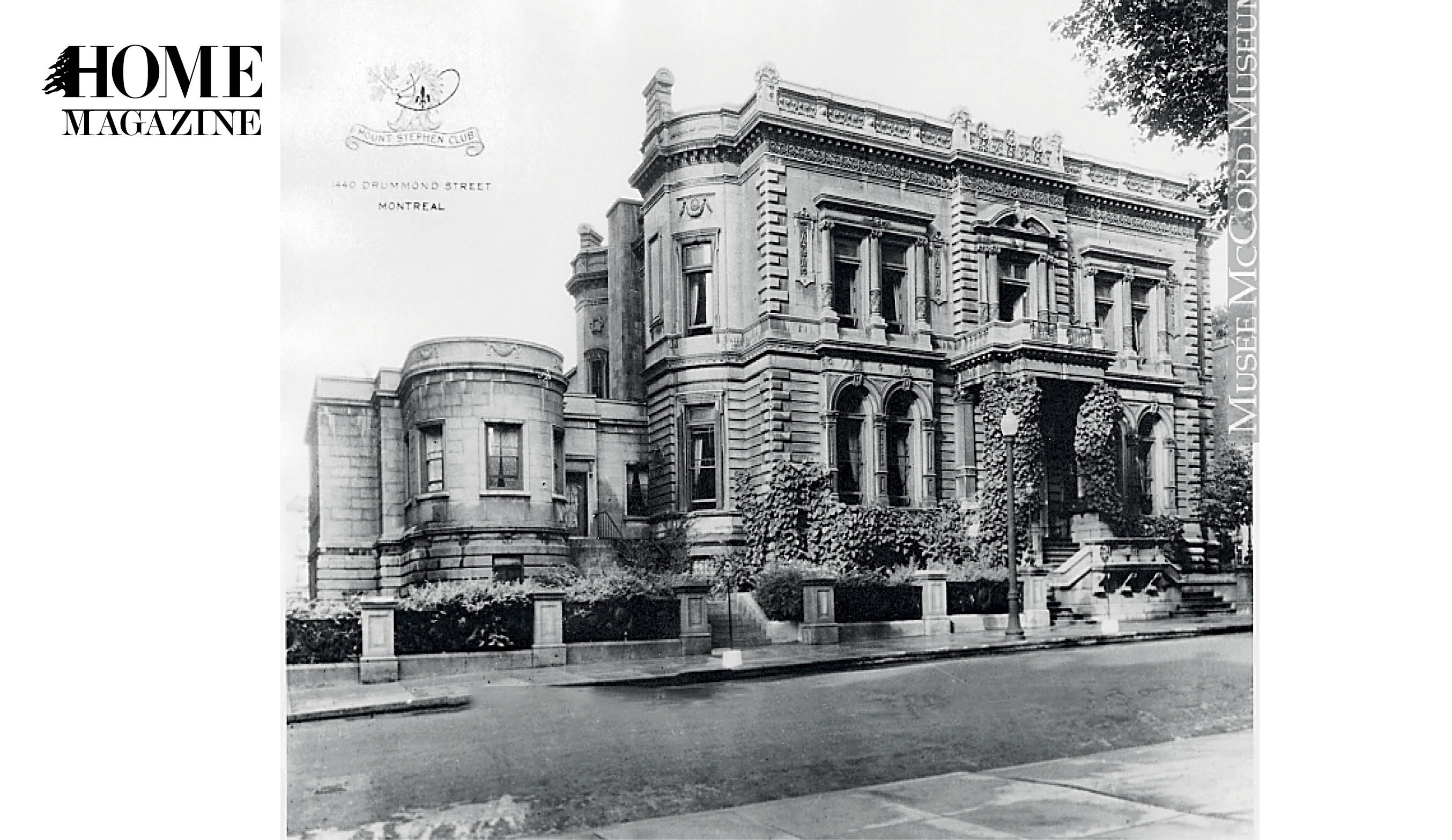
Located at 1440 rue Drummond in the heart of Montreal’s Golden Square Mile, and owned by the Tidan Hospitality & Real Estate Group, this unique mansion hotel is the result of an investment worth more than $20 million. As one of the only three Canadian hotels to be a member of the Leading Hotels of the World, Le Mount Stephen utilizes its modern touch, melding it with the building’s rich antiquity.
When Scottish immigrant George Stephen arrived in Montreal in 1850 at the age of 21, he had no idea that his entrepreneurial style and keen attention to detail would lead to him becoming one of the most distinguished businessmen of the age and a prominent figurehead of the financial community. After heading his own company in the textile industry and multiplying his investments, his name in the Montreal establishment was synonymous with success.
As co-founder and first president of Canadian Pacific, he developed the railway system and, with his deep pockets, proceeded to help build the transcontinental railway. Stephen received the title of “Lord Mount Stephen” in 1891.
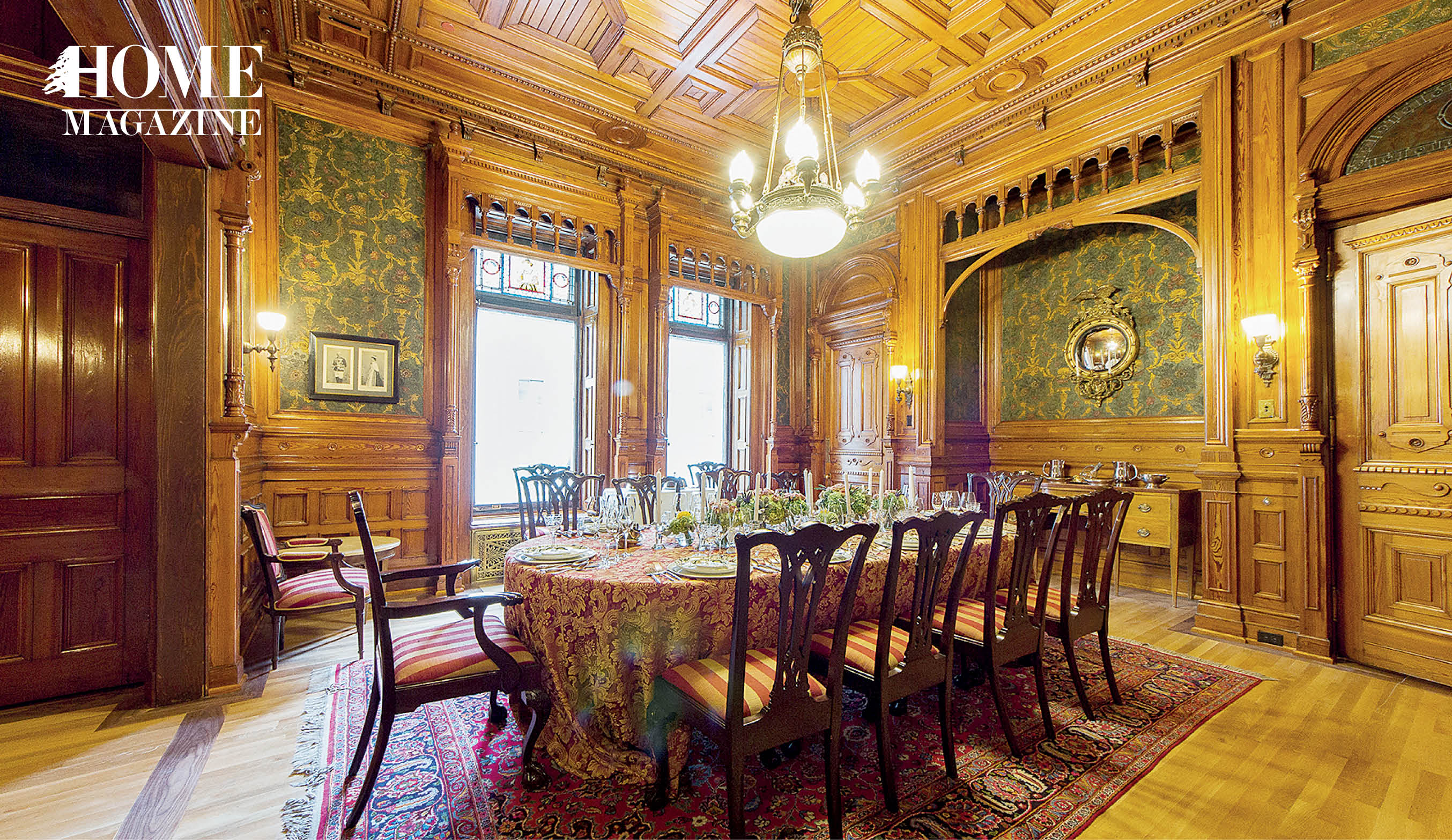
Le Mount Stephen Hotel is “a masterpiece of the neo-Renaissance style in Canada, a component of the Victorian Era inspired by the Italian Renaissance.” Recognized as a National Historic Site of Canada by the Historic Sites and Monuments Board of Canada in October, 1971, the George Stephen House was first owned and built by Lord George Baron and later turned into an exclusive club exhibiting grandeur and wealth. The Mount Stephen Club, a gentlemen’s club founded in 1926 by a prestigious group of businessmen to save the George Stephen House from demolition, was reserved for men, bringing together the Montreal and international elite for decades. In 1975, the segregation of women ended, allowing them to access the club by the main entrance and become full members. In March of that year, the Mount Stephen Club building was named a “heritage immovable” by the Ministère de la Culture et des Communications du Québec.
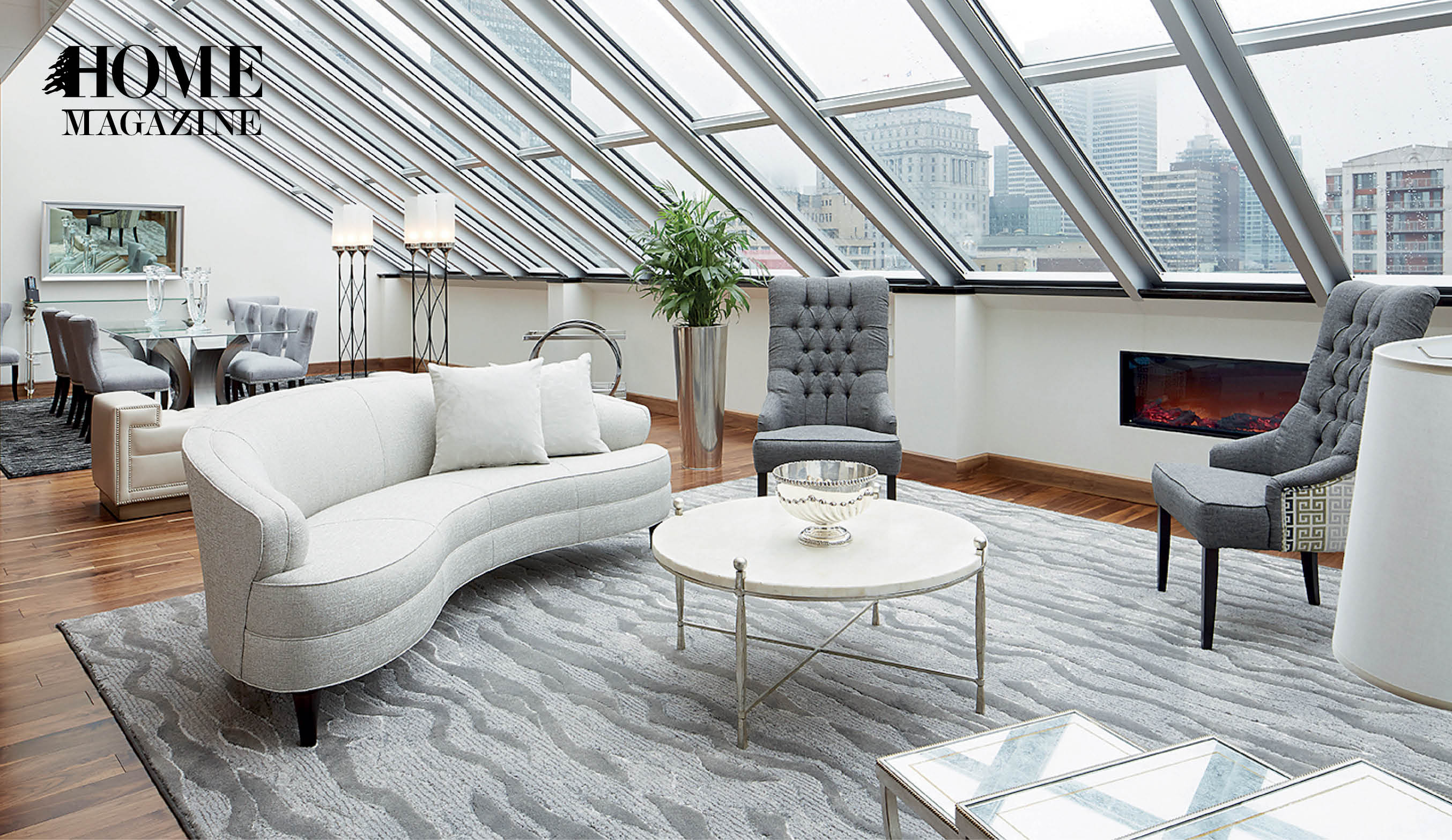
Classical, elegant, ambient, sophisticated, both exterior and interior of this jewel are awe-inspiring to behold. Though the hotel proudly boasts of its “contemporary comforts on the technological cutting edge,” the structural and architectural integrity of George Stephen House has been remarkably upheld. A new 11-story section, connected to the original period mansion by a short passage and characterized by an angled glass roof, comprises 90 rooms and has been successfully integrated into the cityscape, making it almost invisible from the street. Nine rooms are designated for persons with reduced mobility, 69 are regular accommodations, 16 are suites, four are sky-lofts, and one is a classic but modern Royal Suite with “exclusive designed furniture, museum quality antiques, and contemporary artworks.”
Pale marble bearing the hotel’s coat of arms greets guests in the lobby and reception counters, while event spaces, such as the Elizabeth Grand Ballroom, as well as a fully equipped gym and the Mbiospa Prestige Spa, are scattered around the new wing. The corridors are dressed with a subtle and calming palette of colors and period furniture from the George Stephen home. It is also home to Bar George – the newest restaurant from Oliver & Bonacini. Bar George is a restaurant built to honor Le Mount Stephen’s rich history through its “brilliant collision of the classic and inventive, of the thoughtful and playful.”
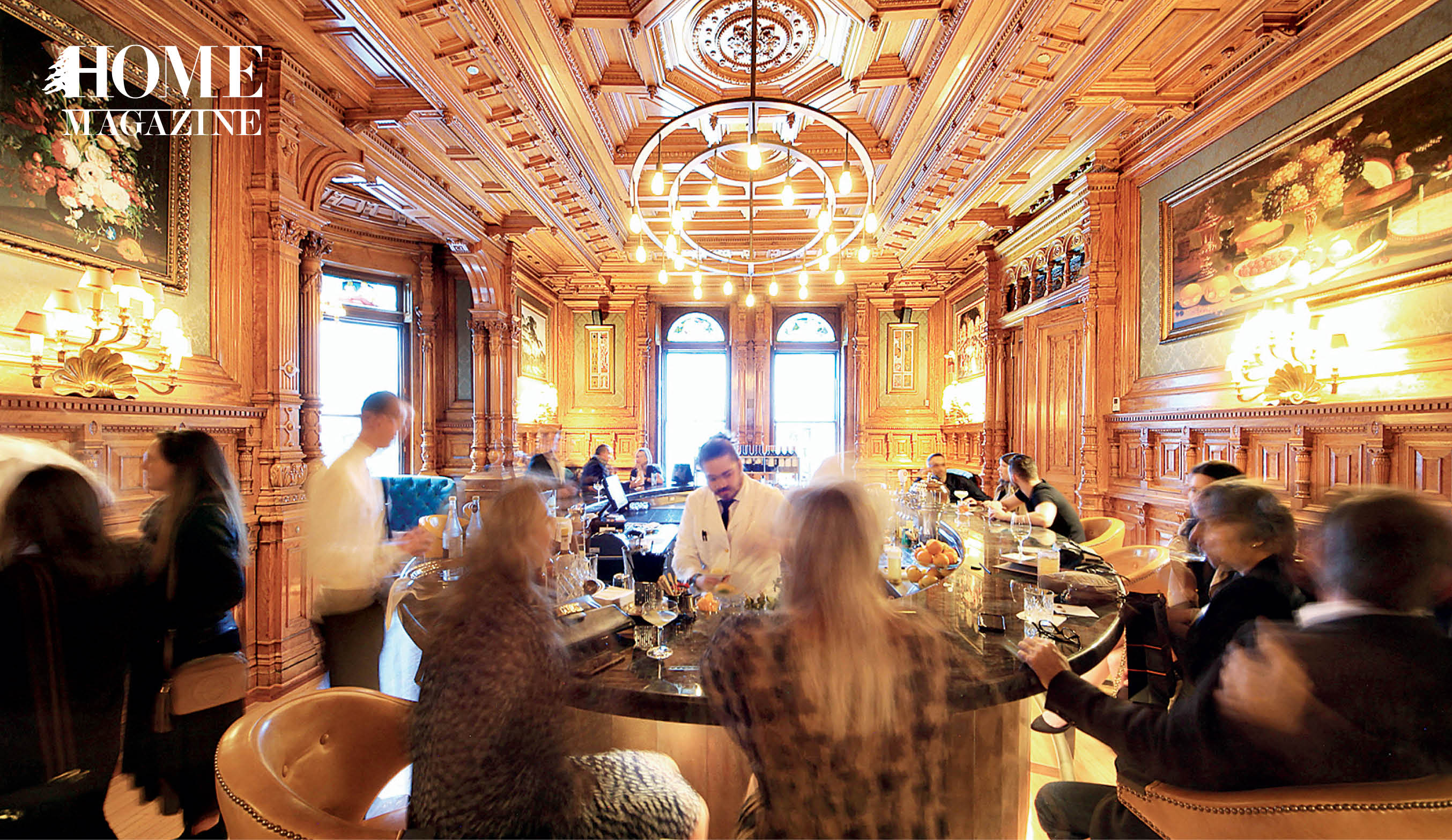
Celebrating the old in a new way, Bar George showcases the building’s noble character through contemporary offerings.
“Beyond the place, what will distinguish us is the quality personalized service,” General Manager Antoine Naoum said. “The clientele will be delighted by the geographic … the historical character and the contemporary functionality of our hotel dedicated to the art of living.” The diligence and dedication of the team embodies the very essence of what curious, trendy travelers are in search of. George Stephen’s legacy lives on, as the past, present and future intersperse in brilliant and dynamic style. Memories are reawakened within these walls.
“The project is unique in its kind,” Naoum told HOME Magazine. “You travel through the nineteenth century to sleep in today’s comfort and connectivity.”

Mr. Naoum, a renowned member of the vast Lebanese diaspora in Canada and a seasoned international hotelier, heads Le Mount Stephen Hotel with fervor and passion. He has held various positions in prestigious chains such as Le Méridien, IHG and the Ritz-Carlton, helped open the Vogue hotel, Montreal, and performed in several jobs in Lebanon, Kuwait, Bahamas and Greece. Naoum explained how his Lebanese background has influenced him in his work with Le Mount Stephen Hotel.
“Being born in Lebanon and partially living through the war, it has evolved in me the eagerness to explore the world and to flee the danger,” he said. “Since I was a child, I have been inspired by Gibran Khalil Gibran, dreamt and pursued my passion in becoming a hotelier of the world. Having been proudly raised the Lebanese way helped me appreciate values, ethics and know-how and mentoring those values in others, it is an ongoing dynamic. I was fortunate to have contributed to the Lebanese Diaspora Energy (LDE) Montreal by hosting the official delegation at Le Mount Stephen and for being a member of the organization committee.” With his Lebanese passion and zest for life, Naoum is always ready to represent and serve Lebanon.
[instalink id=”14″]


 Signature Boutique