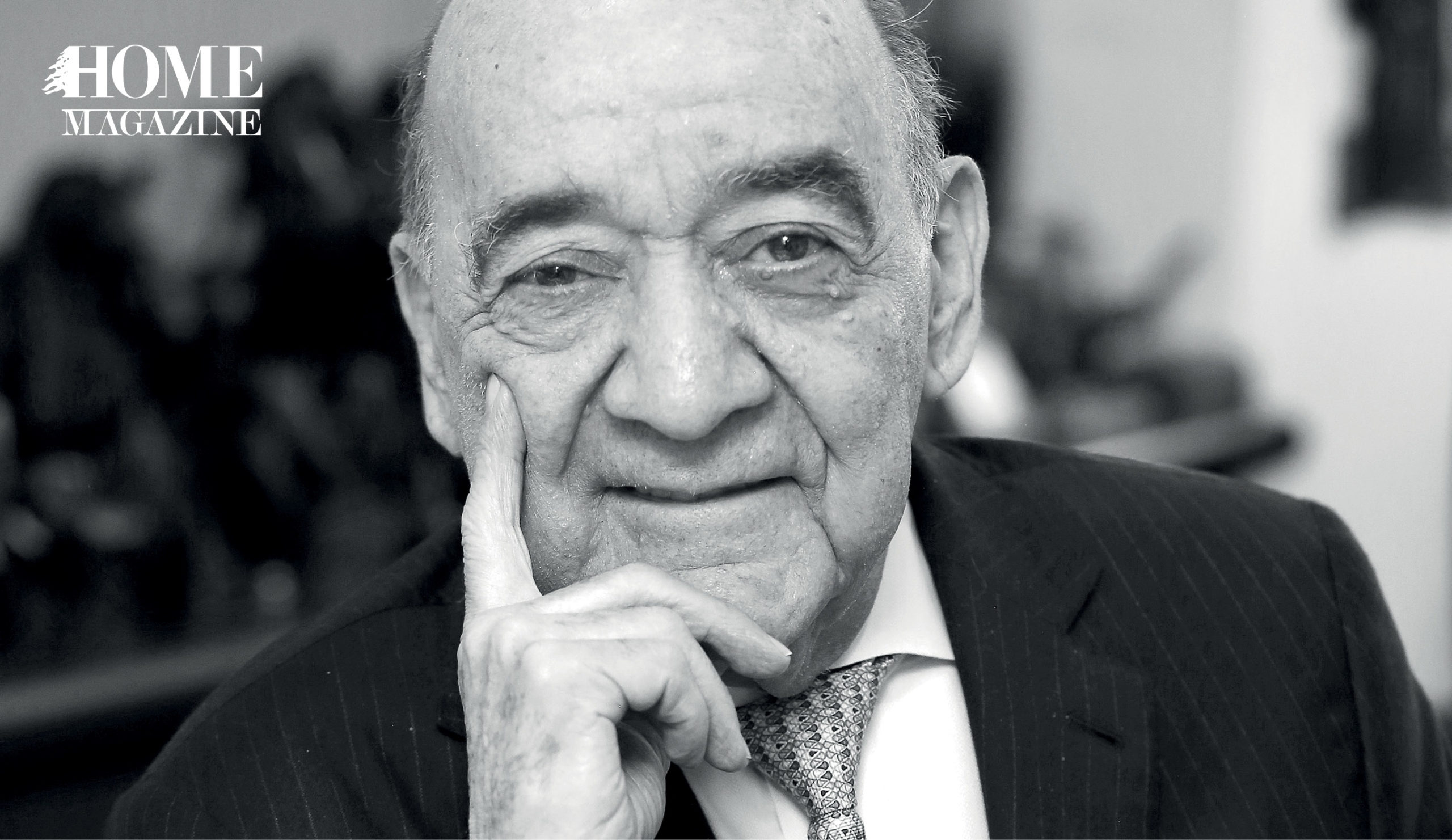
An interview with Charles El-Mir, Lebanese Ice Hockey Federation president based in Montreal, Canada.
Ice hockey — one of the most popular sports — is played at the Olympic Games. Today hockey is a major sport, especially in North America where it is a multi-billion-dollar industry.
When we think of hockey, Canada immediately comes to mind. Canadian hockey players express their pride wearing the maple leaf jersey. As of late, Lebanon has been trying its hand at the sport and shooting pucks.
Famous Lebanese athletes mainly play basketball or football. Since 2018, Lebanon has an ice hockey team based in Montreal.
On April 2017, Lebanon’s ice hockey team played its first game in history against Team Haiti (and won!) at Arena Raymond Bourque in Montreal. It was a surprisingly successful event, attracting around 1,000 ice hockey fans.
Since then, the Lebanese ice hockey team participated in various exhibition games and tournaments locally and internationally against competitors from Belarus, Germany, Algeria, Morocco, Egypt, Philippines, Tunisia, and the United Arab Emirates.
In April 2018, the Lebanese ice hockey team achieved the Silver Medal in the Arab Cup, which was held in Abu Dhabi.
They also participated in the Lebanese Diaspora Energy (LDE) event in September 2018, playing the opening-exhibition game at McGill University ice rink.
The team is in its second year now. Most of the players are Canadian-born young men and women of Lebanese descent. “Sport activities are the best way to reunite people without including religion or politics,” says Charles El-Mir, the founder and president of the young Lebanese Ice Hockey Federation.
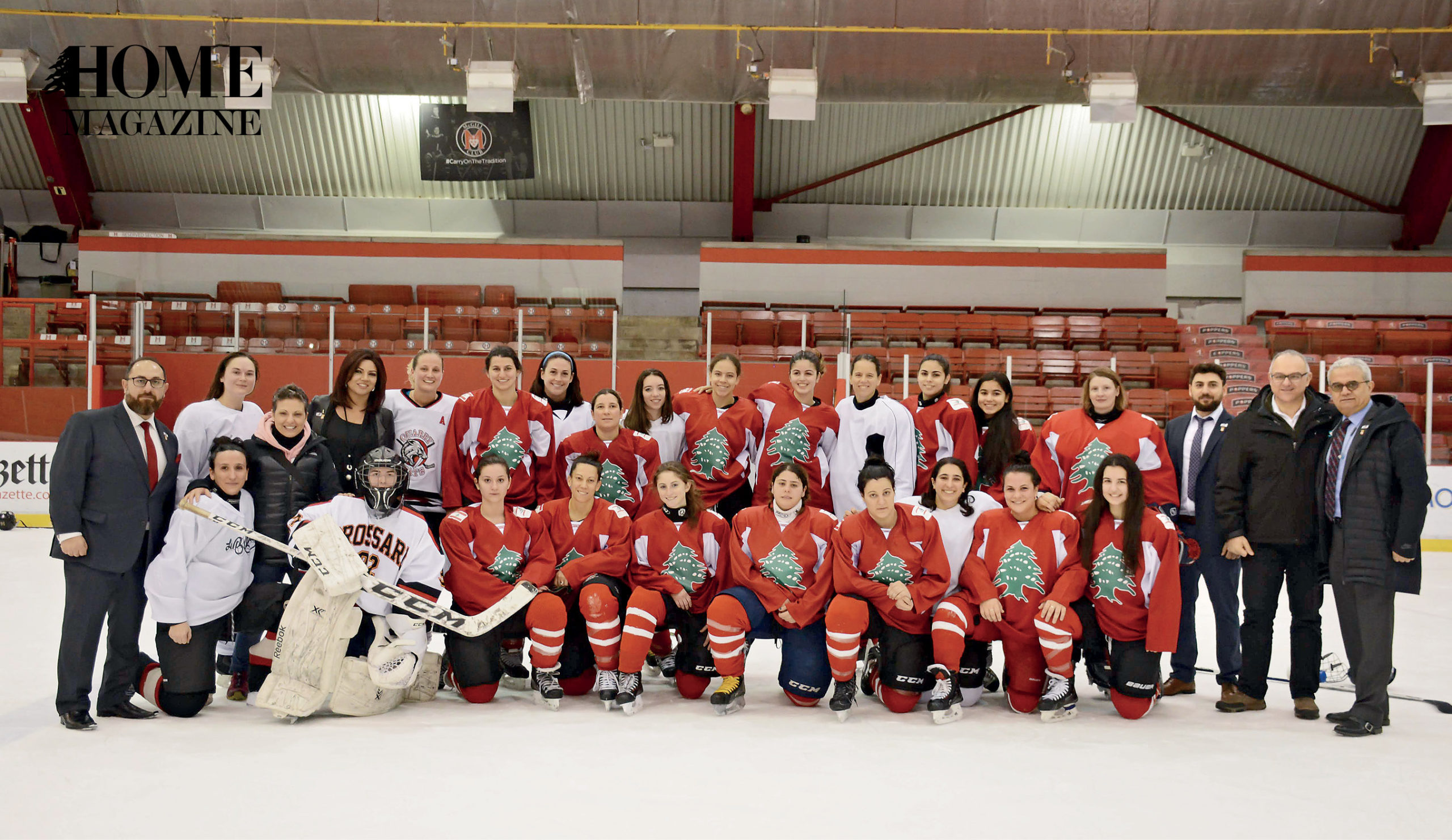
The Lebanese Ice Hockey Federation oversees the Lebanese local and international ice hockey teams and development program of adults and youth. The federation also manages the Lebanese national team at international tournaments and exhibition games.
From its base in Montreal, the Lebanese Ice Hockey Federation coordinates its activities with Lebanese and Canadian governmental organizations such as the Lebanese Olympic Committee, the Lebanese Embassy in Canada and the Canadian Embassy in Lebanon. As of September 26, 2019, the Lebanese Ice Hockey Federation became a member of the International Ice Hockey Federation (IIHF), which allows the federation to take part in official IIHF world tournaments and championships. “The next step is to build the first rink in Lebanon,” says El-Mir.
El-Mir stresses on the team’s link to Lebanon and mentions, “We strongly believe in promoting positive change within the Lebanese communities as well as improving the global impression of Lebanon. We intend to represent Lebanon in a positive light on an international stage through ice hockey.”
He adds, “We are in the process of bringing Lebanese families back to their roots and HOMEland through their connection with the Lebanese hockey team. We are also encouraging them to update their citizenship status through the consulates and embassies where they are residing.”
The Lebanese Ice Hockey Federation board is composed of professionals, leaders, university graduates, and entrepreneurs who generously invest their time and efforts to the game. One thing they share is a strong drive to popularize the sport in Lebanon. Overall, the board rallies behind the idea of making Lebanon into a hockey-loving nation.
Short-term objectives include becoming a member of the Lebanese Olympic Committee (LOC) in order to compete in the 2020 Asia Cup and 2021 Asia Winter Games.

In the long term, the Lebanese Ice Hockey Federation is looking at building a sports center, containing an ice hockey rink, training facilities, and gym. The complex will be designed for players to train as well as for hockey games and events to be held in Lebanon. With these advancements, a Lebanese hockey team playing in the Winter Olympic Games could become a reality.
Last but not least, the first Lebanese women’s hockey team was launched in December 2018, constituting the third Arab female hockey team.
The team is comprised of more than 15 players of Lebanese origin. While most come from across Canada, some recruits hail from the United States. In a positive turnout for the fledgling squad, 30 women have registered for the tryouts in Ottawa in August 2019.
Women of the team (aged from 15 to 38) are active players in their respective high school hockey clubs and are part of, for the first time, a team representing Lebanon. The team is currently fundraising to fulfill their aim of becoming a part of the 2121 Olympics.
The most famous player of all time is the Canadian player Wayne Gretzky, nicknamed “the great one.” Maybe another great one is training in Montreal right now, and it could be a Lebanese woman. Go! Go! Go! Team Lebanon!

HOMEland Magazine
We firmly believe that the internet should be available and accessible to anyone, and are committed to providing a website that is accessible to the widest possible audience, regardless of circumstance and ability.
To fulfill this, we aim to adhere as strictly as possible to the World Wide Web Consortium’s (W3C) Web Content Accessibility Guidelines 2.1 (WCAG 2.1) at the AA level. These guidelines explain how to make web content accessible to people with a wide array of disabilities. Complying with those guidelines helps us ensure that the website is accessible to all people: blind people, people with motor impairments, visual impairment, cognitive disabilities, and more.
This website utilizes various technologies that are meant to make it as accessible as possible at all times. We utilize an accessibility interface that allows persons with specific disabilities to adjust the website’s UI (user interface) and design it to their personal needs.
Additionally, the website utilizes an AI-based application that runs in the background and optimizes its accessibility level constantly. This application remediates the website’s HTML, adapts Its functionality and behavior for screen-readers used by the blind users, and for keyboard functions used by individuals with motor impairments.
If you’ve found a malfunction or have ideas for improvement, we’ll be happy to hear from you. You can reach out to the website’s operators by using the following email
Our website implements the ARIA attributes (Accessible Rich Internet Applications) technique, alongside various different behavioral changes, to ensure blind users visiting with screen-readers are able to read, comprehend, and enjoy the website’s functions. As soon as a user with a screen-reader enters your site, they immediately receive a prompt to enter the Screen-Reader Profile so they can browse and operate your site effectively. Here’s how our website covers some of the most important screen-reader requirements, alongside console screenshots of code examples:
Screen-reader optimization: we run a background process that learns the website’s components from top to bottom, to ensure ongoing compliance even when updating the website. In this process, we provide screen-readers with meaningful data using the ARIA set of attributes. For example, we provide accurate form labels; descriptions for actionable icons (social media icons, search icons, cart icons, etc.); validation guidance for form inputs; element roles such as buttons, menus, modal dialogues (popups), and others. Additionally, the background process scans all the website’s images and provides an accurate and meaningful image-object-recognition-based description as an ALT (alternate text) tag for images that are not described. It will also extract texts that are embedded within the image, using an OCR (optical character recognition) technology. To turn on screen-reader adjustments at any time, users need only to press the Alt+1 keyboard combination. Screen-reader users also get automatic announcements to turn the Screen-reader mode on as soon as they enter the website.
These adjustments are compatible with all popular screen readers, including JAWS and NVDA.
Keyboard navigation optimization: The background process also adjusts the website’s HTML, and adds various behaviors using JavaScript code to make the website operable by the keyboard. This includes the ability to navigate the website using the Tab and Shift+Tab keys, operate dropdowns with the arrow keys, close them with Esc, trigger buttons and links using the Enter key, navigate between radio and checkbox elements using the arrow keys, and fill them in with the Spacebar or Enter key.Additionally, keyboard users will find quick-navigation and content-skip menus, available at any time by clicking Alt+1, or as the first elements of the site while navigating with the keyboard. The background process also handles triggered popups by moving the keyboard focus towards them as soon as they appear, and not allow the focus drift outside it.
Users can also use shortcuts such as “M” (menus), “H” (headings), “F” (forms), “B” (buttons), and “G” (graphics) to jump to specific elements.
We aim to support the widest array of browsers and assistive technologies as possible, so our users can choose the best fitting tools for them, with as few limitations as possible. Therefore, we have worked very hard to be able to support all major systems that comprise over 95% of the user market share including Google Chrome, Mozilla Firefox, Apple Safari, Opera and Microsoft Edge, JAWS and NVDA (screen readers).
Despite our very best efforts to allow anybody to adjust the website to their needs. There may still be pages or sections that are not fully accessible, are in the process of becoming accessible, or are lacking an adequate technological solution to make them accessible. Still, we are continually improving our accessibility, adding, updating and improving its options and features, and developing and adopting new technologies. All this is meant to reach the optimal level of accessibility, following technological advancements. For any assistance, please reach out to