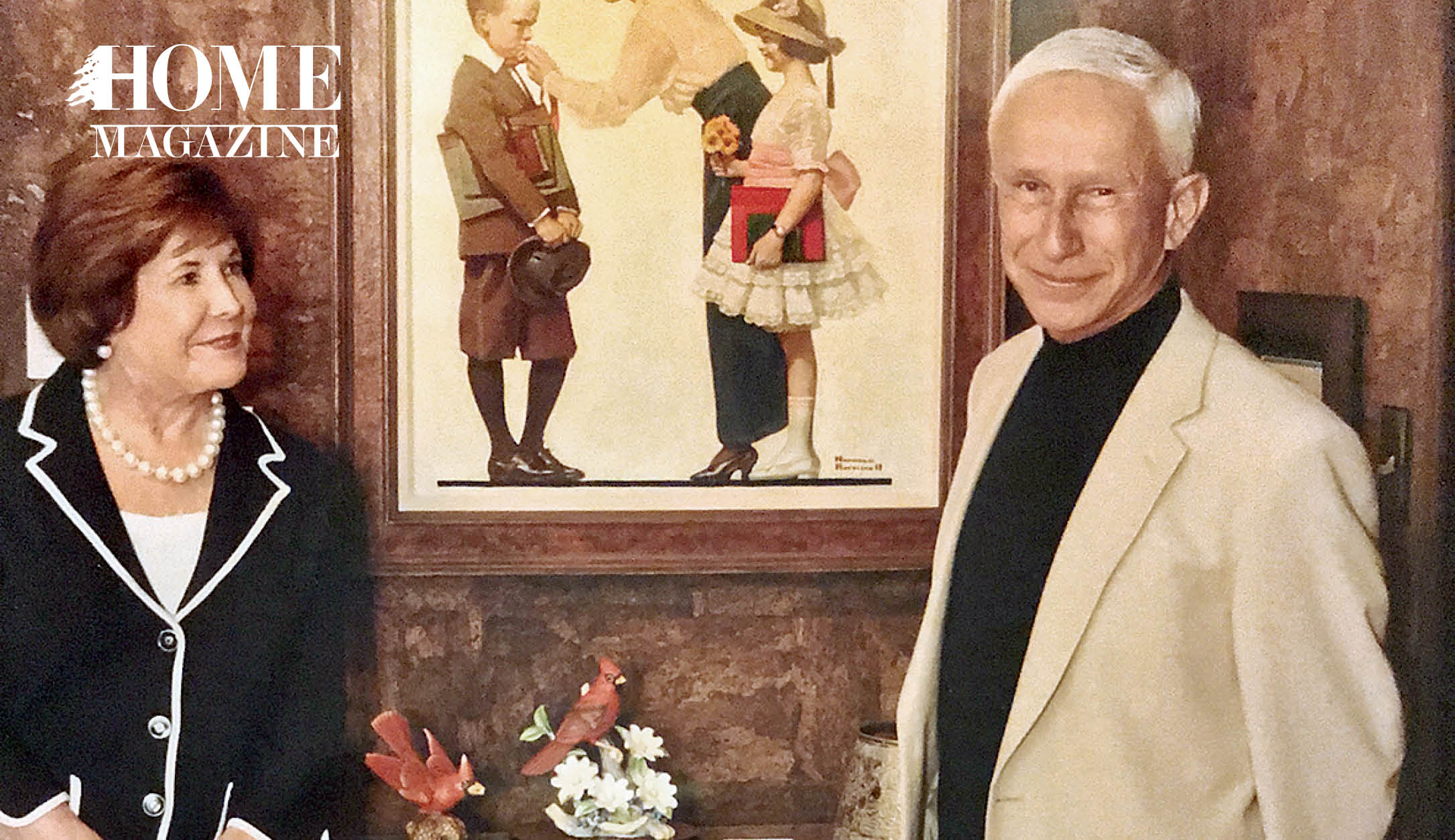
Therese and Malouf Abraham with inlaid wooden table from Lebanon and Norman Rockwell’s painting First Day of School
Lebanese-American and his wife donate their unique HOME and art collection to share their love of art with a Texas community.
Tucked away in the little town of Canadian in the Texas Panhandle is the Citadelle, a very special art museum housed in an amazing historical building. The founder of the Citadelle Art Foundation, Malouf Abraham, is a third-generation Lebanese-American who has had an impressive career as a doctor, art collector and philanthropist.
The Lebanese origin of this story begins with Malouf ’s grandfather Na’im Ibrahim Ma’alouf from the village of Kfar’aqab in the Matn region of Lebanon. In 1901, Kfar’aqab, an important base for the Ma’alouf family, was a village in the Lebanese autonomous region of the Syrian province of the Ottoman Turkish Empire. In that year, Na’im began a fairly typical saga of emigration from Lebanon, multiplied by five. During five trips abroad, Na’im made quite a tour of key destinations of Lebanese emigrants. He visited his brother George and family in Sydney. He went to Sao Paolo, Brazil, where he visited two brothers-in-law and briefly opened a small store. He visited relatives in Roanoke, Virginia, where he took his first job rolling handmade cigars and took up the practice of peddling goods to rural communities. He also peddled goods in the areas around Salt Lake City and Provo, Utah, with two brothers Salem and Jacob.
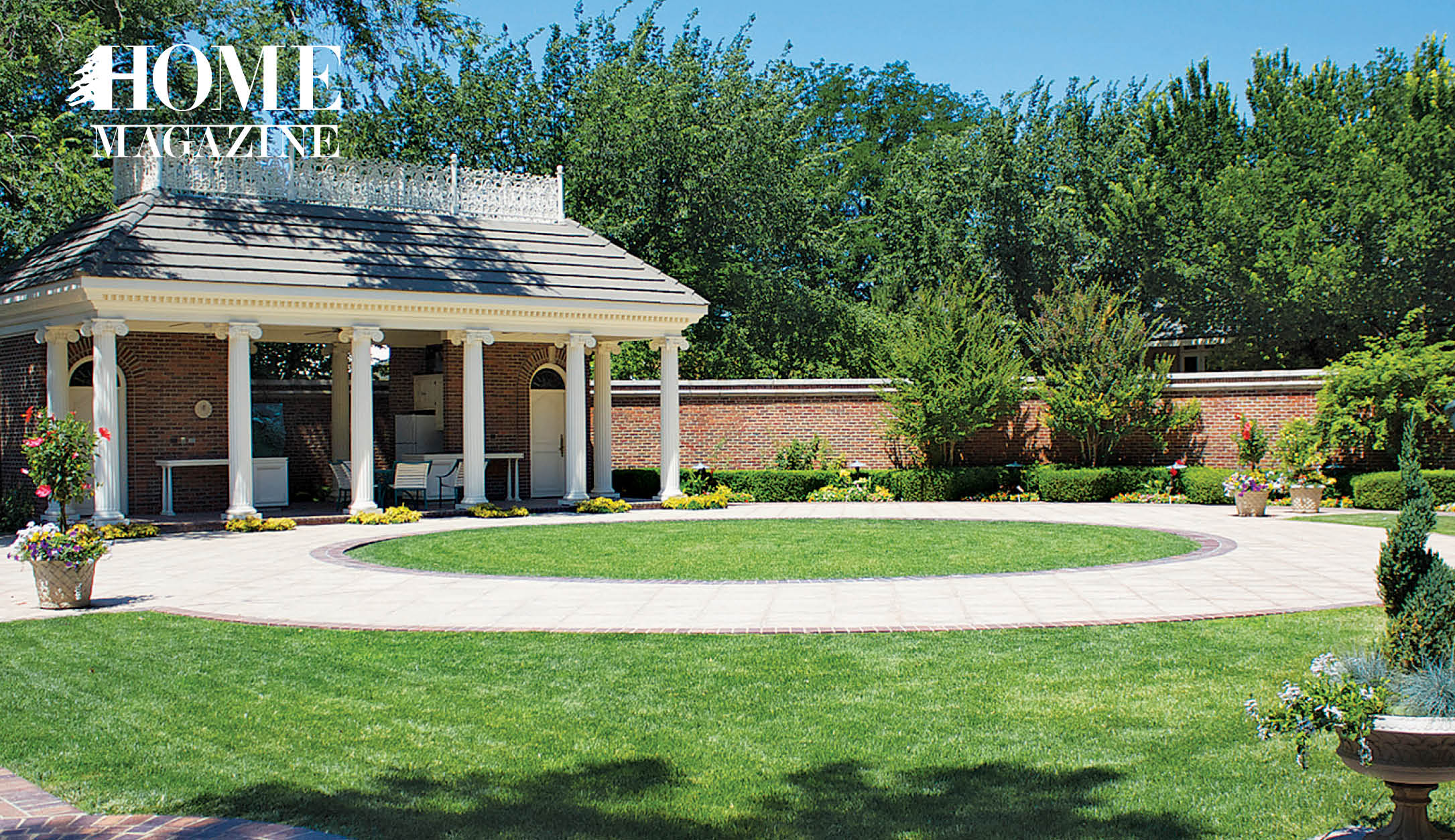
Pavilion Garden of the Citadelle Art Foundation
When he returned to Lebanon after the fifth trip, Na’im met and married Alia, the daughter of Dr. Abdallah Bulus Baz Ma’alouf, also from Kfar’aqab, and opened a small general store in the village. His first two sons were born there, Nasib in 1907 and Tom in 1910. He had planned to settle there permanently, but the region was unstable and the Ottoman Empire was engaged in war. This led to a wave of emigration of young Lebanese men due to fears of conscription into the Ottoman army.
Na’im decided it was time to move his family abroad. He initially went alone to Amarillo, in the Texas Panhandle in 1912. He sold ready-to-wear clothing, fine linens, scarves and other goods out of a suitcase in towns along the railroad. People in Canadian, Texas, were much more responsive than other communities, so he decided to move there.
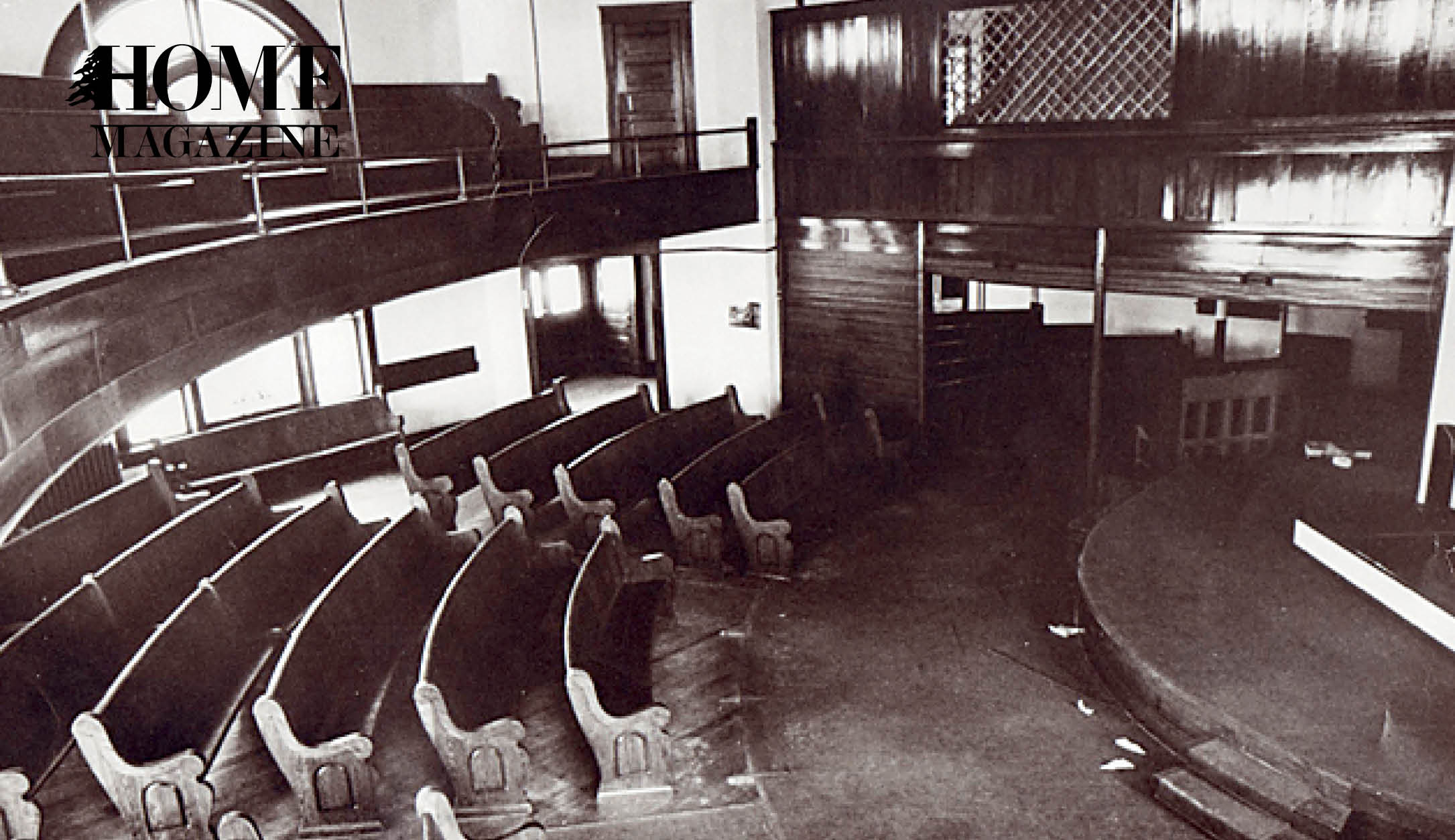
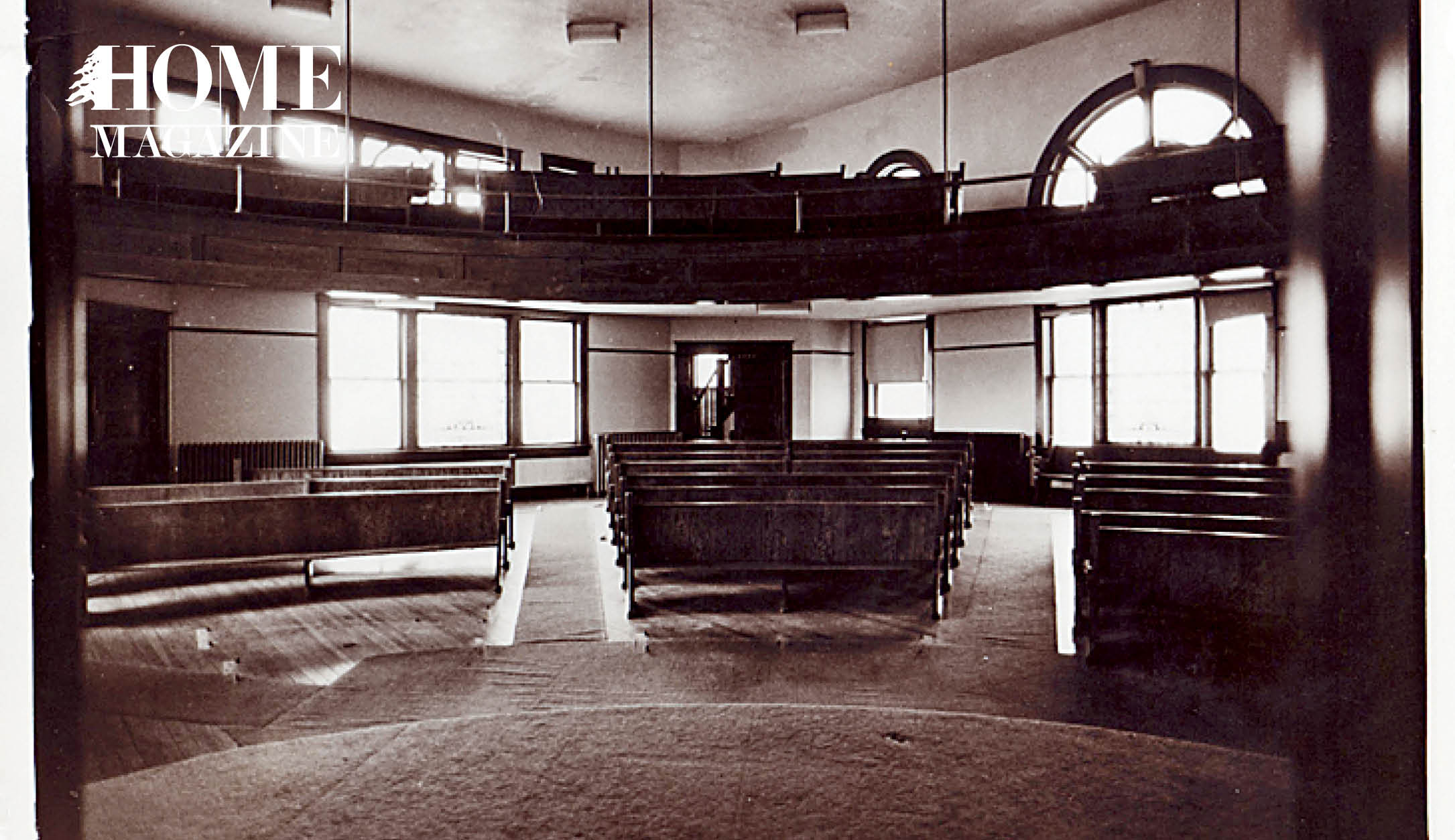
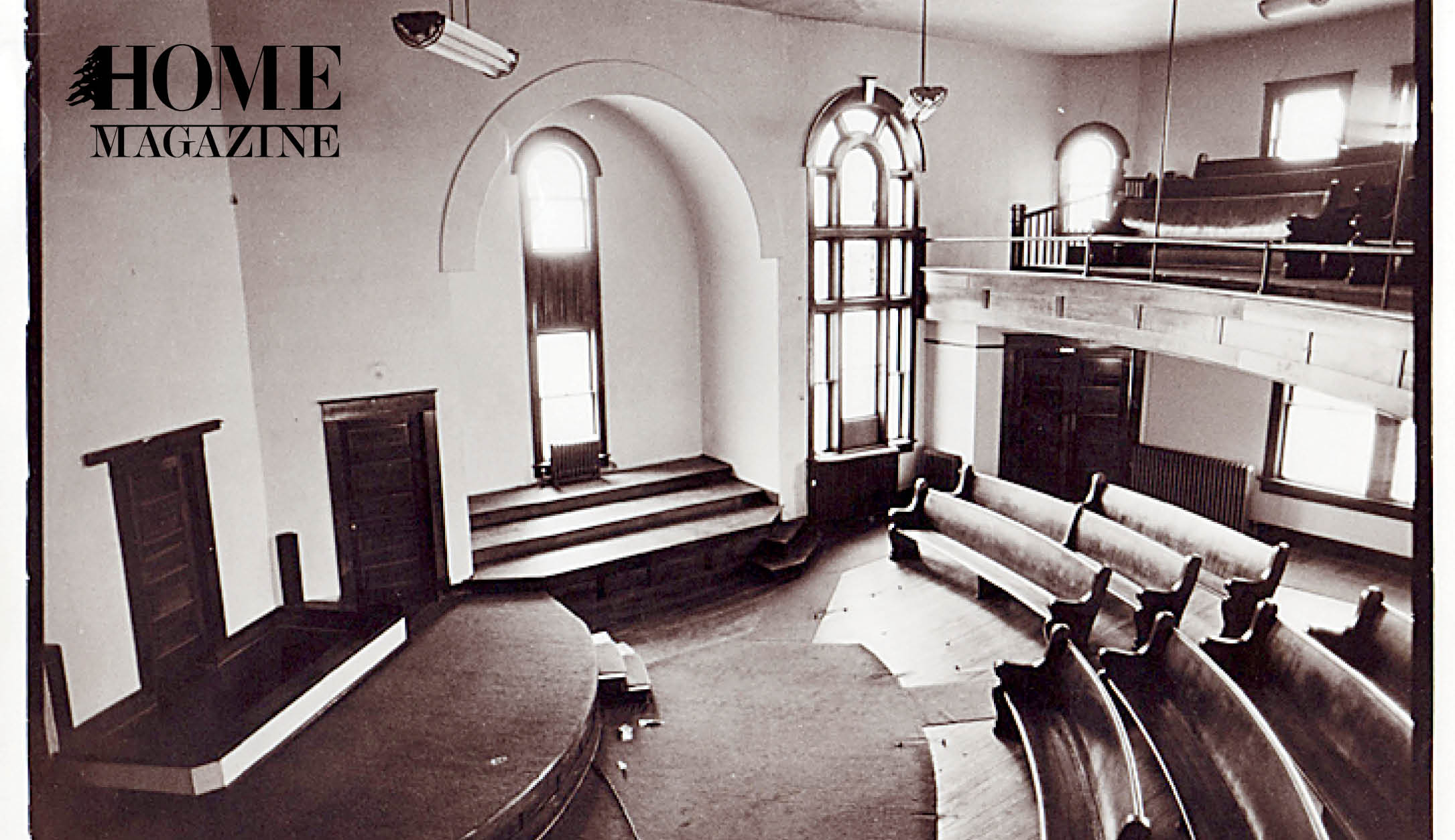
Inside of the abandoned church that became the Abrahams’ HOME and later the Mansion of the Citadelle Art Foundation.
By 1913, he had opened a small clothing store, the Fair Store, with an apartment for his family in the back. He sent for Alia and their two sons, and then went to meet them at Ellis Island. When Na’im had come through earlier, he had taken the anglicized name of his father Ibrahim as their family name – hence, Nahim Abraham. But Alia and their sons came as Ma’alouf, so it took some time to clear the confusion. Alia never forgave Nahim for dropping the family name that she was so proud of as both her maiden and married name. In compensation, the name Ma’alouf was retained as the first name of their next child. Malouf was born in Canadian in 1915, followed in 1917 by their fourth son, Edward.
When business at the store was slow, Nahim and Alia took turns selling their goods in other towns along the railroad line, and with hard work, their family business succeeded and grew. Nahim and Alia made a brief visit to Lebanon in 1938, but their stay was cut short by the start of World War II.
Nahim’s son Malouf Abraham (nicknamed “Oofie”) married Iris Lewis, a descendent of the earliest settlers of Hemphill County and they had three children: Malouf, Jr., Bill Ed and Betty. Oofie was successful in the oil and gas business in the upper Texas and Oklahoma Panhandles as it boomed in the 1950s, amassing considerable wealth and sharing much of his good fortune with others. Because of both his business achievements and philanthropic generosity, he was honored with the first Living Legend Award from the Panhandle Producers and Royalty Owners Association. He also served as mayor of Canadian and served two terms in the Texas House of Representatives from 1966 to 1970.
Malouf Abraham, Jr., (Oofie and Iris’ first child) was born in 1939. In an interview with him, he recalled that visiting his grandparents was like going to another country. He remembered playing “animal hop” with his siblings and cousins on Persian rugs that had animal shapes embedded in them. The HOME also had a samovar, brass trays, gold bracelets and tapestries of Baalbek and The Cedars.
And he recalled Sunday dinners cooked by his grandmother, who always prepared wonderful Lebanese food like fatayer, kibbe balls, tabouli, stuffed grape leaves, ma’amoul and what he called “twisty cookies,” flavored with rose water. He also remembered his father wrote a letter to a nursery for his grandmother, inquiring about grape plants that would be good for stuffed grape leaves; she didn’t care about the grapes.
And on St. George’s Day, she would call all the kids in the neighborhood, feed them and have a bonfire in celebration of St. George, the patron saint of Lebanon, who was known for killing a dragon.
Malouf recalled that his grandparents would argue a lot and that his grandfather would tell his grandmother, “You’re killing me by the inch.” He wonders if that might be the translation of some Arabic saying.
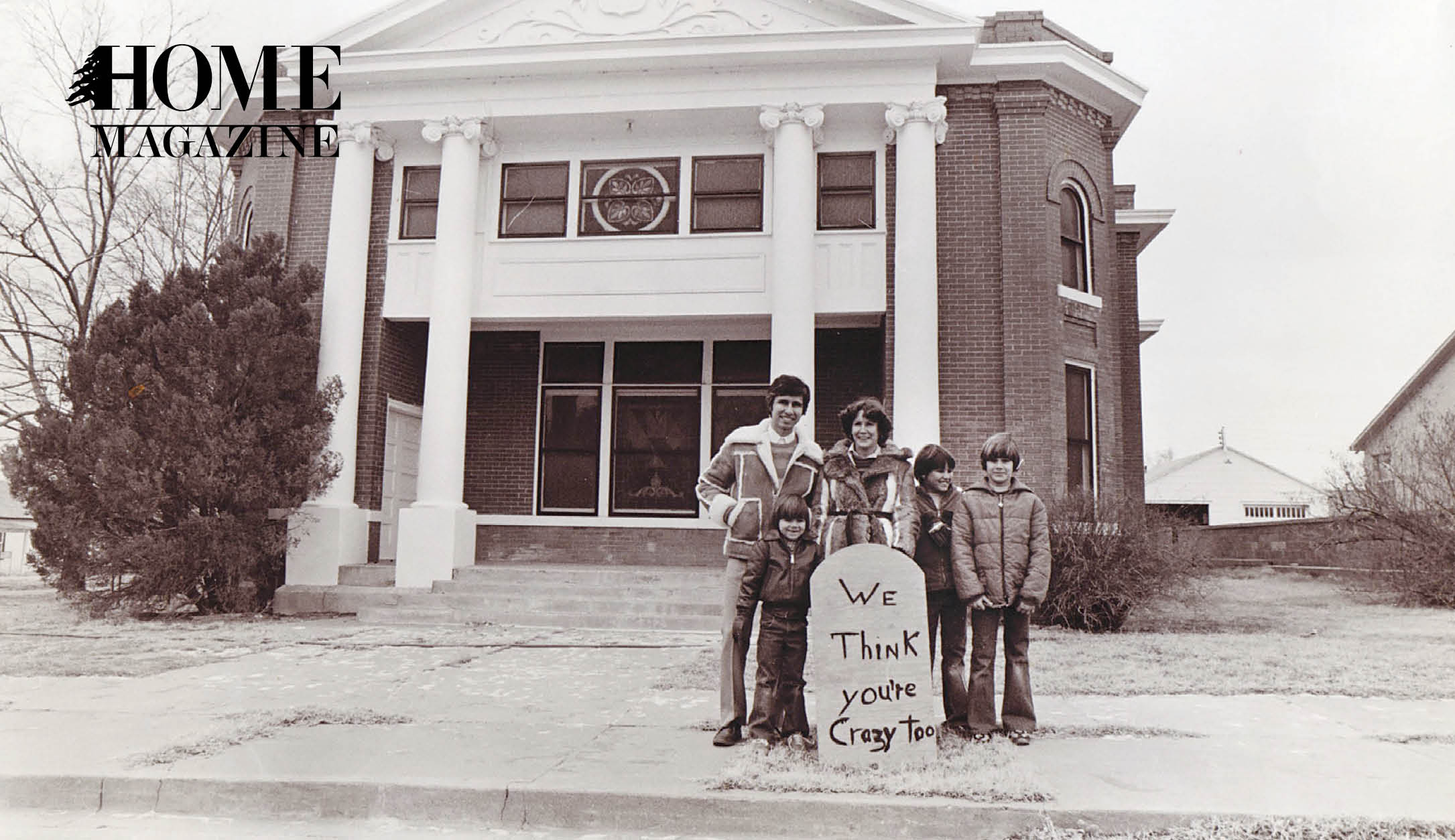
Malouf and Therese Abraham and their children in 1977
Malouf, Jr., went to Trinity University in San Antonio and then Southwestern Medical School in Dallas. And in 1961, his father decided to take Malouf, then about 21, and his sister, 19, to Lebanon. They spent 10 or 11 days there, going to Kfar’aqab, the village of his grandparents, and seeing Baalbek, Casino du Liban, The Cedars and Beirut.
Soon after the trip, Dr. Malouf interned in Greensboro, North Carolina, where he met a young nurse, Therese Browne.
They married in 1963. About that time, Malouf received his draft notice. He joined the Air Force, where he served as a captain and military doctor during the Vietnam War. He was put in charge of an allergy clinic. Soldiers were suffering from respiratory problems they got from the Vietnamese jungles and his task was to help them breathe better. As he experimented, he came up with homeopathic vaccine shots that introduce minute amounts of allergens into the body to stimulate the immune system. He was awarded the Air Force Commendation Medal for his work in treating military personnel for allergies.
In 1967, after completing his service, Dr. Malouf returned to Canadian with his wife Therese, where they had their three children (Salem, Jason and Eddie) and where he maintained an allergy clinic for 35 years. He retired in 2001 and publicly released Allernon, a medication to assist the immune system against allergies.
In 1972, Dr. Malouf and Therese bought Norman Rockwell’s painting First Day of School during a visit to New York City. The purchase ignited their lifelong passion for selecting and buying precious artwork, guided in large part by curator Leah Kleman of New York City. Five years later, in 1977, they purchased the property that was to house the Abraham Art Collection.
Malouf and Therese were active members of the National Trust for Historic Preservation, which was concerned with protecting America’s architectural landmarks. There was such a landmark in Canadian, one that had been built in 1910 as the First Baptist Church. It was bought in 1955 by the Church of Christ and used as their place of worship for 20 years.
Following that, it was abandoned for two years and there was talk of tearing it down and building something else in its place. But on New Year’s Day 1977, the Abrahams bought the church, making sure that wouldn’t happen. Many people thought the Abrahams were crazy to buy it, and so Malouf, Therese and their three children, in jest, took a picture in front of the building with a sign saying, “We Think You’re Crazy, Too.”
They made major renovations, renamed the building the Citadelle Mansion, and for a long time lived in it as their primary home. Over the years, the Abrahams bought up nine different properties to expand the Mansion and develop the gardens.
Malouf and Therese were very active in civic life. Therese was Canadian’s first woman mayor, serving from 1981 to 1991.
She was given a Distinguished Service Award by West Texas State University in 1982 for her civic achievements, and in 1984, she was chosen Canadian’s Woman of the Year.
She and Malouf have both been very active in boards and committees in the Panhandle concerned with historic preservation and promotion of the arts, among other civic issues. Their legacy in both was assured in 2009 when they established the Citadelle Art Foundation through the donation of their HOME, grounds and a collection of hundreds of art pieces including paintings, sculptures, and fine art. The foundation’s permanent collection includes more than 150 paintings from around the world, as well as many unique sculptures and antiques.
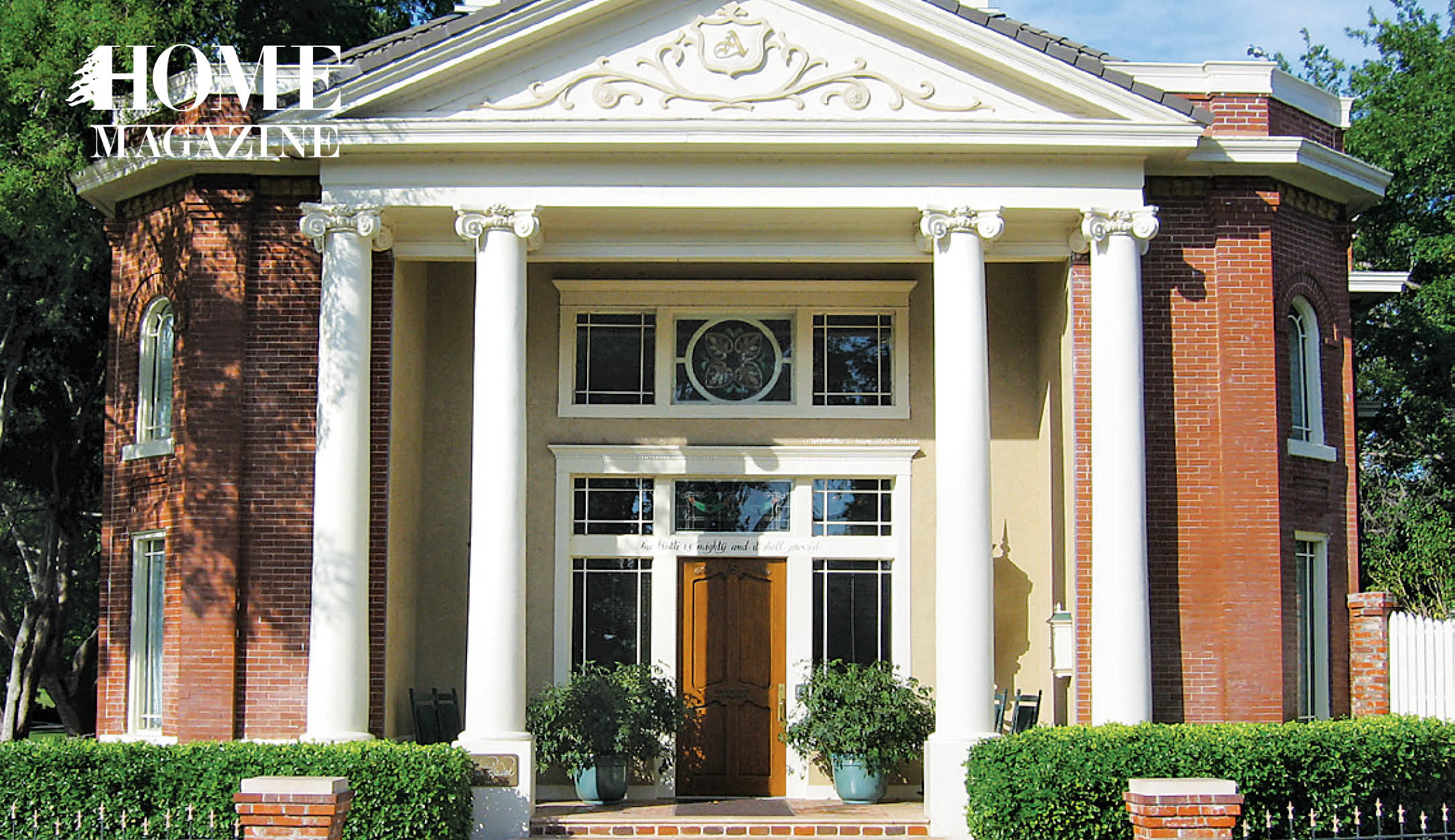
The Mansion of the Citadelle Art Foundation museum complex today.
One of its programs is The Citadelle Road Show, which brings art to classrooms across the Texas Panhandle free of charge, integrating art with other subjects like history, math and science. It also offers free educational tours of the museum, along with art activities for schools and teachers.
One of the features of this impressive art museum is the Iris & Oofie Abraham Gallery, named after Malouf ’s parents. In it, the foundation has hosted many different art exhibitions. The museum is open to the public, and some of its buildings and gardens are rented out for weddings and other special events.
One of the prized pieces in the museum is a beautiful inlaid wooden table from Lebanon – just one of the whispers from Dr. Abraham’s Lebanese heritage. Another is the fact that the Abrahams still celebrate Christmas with Lebanese food.
While Malouf is clearly proud of his Lebanese heritage, Lebanon is also proud of the wonderful legacy Dr. Malouf Abraham has given the world through his many achievements, and especially the Citadelle Art Foundation in Canadian, Texas.
For more info: http://www.thecitadelle.org

HOMEland THEMES
Coming Soon
HOMEland Events & Collaborations
Coming Soon
 Signature Boutique