
Interviewed by: Patricia Bitar Cherfan, Editor-in-Chief
“I am from the old stock,” says Moise Khayrallah proudly, but with an equal measure of humility, as he explains to HOME that his family ancestry can be traced back almost 400 years in Ghbeleh. A quiet and verdant mountainous village 42 kilometers from Beirut in the Ftouh Keserwan district, Ghbeleh holds plenty of fond childhood memories for Khayrallah, who left Lebanon at the age of 24 to pursue his doctorate studies in Raleigh, North Carolina. During his brief visit to Lebanon, HOME met with Khayrallah to learn more about his fascinating career in the United States and his fervent intent to give back to his HOMEland.
Before moving to the United States, Khayrallah completed his undergraduate studies, followed by a master’s degree in psychology, at the American University of Beirut. Always interested in the phenomena of the mind and its functions, he decided to pursue a Ph.D. in psychology, which he did at the University of North Carolina (UNC) in Chapel Hill. After his doctorate Khayrallah remained in the USA and went on to have an illustrious career in the field of biopharmaceuticals spanning almost three decades.
United States: Pursuing Higher Education and a Career in Biopharmaceuticals
After acquiring his doctorate in 1993, Khayrallah was discouraged from returning to the war-torn Lebanon of that time and began to pursue his U.S. citizenship while seeking work. “Actually I got into pharmaceutical research by chance,” explains Khayrallah, who was always interested in the research aspect (and not the actual practice) of psychology. He found that the tools of research were the same–whether it was psychology or pharmaceuticals. The same year he joined Burroughs Wellcome (which would later merge with GlaxoSmithKline) and worked with them until 1996.
“After being with this company for nine years, my Lebanese entrepreneurial spirit kicked in,” he laughs. He loved research and pharmaceuticals, but he no longer wanted to work in a large company. In order to learn the business mechanics of pharmaceuticals, he joined a string of small companies, delving in their financial and joint venture projects. In 2002, he launched his first company, Alius Pharma, LLC., which was followed by Addrenex Pharmaceuticals, Inc. four years later. In 2010, he co-founded Neuronex Inc., a company focused on developing treatment for seizure disorders.
Over time, Khayrallah perfected a model in which he focused on research while managing a lean operation, without a lot of structure, so that he could swiftly develop a new drug. “My team and I perfected a model that became skilled in dealing with the Food and Drug Administration (FDA), making connections and building a network of providers outside of the company that could supplement my skills,” explains Khayrallah. He would partner with medical and pharmaceutical experts for all the technical know-how, leaving him and his core team of 10 staff members to focus on the business and acquisition side of the company. This effective model led to a string of successful new drugs being developed, six of which are now on the market thanks to him. Soon, Khayrallah’s reputation for having the Midas touch in biopharmaceutical development grew.
The business model also allowed Khayrallah to get a lot of support, whether from staff, colleagues or networkers, so that he could work quickly and efficiently and not be consumed by the workload that comes with running a fully functioning company. “I had the luxury of having a life too and not just work,” he says. “I always believed in working smart and not just working hard.”
“I had the luxury of having a life too and not just work,” he says. “I always believed in working smart and not just working hard.”
Khayrallah went on to sell four of his companies, each time duplicating the tried and tested formula as he explains to HOME: “First we would create a company around a drug, then work on perfecting it for two to three years, then sell it to a larger pharmaceutical company that can take it to the market, because I did not want to create a larger organization to manage marketing and sales. Those are not my areas of specialty.”
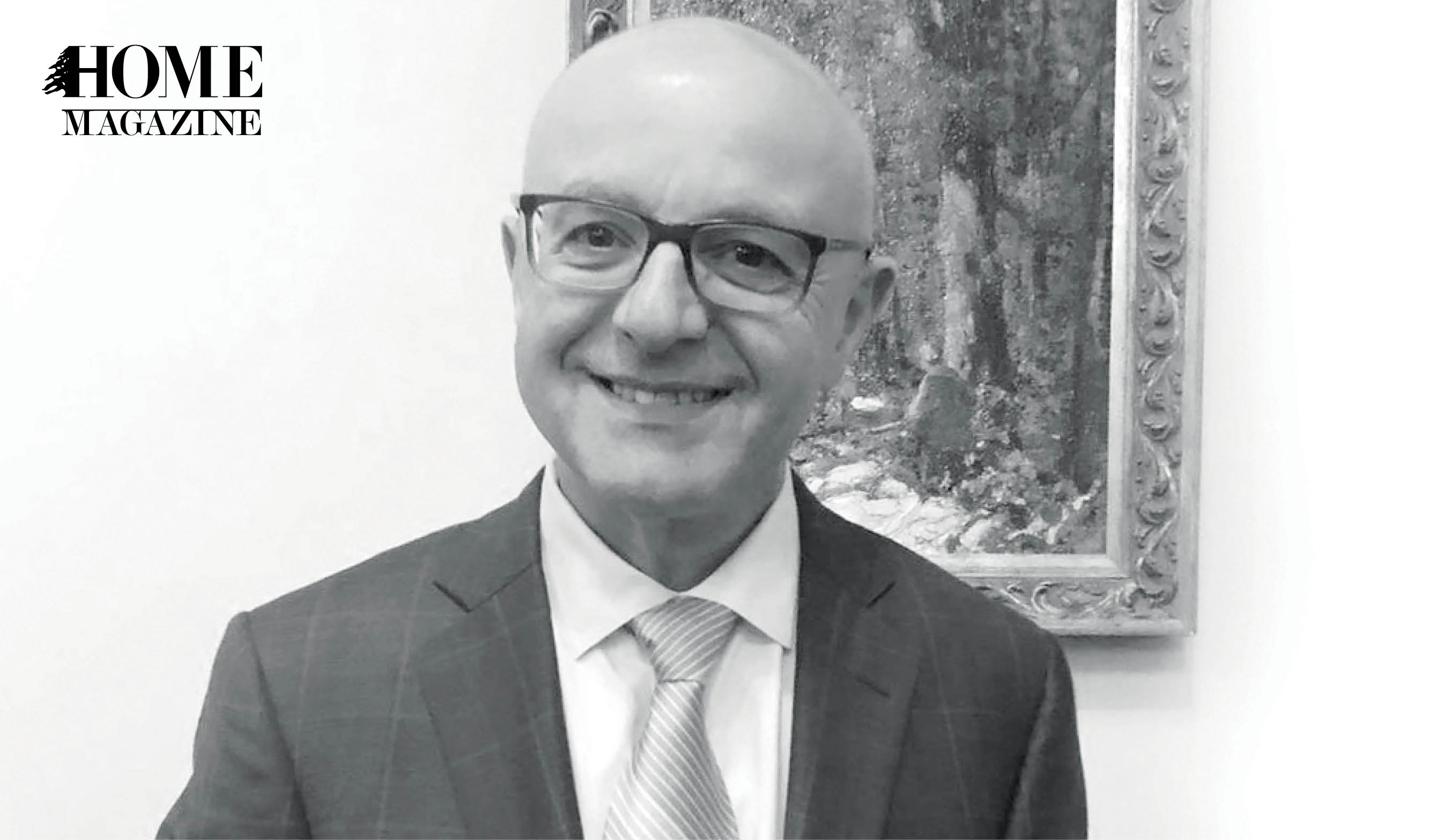
Most of the drugs he developed were for treating neurological disorders, such as ADHD and seizures that are associated with certain illnesses, which he finds to be more aligned with his psychology background. Currently, Khayrallah is onto his sixth company, Emergo Therapeutics, Inc., formed in 2017. Through a connection with a scientist who brought him the idea for a drug—that was originally developed for asthma—he is repositioning and developing it to be used for influenza and other respiratory infections. The company recently raised $12 million and hopes to begin human trials for this new drug within two months’ time.
Raising Funds and Getting Investors On Board
When Khayrallah first started, the biggest challenge in developing a new drug was fundraising. He recalls traveling all around the world with his team in order to raise $10 million. “No one would give us a penny,” he admits. “However, after lots of time and effort one person took a chance on us. It is someone who knew me, and I had worked with and helped him before,” he adds. This led to a successful study which brought in a corporate partner for Khayrallah’s company. Eventually, other brands joined in and a larger sum of $17 million was invested into the drug, the company of which he ended up selling to the partner. “When I scored raising money that first time, it became much easier thereafter,” says Khayrallah. Thanks to his success record, today he has a portfolio of investors. His business model also allows investors to own stocks in the company, so once he sells the company everyone involved makes a profit. He also proudly tells HOME that three investors of Emergo Therapeutics are Lebanese.
When asked if he would consider manufacturing his drugs in Lebanon, Khayrallah has this to say: “Lebanon is manufacturing generic drugs but very little work is being done for new ones, which is what we specialize in. Lebanon is too small for research. I mean, even in the U.S., which has a population of about 340 million, we have a tough time getting enough subjects to do our research. There may be some minor work that can be done but unfortunately you need a mass presence of patients to conduct effective studies. There is a lot of good academic research conducted in Lebanese universities, but with regard to pharmaceutical research that leads to new drug development, it’s probably going to be tough to do here.”
Paying Tribute to the Lebanese Diaspora
While Khayrallah is an astute researcher and businessman, he is also highly involved in philanthropy and strongly believes in giving back. He is part of the Lebanese community in the Research Triangle Park area (one of the leading high-tech research and development parks in the U.S.) that he resides in. He helped found the Triangle Lebanese American Center and became its president several times. He estimates that there are roughly 18,000 Lebanese in North Carolina, between those that came recently, like him, and those that came in the late 1800s during the first wave of Lebanese mass emigration.
With pride for his roots, he says, “The Lebanese community has become an integral part of North Carolina society. Many speak highly of the Lebanese they knew or grew up with and so forth.” However, Khayrallah felt that there wasn’t enough knowledge of how influential, even if understated, the Lebanese community was in North Carolina. One example he gives is how the Lebanese community was instrumental in establishing the Catholic Church in North Carolina.
He wanted to research the Lebanese contribution in North Carolina, so Khayrallah teamed up with Akram Khater, a talented history professor of North Carolina State University. This effort led to the one-hour documentary Cedars in the Pines. A museum exhibit also followed based on this documentary, which became a traveling museum collection. Khater also established a curriculum for history teachers in North Carolina that included the history of the Lebanese community within its syllabus.
“To keep the work going permanently he made an initial personal endowment of $8 million to create the Moise A. Khayrallah Center for Lebanese Diaspora Studies.”
A Permanent Center for Lebanese Diaspora History
Deeply enamored with all the work Khater was doing, Khayrallah decided to establish a permanent center dedicated to researching the Lebanese Diaspora—both in the United States and in the rest of the world—in 2014. He acknowledges the many efforts to document the Lebanese Diaspora’s history, most of which has taken place in Lebanon but also universities such as Cambridge. “Unfortunately, they have been haphazard. When money runs out, the effort stops,” he laments. To keep the work going permanently he made an initial personal endowment of $8 million to create the Moise A. Khayrallah Center for Lebanese Diaspora Studies.
“There is a lot of history that is about to be lost,” insists Khayrallah. “We need to make the effort now to research and document it.” For example, the center is currently working with two other organizations to archive all the writings of Ameen Rihani, the founding father of Arab-American literature, and is also receiving all the works of Lebanese-American poet Elia Abu Madi to preserve them and have them in a climate-controlled environment. These and many other efforts are in development. “If we don’t document our history, someone else will write it for us,” he says very poignantly. “If so, you bet it won’t be done in a favorable light, and could be full of falsehoods.”

The purpose is not only for documenting Lebanese history however. He says the idea is to engage with others constructively using the information on Lebanon and its past. “It will take time and effort but we want to continue to make an impact on the world because Lebanon has a unique history of coexistence and presence in an environment that was not favorable to it,” explains Khayrallah. “Maybe we can be a think-tank and influence the view of the world about Lebanon and be much more, who knows?”
Giving Back with Entrepreneurship Expertise
This year Khayrallah turns 60, but he is showing no signs of slowing down with a new pharmaceutical company underway and his increasing involvement with the center. He is also the chairman of the Board of the Carolina Ballet, which seems like a big departure from his day job. “I help them raise funds and make them more entrepreneurial,” he says. “Then again I love the arts and literature. I credit my school back in Lebanon, Champville Marist Brothers, for introducing me to the arts as a young boy.” He fondly recalls his audio-visual lessons in grade school led by Brother Robert, who would meticulously explain classical symphonies to Khayrallah and his classmates. “This helped instill a love for music, along with my mother who would listen to Fairouz, Abdel Wahab and other great Arabic artists on the radio at HOME.”
Khayrallah’s impressive background includes mentoring others and helping organizations, as he explains: “The ‘can do’ Lebanese spirit has allowed me to throw myself out there and figure it out – one way or another.”
“If we don’t document our history, someone else will write it for us,” he says very poignantly. “If so, you bet it won’t be done in a favorable light, and could be full of falsehoods.”
Khayrallah is also funding a program at University of North Carolina Chapel Hill to help students get into education with entrepreneurial and innovative ideas. It is called the Master of Arts in Educational Innovation, Technology and Entrepreneurship (MEITE). Khayrallah was recently honored with a new prize for innovation at the university, which is just one of many accolades he has received during his three-decade-long career.
With so many accomplishments under his belt, HOME was curious to know what lessons in life Khayrallah can share with readers. Before replying, he takes a deep breath and looks out pensively into the horizon from his large sweeping terrace in his family estate in Ghbeleh (which must be said has spectacular uninterrupted views of the Keserwan mountains), then continues in his soft and determined tone: “First of all, throw yourself out there and have courage. I learned to just do things and all of a sudden it just builds upon itself. The second lesson is that no matter how good you are, how many degrees you may have and so forth, you are nothing by yourself. You are a product of your environment. Your achievements are never you by yourself.”
Khayrallah is deeply indebted to his family, teachers, mentors, collaborators and others who have influenced and helped him along his journey. Now, as he continues to pave his own path in true Lebanese fashion, he is happy to give back. He is living proof that only when we help one another do we truly succeed.
For more info:
https://lebanesestudies.ncsu.edu/
https://www.linkedin.com/in/moise-khayrallah-b0894112/


HOMEland THEMES
Coming Soon
HOMEland Events & Collaborations
Coming Soon
 Signature Boutique