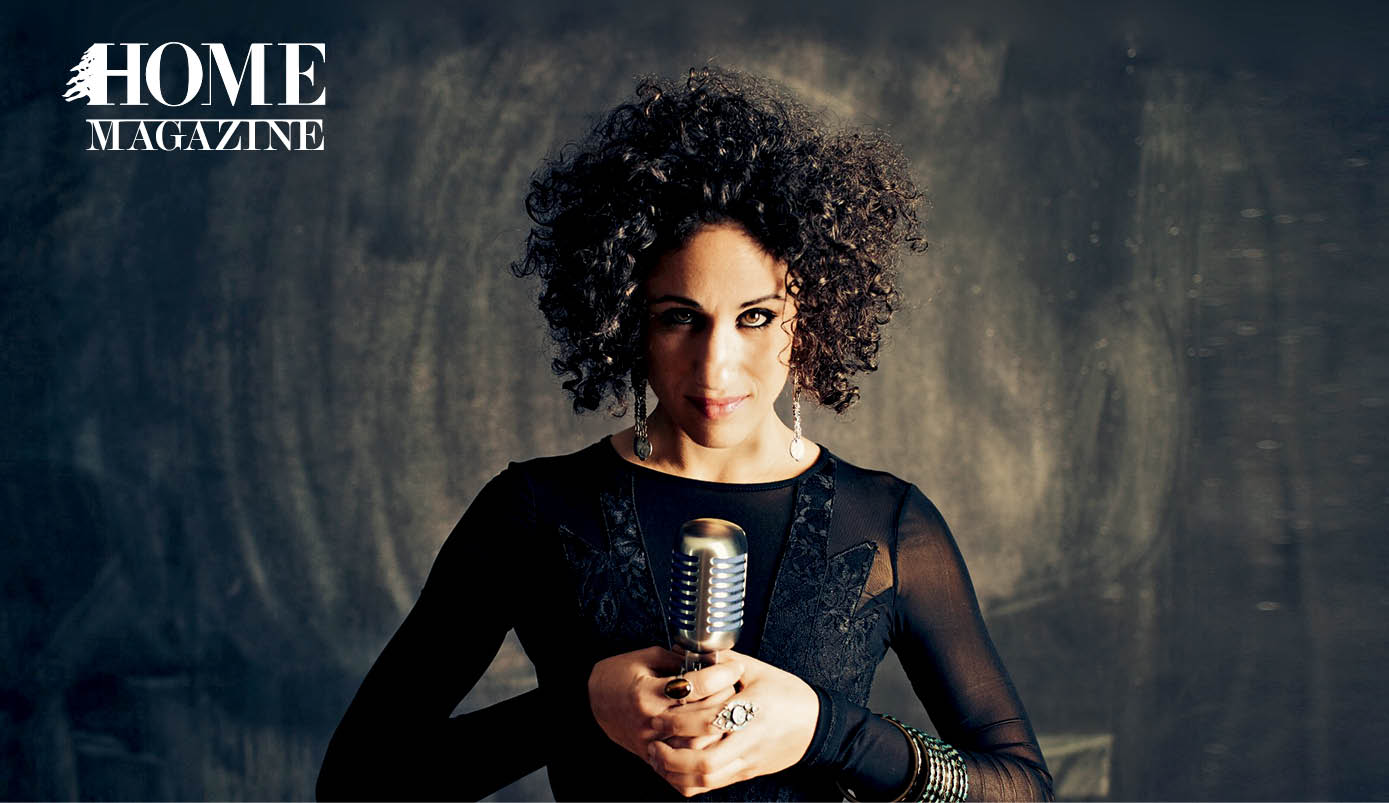
Photo by: Sarah Deragon
Lebanese-American musician collaborates to bring a message of hope.
“Why am I here? Let me think out loud for a minute,” said Naima Shalhoub, Lebanese-American singer, in an interview with HOME Magazine at Café Younes in Beirut’s Hamra District. Shalhoub was grabbing a quick bite before the sound check for her concert at Metro Al Medina that evening.
In her blue-and-yellow Golden State Warriors tank top, the up-and-coming musician looked like the Californian she is. She also looked very Lebanese — curly brown hair, olive skin and long lashes. Her shoulder-length locks, clipped back, revealed silver hoop earrings, one big and one small in each ear lobe. A small gold flower pierced her right nostril. She blended right in — a 30-something, hip Hamra artist.
“What I love is arts in the purpose of freedom,” her voice rising, “connecting with people, refraining from putting them in boxes, especially those most isolated and stigmatized, like criminals or addicts. Everyone deserves grace.”
In this, her sixth trip to Lebanon, the separate threads of Shalhoub’s life — music, academics and activism— Lebanon and the U.S.A. — are coming together and she is living the life she is meant to live, she said. Producing songs with incarcerated people, collaborating with NGOs working on social justice issues, performing her own sultry brand of jazz and soul, with warm, deep sounds of the oud, a lute-like string instrument, and derbeki, the gobletshaped Arabic hand drum — all vibrant threads in her rich life.
The journey
The path was not always clear, said Shalhoub, a first-generation Lebanese American. Being in Lebanon seemed to help connect the dots.
“My heart is here. I grew up in the diaspora. My family is all over — Sierra Leone, the United States, Belgium and Ireland. I always grew up with a strong connection to Lebanon,” said Shalhoub, whose family’s roots are in Akkar.
“Here, I intimately experience how powerful Lebanon is — bearing witness to remnants of history, the sorrow, the beauty, the joy, the life, the creativity, the resiliency, the struggle, which is very different than learning about these very things, yet being away.”
“Here, I intimately experience how powerful Lebanon is — bearing witness to remnants of history, the sorrow, the beauty, the joy, the life, the creativity, the resiliency, the struggle, which is very different than learning about these very things, yet being away,” she said.
In 2009, Shalhoub had just finished graduate school and wasn’t sure what to do next. She bought a one-way ticket to Lebanon to get away and do some soul searching.
“One night in a pub in Hamra, I had my little ukulele” she recalled. “I remember that moment. I needed to sing. I had been pushing it away for so long.
“I grew up singing in choir and theater. In college, I took a long break from it. I didn’t have the confidence. I didn’t think it would be possible,” she said. When she left a few months later, she returned to the San Francisco Bay area “to build a life in music,” not sure where it would lead.
But not only in music. In the heady music scene, she wanted to stay grounded, to live with purpose, she said.
Her graduate studies in postcolonial anthropology — the violent history of colonialism, the social structures that support racism and sexism — provided a framework for both music and activism.
Shalhoub admired Rhodessa Jones, whose Medea Project helped imprisoned women tell their stories through drama and work towards transformation. “And the many blues artists who performed in prisons — I wanted to follow suit,” she said.
Shalhoub began facilitating weekly music sessions with women in the San Francisco County Jail in 2014. She used music and songs to encourage selfexpression and reflection. “We talked as much as we sang.
I learned so much from our time together. “That’s when it all clicked for me. This is what I’ve been preparing for.”
A chance meeting on an airplane with Yasmine Daher, the co-founder of a record label/artist-management community in Lebanon, inspired Shalhoub’s next steps.
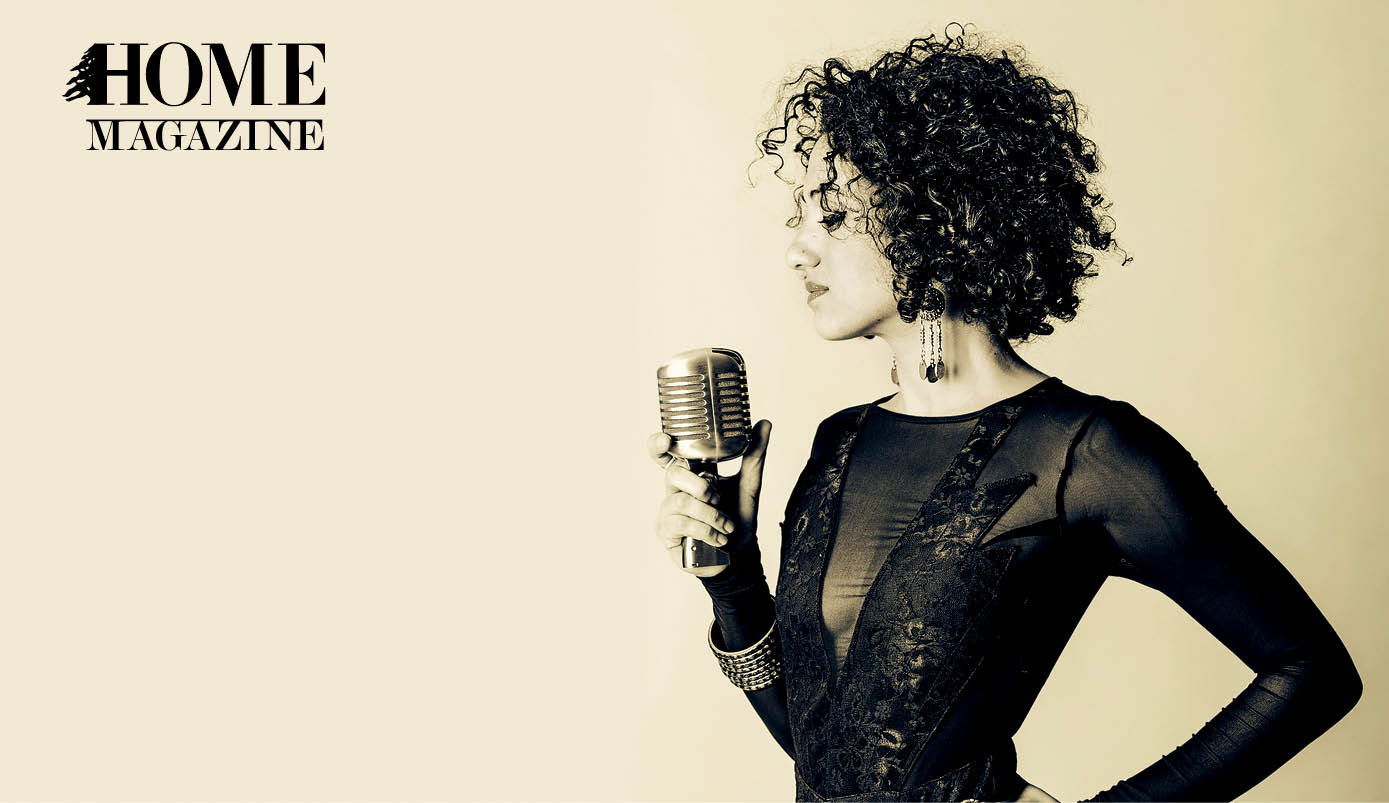
Daher tells the story on her Facebook page.
To my right, a seat away, there was a young woman. Her aura was warm and vibrant; I felt it from the second we smiled at each other … She introduced herself as “Naima” and …
Before you know it, we found ourselves promising to meet … An activist, a humanist, a songstress, she had so much to give. But how to bring it all together? Naima mentioned her occasional visits to San Francisco County Jail and how liberated her soul felt every time she’d sing for a group of incarcerated women.
“Why don’t you record your album there? If that is where you feel at ease, if that is where your spirit and your music come together, if that is where you sing your heart out, then that is where you should record your album.”
A year later, on May 5, 2015, after a lot of hard work and a crowdfunding campaign, Naima recorded her album at San Francisco County Jail during Mother’s Day week, marking one year since the day she first started visiting these women.
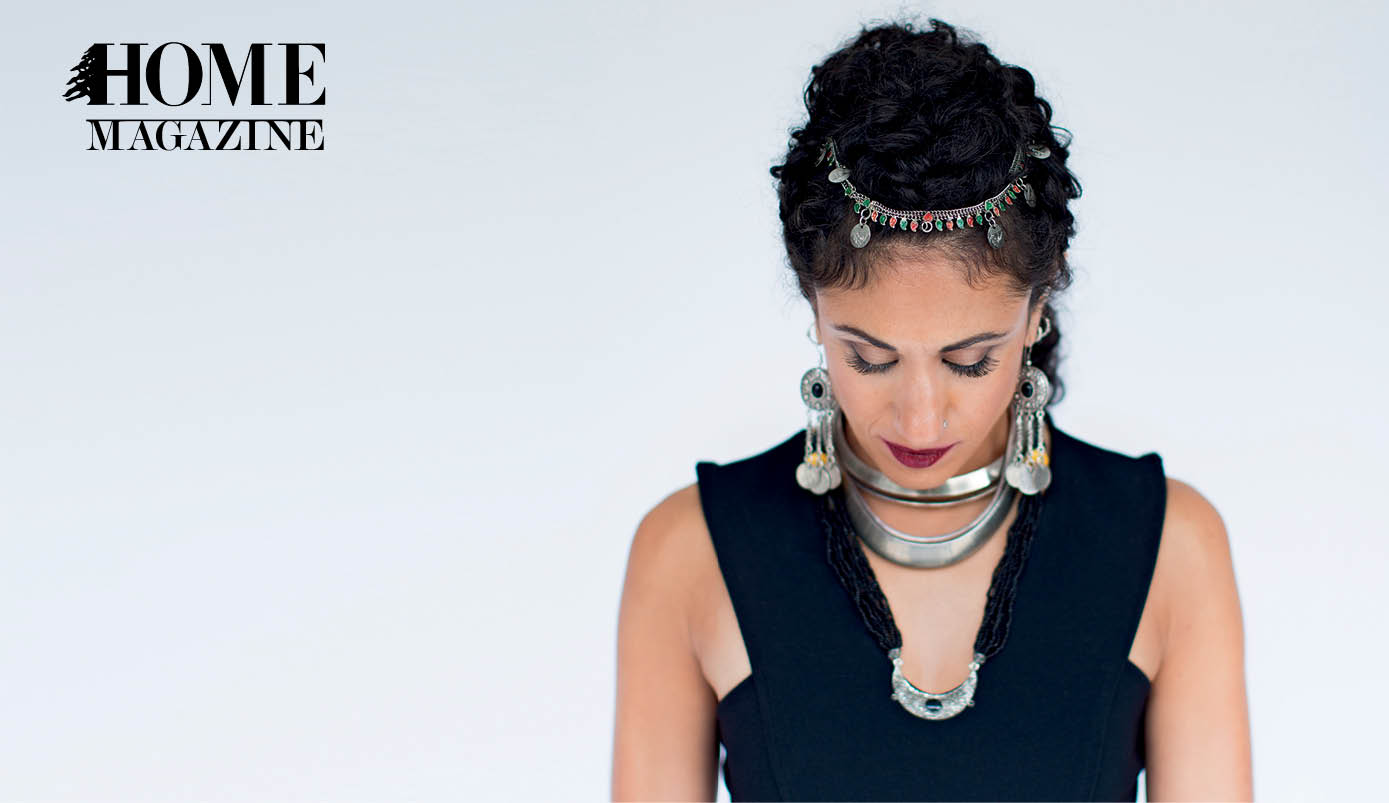
Photo by: Sarah Deragon
Back to Lebanon
The meeting with Daher also led Shalhoub back to Lebanon this year for what turned out to be much more than a concert and the launch of her new EP, “Borderlands.” “I always had a dream of going to Lebanon and connecting with organizations with a similar mission,” Shalhoub said.
Daher and her colleague Catherine Moutran, who have been working with each other inside and outside the label, also believed Shalhoub had more to share than just music.
So the #NAMENA project was born. (Samir Chalhoub joined later and completed the #NAMENA team.)
The #NAMENA Project reached out to social organizations and cultural platforms with the goal of collaborating to promote positive change. Partners included Skoun Lebanese Addictions Center, Catharsis Lebanese Center for Drama Therapy, the Lebanese American University and its Institute for Women’s Studies in the Arab World (IWSAW), Submarine Coworking Space, and Metro Al Medina Theater.
Radio and TV interviews with Shalhoub highlighted the project’s theme, “What do you do for change?”
IWSAW sponsored an inspiring discussion at LAU with Shalhoub, Nadya Mikdashi (co-founder of Skoun) and Zeina Daccache (founder of Catharsis) that LAU’s website said “shed light on the decaying and dangerous legislative system in Lebanon” and promoted policy reform. Daccache invited Shalhoub to accompany her to the notorious Roumieh prison. Inside, Shalhoub enlisted 52 prisoners to help write lyrics for “The Roumieh Prison Blues,” a song she performed at her concert “to bring attention to mass incarceration and how it is dehumanizing people.”
“What I love is arts in the purpose of freedom, connecting with people, refraining from putting them in boxes.”
On stage in Hamra, sparkling in a white satin gown and big crystal earrings, Shalhoub poured her heart into the microphone as she sang her original compositions. Her unique sound channels traces of Ella Fitzgerald, Billie Holiday and Janis Joplin, and influences from Fairouz and Oum Kalthoum.
Shalhoub bounced and weaved, her voice rising and falling, barely containing her passion. She profusely thanked the artists with her on stage and the supportive audience, especially her father, who traveled to Lebanon to see her perform. Shalhoub dedicated a portion of the proceeds of her concert to Skoun.
Oakland, California
Back to her life in the U.S. as a middle school music teacher, performer and social activist, Shalhoub wrote on her Facebook page: “I woke up this morning missing being in Lebanon, but God is good … I hear my ancestors saying, ‘This is full circle my child’ … I hear myself finally receiving the fullness of the gifts I’ve been given to share … Thank you #lebanon for welcoming me and my music with open arms and invitations to continue returning to you.”
For more info:
https://play.anghami.com/artist/2199352
TEDxLAU: httXps://www.youtube.com/watch?v=BTNMC3ckfD4
https://www.naimashalhoub.com/
https://www.instagram.com/naimashalhoub/
https://www.facebook.com/naimashalhoub/
https://twitter.com/naimashalhoub
https://www.youtube.com/watch?v=I9TqmZPXJX8


HOMEland THEMES
Coming Soon
HOMEland Events & Collaborations
Coming Soon
 Signature Boutique