
HOMEland THEMES
Coming Soon
HOMEland Events & Collaborations
Coming Soon
 Signature Boutique

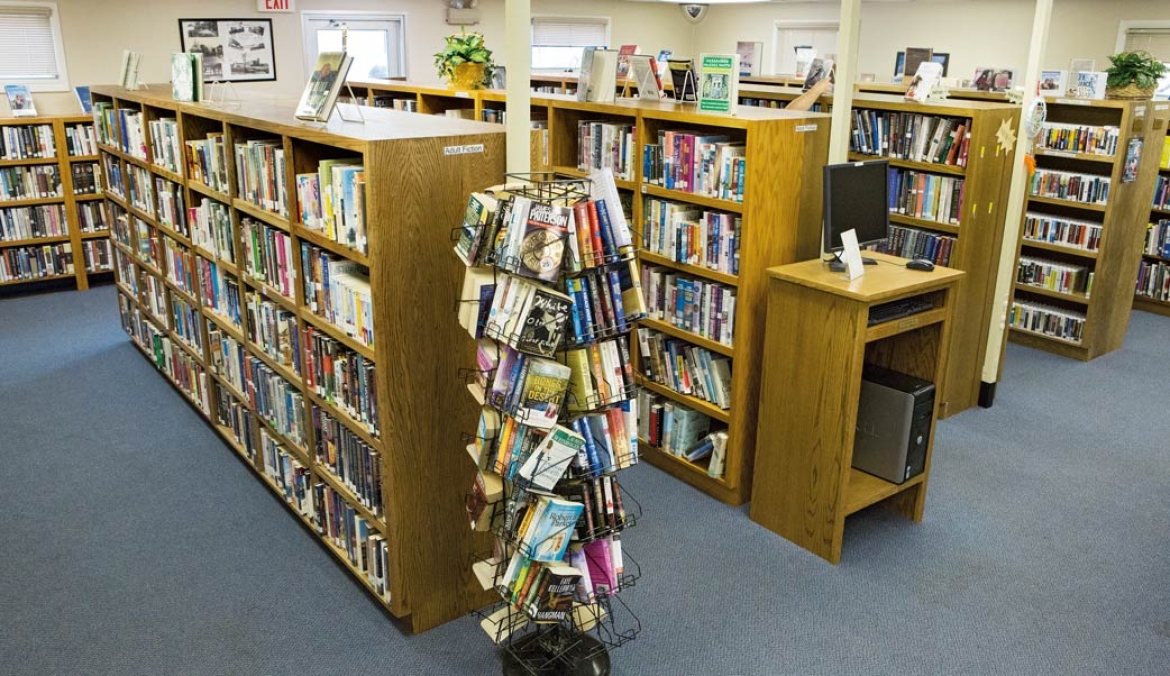
Though it is not particularly well known, there is an impressive number of public libraries in Lebanon.
The concept of a “public library,” where people borrow and return books and read newspapers and magazines free of charge, is relatively recent in Lebanon, with the first being established in Baakline in 1987. Others generally started after the year 2000. For this reason it might be a great surprise to most people that more than 50 public libraries have been established in Lebanon, and that they are in towns and villages throughout the country, as well as in all the major cities. The libraries discussed here are “public” in three important respects. They are open to all, are free and generally have some government support.
There are three networks of public libraries in Lebanon along with some that are unaffiliated. One of these networks has been developed by Assabil, a non-governmental organization founded in 1997 to establish, promote and support public libraries in Lebanon.
From the start, Assabil has had two major concerns: providing free and unlimited access to information, and creating public spaces. For a refundable deposit of LL10,000 for a library card people can have access to its three libraries in Beirut (Bachoura, Geitawi and Monnot) where they can borrow books, read magazines and daily newspapers, enjoy free high-speed Internet, and attend a diversity of programs like writing workshops, computer classes and cultural events. There are also programs for children, including storytelling, theater, arts and crafts. Assabil also has a mobile library called Kotobus which brings books and a wide range of activities to public schools, Palestinian camps, and NGOs serving underprivileged children in Beirut and its suburbs.
Assabil has been increasingly inclusive, not only providing services targeted to Lebanese citizens, but also to foreign residents, refugees and more recently to migrant domestic workers. Thus, while the largest number of books is in French, followed by Arabic and English, other languages represented include Armenian, German, Spanish, Tamil and Amharic.
Assabil also supports the development of libraries throughout Lebanon by providing advice, guides and toolkits, workshops and books. The Assabil website lists the benefits and requirements for inclusion in its network.
A second network of public libraries was created by the International Organisation of La Francophonie) as Centres de Lecture et d’Animation Culturelle (CLAC – Reading and Activity Centers).
Twenty-eight CLAC centers have been established in Lebanon. The municipalities provide the buildings and staff, and the CLAC program has covered the cost of books, furniture, shelves and staff training. CLAC libraries, like those of Assabil, provide various cultural and recreational activities.
Both the CLAC and Assabil networks have a strong relationship with the Culture Ministry, and are listed on its website (now under reconstruction).
A third network of the Welfare Association has seven libraries in Palestinian refugee camps – established in partnership with local organizations. Assabil gives them consultancy and training on selecting books, renovating spaces, and developing programs and activities.
The main problem of Lebanon’s public libraries is that they cannot afford to pay appropriate salaries and benefits or increase and update their collections. Libraries need motivational activities to attract people, but a poorly paid librarian is unlikely to make that extra effort. Often individuals, families or NGOs will start a library, but not maintain it so that some have closed.
For those who want to support a public library – financial support is the most helpful. There are also many opportunities for people to volunteer in libraries. In addition, you can donate your own unwanted books, although you should check with the library first about its restrictions. While many of the libraries accept books in different languages, books in Arabic are more highly sought after.
Above all, you are welcome to borrow books from your local public library and enjoy its many other programs and services. For a fairly complete list of public libraries in Lebanon, go to the website of the Culture Ministry.
Signature Boutique 

HOMEland Magazine
We firmly believe that the internet should be available and accessible to anyone, and are committed to providing a website that is accessible to the widest possible audience, regardless of circumstance and ability.
To fulfill this, we aim to adhere as strictly as possible to the World Wide Web Consortium’s (W3C) Web Content Accessibility Guidelines 2.1 (WCAG 2.1) at the AA level. These guidelines explain how to make web content accessible to people with a wide array of disabilities. Complying with those guidelines helps us ensure that the website is accessible to all people: blind people, people with motor impairments, visual impairment, cognitive disabilities, and more.
This website utilizes various technologies that are meant to make it as accessible as possible at all times. We utilize an accessibility interface that allows persons with specific disabilities to adjust the website’s UI (user interface) and design it to their personal needs.
Additionally, the website utilizes an AI-based application that runs in the background and optimizes its accessibility level constantly. This application remediates the website’s HTML, adapts Its functionality and behavior for screen-readers used by the blind users, and for keyboard functions used by individuals with motor impairments.
If you’ve found a malfunction or have ideas for improvement, we’ll be happy to hear from you. You can reach out to the website’s operators by using the following email
Our website implements the ARIA attributes (Accessible Rich Internet Applications) technique, alongside various different behavioral changes, to ensure blind users visiting with screen-readers are able to read, comprehend, and enjoy the website’s functions. As soon as a user with a screen-reader enters your site, they immediately receive a prompt to enter the Screen-Reader Profile so they can browse and operate your site effectively. Here’s how our website covers some of the most important screen-reader requirements, alongside console screenshots of code examples:
Screen-reader optimization: we run a background process that learns the website’s components from top to bottom, to ensure ongoing compliance even when updating the website. In this process, we provide screen-readers with meaningful data using the ARIA set of attributes. For example, we provide accurate form labels; descriptions for actionable icons (social media icons, search icons, cart icons, etc.); validation guidance for form inputs; element roles such as buttons, menus, modal dialogues (popups), and others. Additionally, the background process scans all the website’s images and provides an accurate and meaningful image-object-recognition-based description as an ALT (alternate text) tag for images that are not described. It will also extract texts that are embedded within the image, using an OCR (optical character recognition) technology. To turn on screen-reader adjustments at any time, users need only to press the Alt+1 keyboard combination. Screen-reader users also get automatic announcements to turn the Screen-reader mode on as soon as they enter the website.
These adjustments are compatible with all popular screen readers, including JAWS and NVDA.
Keyboard navigation optimization: The background process also adjusts the website’s HTML, and adds various behaviors using JavaScript code to make the website operable by the keyboard. This includes the ability to navigate the website using the Tab and Shift+Tab keys, operate dropdowns with the arrow keys, close them with Esc, trigger buttons and links using the Enter key, navigate between radio and checkbox elements using the arrow keys, and fill them in with the Spacebar or Enter key.Additionally, keyboard users will find quick-navigation and content-skip menus, available at any time by clicking Alt+1, or as the first elements of the site while navigating with the keyboard. The background process also handles triggered popups by moving the keyboard focus towards them as soon as they appear, and not allow the focus drift outside it.
Users can also use shortcuts such as “M” (menus), “H” (headings), “F” (forms), “B” (buttons), and “G” (graphics) to jump to specific elements.
We aim to support the widest array of browsers and assistive technologies as possible, so our users can choose the best fitting tools for them, with as few limitations as possible. Therefore, we have worked very hard to be able to support all major systems that comprise over 95% of the user market share including Google Chrome, Mozilla Firefox, Apple Safari, Opera and Microsoft Edge, JAWS and NVDA (screen readers).
Despite our very best efforts to allow anybody to adjust the website to their needs. There may still be pages or sections that are not fully accessible, are in the process of becoming accessible, or are lacking an adequate technological solution to make them accessible. Still, we are continually improving our accessibility, adding, updating and improving its options and features, and developing and adopting new technologies. All this is meant to reach the optimal level of accessibility, following technological advancements. For any assistance, please reach out to