Photos by: Zakaria Rakha
International correspondent returns to Beirut and tells it like it is!
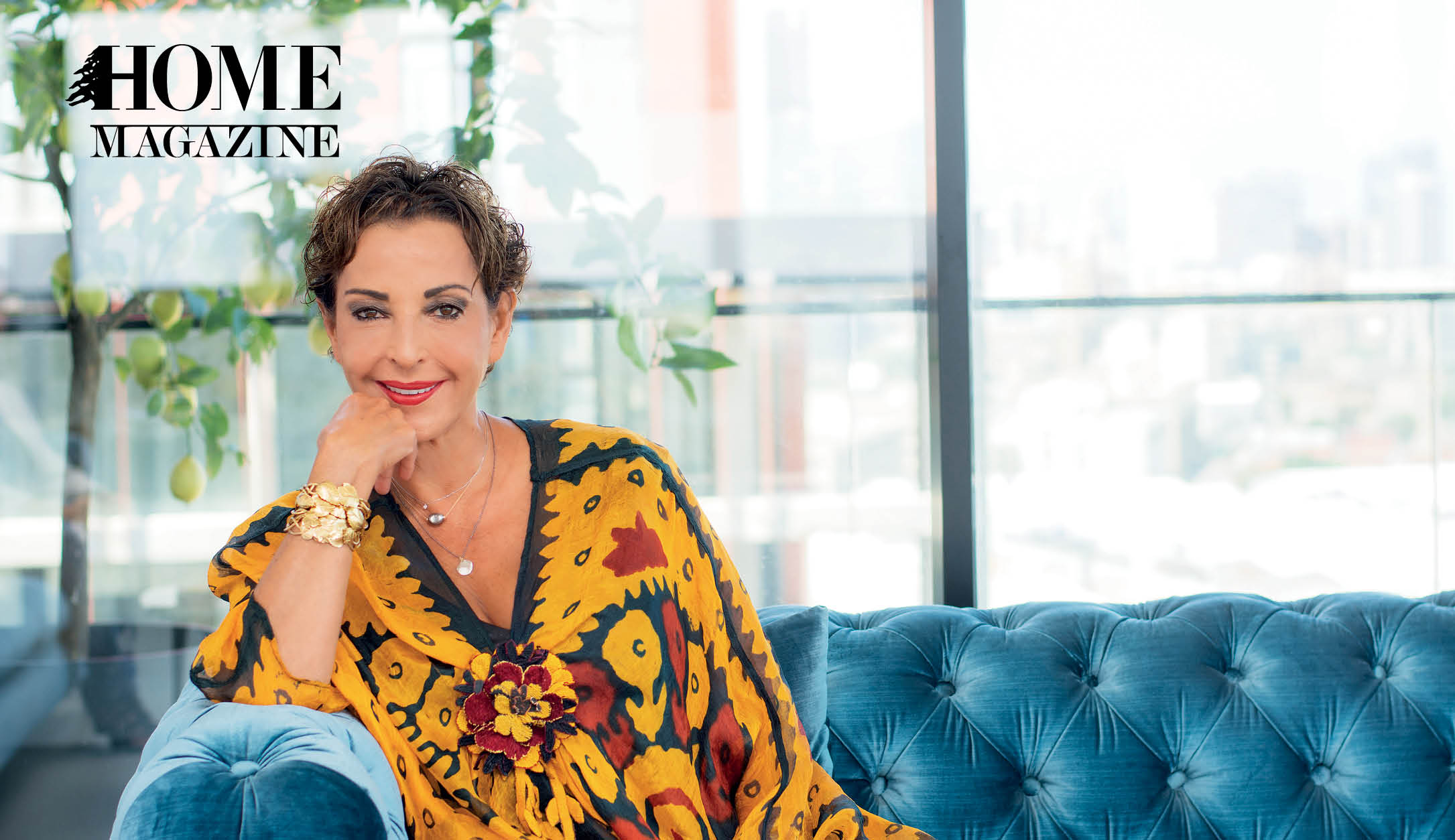
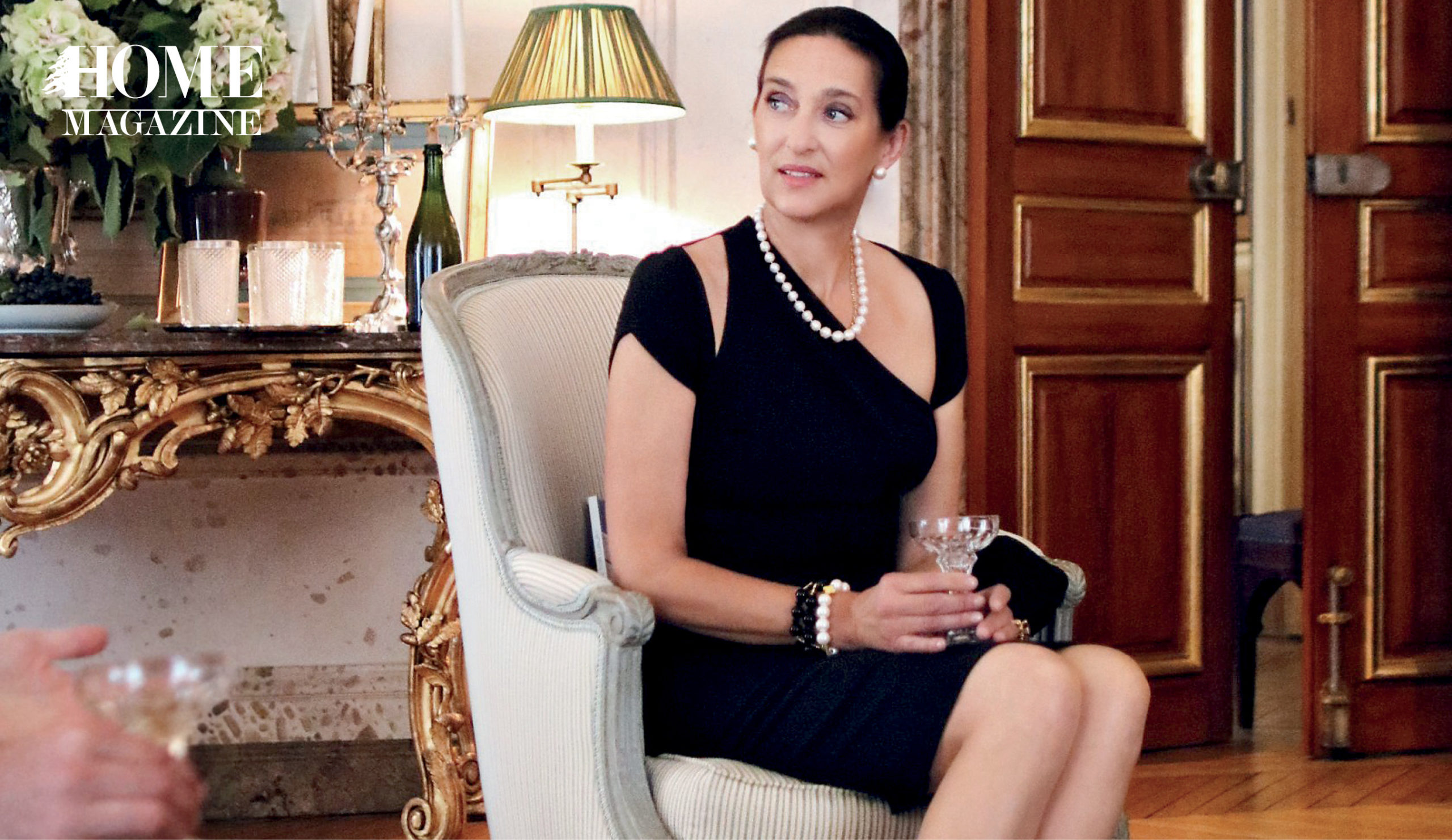
Feisty Raghida Dergham, a respected journalist and political analyst, is back in Lebanon after an impressive international career. HOME interviewed Dergham in her 10th floor high-rise overlooking Beirut’s harbor – modern, in black and white with a zebra-skin rug and provocative paintings. One painting features a man’s head with his mouth taped shut. Another is an abstract male figure – holding up his finger the way dogmatic leaders do when they pontificate. A woman’s foot is putting a cigarette in his mouth, “to shut him up,” she said.
Like her flat, Dergham is welcoming, but not afraid to challenge the status quo.
Raghida Dergham at a glance
A third-generation Lebanese-American,Dergham was born and grew up in Lebanon, then moved to the United States at 17, where she studied at the State University of New York. Her exceptional career as a journalist began in Boston with a bilingual weekly radio program named Haneen, which translates as “nostalgia.”
In 1976, she moved to New York to become a foreign correspondent and worked for several media companies, including An-Nahar International then Al-Hawadeth as chief U.S. correspondent from 1981 to 1989 when she joined the London-based Al-Hayat as a senior diplomatic correspondent, columnist and the New York bureau chief for almost three decades. Dergham is also the founder and executive chairman of the Beirut Institute, an esteemed international think tank for the Arab region.
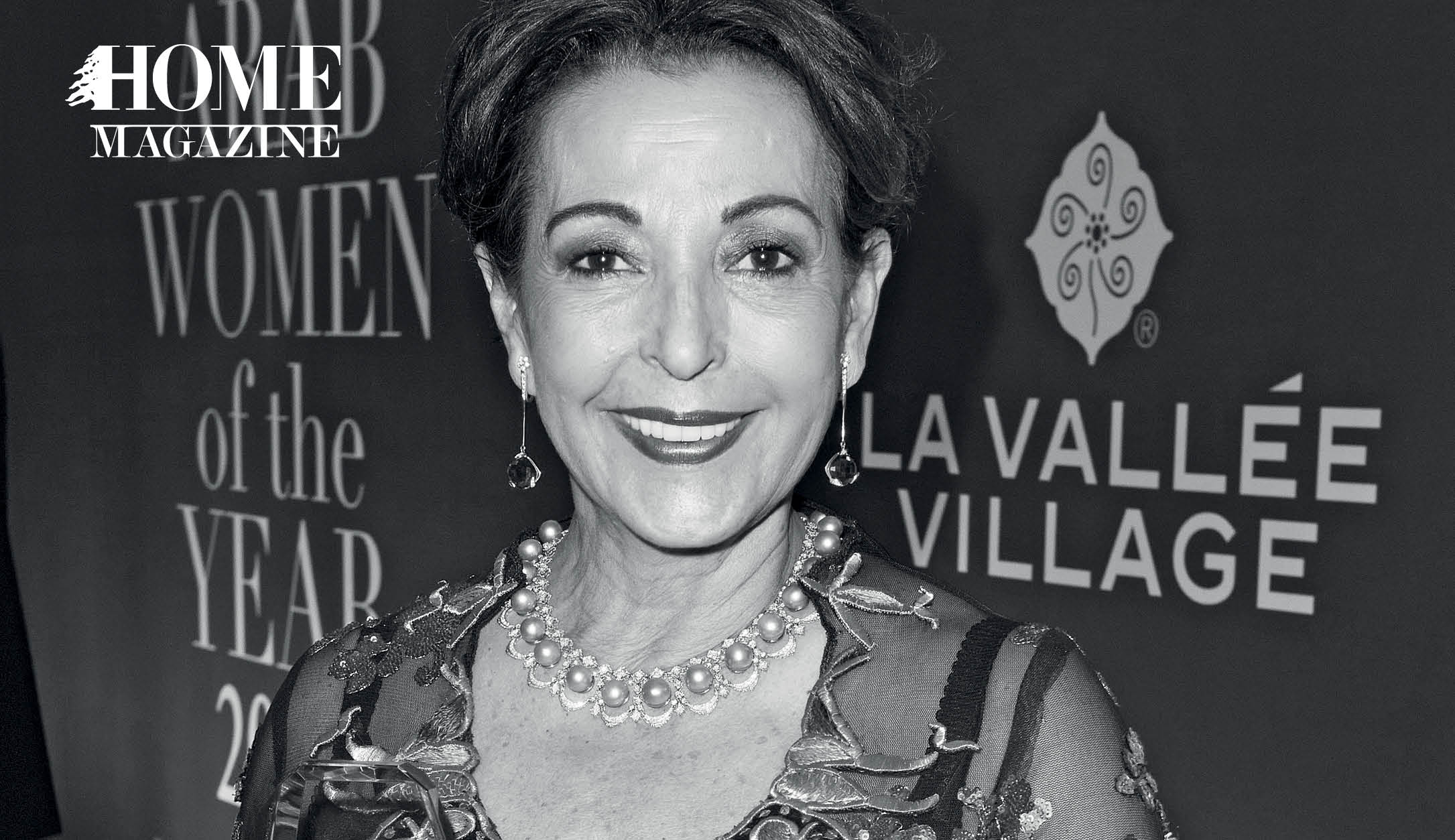
She’s been twice on Arabian Business’ list of the 100 Most Powerful Arab Women in 2011 and 2016, and she was named “Arab Woman of the Year” for her achievements in journalism by London Arabia in 2017. In 2018, she was named one of the 50 Most Influential Women in the Arab World.
She served as a member of the International Media Council of the World Economic Forum, which includes 100 of the most respected media figures globally, and she is an advisory board member on International Women’s Media Foundation having served for 10 years as a member of the board.
A familiar face on television as a political analyst for NBC and MSNBC in the United States and LBC in Lebanon,Dergham has also been a frequent commentator on CNN, Al Arabiya, and MTV. She is a popular speaker at leading universities, including Harvard, Princeton, Columbia and Georgetown. Her analyses and opinions have appeared in The New York Times, The Washington Post, The Los Angeles Times, Newsweek, Huffington Post, Arab News, Al Arabiya and and she is currently a columnist with The National. She is always able to offer another perspective, no matter on which side of the Atlantic she finds herself.
In a wide-ranging interview that touched on her career, return to Lebanon, short-lived run for parliament, family, friends, dreams and memories, Dergham openly shared her experiences and sometimes controversial opinions, frequently saying, “And you can quote me on that.”
Here’s what she had to say.
On being a journalist
It is in your blood. A journalist is naturally curious. You’ll die of curiosity. And if you are not curious, you’re a lousy journalist.
The most important tool a journalist has is the right to ask, the power of the question. When do you dare to ask? You dare when you have knowledge. If you don’t have knowledge, you don’t dare take the question forward and do the follow up. If you haven’t done your homework, you don’t have the basis to do the necessary confrontation.
On her career I have been so lucky in my career. In 1989, I joined Al-Hayat and covered the Belgrade Nonaligned Summit.
I interviewed eight heads of state and foreign ministers in eight days, transcribed the interviews and wrote the stories. I slept about two hours a night, but for 14 days, they couldn’t stop publishing my Belgrade stories on page 1. It was a big splash.
“The power of question”
But I was armed with experience, contacts, credibility and courage. That is why my debut in Al-Hayat was remarkable. No other journalist worldwide had ever done that.
Sometimes we get our major scoops by pure accident as I did when I revealed the secret talks between Palestinian and Israeli officials. Someone well connected was visiting me and mentioned something about the Oslo talks. I said, “Oslo?” I didn’t know about it before, but I had the scoop 24 hours ahead of others.
After the Iranian revolution, I interviewed President Bani Sader and I did the only interview ever with the first lady of Iran. This was a scoop because there was never another interview with any other first lady of Iran.
Amongst the important interviews I have conducted were Palestinian Presidents Yasser Arafat and Mahmoud Abbas, French President Giscard D’Estaing, Hosni Mubarak, King Hussain and King Abdullah, Ferdinand Marcos, George Bush, Boris Yeltsin and many more world leaders. I interviewed Ramzi Yousef, the man convicted of bombing the World Trade Center in 1993. Everyone wanted that interview, but no one ever got it. I was the only one who sat down with him in prison face to face, one on one.
I decided to become a political analyst and columnist because I didn’t want to just do interviews. I think people need news in perspective. Coming back here, I realize how much people want the regional and international perspective. This is something I can provide.
On her courage
I’m emboldened because I’m clean and fair, because I’m a true journalist. It’s my job to hold their feet to the fire. If I don’t, I’m a socialite. I’m not interested in becoming a socialite.
I refuse to be intimidated. I’ve received letter bombs, been threatened with military court in Lebanon. I refused to appear because I will not stand any such accusations; the person who brought them had to retract them. It hasn’t been easy to receive threats.
On being an international correspondent
I once fancied myself as the interpreter between the Middle East and the United States but I think it is a lost cause. There is a total disconnect. America has a push-button mentality. As soon as an issue is off the screen, it is out of the mind.
I worked so hard trying to persuade the American public to understand the Arab public, and vice versa. Both are self-centered and the job was and remains hard.
Here they assume America is responsible for everything that happens. This is not totally imagined but it’s exaggerated big time. The feeling is that you can’t rely on America as a partner because there is no trust in the durability of American partnerships. But the geopolitical alliances are not stable; they always change according to interests.
On the United Nations
One of the reasons I’m disappointed in the United Nations and want to leave that beat is the way it acted on Syria. They sat on a genocide. I’m not naïve to think that politics are clean and transparent, but this is beyond acceptable.
On Al-Hayat
Al-Hayat was very dear to me having given it 28 years of my life. I grew up with it and was part of the core who built it. So it saddens me deeply that such a legacy newspaper is shredded by short-sighted decisions.
Unfortunately, it has closed its offices in London, Beirut and other capitals. They are free to do what they want to do. But I am absolutely furious they had not been fair to people they have let go without respecting their minimum rights.
On journalism today
If you don’t have good journalists to provide good content, then you are creating a medium of distrust. It doesn’t matter if it’s in a newspaper or magazine, in our hands or online, it doesn’t work without good journalists and the basic ethics of good journalism credibility are a hard thing to earn and it can only be earned, not bestowed.
Bloggers think they have the right to put everything they hear out there as if it were the truth. You don’t do that! I come from the old school. You don’t go to just one source. People’s lives get ruined by some who all of the sudden become impromptu journalists.
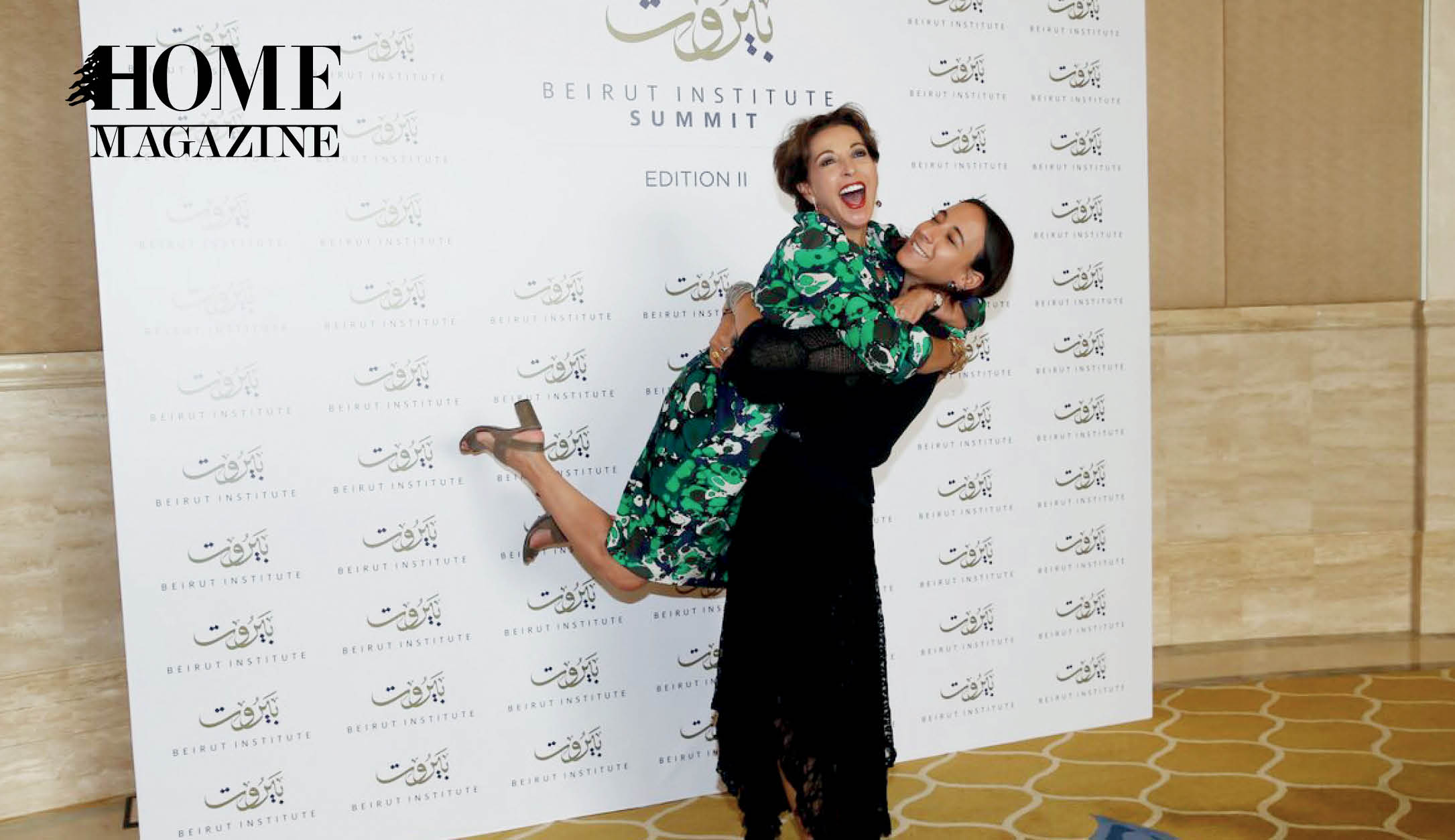
With daughter Thalia, celebrating at the Beirut Institute Summit, Edition II, in Abu Dhabi.
On the Beirut Institute
I am very proud to be a Lebanese woman who founded an indigenous think tank for the Arab region that has now become a respected international brand. It is exciting for me that I have built an influential and effective policy institute that is innovative, daring, and forward-looking.
I started the Beirut Institute as a place for convening minds to think collectively and find constructive solutions to problems in the region. I felt many, particularly the youth, were so disengaged. I decided there must be a way to instill enthusiasm; they can’t just live with frustration and submission.
It’s now in its eighth year – and has become a renowned think tank for the Arab region with a global reach. I consider it an incubator of ideas that become tangible recommendations that will be delivered to policy makers around the world.
“It is easier for them to have a men’s club.”
On returning to Lebanon
I am reinventing myself. As my years in New York as the bureau chief of Al- Hayat have come to an end, I thought this would be a possibility for another beginning closer to Lebanon.
I wanted to come back to Beirut and give from the experiences I have had. The international element enriches my work as a political analyst and hopefully enriches the vision of young people when they discuss politics and development.
I still have my apartment in New York, so I have not made the full move yet. I don’t know if I will. Ideally, I would like to have both HOMEs.
I have a funny story about the love of two cities. When my daughter was three years old, we visited Istanbul, she said, “Let’s move to Istanbul.” I said, “I thought you love New York. You can’t live in both places.” She thought for a moment and then she said, “I know. We can Scotch tape the two cities together.”
So, I’d like to Scotch tape the two cities – Beirut and New York.
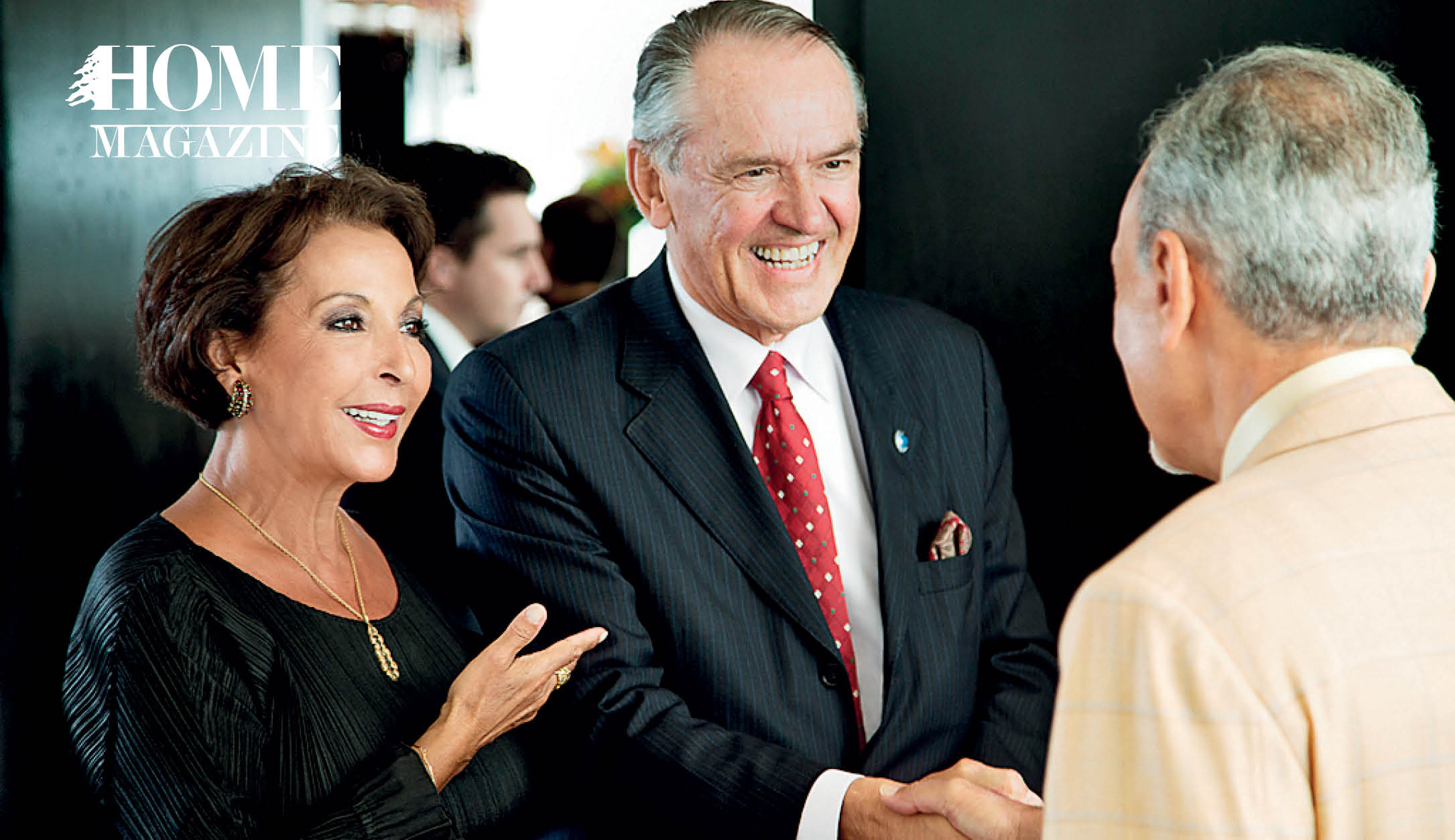
With former Deputy United Nations Secretary General Jan Eliasson at a Beirut Institute lunch with ambassadors of the Security Council, hosting board member Prince Turki Al Faysal as a special guest.
On running for parliament
The notion of running for parliament was definitely not on my mind in the beginning. When the idea came up, I went for it. I withdrew, but I will remain in the public domain to insist, and I mean insist, on breaking the glass ceiling that prevents women from being policy makers.
I withdrew because I found the political activists who call their activism “civil society” have not matured enough to think strategically on how to break this horror of a fence put up by the political establishment and the feudal lords. It’s a feudal society when it comes to the political ruling class.
“It’s my job to hold their feet to the fire. If I don’t, I’m a socialite. I’m not interested in becoming a socialite.”
As if it’s not bad enough that the so-called civil society was scattered, there was another group who actually belittled the civil society and its youthful side. They acted much worse than the establishment. But the big problem is that the system is rotten to the core and the newcomers are not easily let in. That’s why I’d like to say I went into the parliamentary elections with my heart and withdrew my candidacy with my brain.
On women in Lebanon
The status of women here in Lebanon is despicable and not acceptable. Men have decided to exclude women deliberately when the constitution says women and men are equals. Here we have a handful of men denying women a quota that is a necessary springboard to catch up, and without which women can never be part of the parliament. It is easier for men to have a men’s club running the country, as it seems, rather than integrate women in the policy making process.
Of course, it is our rightful place to be in policy making. Men tell me often, ‘we have few women of your level.’ Well I appreciate the compliment but don’t appreciate the put down of Lebanese women. I find it offensive that I am expected to say ‘yes, you’re right’ when in fact I have great admiration for the majority of women in Lebanon.
It is admirable how the young Lebanese woman is able to go to her job, raise children, get herself prettified, go out with her husband, then wake up in the morning and do it all again. I think the balancing act is tremendous, but they do it so well.
On being a working mother
I was always clear about this. If I am to be called for the most important scoop of my life and my daughter Thalia is of the hospital, no doubt I’d run in the hospital.
When she was 2 or 3, I changed her schedule so she would stay up until 12 at night because I wanted to see her. I spent my weekends always with my daughter and took a month off every year – just disconnected and traveled the world with her.
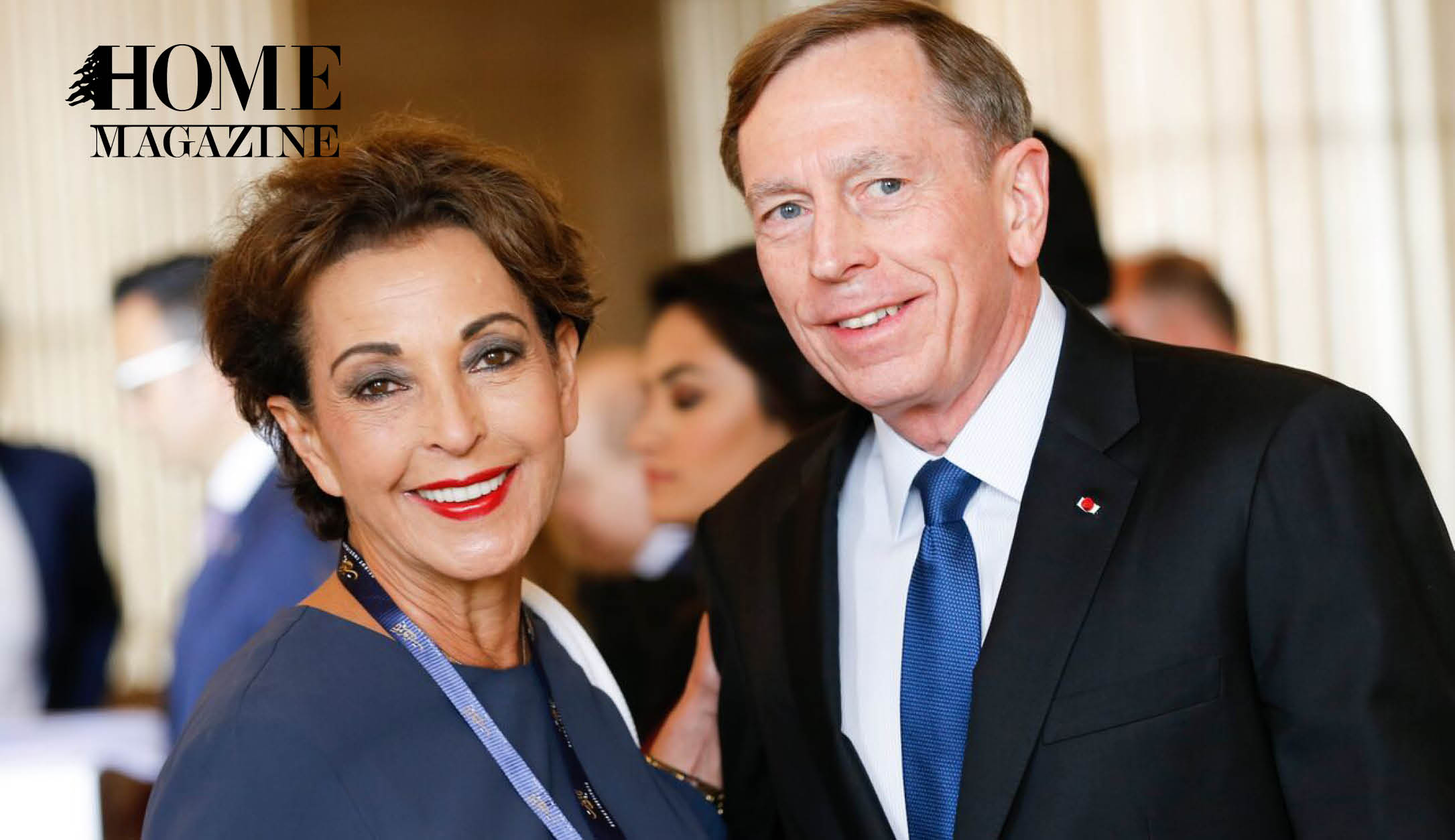
With United States General David Petraeus at Beirut Institute Summit, Edition ll, in Abu Dhabi.
On the Diaspora
We in the Diaspora are essential to the economic well-being of Lebanon, but we are undervalued. Ok, we are included in the elections now, but we are not represented. We should be represented, whether in parliament or elsewhere.
On Lebanon
We have a jewel of a country. I love Beirut; when I wake up watching the news and see people volunteering to clean the streets and beaches, I am humbled by it. The persistence of the Lebanese to make it work.
On the one hand, you can say it is a gimmick of a country because how on earth does a country function under such circumstances – deal-making and no electricity, the trash crisis, a modern country where women have no place in parliament. And then we take another look and see everybody is beautifully dressed and full of creativity. It has a split personality.
We must solve our problems. We have a young generation who can’t wait to save enough money and get out of the country. It is because we don’t take care about what young people need, which is job opportunity, education for all, and security. There is no stability, no peace of mind.
For more info: http://www.beirutinstitute.org
HOMEland THEMES
Coming Soon
HOMEland Events & Collaborations
Coming Soon
 Signature Boutique