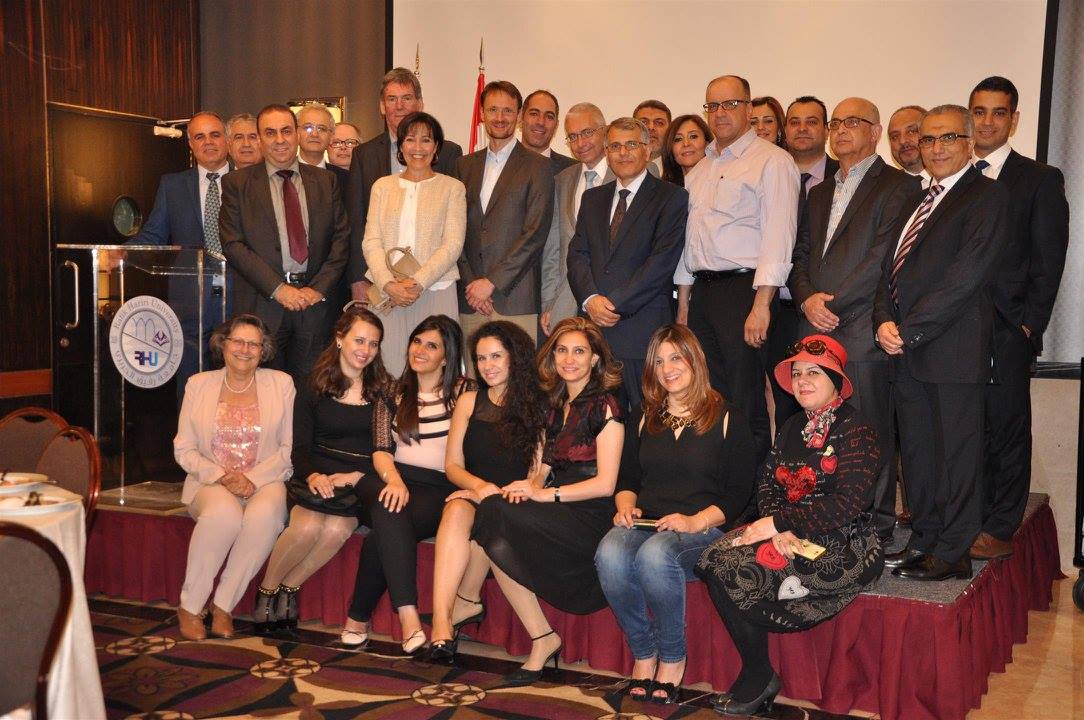
Rafik Hariri University faculty and staff dinner, 2016
It’s been two weeks since a massive explosion in Beirut’s port sent shock waves that were felt in Cyrus, over 150 miles away. It killed more than 200 people. At least 110 are still missing and by the latest counts as many as 300,000 are suddenly homeless.
Prime Minister Hassan Diab’s administration resigned last week in response to anger in the streets at the negligence and corruption said to have caused the blast. Protesters still call for the members of parliament to step down. The United States’ FBI is now participating in the investigation.
“The Beirut we knew does not exist anymore,” texted a Lebanese friend and colleague from my years of teaching there.
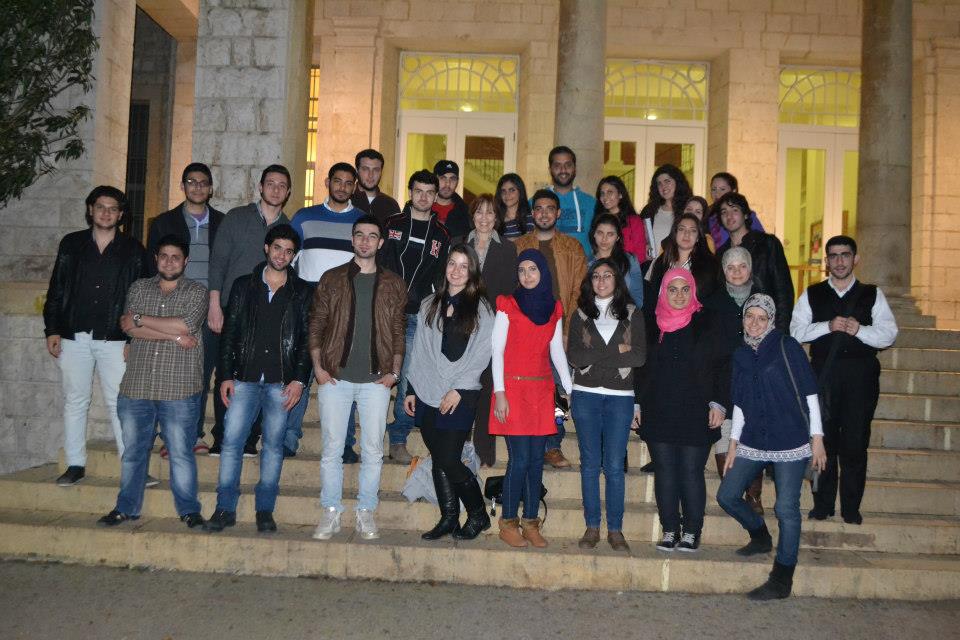
In 2009, my daughter, Aisha, and my son, Adam, and I moved to Lebanon to study and work. We lived 20 minutes south of Beirut, on the campus of Rafik Hariri University, where Aisha studied and I taught journalism and served as the Languages and Humanities Department Chair. Adam started middle school at the German International School nearby. From the window of our apartment, we could see the Mediterranean sparkling below, just a 10-minute drive down the mountain.
When we got there, tourism was up and Lebanon was enjoying its third straight year of economic growth. Downtown Beirut featured high-end boutiques and pricey restaurants that catered to tourists from the Arabian gulf. Adam enjoyed counting flashy sports cars as we strolled along Beirut’s famous waterfront, the Corniche, in front of the city’s glistening skyline.
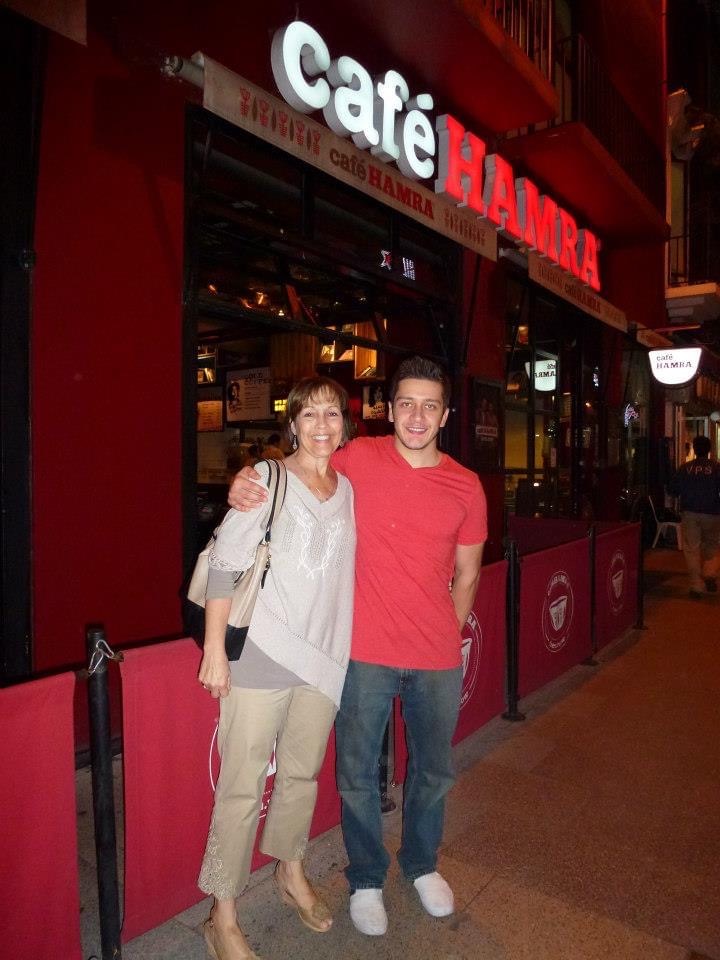
Over the eight years I lived in Lebanon, I saw Beirut deteriorate. Rising sectarian tensions in the country resulted in travel bans or advisories in the Gulf countries that kept many tourists with money away. In 2011, the Syrian War started and by 2014 more than 1 million Syrian refugees had settled in this country of 4 million Lebanese. Beggars lined the sidewalks of Hamra, an area of cafes, shops and restaurants popular with students and artists.
Still, through it all, Beirut was such an interesting place to be. As the late celebrity chef and journalist Anthony Bourdain told Blogs of War in 2014, “For all its problems … it’s an absolutely magical, gorgeous city. Impossible not to fall in love with.” Regardless of everything, which can be quite a lot—including no electricity or hours stuck in traffic, Beirutis always offer a warm welcome and share their joie de vivre.
I left Lebanon in the summer of 2018. Since then, observing from afar, I am sad to see its fate.
In the fall of 2019, a dollar shortage in the country sparked fears and protests. Banks imposed withdrawal limits on U.S. dollars and the Lebanese lira went into freefall. For three decades, the lira has had an official exchange rate and market value of 1,507 LBP to $1. While that is still the official rate, friends tell me the actual value today, which is the black-market rate, is 7,000 LBP to $1, wiping out savings accounts and making almost everything unaffordable to many.
As renowned Middle East correspondent Robert Fisk wrote: “So here is one of the most educated nations in the region with the most talented and courageous – and generous and kindliest – of peoples, blessed by snows and mountains and Roman ruins and the finest food and the greatest intellect and a history of millennia. And yet it cannot run its currency, supply its electric power, cure its sick or protect its people.”
Large protests against government corruption, called the October Revolution, broke out across the country in the fall and continued until March, when COVID-19 surged. Then, at the worst time, a huge explosion wiped out large swaths of Beirut, with damage extending as far as 15 miles.
I called my nephew Ali, whose family had moved to Lebanon from Aleppo in 2013, just before his neighborhood became a frontline in the Syrian War. He was just south of Beirut, on his way to home from work, when he heard the explosion.
“I’m ok, Auntie. But it was so loud. Thank God it happened when it did (6:07 p.m.). If it had been earlier, so many more people would have been killed.” Later that evening, Ali sent me photos of the coffee shop where he works with shattered glass and debris across the floor.
I opened Facebook and checked to see if my friends and students were “marked safe in the Beirut explosion.” If not, I looked at their page to see the date of their latest post. For those I didn’t see, I started sending messages.
I remembered two people I had interviewed for HOME Magazine Lebanon who lived near the port. I found a post by Lebanese American journalist Raghida Dergham. I had spent an afternoon in her apartment, now gone, overlooking the port through wall-sized windows.
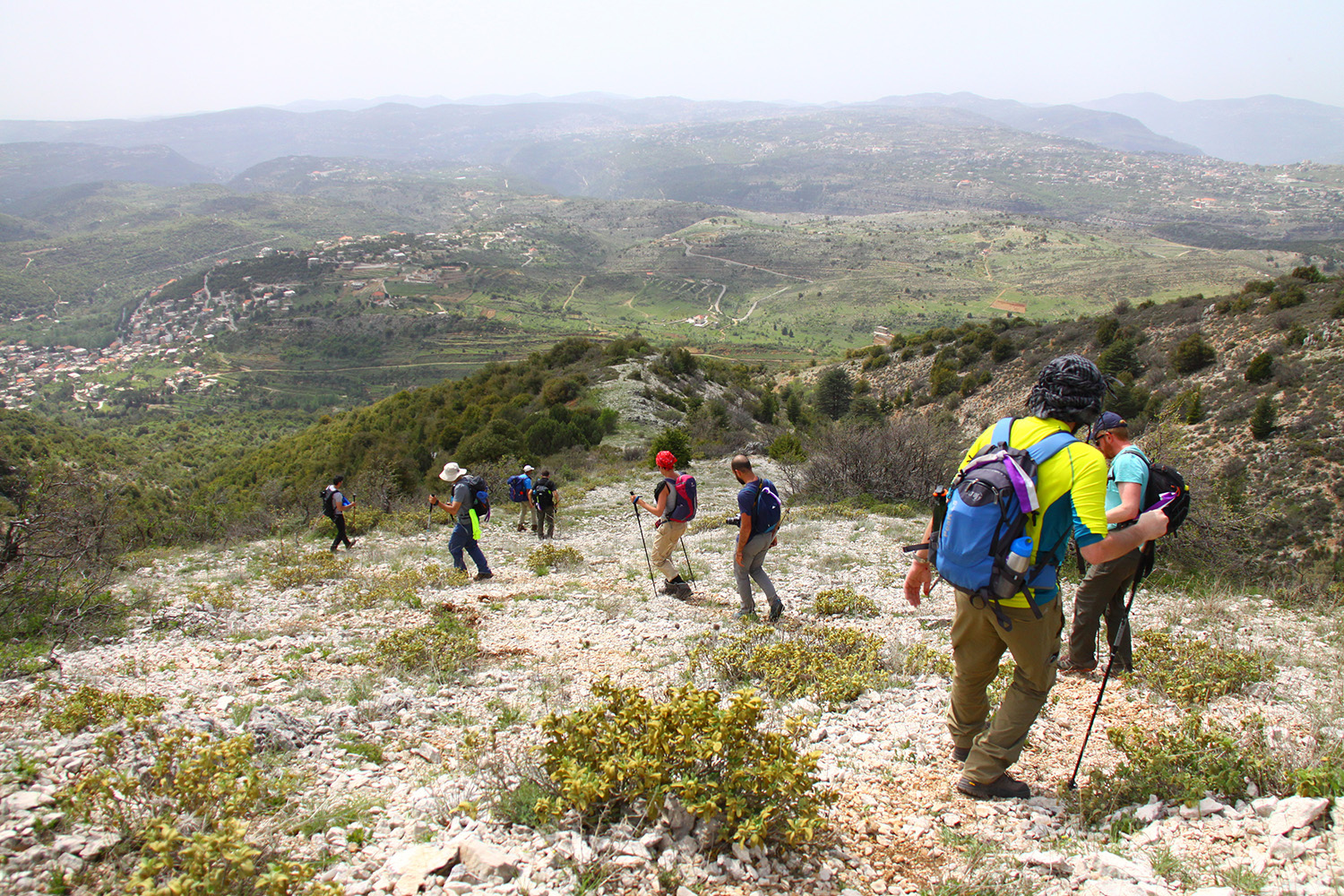
I sent an email to Joseph Karam, the founder of the Lebanon Mountain Trail.
Karam got back to me two days later. Thank God, he had opened his windows and doors before the blast. No glass broke. When he heard the first boom, he grabbed his 5-year-old daughter and ran to the stairwell with his wife.
The rest of that week, I searched for updates and read messages or posts from friends. Their trauma was palpable.
“I literally have no words. Just heartbreak and fear and anger.”
“What happened can’t be described. Beirut was fully destroyed.”
“For some of us who didn’t die, we died inside.”
“We are exhausted and I don’t think we will be able to survive another disaster.”
“I wish we could put Lebanon on a huge plane and fly it away all together to somewhere safe and calm!”
Three days after the explosion, Elaine Eid, a reporter with Inter Press Service News Agency, shared this update. (Elaine was a student last year who worked on a collaborative project between my Marquette University class and a class at Notre Dame University in Lebanon that my Lebanese colleague taught. I saw a link to this story in our class Facebook group.)
My Facebook feed quickly filled with photos of damaged homes, shops and landmarks. Damage was extensive on two trendy streets, Mar Mikhael and Gemmayze, where Aisha had an internship with a social media marketing firm after graduation. Practically every shop and restaurant in the area had suffered extensive damage.
Then photos of victims began to appear, with posts about who they were and how they died: young, strong firefighters who had responded to the fire that preceded the second big blast; the Dutch ambassador’s wife; an internationally recognized architect; nurses; patients; a 2-year-old boy; a 5-year-old girl with the voice of an angel. My friend, Lebanese author Sadika Kebbi, is writing many of the posts. “I made a promise to do my best to give our victims’ names, faces and stories so that they will be remembered as humans and not victims,” she said.
I saw articles about the extensive damage at St. George Medical Center, where four nurses were killed by the blast. The video footage at this link made me cry when I saw it.
The American Syrian-Lebanese Club, with a chapter in Milwaukee, and the parishioners of Milwaukee’s Lebanese-Syrian church, St. George Melkite Greek Catholic Church, 1617 W. State St., are encouraging people to give to the St. George Medical Center through a direct online donation at https://www.stgeorgehospital.org/stgeorge-donation. They also recommend direct online donations to the Lebanese Red Cross at https://www.supportlrc.app/donate/donate_guest.html.
Now I’m seeing signs of hope and the amazing Lebanese resilience. “We will stay here and rebuild our country stone by stone,” one post said. Volunteers went to heavily damaged areas with brooms and buckets, cleaning up the streets and homes.
But to recover what has been lost will take much more than citizen volunteers. The people of Lebanon need help in a big way.
This morning, the most optimistic person I know, a Lebanese friend who is always organizing neighbors to clean-up the beaches and mountain trails, said, “This is bigger than us.”
This story was originally published in the Wisconsin Muslim Journal.
HOMEland THEMES
Coming Soon
HOMEland Events & Collaborations
Coming Soon
 Signature Boutique