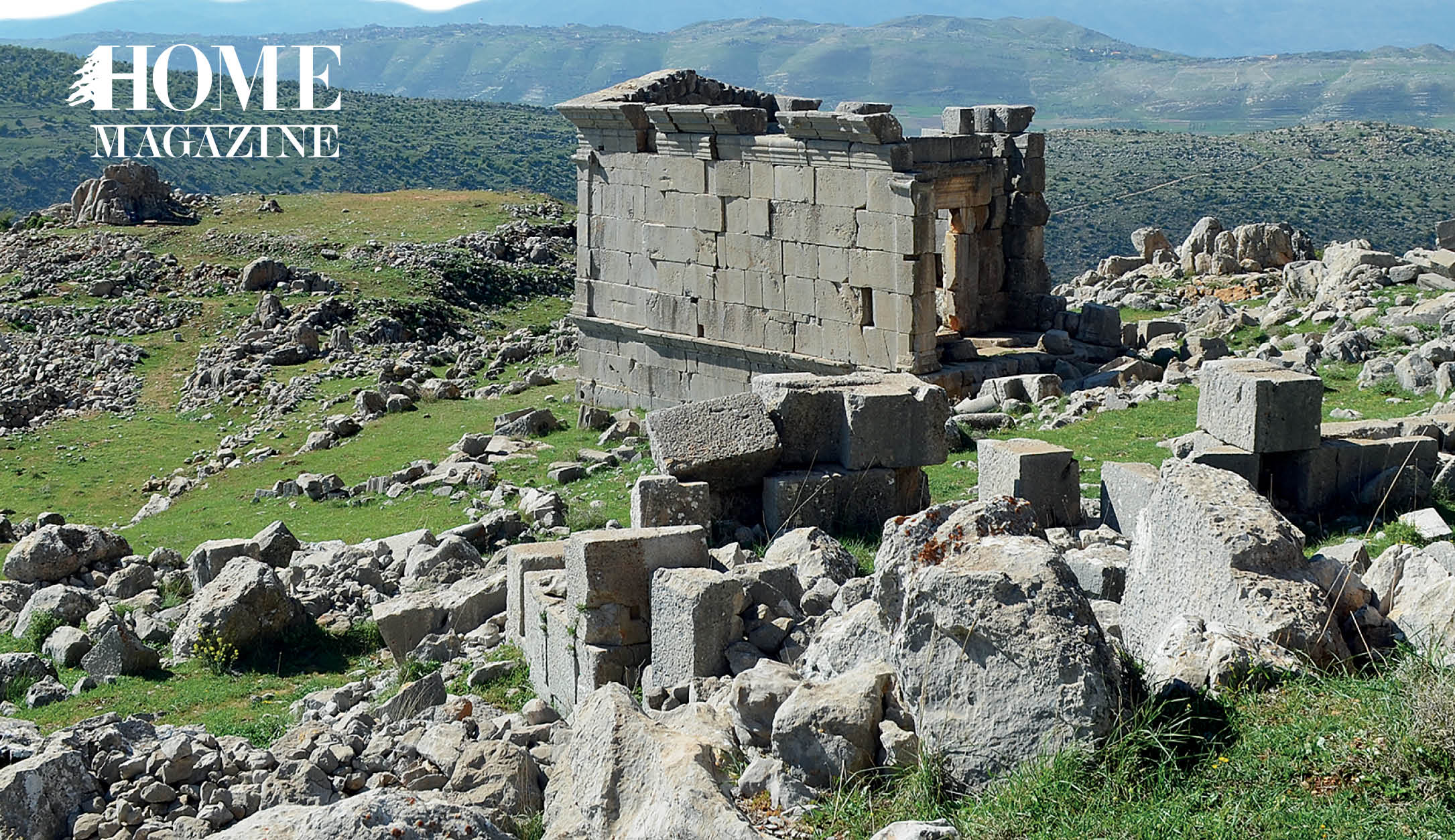
Photos by: Georges Jabbour
Jabal el Sheikh, the “Mountain of the Chief,” the highest summit of the Anti-Lebanon range, majestically rises on the extreme southeastern border of Lebanon. Its summit reaches 2.814 meters (9.232 ft) above sea level and straddles the border between Lebanon and Syria. It is a massive, snow-capped mountain that towers above the surrounding countryside. Snow covers its peaks for most of the year, and thus its melted water feeds the Hasbani River in Lebanon, the Jordan River and the Lake of Tiberias, as well as other rivers and streams.
Its name in Arabic, the “Mountain of the Chief,” is thought to derive from the association of its snowy summits with an elder’s grey hair.
Jabal el Sheikh is better known as Mount Hermon. The holiness of the Lebanese mountains need not be proven. “The ground split open with the heels of their feet, as they whirled around in circles, Mt. Hermon and Lebanon split.” This is an excerpt taken from the Epic of Gilgamesh, a poem from ancient Mesopotamia (c. 2100 B.C.), written on clay tablets and often considered the earliest surviving great work of literature.
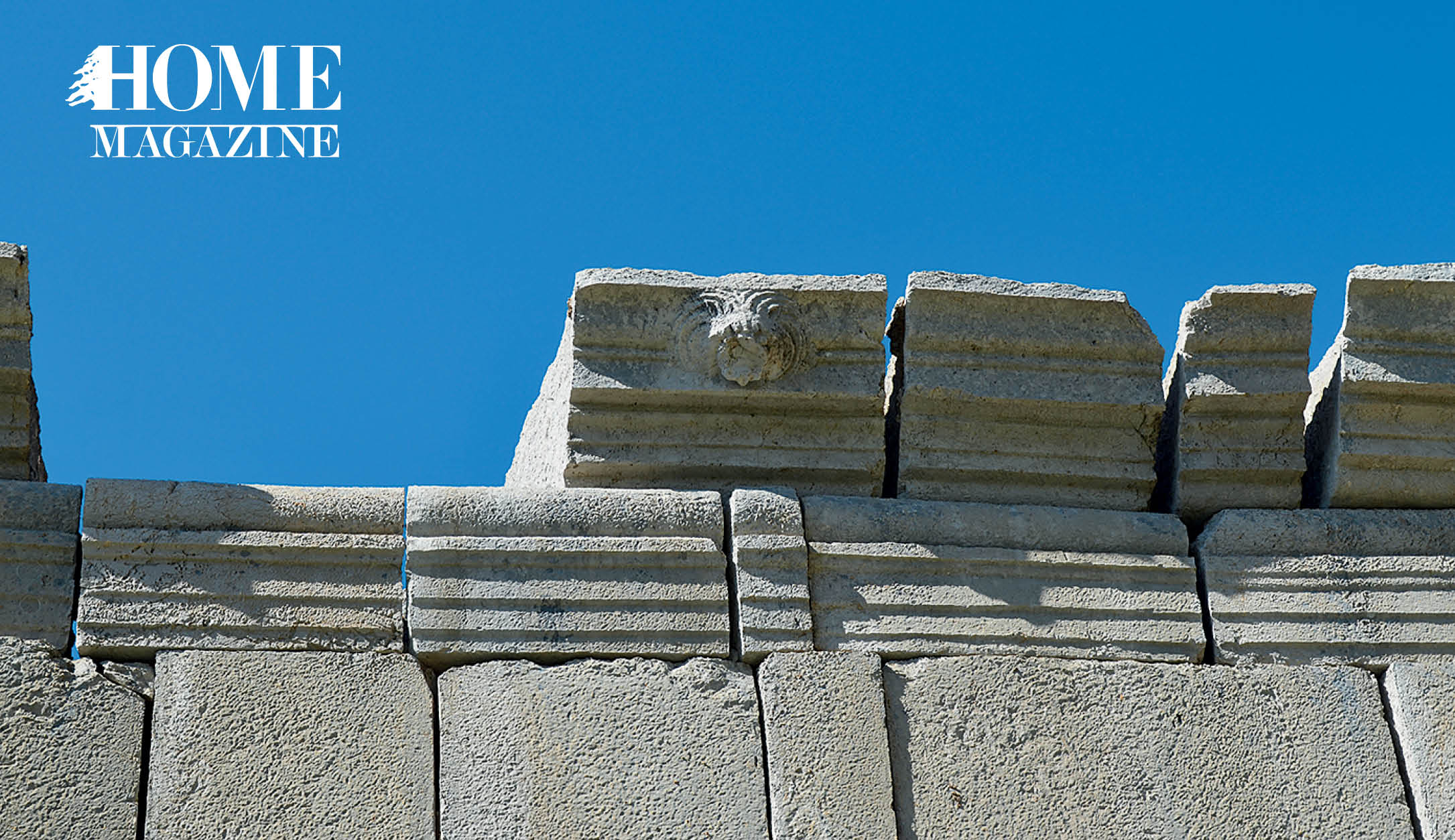
Pilasters Lion Muffles
Furthermore, Mount Hermon is often mentioned in the Bible as Hermon, Sion or Senir. Called Baal-Hermon by the worshipers of Baal (Lord God), it was also revered by the Romans.
Thought to be a possible location of the transfiguration of Jesus, it is also a sacred place for the Druze (a Druze shrine lies in the vicinity of Hasbaya).
The highest temple of the ancient world sits on the summit of the mount and is known today as Qasr Antar. The temple was documented in 1869 by Charles Warren, who found a stela (an upright stone slab or column bearing a commemorative inscription) with a Greek inscription that was translated as follows: “According to the command of the greatest Holy God, those who take an oath, from here.”
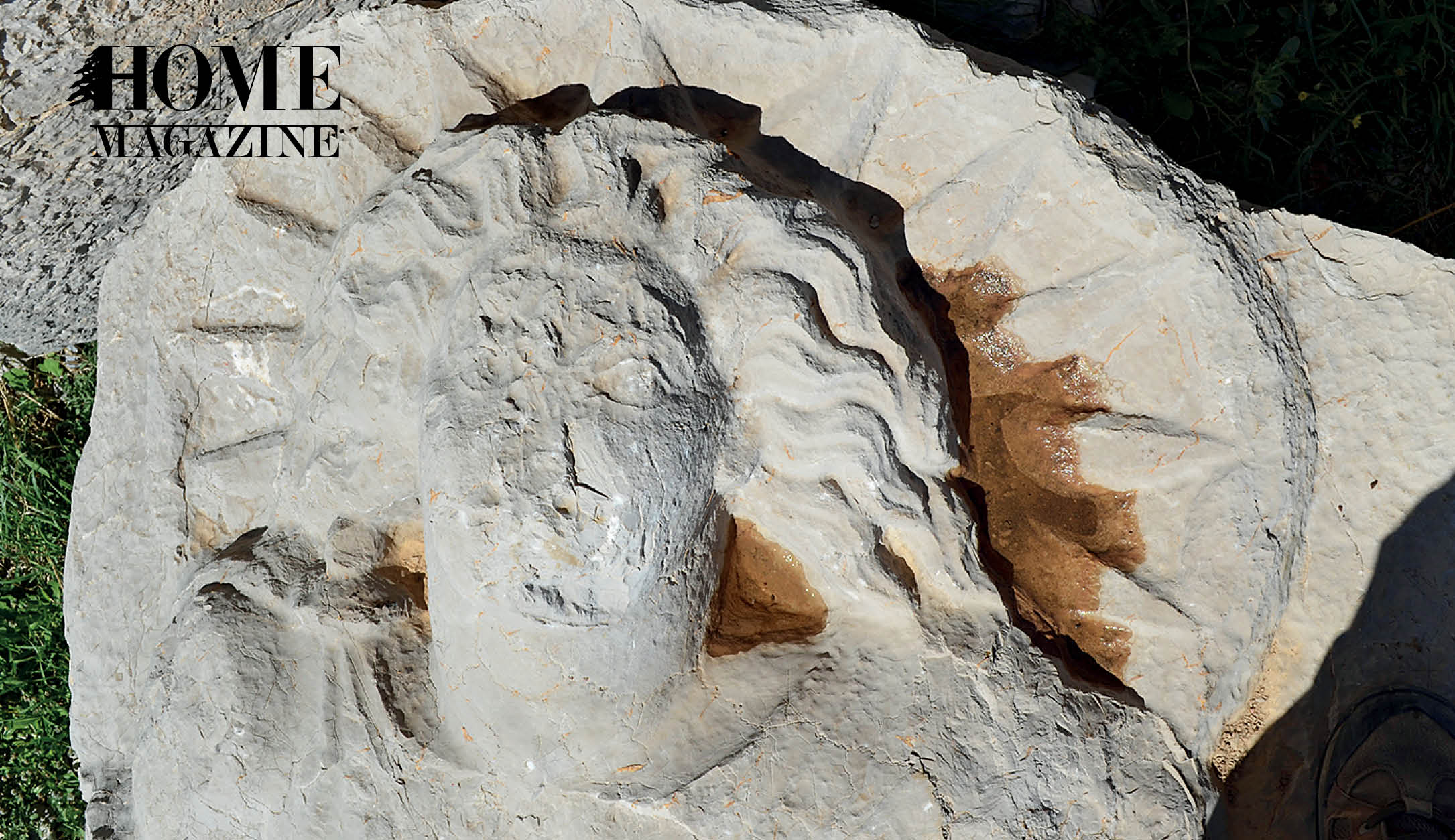
Volutes
Some 17 Roman temples can still be reckoned on the slopes and around Mount Hermon. Most of them have visible and distinguishable remains, whilst others are identified through inscriptions.
The village of Deir El Aachayer lies on the border between Lebanon and Syria, and is settled upon the terraces that overlook Birket el-Bouhairi. When reaching the center of the village, one stumbles on the remains of a quite large preserved temple. A walk in the town will reveal massive ruins amid the village houses. A Greek inscription can be seen below the great temple that attests to the use of this sacred place in 132 A.D.
The temple opens toward the east, its monumental staircase has totally disappeared, and although one cannot see any column’s remains, we can assume their existence all around the cella (the inner chamber). The capitals are of the Ionic order, bearing volutes on their corners, and are decorated with swastikas.
Another well preserved temple of Mount Hermon is located near the village of Ain Hirsha. A 30-minute walk uphill from the village leads to the remains of a Roman temple of the 2nd century A.D.
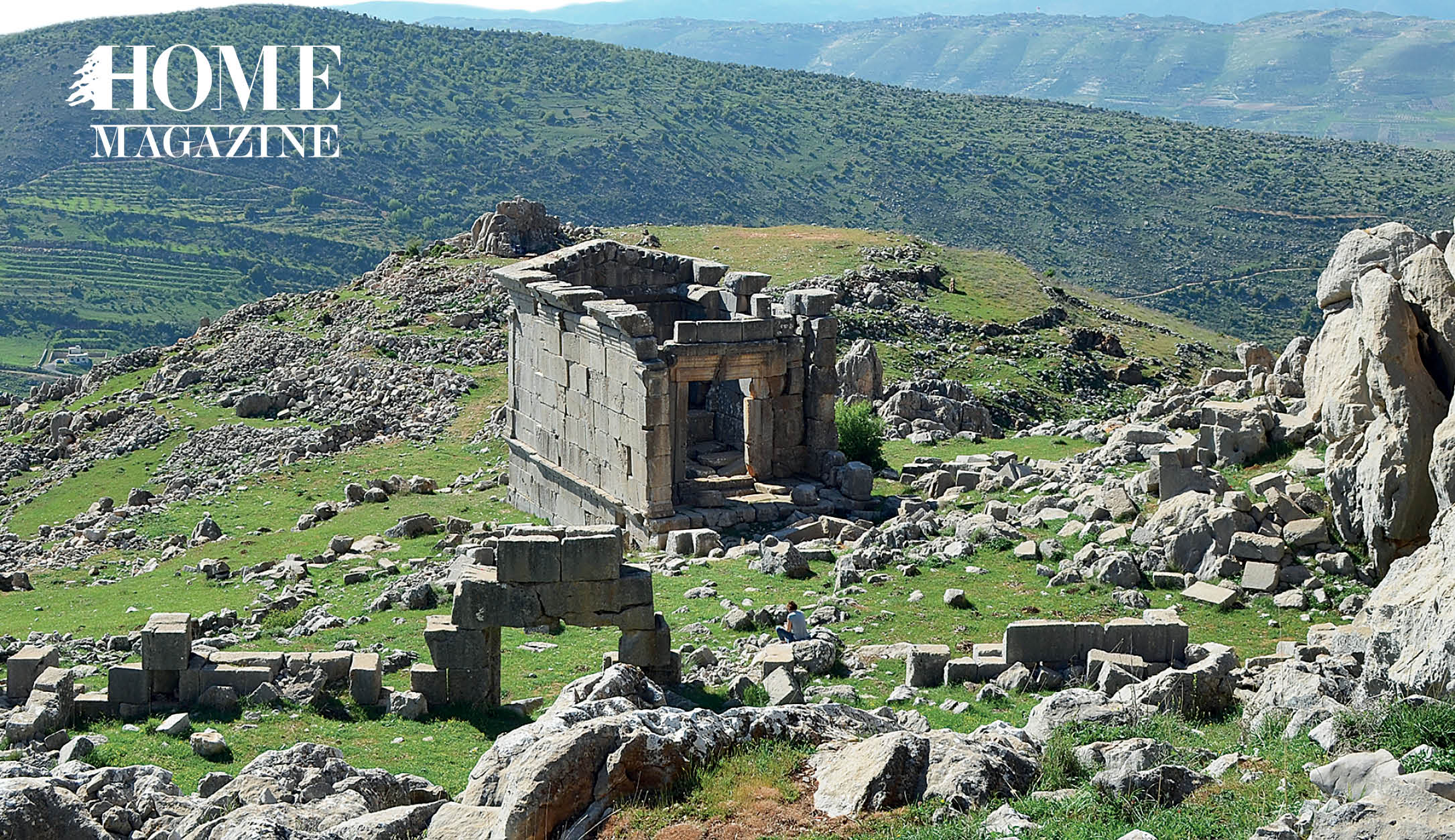
Helio’s torso
The temple can hardly be differentiated from its surrounding environment, but once you reach it, it stands out majestically on the slope. It is one of the best preserved temples in Lebanon. Its decoration is quite simple: angle pilasters and lion muffles. A feminine torso with a lunar crescent is carved on the western pediment. It represents Selene, the Greek goddess of the moon. A fragment lying on the ground depicts Helios, the solar god. A quite intriguing relief, a sculpture that remains attached to a solid background of the same materials, representing a miniature temple, can be seen right under Selene’s torso.
Other construction remains can be seen around the temple, some of which can be identified with dwellings, tombs and sarcophagi.
Reaching the Hermon Mountains is not an easy task. It’s a two-hour drive (traffic-less of course), but the scenery on your way and the peacefulness felt once there are its own reward.
Song of Songs 4:8
Come with me from Lebanon, my bride, come with me from Lebanon.
Descend from the crest of Amana, from the top of Senir, the summit of Hermon, from the lions’ dens and the mountain haunts of leopards.
Psalm 133
When Brothers Dwell in Unity
A Song of Ascents. Of David.
Behold, how good and pleasant it is when brothers dwell in unity!
It is like the precious oil on the head, running down on the beard, on the beard of Aaron, running down on the collar of his robes!
It is like the dew of Hermon, which falls on the mountains of Zion!
For there the Lord has recommended the blessing, life forevermore.

HOMEland Magazine
We firmly believe that the internet should be available and accessible to anyone, and are committed to providing a website that is accessible to the widest possible audience, regardless of circumstance and ability.
To fulfill this, we aim to adhere as strictly as possible to the World Wide Web Consortium’s (W3C) Web Content Accessibility Guidelines 2.1 (WCAG 2.1) at the AA level. These guidelines explain how to make web content accessible to people with a wide array of disabilities. Complying with those guidelines helps us ensure that the website is accessible to all people: blind people, people with motor impairments, visual impairment, cognitive disabilities, and more.
This website utilizes various technologies that are meant to make it as accessible as possible at all times. We utilize an accessibility interface that allows persons with specific disabilities to adjust the website’s UI (user interface) and design it to their personal needs.
Additionally, the website utilizes an AI-based application that runs in the background and optimizes its accessibility level constantly. This application remediates the website’s HTML, adapts Its functionality and behavior for screen-readers used by the blind users, and for keyboard functions used by individuals with motor impairments.
If you’ve found a malfunction or have ideas for improvement, we’ll be happy to hear from you. You can reach out to the website’s operators by using the following email
Our website implements the ARIA attributes (Accessible Rich Internet Applications) technique, alongside various different behavioral changes, to ensure blind users visiting with screen-readers are able to read, comprehend, and enjoy the website’s functions. As soon as a user with a screen-reader enters your site, they immediately receive a prompt to enter the Screen-Reader Profile so they can browse and operate your site effectively. Here’s how our website covers some of the most important screen-reader requirements, alongside console screenshots of code examples:
Screen-reader optimization: we run a background process that learns the website’s components from top to bottom, to ensure ongoing compliance even when updating the website. In this process, we provide screen-readers with meaningful data using the ARIA set of attributes. For example, we provide accurate form labels; descriptions for actionable icons (social media icons, search icons, cart icons, etc.); validation guidance for form inputs; element roles such as buttons, menus, modal dialogues (popups), and others. Additionally, the background process scans all the website’s images and provides an accurate and meaningful image-object-recognition-based description as an ALT (alternate text) tag for images that are not described. It will also extract texts that are embedded within the image, using an OCR (optical character recognition) technology. To turn on screen-reader adjustments at any time, users need only to press the Alt+1 keyboard combination. Screen-reader users also get automatic announcements to turn the Screen-reader mode on as soon as they enter the website.
These adjustments are compatible with all popular screen readers, including JAWS and NVDA.
Keyboard navigation optimization: The background process also adjusts the website’s HTML, and adds various behaviors using JavaScript code to make the website operable by the keyboard. This includes the ability to navigate the website using the Tab and Shift+Tab keys, operate dropdowns with the arrow keys, close them with Esc, trigger buttons and links using the Enter key, navigate between radio and checkbox elements using the arrow keys, and fill them in with the Spacebar or Enter key.Additionally, keyboard users will find quick-navigation and content-skip menus, available at any time by clicking Alt+1, or as the first elements of the site while navigating with the keyboard. The background process also handles triggered popups by moving the keyboard focus towards them as soon as they appear, and not allow the focus drift outside it.
Users can also use shortcuts such as “M” (menus), “H” (headings), “F” (forms), “B” (buttons), and “G” (graphics) to jump to specific elements.
We aim to support the widest array of browsers and assistive technologies as possible, so our users can choose the best fitting tools for them, with as few limitations as possible. Therefore, we have worked very hard to be able to support all major systems that comprise over 95% of the user market share including Google Chrome, Mozilla Firefox, Apple Safari, Opera and Microsoft Edge, JAWS and NVDA (screen readers).
Despite our very best efforts to allow anybody to adjust the website to their needs. There may still be pages or sections that are not fully accessible, are in the process of becoming accessible, or are lacking an adequate technological solution to make them accessible. Still, we are continually improving our accessibility, adding, updating and improving its options and features, and developing and adopting new technologies. All this is meant to reach the optimal level of accessibility, following technological advancements. For any assistance, please reach out to