
HOMEland
Coming Soon
HOMEland Events & Collaborations
Coming Soon
 Signature Boutique


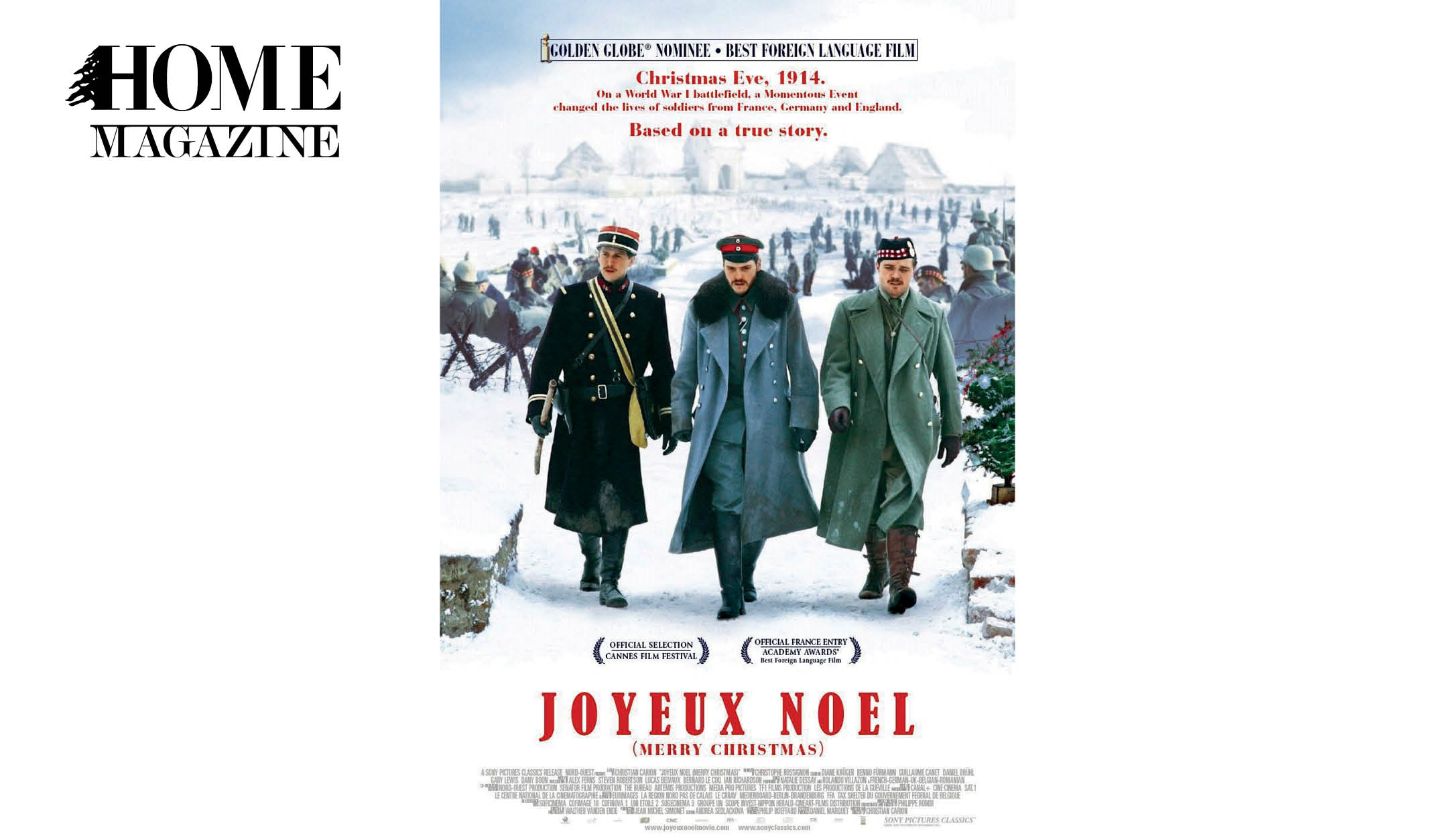
An unofficial Christmas truce was called along areas of the Western Front in World War I.
Soldiers from opposing armies laid down their weapons and exchanged gifts and well wishes.
Toward the end of 1914 it was clear to soldiers on all fronts that the war would not be over by Christmas. Germany had invaded Luxembourg and Belgium and had its sights on France, drawing
Great Britain into the conflict. The fighting degenerated into a stalemate and both sides started to dig fortified systems of trenches. As Christmas approached, many soldiers had to face the reality that they would be spending the festive season away from their loved ones.
On Dec. 7, 1914, Pope Benedict XV proposed a wide, official “Truce of God” calling for hostilities to end for the duration of the Christmas period. The idea was rejected by the authorities who, nevertheless, were keen to maintain morale and bring some festive cheer to the front lines.
Over the month 460,000 parcels and 2.5 million letters were sent to British soldiers in France. King George V sent a card to every serving soldier, who also received small parcels containing tobacco or writing sets from the royal household.
The Germans too received small gifts from their superiors, wreaths and tabletop Christmas trees. On Christmas Eve the Germans, positioned near to Ypres, decorated their trenches with candles and began to sing carols.
As one veteran remembers:
“It was a Christmas card Christmas Eve. There was white beautiful moonlight, frost on the ground – almost white everywhere. And round about – I should think – 7 or 8 in the evening we heard this singing and a lot of commotion, and we saw some lights. I don’t know what they were – some lights – and later we heard them singing ‘Silent Night’ – ‘Stille Nacht’ – I shall never forget it.
It’s one of the highlights of my life absolutely to see them. I thought what a beautiful tune.”
Tentatively some soldiers put their heads above the parapet and, drawing no enemy fire, went out into no-mans land.
Here soldiers from both sides met and exchanged gifts, singing together and taking photographs. The opportunity to leave the damp trenches and tend to the dead and wounded was too unique to be missed. Joint funerals were reportedly held for the dead.
There are eyewitness accounts of scenes of fraternization and compassion.
Bruce Bairnsfather of the Royal Warwickshire Regiment recalls:
“I wouldn’t have missed that unique and weird Christmas Day for anything. … I spotted a German officer, some sort of lieutenant I should think, and being a bit of a collector,
I intimated to him that I had taken a fancy to some of his buttons. … I brought out my wire clippers and, with a few deft snips, removed a couple of his buttons and put them in
my pocket. I then gave him two of mine in exchange. … The last I saw was one of my machine gunners, who was a bit of an amateur hairdresser in civil life, cutting the unnaturally long hair of a docile Boche , who was patiently kneeling on the ground whilst the automatic clippers crept up the back of his neck.”
The unofficial truce lasted up to New Year’s Day in some places, there were reports of a football match between the two sides, but these are unconfirmed. It is thought that there might have been a few disorganized kickabouts between the men, but these would have been one in a number of communal activities enjoyed by the men, who sang carols and drank together with a sense of fraternity.
When the high command caught wind of the truce they were outraged. They feared that the men might mutiny or question the war. Strict orders were given to put a stop to the merriment and anyone who refused would be harshly punished. The war then continued in savage fashion claiming the lives of an estimated 16 million people.
Both sides demonized the other as the war developed and so any feeling of camaraderie or kinship faded, but the story of when the men put aside their differences and came together on Christmas of 1914 will always be told.
Events elsewhere in WWI
By November Russia, and then France and Great Britain, had officially declared war on the Ottoman Empire. In response Sultan Mehmet V declared jihad on the Allies. The Great War, the beginnings of which can be traced to the Balkan states, had spread to Mesopotamia, Africa and as far as the Indian Ocean.
In the theater of Europe, the Germans had advanced through Belgium and marched on Paris, only to be repelled by British and French troops at the Battle of the Marne in September 1914. The Germans retreated to the Aisne Valley in northern France and held their position against the Allied attack.
On the Western Front fierce fighting at Ypres Salient had claimed the lives of many soldiers on both sides and so with grit and determination, the opposing forces dug in, unprepared to concede an inch of ground.
Signature Boutique
Lebanon, in your inbox


HOMEland Magazine
We firmly believe that the internet should be available and accessible to anyone, and are committed to providing a website that is accessible to the widest possible audience, regardless of circumstance and ability.
To fulfill this, we aim to adhere as strictly as possible to the World Wide Web Consortium’s (W3C) Web Content Accessibility Guidelines 2.1 (WCAG 2.1) at the AA level. These guidelines explain how to make web content accessible to people with a wide array of disabilities. Complying with those guidelines helps us ensure that the website is accessible to all people: blind people, people with motor impairments, visual impairment, cognitive disabilities, and more.
This website utilizes various technologies that are meant to make it as accessible as possible at all times. We utilize an accessibility interface that allows persons with specific disabilities to adjust the website’s UI (user interface) and design it to their personal needs.
Additionally, the website utilizes an AI-based application that runs in the background and optimizes its accessibility level constantly. This application remediates the website’s HTML, adapts Its functionality and behavior for screen-readers used by the blind users, and for keyboard functions used by individuals with motor impairments.
If you’ve found a malfunction or have ideas for improvement, we’ll be happy to hear from you. You can reach out to the website’s operators by using the following email
Our website implements the ARIA attributes (Accessible Rich Internet Applications) technique, alongside various different behavioral changes, to ensure blind users visiting with screen-readers are able to read, comprehend, and enjoy the website’s functions. As soon as a user with a screen-reader enters your site, they immediately receive a prompt to enter the Screen-Reader Profile so they can browse and operate your site effectively. Here’s how our website covers some of the most important screen-reader requirements, alongside console screenshots of code examples:
Screen-reader optimization: we run a background process that learns the website’s components from top to bottom, to ensure ongoing compliance even when updating the website. In this process, we provide screen-readers with meaningful data using the ARIA set of attributes. For example, we provide accurate form labels; descriptions for actionable icons (social media icons, search icons, cart icons, etc.); validation guidance for form inputs; element roles such as buttons, menus, modal dialogues (popups), and others. Additionally, the background process scans all the website’s images and provides an accurate and meaningful image-object-recognition-based description as an ALT (alternate text) tag for images that are not described. It will also extract texts that are embedded within the image, using an OCR (optical character recognition) technology. To turn on screen-reader adjustments at any time, users need only to press the Alt+1 keyboard combination. Screen-reader users also get automatic announcements to turn the Screen-reader mode on as soon as they enter the website.
These adjustments are compatible with all popular screen readers, including JAWS and NVDA.
Keyboard navigation optimization: The background process also adjusts the website’s HTML, and adds various behaviors using JavaScript code to make the website operable by the keyboard. This includes the ability to navigate the website using the Tab and Shift+Tab keys, operate dropdowns with the arrow keys, close them with Esc, trigger buttons and links using the Enter key, navigate between radio and checkbox elements using the arrow keys, and fill them in with the Spacebar or Enter key.Additionally, keyboard users will find quick-navigation and content-skip menus, available at any time by clicking Alt+1, or as the first elements of the site while navigating with the keyboard. The background process also handles triggered popups by moving the keyboard focus towards them as soon as they appear, and not allow the focus drift outside it.
Users can also use shortcuts such as “M” (menus), “H” (headings), “F” (forms), “B” (buttons), and “G” (graphics) to jump to specific elements.
We aim to support the widest array of browsers and assistive technologies as possible, so our users can choose the best fitting tools for them, with as few limitations as possible. Therefore, we have worked very hard to be able to support all major systems that comprise over 95% of the user market share including Google Chrome, Mozilla Firefox, Apple Safari, Opera and Microsoft Edge, JAWS and NVDA (screen readers).
Despite our very best efforts to allow anybody to adjust the website to their needs. There may still be pages or sections that are not fully accessible, are in the process of becoming accessible, or are lacking an adequate technological solution to make them accessible. Still, we are continually improving our accessibility, adding, updating and improving its options and features, and developing and adopting new technologies. All this is meant to reach the optimal level of accessibility, following technological advancements. For any assistance, please reach out to