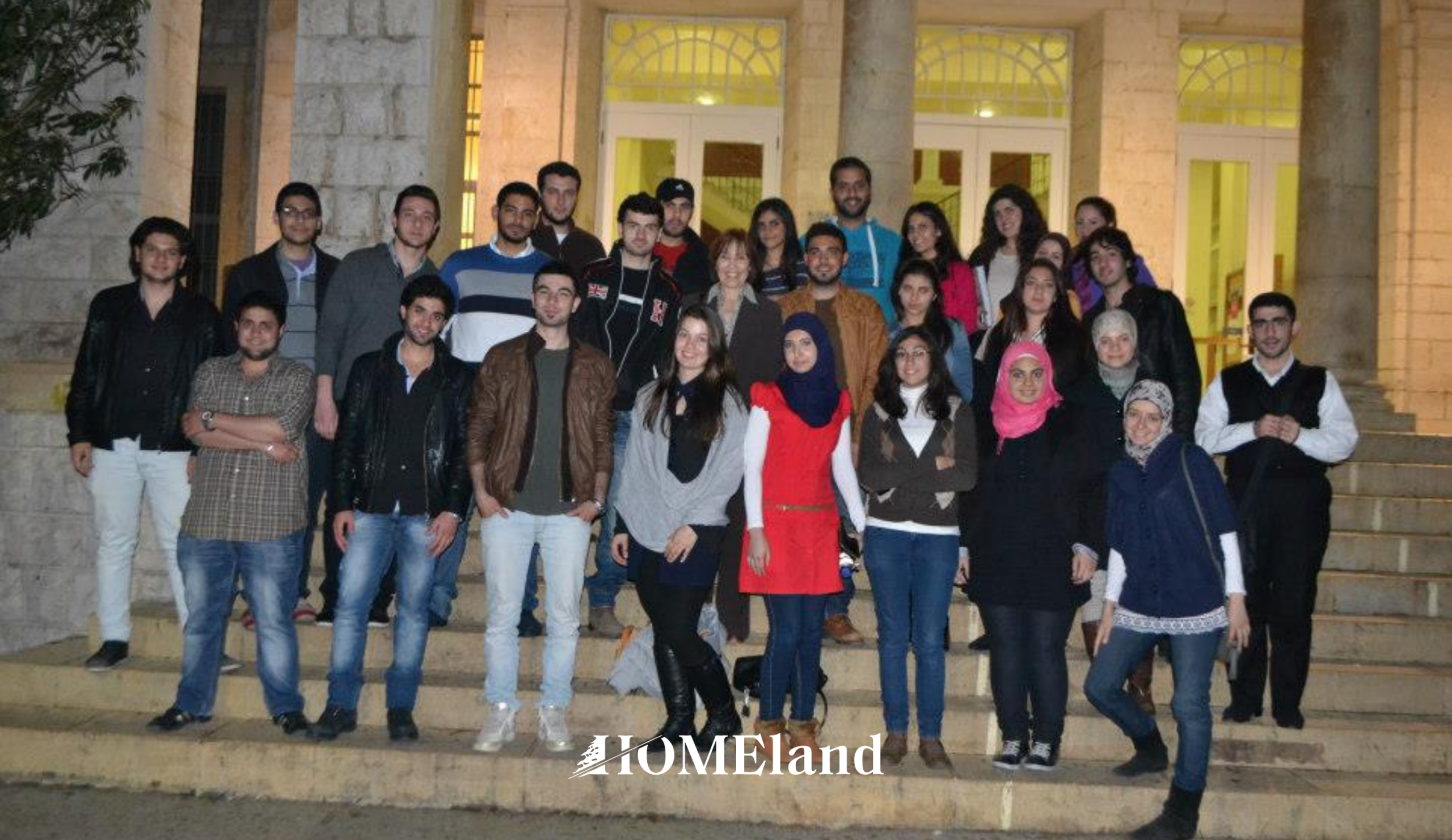
The films featured at the Beirut Art Film Festival (BAFF) are not your average run-of-the-mill movies you see at your local cinema. They are carefully selected to offer audiences documentaries and films that are thought-provoking, educational and artistic. Founded by art gallery owner and art history teacher Alice Mogabgab Karam, the film festival is now in its fifth year.
The current BAFF kicked off Dec. 5, 2019. Since then, it has been holding screenings at various locations in Beirut with two weeks at the American University of Beirut (AUB), followed two weeks at the Académie Libanaise des Beaux-Arts (ALBA) and a week (Jan. 28 – 31) at Saint Joseph University (USJ).
Additional screenings are also being held in participating cultural centers: Dar El Nimr for Arts & Culture in Beirut, Municipality of Zahle Maalaka and Tanayel, ASSABIL Friends of Public Libraries Association in Beirut and Palmyra Hotel in Baalbeck.
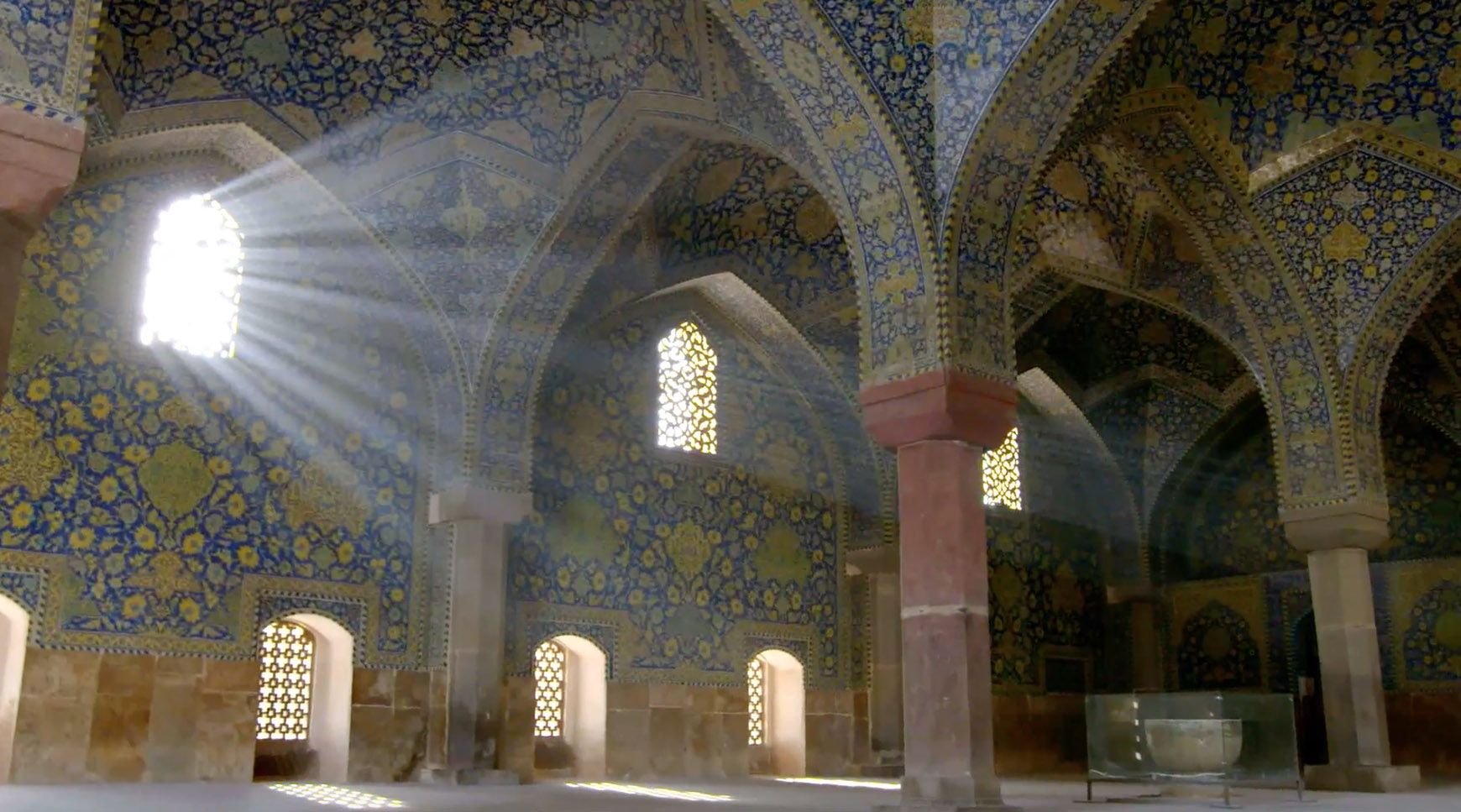
The fifth week of screenings (Jan. 28 – 31) at USJ include the film “La Bataille du Cèdre” by Laurent Sorcelle about a lifetime project of Lebanese people dedicated to save the iconic cedars tree forest of Becharé. Another screening is for “Mosques: Art & Space” by Antoine Flandrin, who takes viewers on a journey to the heart of six of the greatest jewels of sacred Islamic art. The week closes with “The Great Buster – A Celebration.” The film by Peter Bogdanovich celebrates the life of a true cinematic visionary, the American filmmaker and comedian Buster Keaton.
Like other scheduled cultural events in Lebanon this year, the BAFF team chose not to cancel due to the onset of the revolution and economic crisis. In a moving testimony, the organization released a statement about its decision to go on with the film festival: “It is indeed a hard launching of this BAFF – Edition V; no less hard than the difficult circumstances we are living through. However, it is our conviction and will to declare this launching as an integral part and determined participation in the revolt of Lebanese women and men, aiming at a better future for them and for their children.”
Soon Week 6 will unfold, marking the next phase of this year’s BAFF. The location and the featured films will be posted on the BAFF website. Screenings of subsequent weeks will also be announced on its website in due course.
All the films at BAFF are free of charge and there are no bookings (on a first-come-first-seated basis).
Lebanon, in your inbox
HOMEland Magazine
We firmly believe that the internet should be available and accessible to anyone, and are committed to providing a website that is accessible to the widest possible audience, regardless of circumstance and ability.
To fulfill this, we aim to adhere as strictly as possible to the World Wide Web Consortium’s (W3C) Web Content Accessibility Guidelines 2.1 (WCAG 2.1) at the AA level. These guidelines explain how to make web content accessible to people with a wide array of disabilities. Complying with those guidelines helps us ensure that the website is accessible to all people: blind people, people with motor impairments, visual impairment, cognitive disabilities, and more.
This website utilizes various technologies that are meant to make it as accessible as possible at all times. We utilize an accessibility interface that allows persons with specific disabilities to adjust the website’s UI (user interface) and design it to their personal needs.
Additionally, the website utilizes an AI-based application that runs in the background and optimizes its accessibility level constantly. This application remediates the website’s HTML, adapts Its functionality and behavior for screen-readers used by the blind users, and for keyboard functions used by individuals with motor impairments.
If you’ve found a malfunction or have ideas for improvement, we’ll be happy to hear from you. You can reach out to the website’s operators by using the following email
Our website implements the ARIA attributes (Accessible Rich Internet Applications) technique, alongside various different behavioral changes, to ensure blind users visiting with screen-readers are able to read, comprehend, and enjoy the website’s functions. As soon as a user with a screen-reader enters your site, they immediately receive a prompt to enter the Screen-Reader Profile so they can browse and operate your site effectively. Here’s how our website covers some of the most important screen-reader requirements, alongside console screenshots of code examples:
Screen-reader optimization: we run a background process that learns the website’s components from top to bottom, to ensure ongoing compliance even when updating the website. In this process, we provide screen-readers with meaningful data using the ARIA set of attributes. For example, we provide accurate form labels; descriptions for actionable icons (social media icons, search icons, cart icons, etc.); validation guidance for form inputs; element roles such as buttons, menus, modal dialogues (popups), and others. Additionally, the background process scans all the website’s images and provides an accurate and meaningful image-object-recognition-based description as an ALT (alternate text) tag for images that are not described. It will also extract texts that are embedded within the image, using an OCR (optical character recognition) technology. To turn on screen-reader adjustments at any time, users need only to press the Alt+1 keyboard combination. Screen-reader users also get automatic announcements to turn the Screen-reader mode on as soon as they enter the website.
These adjustments are compatible with all popular screen readers, including JAWS and NVDA.
Keyboard navigation optimization: The background process also adjusts the website’s HTML, and adds various behaviors using JavaScript code to make the website operable by the keyboard. This includes the ability to navigate the website using the Tab and Shift+Tab keys, operate dropdowns with the arrow keys, close them with Esc, trigger buttons and links using the Enter key, navigate between radio and checkbox elements using the arrow keys, and fill them in with the Spacebar or Enter key.Additionally, keyboard users will find quick-navigation and content-skip menus, available at any time by clicking Alt+1, or as the first elements of the site while navigating with the keyboard. The background process also handles triggered popups by moving the keyboard focus towards them as soon as they appear, and not allow the focus drift outside it.
Users can also use shortcuts such as “M” (menus), “H” (headings), “F” (forms), “B” (buttons), and “G” (graphics) to jump to specific elements.
We aim to support the widest array of browsers and assistive technologies as possible, so our users can choose the best fitting tools for them, with as few limitations as possible. Therefore, we have worked very hard to be able to support all major systems that comprise over 95% of the user market share including Google Chrome, Mozilla Firefox, Apple Safari, Opera and Microsoft Edge, JAWS and NVDA (screen readers).
Despite our very best efforts to allow anybody to adjust the website to their needs. There may still be pages or sections that are not fully accessible, are in the process of becoming accessible, or are lacking an adequate technological solution to make them accessible. Still, we are continually improving our accessibility, adding, updating and improving its options and features, and developing and adopting new technologies. All this is meant to reach the optimal level of accessibility, following technological advancements. For any assistance, please reach out to