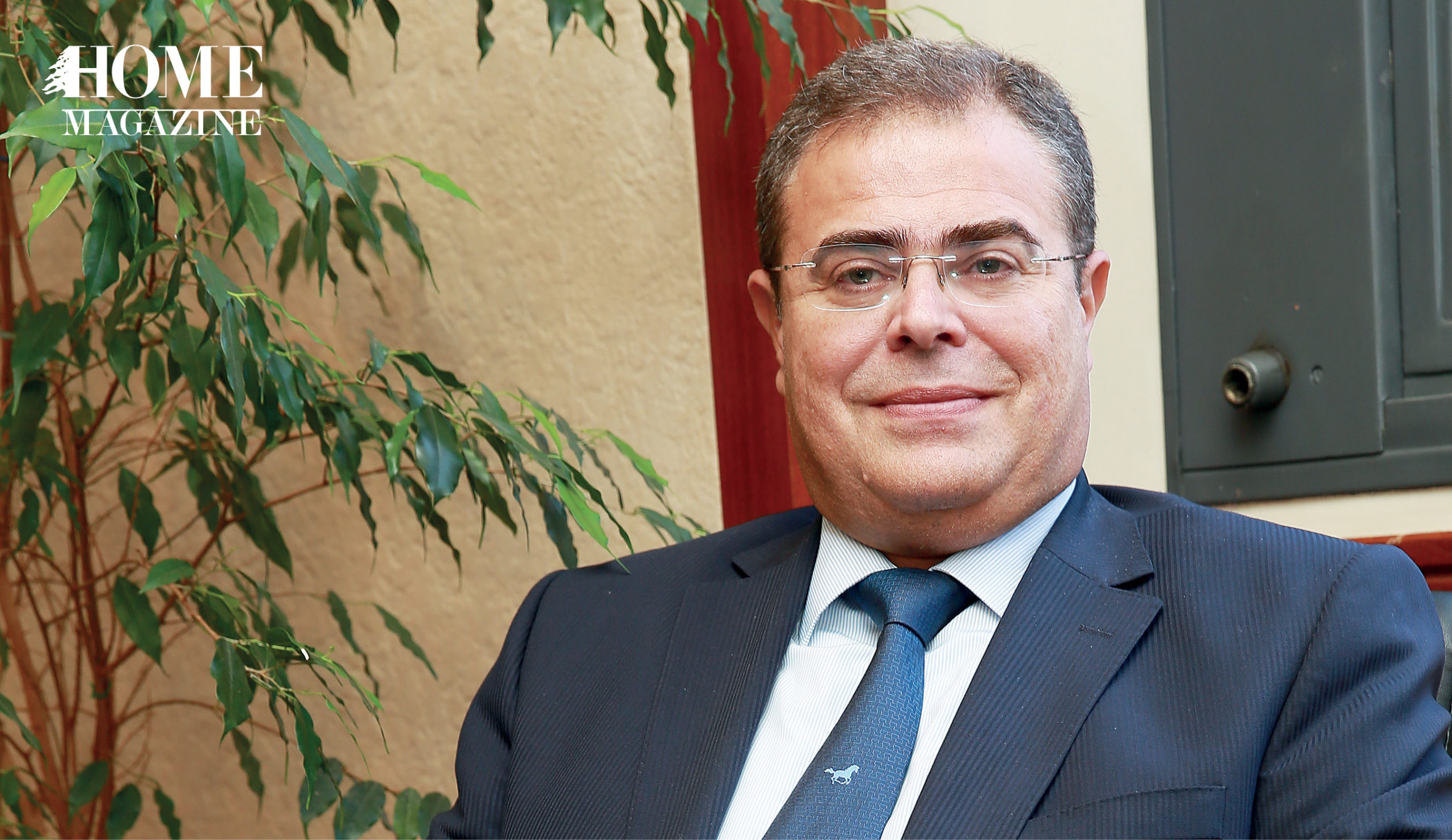
Despite a looming economic crisis, BSL BANK’s General Manager Elias Alouf is confident that Lebanon’s banking sector will weather the storm and continue to improve financial services for customers.
“I don’t think Lebanon is overbanked,” Alouf tells HOME Magazine from his office on Banks Street in Downtown Beirut. He believes that the high number of banks in such a small country creates competition thereby improving the customer’s experience. “You have around 30 active banks in Lebanon giving customers — whether depositor or borrower — the opportunity to choose which bank best suits their needs,” says Alouf.
Lebanon’s banking sector is widely seen as the backbone of the country’s economy, with bank deposits worth slightly more than three times Lebanon’s gross domestic product (GDP). These deposits are highly concentrated; half of all deposits are controlled by less than 1 percent of all accounts, according to the International Monetary Fund (IMF). It is still unclear what level of risk such a high deposit concentration poses for the Lebanese economy.
“I am a firm believer in economic freedom and in perfect competition. If Lebanon only had 14 banks, for example, it would become like the UK: an oligopoly ,” says Alouf. He points out that Australia is another country where the dominance of four banks — known commonly as the “big four” — has stagnated competition. Here in Lebanon, “banks have to outdo themselves to please the customer,” he says, adding that a customer can simply move to a different bank if they want better service.
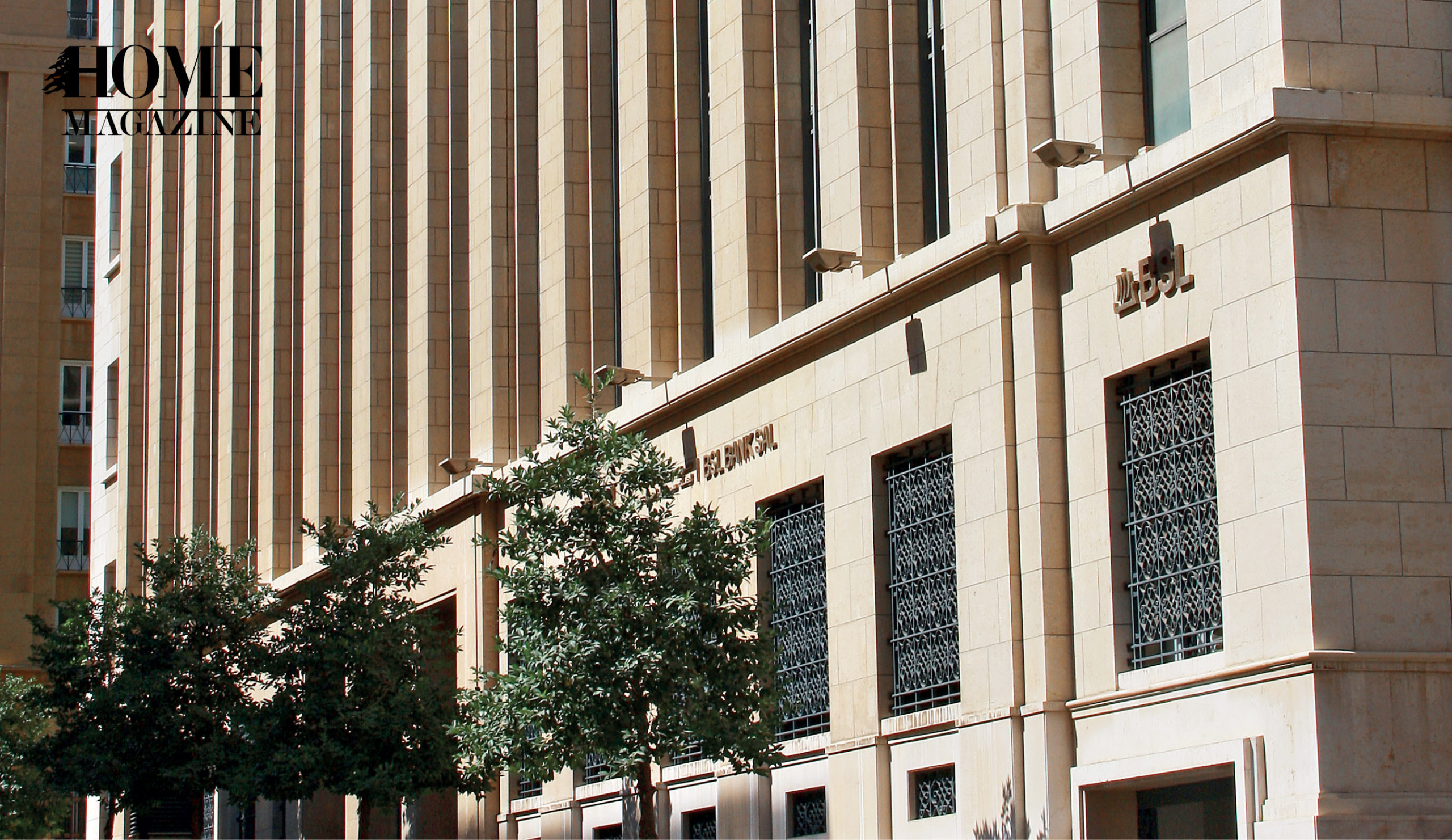
Established in 1863, BSL BANK was granted the unique privilege of issuing banknotes in 1924, acting as a central and commercial bank. After the establishment of Banque du Liban, Lebanon’s central bank, in 1963, BSL BANK transitioned toward becoming a privately owned, fully-rounded commercial bank across Lebanon.
In 1987, the bank was acquired by a Lebanese group headed by Mrs. Nadia El Khoury.
A century and a half since its establishment, BSL BANK is a “mid-sized Lebanese bank” with a network of 18 branches covering Beirut and many other major cities in Lebanon. It offers three activities at its core: retail banking, commercial banking, and treasury and capital markets. The bank has been assisting clients toward achieving personal financial growth through fiscal responsibility, long-term planning and a balanced approach toward borrowing. BSL BANK states that its “commitment to responsible banking” has been instrumental in maintaining its reputation as a highly trusted bank.
Since Alouf joined the bank as general manager in June 2016, he engendered a “social and economic mission” within the bank’s core ethos which promotes essential needs rather than endorse unessential spending. “We need to support people as much as we can to educate their children, to buy a house, to buy a car and to ensure their retirement,” he says. This includes providing tailor-made products for different age groups. “To date, we have provided products for customers in the middle life cycle, between ages 25 and 55,” says Alouf. “We are considering covering ages 55 and above as well, targeting those who are on the verge of retirement and who will live on their life’s savings.”
But financial inclusion remains worryingly low in Lebanon; only 55 percent of the Lebanese population owns a bank account, according to the World Bank’s Global Financial Inclusion Index (Findex) in 2017. Alouf believes that education could be the key to opening up banking for more Lebanese citizens. In this area, banks can play a role by improving peoples’ financial literacy. But banks cannot increase peoples’ income which makes income level a significant barrier. “People open bank accounts for two reasons: They either want to save money or borrow money. However, very low-income people can neither borrow from banks nor save money as they do not have enough of it to set aside,” says Alouf, illustrating with an example. “When you have someone who earns $500, that amount is not enough for them to withstand the entire month. Why would they open a bank account?”
When it comes to Lebanon’s economic woes, Alouf believes that cutting the government’s budget deficit is not the only key to success. “If I were a politician, I would be much more concerned about our balance of payments, as more hard currency is going out than coming in. I would worry about our bills. I would use a transformational budget to inject funds in specific industries,” says Alouf. “I think the problem in Lebanon is a balance of payments problem; it’s not a debt problem,” he adds, pointing out that the debt/GDP was considerably higher in 2006 than today. “At that time, you had an inflow of money coming from expatriates living abroad and so on. For the last four to five years, the imports have been growing hugely. Part of these imports are related to fuel for Electricité du Liban (EDL) and for the general population.”
State-run EDL’s deficit ranges from $1.5 and $2 billion, depending on international oil prices. While the state pays up to 18 USD cents per kilowatt-hour, it only sells at 8 USD cents. This accounts for roughly a third of the country’s annual deficit. Lebanon’s power plants run on fuel and gas oil imported from international oil companies and will continue to do so until Lebanon becomes able to extract gas from its territorial waters. “If the cost of fuel can be reduced a little bit, it would tremendously reduce the balance of payment problem,” he continues. Once the balance of payments issue is solved, “Lebanon’s monetary problems will disappear,” Alouf says hopefully. But this will only be the case provided the money “goes where it should go,” he concludes.
HOMEland
Coming Soon
HOMEland Events & Collaborations
Coming Soon
 Signature Boutique