
The Dream of Costa Rica
Being Lebanese abroad means carrying pride and stigma in equal measure — cedars and pop stars in the Gulf, smuggling slang in Africa, a Costa Rica dream.
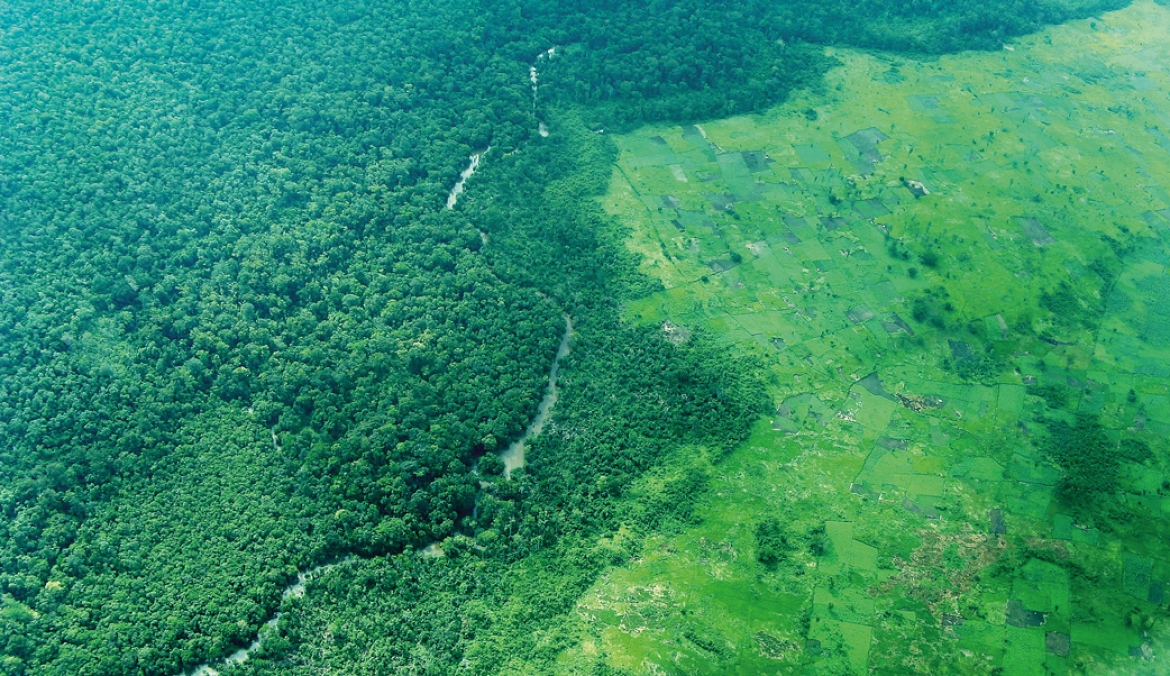
My first big departure from Lebanon was in 1997 when I went for a UNESCO master’s degree in Integrated Land Use Planning. It was thanks to Lebanon and to our story that I managed to land a scholarship.
Once in Paris, at an encounter with the head of the Spatial Planning Agency, I introduced myself as Lebanese. He opened his eyes wide, wished me good luck and referred to a recent advisory trip he’d been on in Beirut trying to advise on the country’s urban and other planning. In his words “On est arrives en se grattant la tete, on est repartis en se grattant le menton,” meaning they were curious about the options on arrival and left having concluded there was no hope for this country.
This sentence exemplifies what my experience with Lebanon has been ever since, sometimes high and sometimes hitting the lowest lows. As a Lebanese professional conservationist, I have been brought in to work with a number of countries and in a number of regions.
At first, I started working in countries of the Arab States, where being a woman with no PhD and no grey hair meant that I had to work twice as hard as my peers to earn the attention and respect of my counterparts.
The reward was the occasional reference to the beauty of our cedars amidst the plethora of heavy winks along with references to Nancy Ajram and Haifa Wehbe.
My next move took me to West Africa, where, during my first visit to Senegal, a colleague told me we could go to “Le Libanais.” Surprised, I interjected that I thought there were many Lebanese in Senegal, so why was he referring to one single Lebanese? Turns out that Le Libanais is now an adjective, the designation for anyone of any nationality that deals in trade, import/export or grocery. “It’s a homage to the commercial and adaptive qualities of your people,” he said, “you should be proud of it.” And proud of it I was – until my next move took me to Gabon, where I facilitated some work on watershed management and a partnership with the Societe d’Energie et d’Eau du Gabon.
At one of our big brainstormings, trying to solve the issue of deforestation and the dredging of soils this was resulting in, one of the participants suggested the simplest solution would be to speak to “Le Libanais” – yes, again – and make sure that all illegal logging and slash and burn was halted. Wearing my nationality proudly, and thinking I could be of help by intervening through the Lebanese Embassy, I approached this person and inquired if he could pass on the name of that Lebanese person doing so much harm. Little did I know that I was up for a surprise. Here again, “Le Libanais” had become a common slang word for designating someone who engaged in illegal activity, cut tree logs without permits and cleared forests with no control. That must have been my lowest low, and one of the hardest days for carrying my heritage.
Yet, time went by and now that I have started working across all continents, I have encountered Brazilians, Mexicans, Colombians and many more of Lebanese ancestry, proud of it and happy to say that in the middle of the Amazon, and in the smallest villages, you will find people of Lebanese origin. Lebanese are known as being fearless, adventurous and entrepreneurial people. Lebanese have managed to make it everywhere, including in Sierra Leone, where amidst the start of the Ebola epidemic, it was only through the Lebanese network that one would manage to find much needed chlorine and disinfectants.
Having entertained the love/hate relationship many of us expats do have with the home country, these experiences have taught me that our legacy is strong in both good and bad. Today I don’t shy away from saying I’m Lebanese. Today I embrace the fact that my passport allows me access to a handful of countries and a world full of diaspora.
It is thanks to Lebanon that I first started learning Spanish, curious as I was about the experience of Costa Rica. Indeed, this small country set in a similar geopolitical context as ours, had abandoned all military expenditure in the 1970s, declared neutrality and invested everything in education and nature conservation. I had a dream that one day, having lived and worked in Cost Rica, I would come back to Lebanon and convince our leaders to apply this model.
For now, thanks to Lebanon, I have only learned to speak Spanish, but the dream is still there and the heritage still strong.
 Signature Boutique
Lebanon, in your inbox


HOMEland Magazine
We firmly believe that the internet should be available and accessible to anyone, and are committed to providing a website that is accessible to the widest possible audience, regardless of circumstance and ability.
To fulfill this, we aim to adhere as strictly as possible to the World Wide Web Consortium’s (W3C) Web Content Accessibility Guidelines 2.1 (WCAG 2.1) at the AA level. These guidelines explain how to make web content accessible to people with a wide array of disabilities. Complying with those guidelines helps us ensure that the website is accessible to all people: blind people, people with motor impairments, visual impairment, cognitive disabilities, and more.
This website utilizes various technologies that are meant to make it as accessible as possible at all times. We utilize an accessibility interface that allows persons with specific disabilities to adjust the website’s UI (user interface) and design it to their personal needs.
Additionally, the website utilizes an AI-based application that runs in the background and optimizes its accessibility level constantly. This application remediates the website’s HTML, adapts Its functionality and behavior for screen-readers used by the blind users, and for keyboard functions used by individuals with motor impairments.
If you’ve found a malfunction or have ideas for improvement, we’ll be happy to hear from you. You can reach out to the website’s operators by using the following email
Our website implements the ARIA attributes (Accessible Rich Internet Applications) technique, alongside various different behavioral changes, to ensure blind users visiting with screen-readers are able to read, comprehend, and enjoy the website’s functions. As soon as a user with a screen-reader enters your site, they immediately receive a prompt to enter the Screen-Reader Profile so they can browse and operate your site effectively. Here’s how our website covers some of the most important screen-reader requirements, alongside console screenshots of code examples:
Screen-reader optimization: we run a background process that learns the website’s components from top to bottom, to ensure ongoing compliance even when updating the website. In this process, we provide screen-readers with meaningful data using the ARIA set of attributes. For example, we provide accurate form labels; descriptions for actionable icons (social media icons, search icons, cart icons, etc.); validation guidance for form inputs; element roles such as buttons, menus, modal dialogues (popups), and others. Additionally, the background process scans all the website’s images and provides an accurate and meaningful image-object-recognition-based description as an ALT (alternate text) tag for images that are not described. It will also extract texts that are embedded within the image, using an OCR (optical character recognition) technology. To turn on screen-reader adjustments at any time, users need only to press the Alt+1 keyboard combination. Screen-reader users also get automatic announcements to turn the Screen-reader mode on as soon as they enter the website.
These adjustments are compatible with all popular screen readers, including JAWS and NVDA.
Keyboard navigation optimization: The background process also adjusts the website’s HTML, and adds various behaviors using JavaScript code to make the website operable by the keyboard. This includes the ability to navigate the website using the Tab and Shift+Tab keys, operate dropdowns with the arrow keys, close them with Esc, trigger buttons and links using the Enter key, navigate between radio and checkbox elements using the arrow keys, and fill them in with the Spacebar or Enter key.Additionally, keyboard users will find quick-navigation and content-skip menus, available at any time by clicking Alt+1, or as the first elements of the site while navigating with the keyboard. The background process also handles triggered popups by moving the keyboard focus towards them as soon as they appear, and not allow the focus drift outside it.
Users can also use shortcuts such as “M” (menus), “H” (headings), “F” (forms), “B” (buttons), and “G” (graphics) to jump to specific elements.
We aim to support the widest array of browsers and assistive technologies as possible, so our users can choose the best fitting tools for them, with as few limitations as possible. Therefore, we have worked very hard to be able to support all major systems that comprise over 95% of the user market share including Google Chrome, Mozilla Firefox, Apple Safari, Opera and Microsoft Edge, JAWS and NVDA (screen readers).
Despite our very best efforts to allow anybody to adjust the website to their needs. There may still be pages or sections that are not fully accessible, are in the process of becoming accessible, or are lacking an adequate technological solution to make them accessible. Still, we are continually improving our accessibility, adding, updating and improving its options and features, and developing and adopting new technologies. All this is meant to reach the optimal level of accessibility, following technological advancements. For any assistance, please reach out to
