How one Muslim Lebanese found HOME in a queer-friendly Friday prayer, reconnecting with her faith and other Muslim Lebanese in the diaspora along the way.
Live to you from Toronto, but still carrying a piece of Lebanon with me. The first month in the diaspora was unkind, started with a brutal flu and ached with unforgiving isolation. Three weeks in, the counselor I started seeing after my anxiety sky-rocketed and my faith trembled, suggested I check out Unity Mosque.
Created in May 2009, Unity Mosque describes itself as “a compassionate, focused, inclusive, LGBTQ+ affirming, Islamic mosque space.” From the website alone, I found myself thrilled to attend their weekly juma circle; a weekly Friday prayer and community-building gathering.
Equipped with Google Maps and a sense of wonder, I prepared to leave my apartment. It was the first time I ventured beyond campus territory, and the buzzing streets reminded me of staying at my grandparents’ in Dahyia: constant traffic, honks and people moving with direction. Finally, I walked into the Women’s Health in Women’s Hands Center flustered and anxious. The congregation was held in a spacious, repurposed boardroom, prayer mats hugging each other on one half and a table with coffee, tea and snacks on the other.
I had never gone to a Friday prayer by myself before, let alone one where everybody sat in a circle regardless of their gender or sexual identity; a true depiction of the celebration of diversity in Islam. I found my way to a spot by the window, sat square-legged and open-eyed, observing, listening and noting in my journal. The session began when Yasmin, a regular attendee at Unity Mosque, stood and recited the call for prayer. Everything but her voice fell silent in the room. I transcended space and time into a serenity I hadn’t felt since walking along Tyre’s corniche early one morning, just a few months ago.
The khutbah was hosted by El-Farouk, one of the co-founders of Unity Mosque. It revolved around Allah being closer to us than our jugular vein, and by extension the only One capable of knowing us or making decrees on us. As I listened, I embraced my nature as a writer and academic by taking notes throughout the preaching. I could sense my anxiety dissolve as his words hit HOME. He concluded his khutbah and we began to form prayer lines for Friday prayer. Right then, I overheard a man talking in soft Lebanese Arabic, and we shared a split-second smile as we recognized our roots are from the same olive tree.
Jamaa prayer—or group prayer— always brings serenity to my heart as we all become one, moving in sync; a choreographed act of kindness. We said our salaams and reassembled in a circle, introducing ourselves by name and sharing what we’d like to pray for in that moment. Hastily and low-voiced, I announced “Da… Dana, ah, I pray for the loneliness to leave…” and began to tear up despite myself. The woman next to me put her hand over mine and squeezed it. It struck me how such a small act of affection could be so generous.
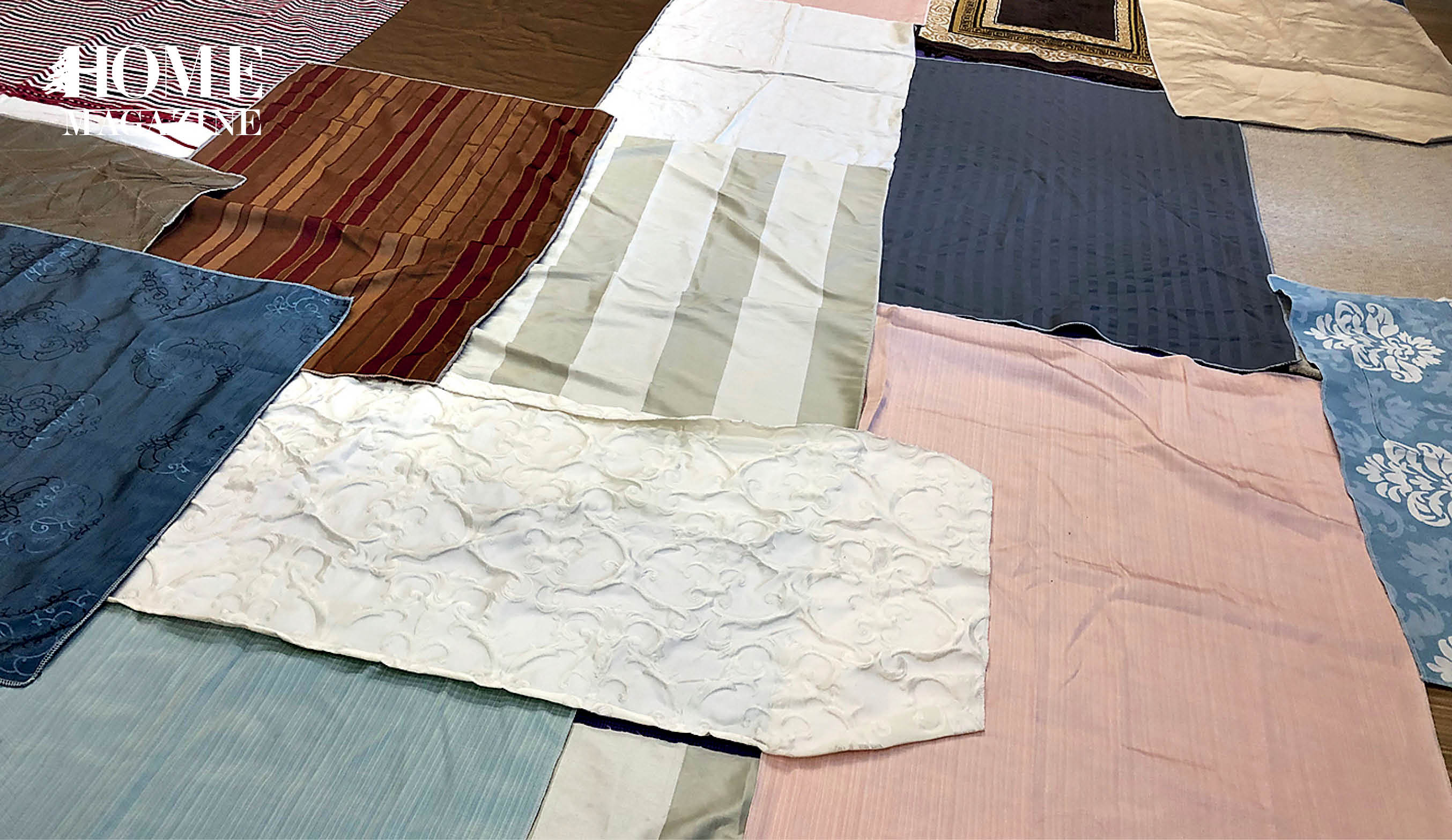
The circle kept going, introducing people from all over the world and all across the spectrum, with prayers that ranged from large-scale asks of wars to end, to personal and pivotal ones like the man across from me who said: “I pray my husband arrives safely tonight.” To this day, that remains one of my most mind-altering moments. Previously, all my conversations with queer Muslims were held in hushed closets, but here I was in daylight, sitting on a spring-colored prayer mat, holding hands with a kind woman and praying for a Muslim man’s husband to get HOME safe, as though it were the most ordinary thing ever.
We prayed, talked, drank tea and felt the world slowly breathe in and out. My experience at Unity Mosque has felt like listening to intersecting athans in Beirut, and has become a stepping stone into the path of making Toronto HOME.
HOMEland Magazine
We firmly believe that the internet should be available and accessible to anyone, and are committed to providing a website that is accessible to the widest possible audience, regardless of circumstance and ability.
To fulfill this, we aim to adhere as strictly as possible to the World Wide Web Consortium’s (W3C) Web Content Accessibility Guidelines 2.1 (WCAG 2.1) at the AA level. These guidelines explain how to make web content accessible to people with a wide array of disabilities. Complying with those guidelines helps us ensure that the website is accessible to all people: blind people, people with motor impairments, visual impairment, cognitive disabilities, and more.
This website utilizes various technologies that are meant to make it as accessible as possible at all times. We utilize an accessibility interface that allows persons with specific disabilities to adjust the website’s UI (user interface) and design it to their personal needs.
Additionally, the website utilizes an AI-based application that runs in the background and optimizes its accessibility level constantly. This application remediates the website’s HTML, adapts Its functionality and behavior for screen-readers used by the blind users, and for keyboard functions used by individuals with motor impairments.
If you’ve found a malfunction or have ideas for improvement, we’ll be happy to hear from you. You can reach out to the website’s operators by using the following email
Our website implements the ARIA attributes (Accessible Rich Internet Applications) technique, alongside various different behavioral changes, to ensure blind users visiting with screen-readers are able to read, comprehend, and enjoy the website’s functions. As soon as a user with a screen-reader enters your site, they immediately receive a prompt to enter the Screen-Reader Profile so they can browse and operate your site effectively. Here’s how our website covers some of the most important screen-reader requirements, alongside console screenshots of code examples:
Screen-reader optimization: we run a background process that learns the website’s components from top to bottom, to ensure ongoing compliance even when updating the website. In this process, we provide screen-readers with meaningful data using the ARIA set of attributes. For example, we provide accurate form labels; descriptions for actionable icons (social media icons, search icons, cart icons, etc.); validation guidance for form inputs; element roles such as buttons, menus, modal dialogues (popups), and others. Additionally, the background process scans all the website’s images and provides an accurate and meaningful image-object-recognition-based description as an ALT (alternate text) tag for images that are not described. It will also extract texts that are embedded within the image, using an OCR (optical character recognition) technology. To turn on screen-reader adjustments at any time, users need only to press the Alt+1 keyboard combination. Screen-reader users also get automatic announcements to turn the Screen-reader mode on as soon as they enter the website.
These adjustments are compatible with all popular screen readers, including JAWS and NVDA.
Keyboard navigation optimization: The background process also adjusts the website’s HTML, and adds various behaviors using JavaScript code to make the website operable by the keyboard. This includes the ability to navigate the website using the Tab and Shift+Tab keys, operate dropdowns with the arrow keys, close them with Esc, trigger buttons and links using the Enter key, navigate between radio and checkbox elements using the arrow keys, and fill them in with the Spacebar or Enter key.Additionally, keyboard users will find quick-navigation and content-skip menus, available at any time by clicking Alt+1, or as the first elements of the site while navigating with the keyboard. The background process also handles triggered popups by moving the keyboard focus towards them as soon as they appear, and not allow the focus drift outside it.
Users can also use shortcuts such as “M” (menus), “H” (headings), “F” (forms), “B” (buttons), and “G” (graphics) to jump to specific elements.
We aim to support the widest array of browsers and assistive technologies as possible, so our users can choose the best fitting tools for them, with as few limitations as possible. Therefore, we have worked very hard to be able to support all major systems that comprise over 95% of the user market share including Google Chrome, Mozilla Firefox, Apple Safari, Opera and Microsoft Edge, JAWS and NVDA (screen readers).
Despite our very best efforts to allow anybody to adjust the website to their needs. There may still be pages or sections that are not fully accessible, are in the process of becoming accessible, or are lacking an adequate technological solution to make them accessible. Still, we are continually improving our accessibility, adding, updating and improving its options and features, and developing and adopting new technologies. All this is meant to reach the optimal level of accessibility, following technological advancements. For any assistance, please reach out to