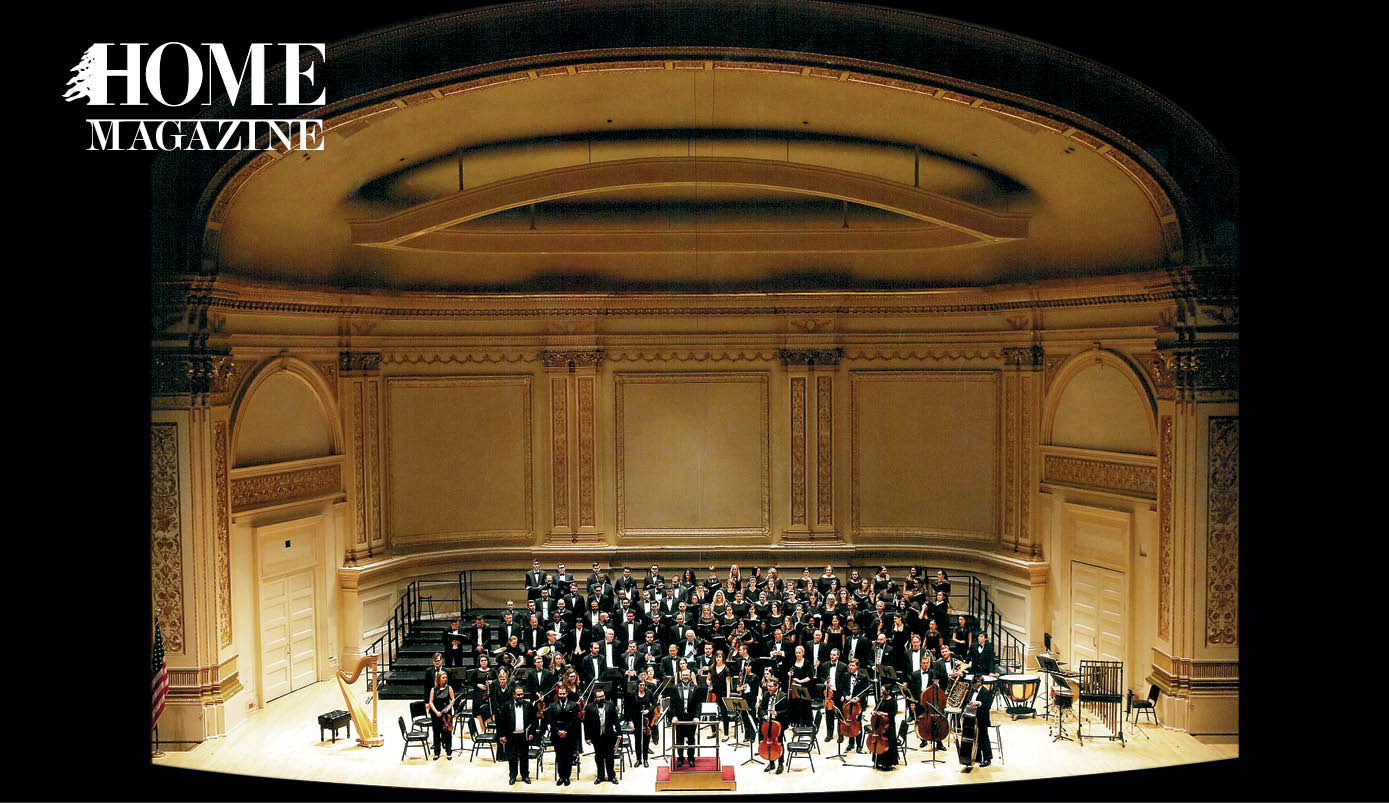
The Chamber Music Season is the latest in Université Antonine’s long tradition of bringing the best of Western classical music to Lebanon.
Photos by: My Story Photography
UA earns Swiss Accreditation
The Swiss Agency of Accreditation and Quality Assurance (AAQ) granted the Université Antonine an institutional certification.
This prestigious certification recognizes the UA as a higher education institution that has proven over time its ability to align its practices with its mission, regulations and other policies.
The Université Antonine is a Catholic Lebanese institution dedicated to developing the youth’s talents in an environment promoting the joy of the truth. It walks its young students towards building their knowledge, their know-how and their being, allowing them to become qualified men and women at the service of our society.
The Université Antonine fulfills this mission respecting diversity, promoting ethical righteousness and demanding excellency.
It promotes contextual scientific research and innovation-driven professionalism.
Université Antonine’s mission statement
Chamber Music Season January – June 2018
150 Years of G. Rossini – Jan. 25
Shadi Torbey, Bass-baritone – Feb. 7
Teatro di San Carlo-Napoli Quartet – March 22
Quatuor Zaide – April 12
Julien Libeer, Piano | Lorenzo Gatto, Violin – May 9
Celebrating 40 Years of the Universite Antonine Chorus – June 5
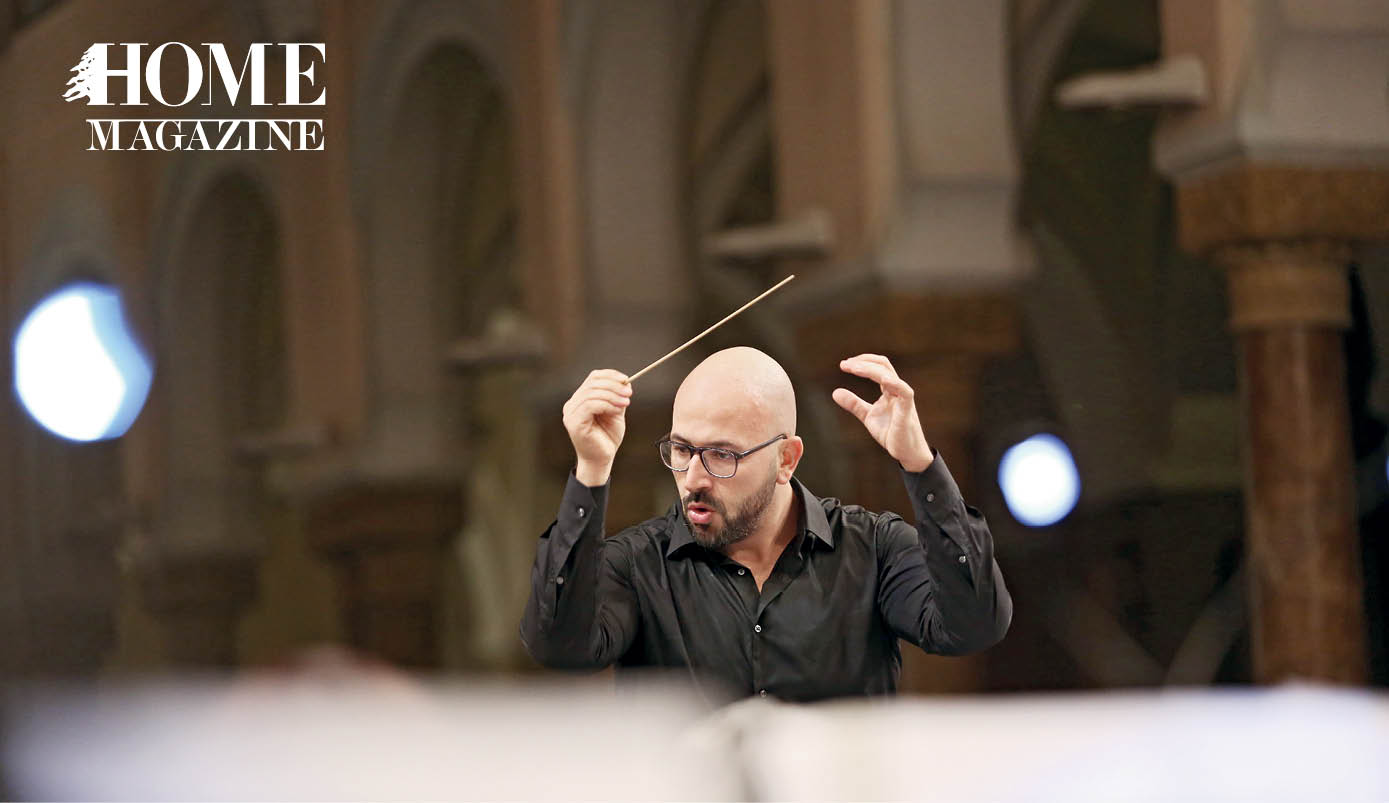
Université Antonine’s annual Chamber Music Season, now in its fourth year, features the crème de la crème from Europe’s classical music scene — including top individual virtuosos, leading trios, quartets and even complete world-famous orchestras — with free admission for anyone who wants to enjoy the music. It is one of many manifestations of UA’s goal of enriching Lebanon’s culture through music.
“Part of the mission of our Chamber Music Season is to bring classical music to the people,” said UA’s young, exceptionally accomplished Father Toufic Maatouk, the Chamber Music Season’s artistic director and UA’s secretary-general. In an interview with the young dynamo at his office overlooking what could be a square in Verona or Seville, but is actually the beautiful center of UA’s Baabda campus, Maatouk talked about the Chamber Music Season, which offers nine concerts per academic year.
“The music scene in Lebanon is thriving now. You can choose between five or six concerts on the same night.”
What motivated Université Antonine to bring exceptional musicians from around the world to give free concerts in Lebanon?
We launched the Chamber Music Season to bring internationally acclaimed musicians to give our university community and the Lebanese a good taste of the music from the world stage. We offer the concerts for free because not everyone has $100 to go to a classical music concert in Lebanon or the money to travel to Salzburg. Why not bring Salzburg here?
Université Antonine has a long history of developing Lebanon’s classical music culture — our school of music was founded in 1981, and our chorus will celebrate its 40th anniversary in June.
Who are some of the talents who have performed in the Chamber Music Season?
All the musicians we have invited are exceptional. Last season, the young Italian pianist Beatrice Rana, who was a silver medalist in the prestigious 2013 Van Cliburn International Piano Competition, opened our Chamber Music Season and inaugurated our new Fazioli piano, the only one of its kind in the Middle East. Also, the Italian-American violinist Francesca Dego performed. She was the first female prizewinner of the renowned Paganini Competition in Genoa, Italy.
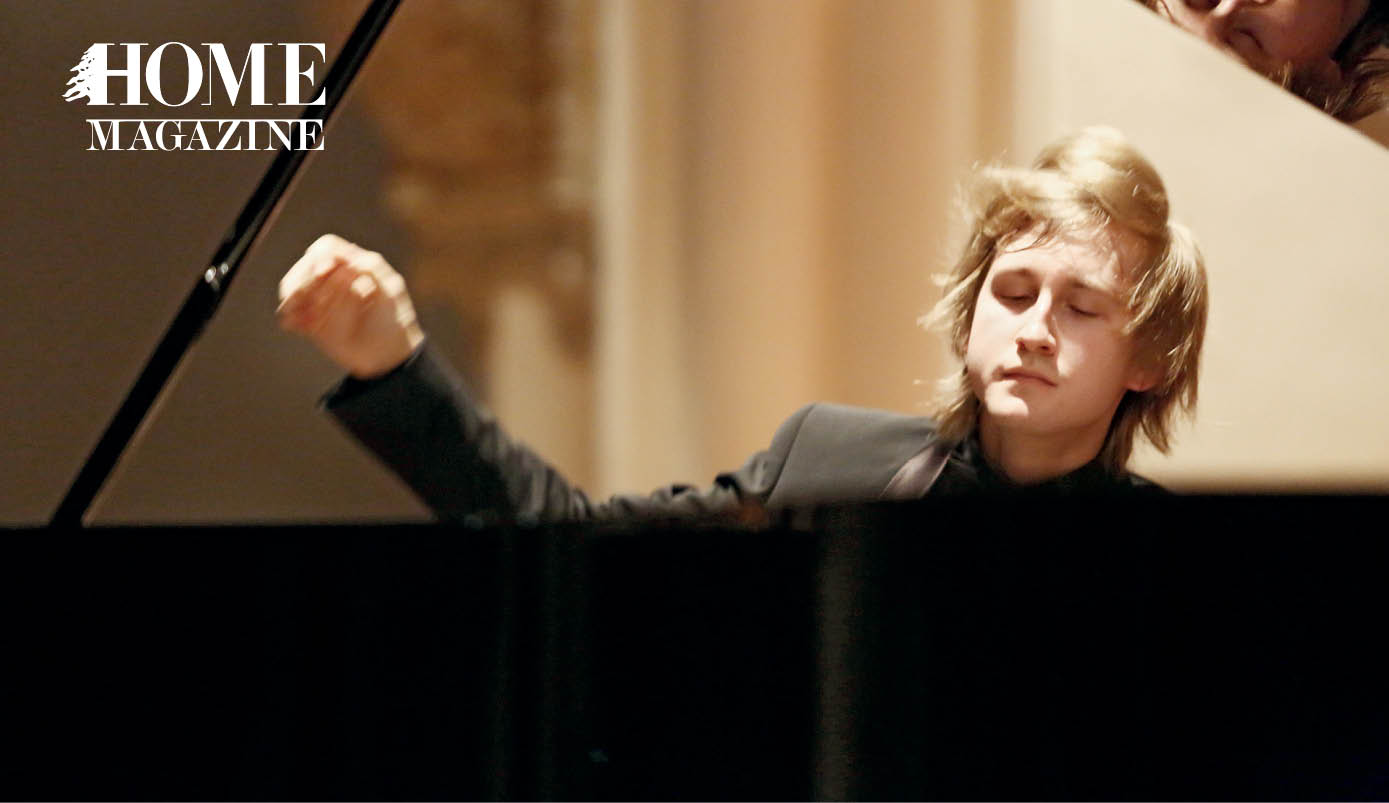
Pianist Julien Libeer from Belgium has performed in the Chamber Music Season several times. He was named Young Musician of the Year by the Belgian Music Press Association in 2010.
Francesca Leonardi, the first female Italian pianist to be registered with the prestigious label Deutsche Grammophon; Greek Vassilis Varvaresos, who was the youngest pianist, at 14, to ever win the Young Concert Artists International Auditions (which he did in 1998) — there are so many. These musicians are all on the world stage — performing in Carnegie Hall in New York, in Teatro di San Carlo in Napoli, and across Europe. We’ve hosted the Orchestra Giovanile of Berlin, the Orchestra Giovanile Mediterranea, and the Romanian National Radio Orchestra.
We also include the Université Antonine Chorus in the series. It has played an important role in bringing Western classical music to Lebanon in its 40-year history. It has also traveled internationally, performing in the United States and Europe. In May 2017, it opened the Pavilion of Lebanon at the Venice Biennale, a display of the work of Lebanese artist, composer and musician Zad Moultaka. Thirty-two voices were singing acapella; they performed “Sun Dark Sun,” a piece Moultaka composed especially for our chorus.
What does the Chamber Music Season add to Lebanon’s music scene?
It adds depth. The music scene in Lebanon is thriving now. You can choose between five or six concerts on the same night. There has been real progress since the end of the civil war with the Al Bustan Festival and the Lebanese Philharmonic Orchestra, the Beirut Chants, in its 10th year, our Université Antonine’s chorus — the music scene has enlarged on all levels.
We are starting to move beyond light fare, but we need to go deeper. The Lebanese audience is ready for this, especially young people. A lot of young people like classical music, and we are in the process of establishing the tradition now.
Music can be a force for change. It can improve the culture and ways of thinking.
What’s next?
We are well into the planning of our next Chamber Music Season; we work about a year ahead. The next step for us at Université Antonine will be to have an orchestra.
“Why not bring Salzburg here?”
And one of my dreams is that we complete a new theater for opera performances. Lebanon does not have an opera house. We created an opera studio at UA, which is a laboratory for seniors to train and develop a real opera performance. We hold one a year, bringing Italian and Lebanese singers together, with an Italian orchestra and costumes from different Italian theaters.
Opera in Lebanon has really progressed. We have talented students who want to develop their talents. One of our students is pursuing a master’s degree in singing performance at McGill in Canada and has won a contract with the Opera of Montreal. Another student is performing in Salzburg.
So, you are not only bringing Salzburg here; you are sending Lebanon’s talented musicians to Salzburg.
For more info:
http://www.ua.edu.lb//french/choraledelua
https://www.twitter.com/uachoir
https://www.facebook.com/AntonineUniversityChoir/
http://www.ua.edu.lb/
HOMEland THEMES
Coming Soon
HOMEland Events & Collaborations
Coming Soon
 Signature Boutique