I first met Imane Assaf on Hamra Street, where she was dressed up as a fabulously ugly Halloween witch. The Halloween street event was one of Ahla Fawda’s very first initiatives aimed at bringing joy, entertainment, and new artistic experiences to locals. Becoming part of the Ahla Fawda team means joining Assaf’s extended family. Her HOME is always open, and her hospitality regularly extends to serving Teta’s amazing Lebanese lunch specialties eaten en famille in the kitchen. But what exactly is Ahla Fawda?
Founded in 2012, volunteer-run Ahla Fawda has grown from a small local NGO from Assaf ’s HOME into one that is capable of organizing and running first-class outdoor festivals. A commitment to social initiatives and a green ethos means that recycling/reusing and regularly delivering humanitarian assistance remains a priority. For the Hamra Wheelchair Pavement Access Campaign, school children and local community members painted symbols around sidewalk ramps to highlight mobility for the disabled and the elderly. Events to celebrate Christmas, Halloween, and Eid el Fitr provide giving opportunities to distribute supplies to the needy. Painting school classrooms and play areas builds bridges between individuals and communities.
Festivals are what Ahla Fawda is best known for; they provide a means for the community to paint large-scale art together in an urban setting. Dramatically changing Hamra’s main street (summer 2017) and the Symposium in Aley (summer 2018) involved a small army of volunteers working day and night. The results were fabulous, interactive experiences for attendees. Alongside all the hard work, it was a great deal of fun for everyone involved. Each festival was a two-day extravaganza, featuring live music, art, food, balloon rides, a petting zoo, jugglers, a vintage car exhibition, local crafts and much more.
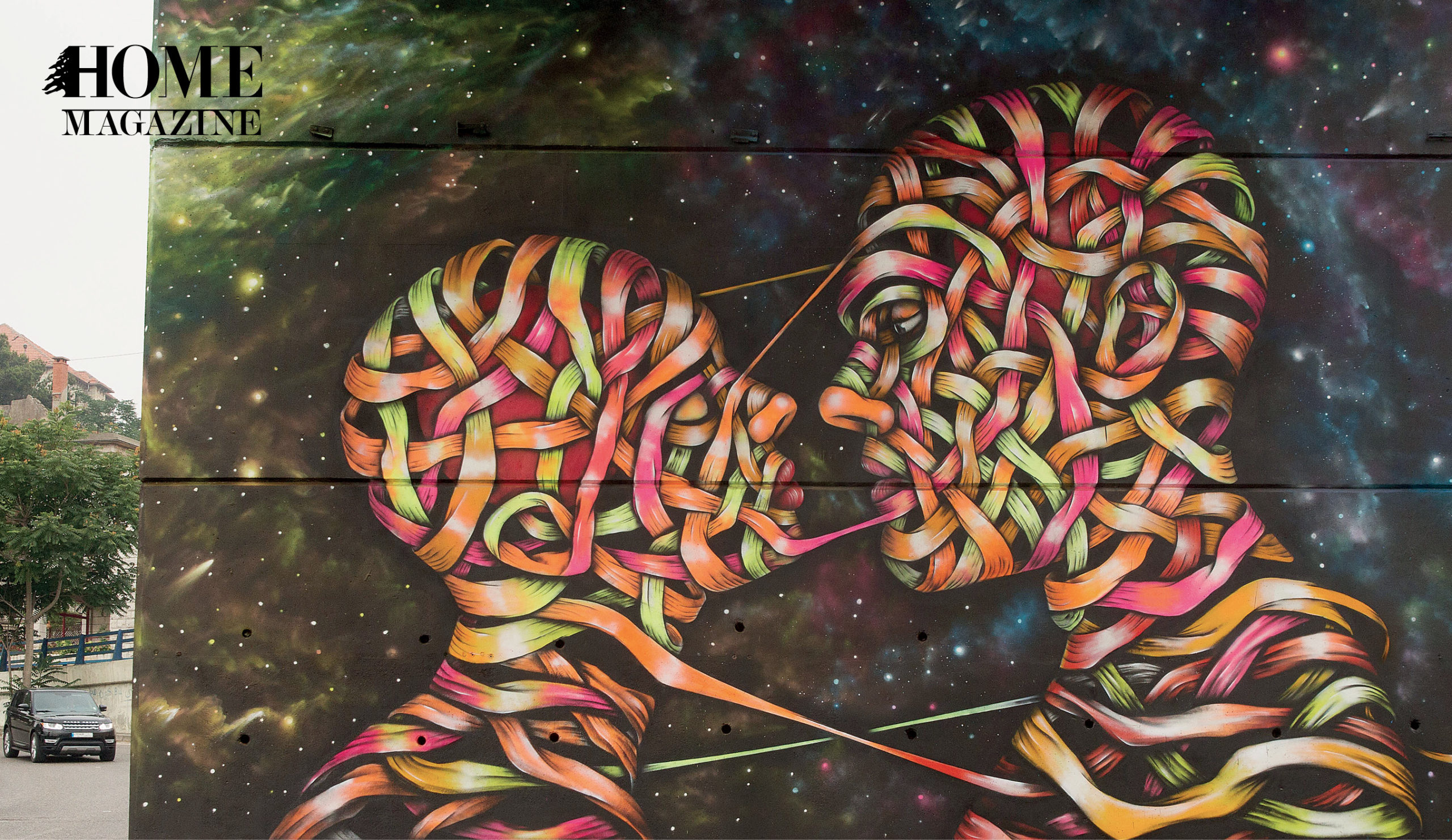
Art is central to this organization’s mission and Assaf exudes enthusiasm, saying things like, “Art is culture, it adds positive energy to the street and uplifts the spirits. Big walls are more visible, and they become like canvases.” For the 2018 Aley Festival, Ahla Fawda invited London’s RISE Gallery to cooperate in the production of artwork. Nine local emerging artists showcased their skills on murals alongside eight well-established artists from the UK, Italy, and Chile.
“Urban art is the visual voice of the community.”
“Urban art softens the impact of new building designs and it is the visual voice of the community. Large scale artwork just does something different to you; the magnitude of each mural can be impressive,” explains Kevin Zuchowski- Morrison, Director of RISE Gallery. Art is fundamentally about being human, the desire to create is part of the human experience and something we should all share.” Later in the year, five local Lebanese artists were sponsored by Ahla Fawda and RISE Gallery to participate in Croydon’s 2018 RISE Festival, where they painted outdoor walls as part of London’s largest urban art festival to date.
Ahla Fawda believes in the promotion of local aspiring artists, giving them the chance to showcase their work on a grand scale both in Lebanon and, when possible, abroad. Hamra is HOME to two such sponsored works: “Eternal Sabah” by street calligraffiti artist Yazan Halwani, which depicts the famous diva’s smile in a 15-meter-high mural, and “The Single Man,” an all-blue doodle by Potato Nose, aka Jad el Khoury.
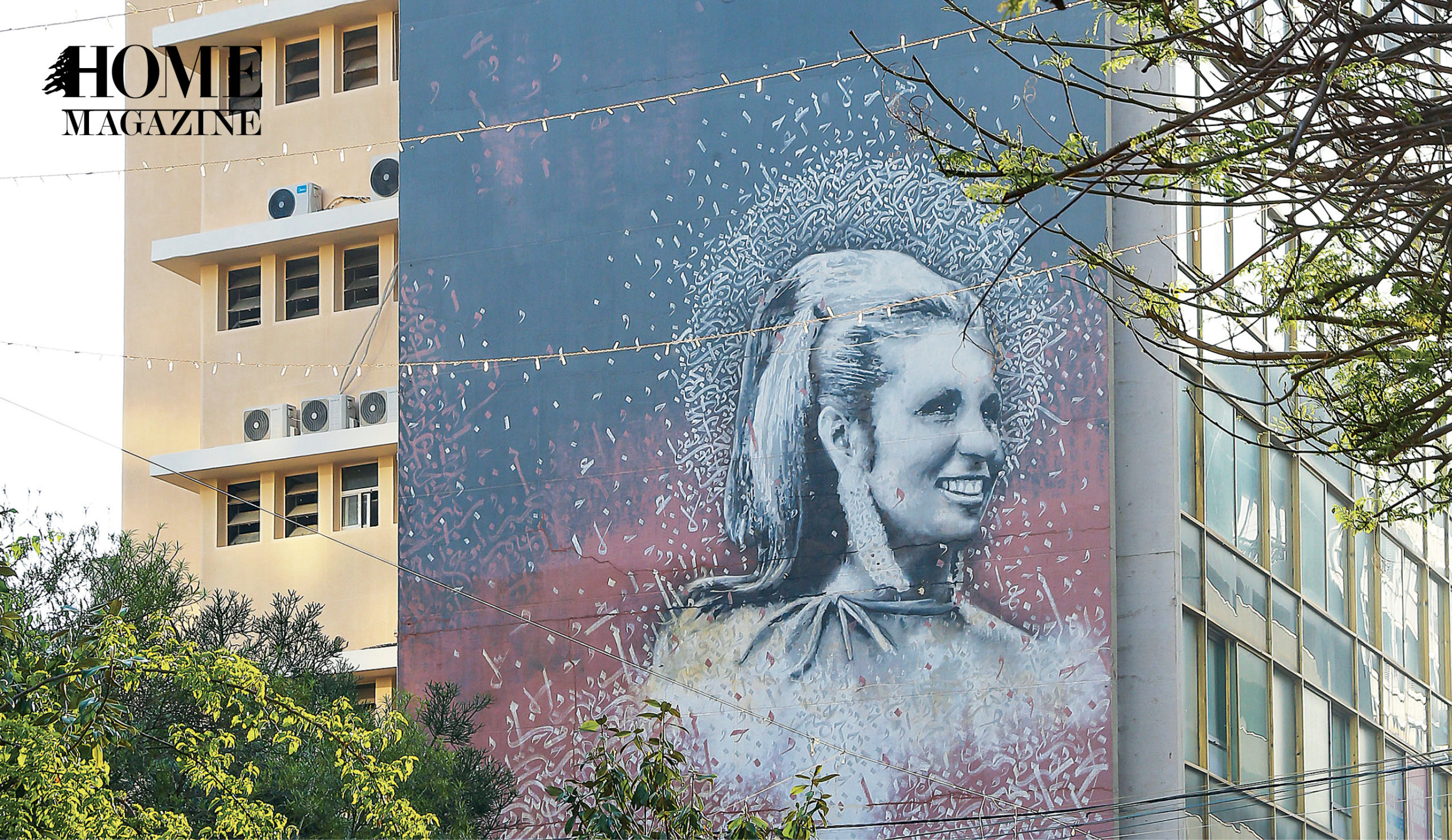 Photo by Ruth Moucharafieh
In collaboration with London-based WhereTheresWalls and RISE Gallery, Ahla Fawda recently launched “Art of Change.” This new project is committed to embellishing urban environments, promoting local talent, and the introduction of art into people’s lives as a positive influence. One can see colorful representations of women along the 25-meter Serhal building by Elie Zaarour and Karim Tamerji, as well as a woman reading Hannah Arendt’s On Revolution by Diana Halabi on an adjacent building. These are beautiful additions to Hamra’s growing portfolio of grand scale outdoor art.
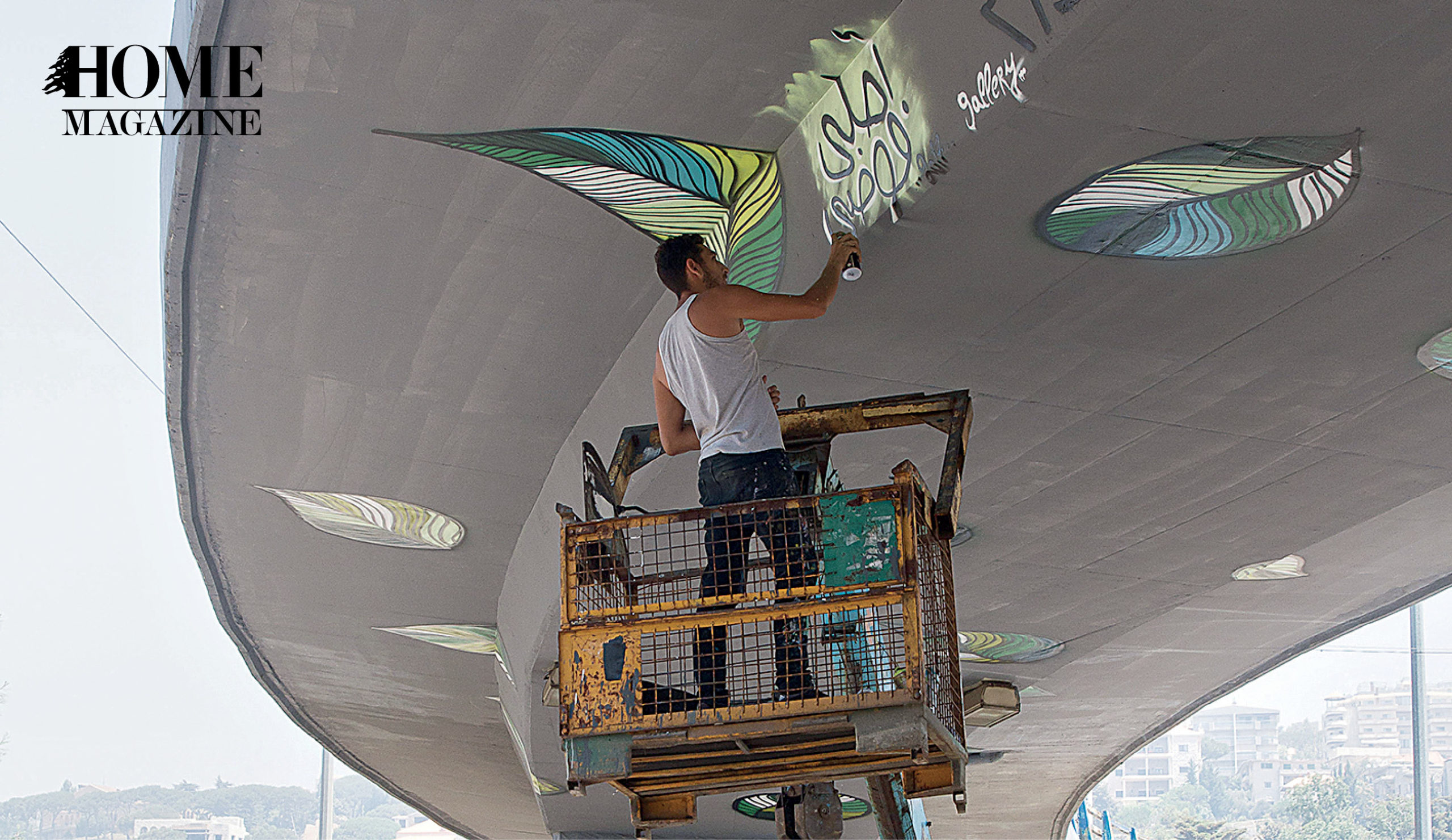
Lebanese-born Zaarour has completed several large-scale works but says, “Collaborative projects are more difficult: Two artists with different knowledge, influences, and styles need to find a common vision, this needs planning and cooperation. Finding common ground can be interesting and combining different styles for a successful outcome is challenging.” For Tamerji, this was his first “big wall.” “The biggest challenge, for me, was that of scale,” says Tamerji. “You can’t really understand what it looks like until you go down and look from the ground. Having completed this one, I said to myself that I simply couldn’t wait to do another one!”
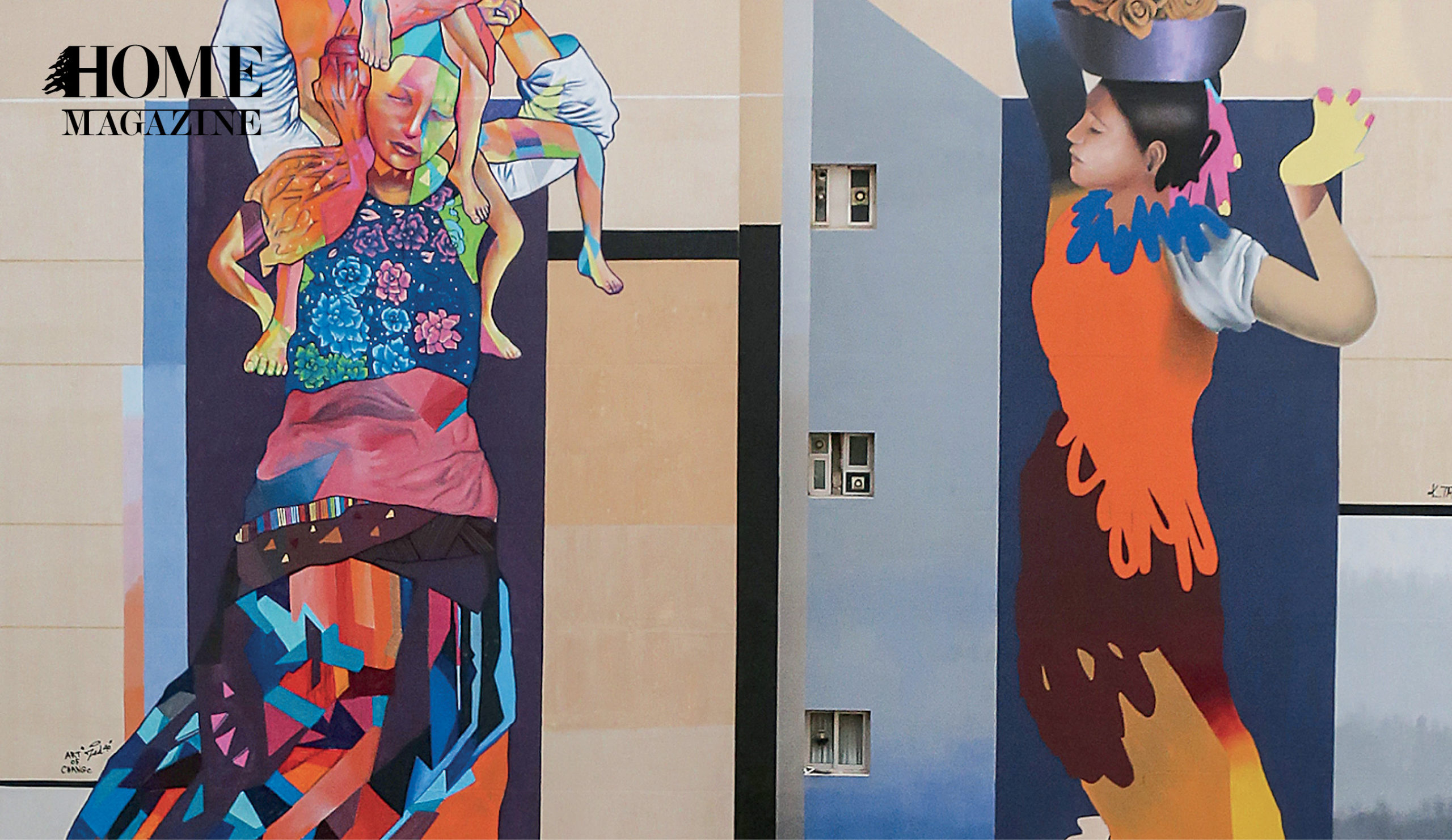
Jason Camp, founder of WhereTheresWalls, shares Assaf ’s passion for street art as a vehicle to improve communal spaces. “I am excited to be part of this new movement. The national media coverage generated for the artists through this most recent work makes me immensely proud and the whole project was incredibly rewarding,” he says. “Going forward, we hope to make Lebanon a place recognized for the quality of its street art and its ambitious artists.”
“Lebanon is creative and challenging, chaotic and inspirational, open to new ideas, and a thrilling place to work.”
Producing these enormous works of art is a team effort; everyone involved feels the buzz of excitement. As artists work, both day and night, people stop and eyes are drawn upward. “Why are you doing this? What does it mean? How long will it take? How big is it? How do you prepare for it?” are just some of the questions that artists and team are often asked. Passersby, locals, and tourists snapped pictures of the artists working from baskets at the top of winches. “I love the excitement that these projects generate within the local community. Everyone wants to be involved — stating their opinion and even offering to help. Most heart-warming of all is when the street kids come to watch,” Assaf says.
As RISE Gallery’s Zuchowski-Morrison says: “I have been so inspired by the Ahla Fawda team, what drives them is not a corporate agenda but purely the intention to do great things that benefit everyone. Lebanon is creative and challenging, chaotic and inspirational, open to new ideas, and a thrilling place to work.”
[instalink id=”23″]
For more info:
https://www.facebook.com/AhlaFawda/
https://www.instagram.com/ahlafawda/
HOMEland THEMES
Coming Soon
HOMEland Events & Collaborations
Coming Soon
 Signature Boutique