By Bilal Ghalib and Joséphine Lesaffre
Two lenses on a light shining in Beirut, Bilal and Joséphine share perspectives on Al Makan, a spiritual third space.
Bilal
I left San Francisco for Beirut and found a common spiritual HOME in both. There is a small, but growing, number of Islamic “third spaces” developing internationally. A third space is what Hiba Khodr, the founder of Al Makan, would call a “place where people will find you if you are not at HOME or in the university or at work.” Al Makan represents one of those third spaces here in Lebanon. It’s a place where you can find delicious coffee, beautiful scents, and a place where you can go without having to buy or be anything other than what you are. As Islam continues to be paired with violence and terrorism in the media, these spaces provide an alternative experience, reaching for hearts by calling to beauty and inspiration.
When I first arrived in Lebanon, I was surprised to find the mosques closing their doors between prayer times — for security reasons, I was told. I was missing Taleef, the spiritual community center I found in California. A place I felt safe enough to hesitantly share the thoughts I was too scared to share with anyone, even myself. I clearly remember eating burgers with Taleef founder Usama Canon, and telling him that I wasn’t clear about what I believed anymore.
These spaces overflow with generosity and openness, and like a drop of ink falling into a cup of water, I found myself unraveling at Taleef. The evening conversations and lectures appealed to me. In fact, the space helped me feel human while living in Silicon Valley, where your value is often linked to your startup’s valuation. Taleef isn’t a mosque. It is not my HOME, nor a job. It is a place to be human.
My first year in Lebanon, I didn’t find anything like Taleef. I would attend various after-prayer activities at mosques and, always, the door would close after the talk, leaving me alone to walk HOME. I knew my friend Sara Sibai had a space she spoke highly about. After her weekly gathering, she would be so full of light, and I would miss Taleef. One day, she forwarded me an invitation to the open house of Al Makan, and a new dimension opened up for me.
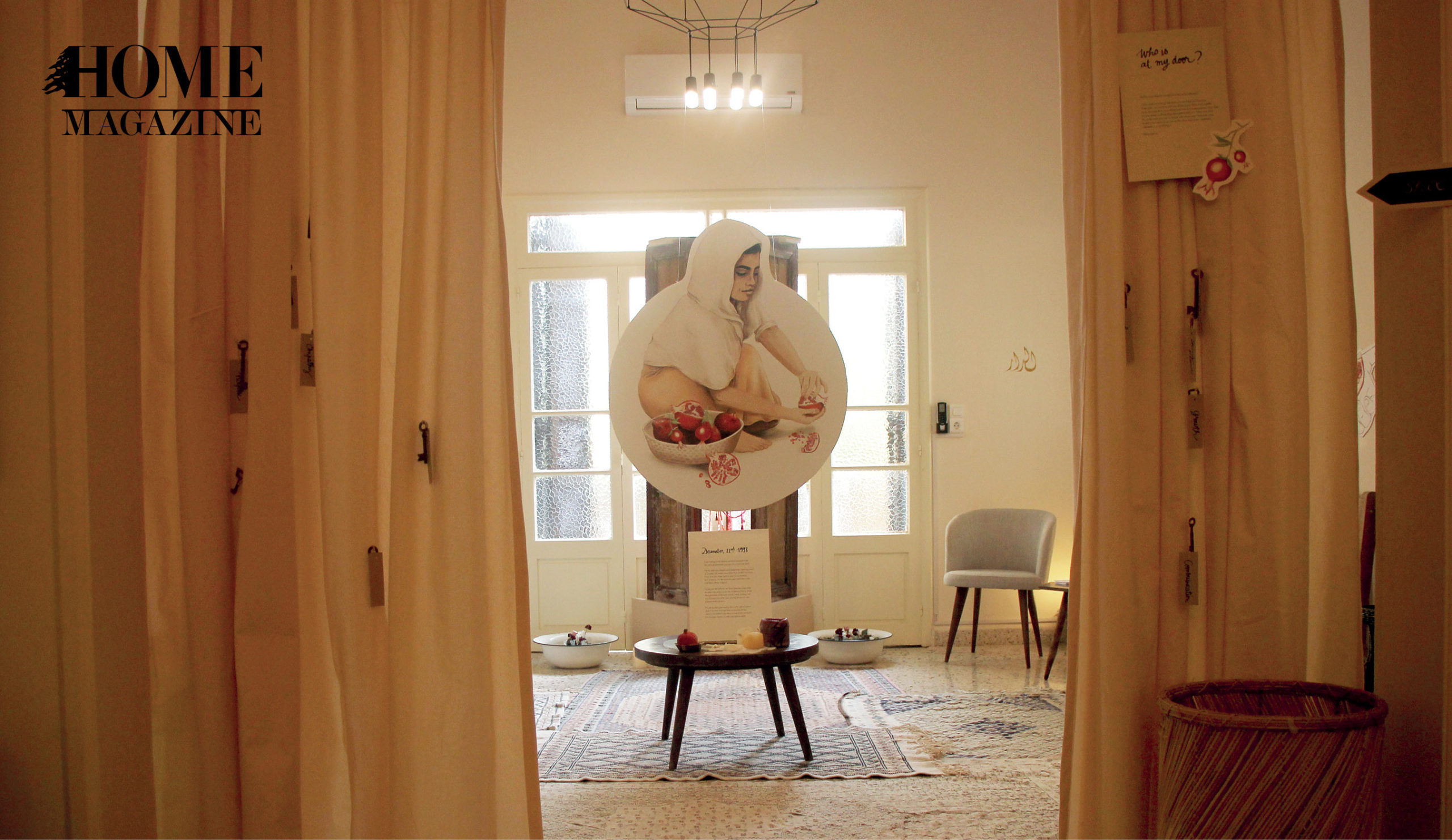
One warm evening, I visited Al Makan, nestled in Mar Elias. I remember being inspired with the attention to detail. Every corner was dripping with beauty and crying out hospitality. The snacks were bountiful. The scents were delicious. Each room had a name carefully calligraphed onto it. Live music and coffee flowed all night. I left knowing that I had found my spiritual HOME in Beirut.
There was just one problem: my gender.
Most Islamic spaces in the world are male-dominated and male-operated. In the meantime, the large central room of Al Makan displays a large calligraphy piece: “The place that is not feminized cannot be depended upon.” The quote by Andalusian poet Ibn Arabi makes me think: In a world of male-dominated religious spaces, having Al Makan be primarily focused on women makes a lot of sense and is deeply needed. In fact, my wife Joséphine has found her HOME in this place. Here is her story:
Joséphine
To me, there are many ways to God, you simply have to find the right door for your own path.
My first encounter of a peaceful and beautiful Islam was in Taleef as I joined my husband Bilal. Men and women had equal voices, and shared as much space in the room. Everyone treated each other with respect, openness, and kindness, regardless of gender, religion, age, or background.
“The place that is not feminized cannot be depended upon.”
As a convert, I feel as if I am tip-toeing in a world of traditions that feel mostly foreign to me. From the language, social interactions, clothing, and prayers, I often get scared and long for the familiarity of my childhood environment — yet quickly lack the deeper sense of meaning I found in Islam. The more conservative places and people I would encounter, the more disappointed and doubtful I became. Thankfully, Al Makan revived the beautiful image of Islam that I had.
As I stepped in for the first time, I could smell the perfume of jasmine flowers gently diffusing in the room. Patterns of carpets were dancing with the silhouettes of plants — while Khodr’s words were taking shape in my head. Certain times, people and places feel familiar, like hearing a loved one’s voice after years of silence. Khodr’s face was glowing as she spoke about collaborating, and here began the crafting of my relationship with Al Makan. A few months later, I was invited back to Beirut, to begin the Open Doors art residency.
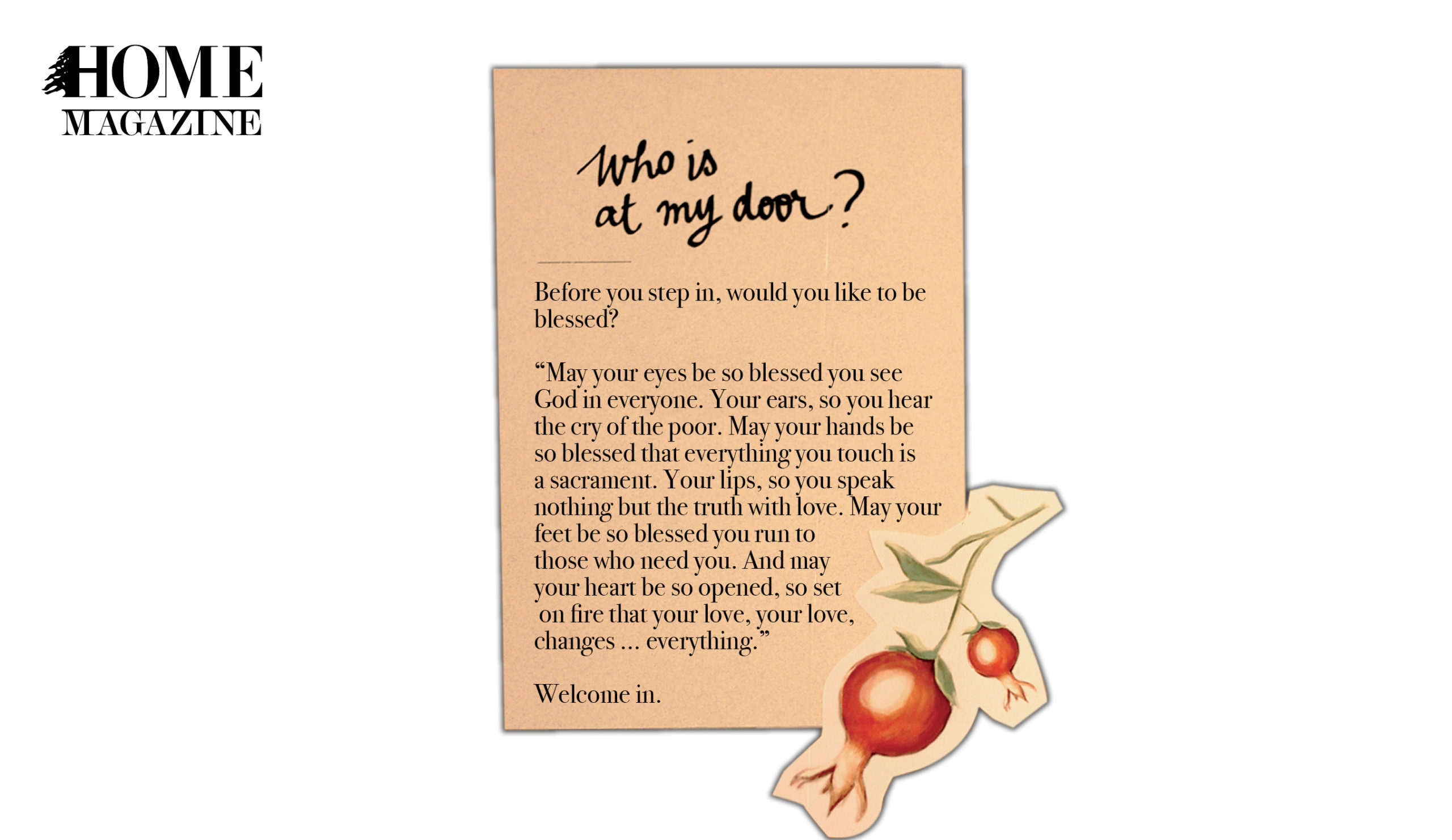
This Open Doors project actually started in 2014, when I began exploring the world and peoples’ stories. Beirut was one of those places. At that point, all the doors that I drew were still closed. When I started to contemplate what could be behind those doors, it became time for me to open my own doors from the inside. Doors welcome and create intimacy. The acts of opening and closing create a harmonious balance. A door holds two purposes: one is community, generosity, and sharing; the other is intimacy, looking within to self-reflect. Al Makan was the perfect physical incarnation for this metaphor. Opened and safe, beautiful and truth-driven.
I welcomed Islam in my life for its peace and beauty. The beauty of self-refinement in the face of God. A handful of places and people have made me feel welcomed as I am, to Islam as it is, and Al Makan has been amongst them. The space ignites a sort of magic spark within its environment, enabling people to shine a light within. With every individual spark that shines through each of us, we can light up this world.
HOMEland
Coming Soon
HOMEland Events & Collaborations
Coming Soon
 Signature Boutique