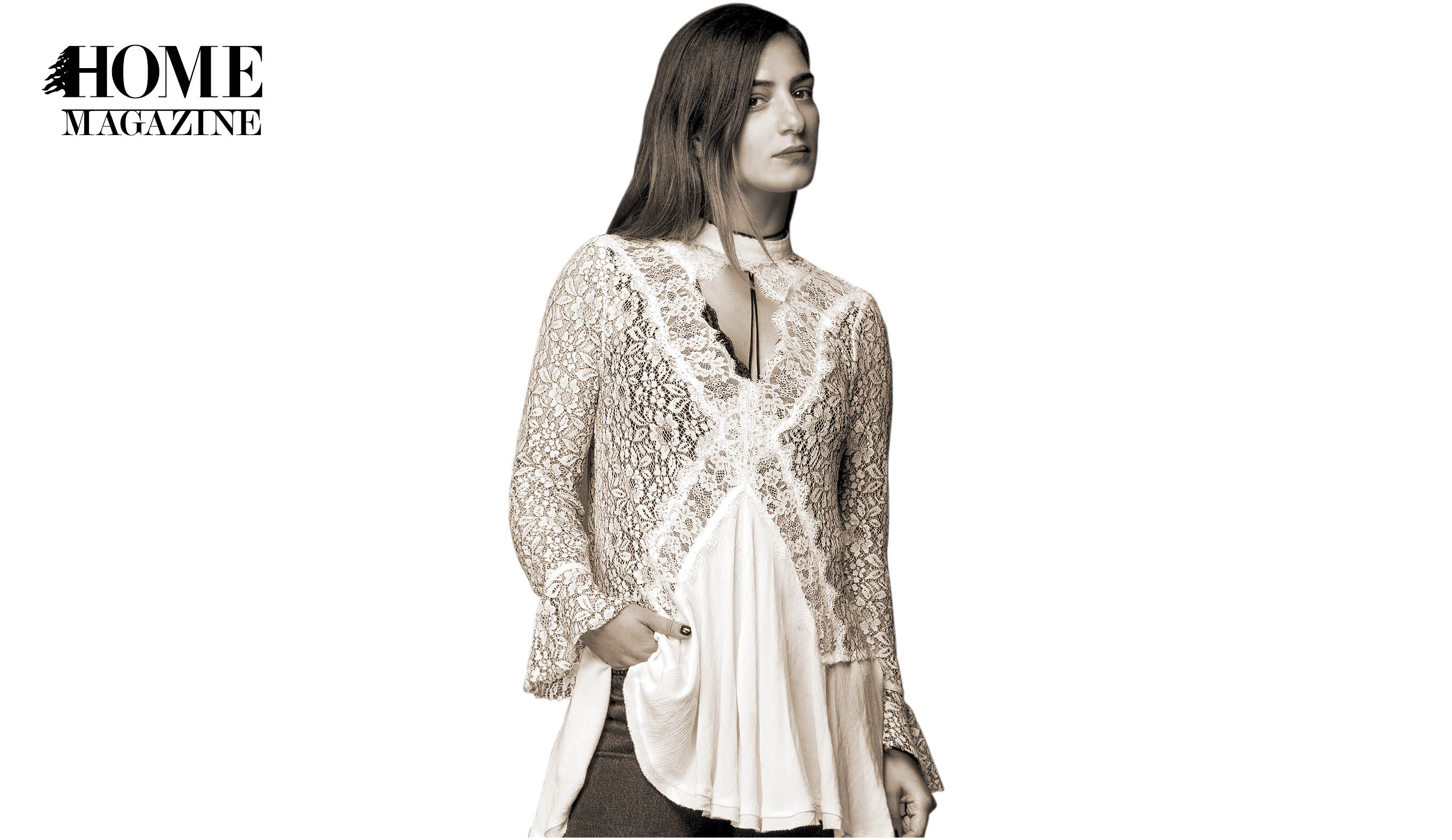
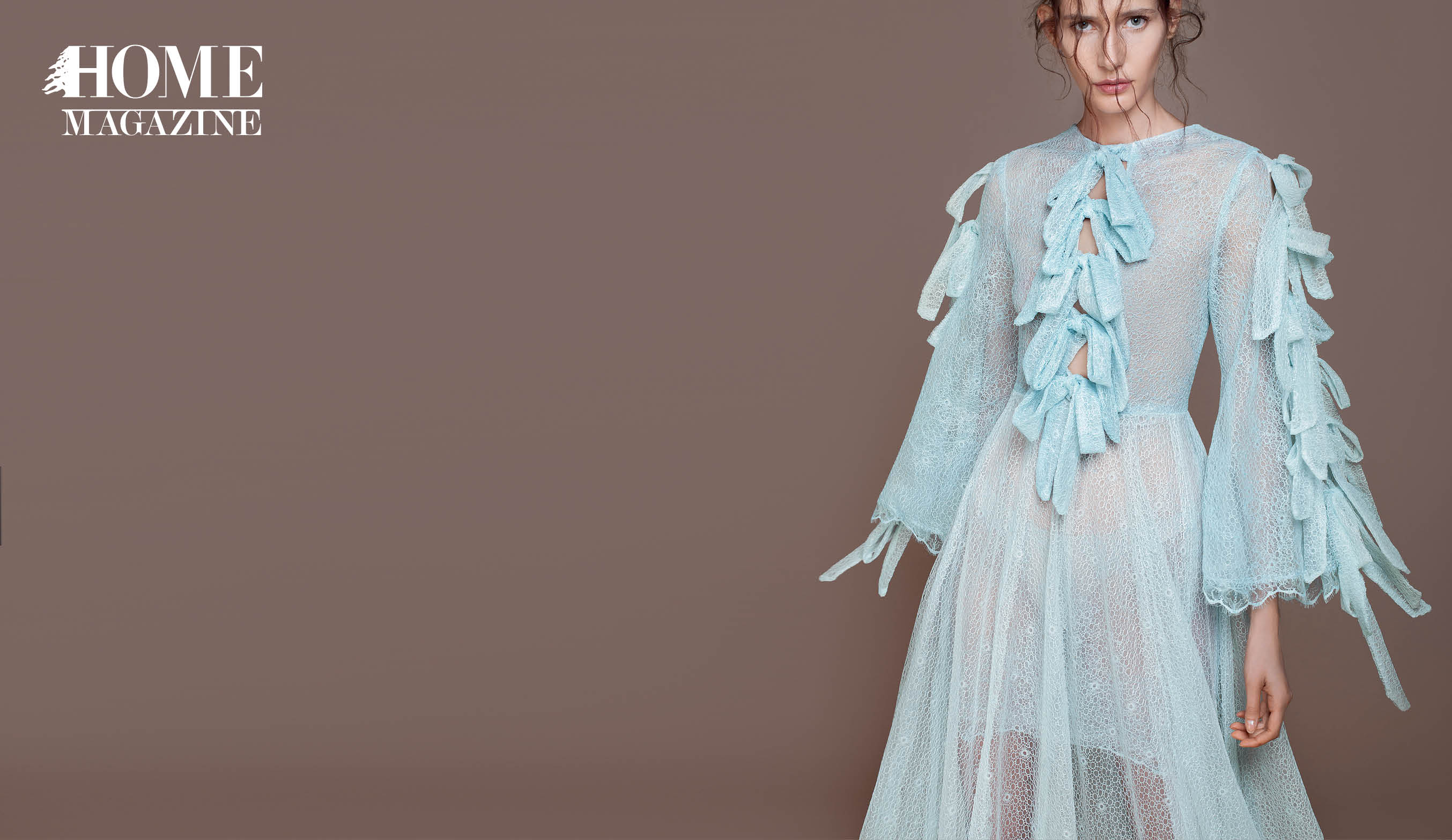
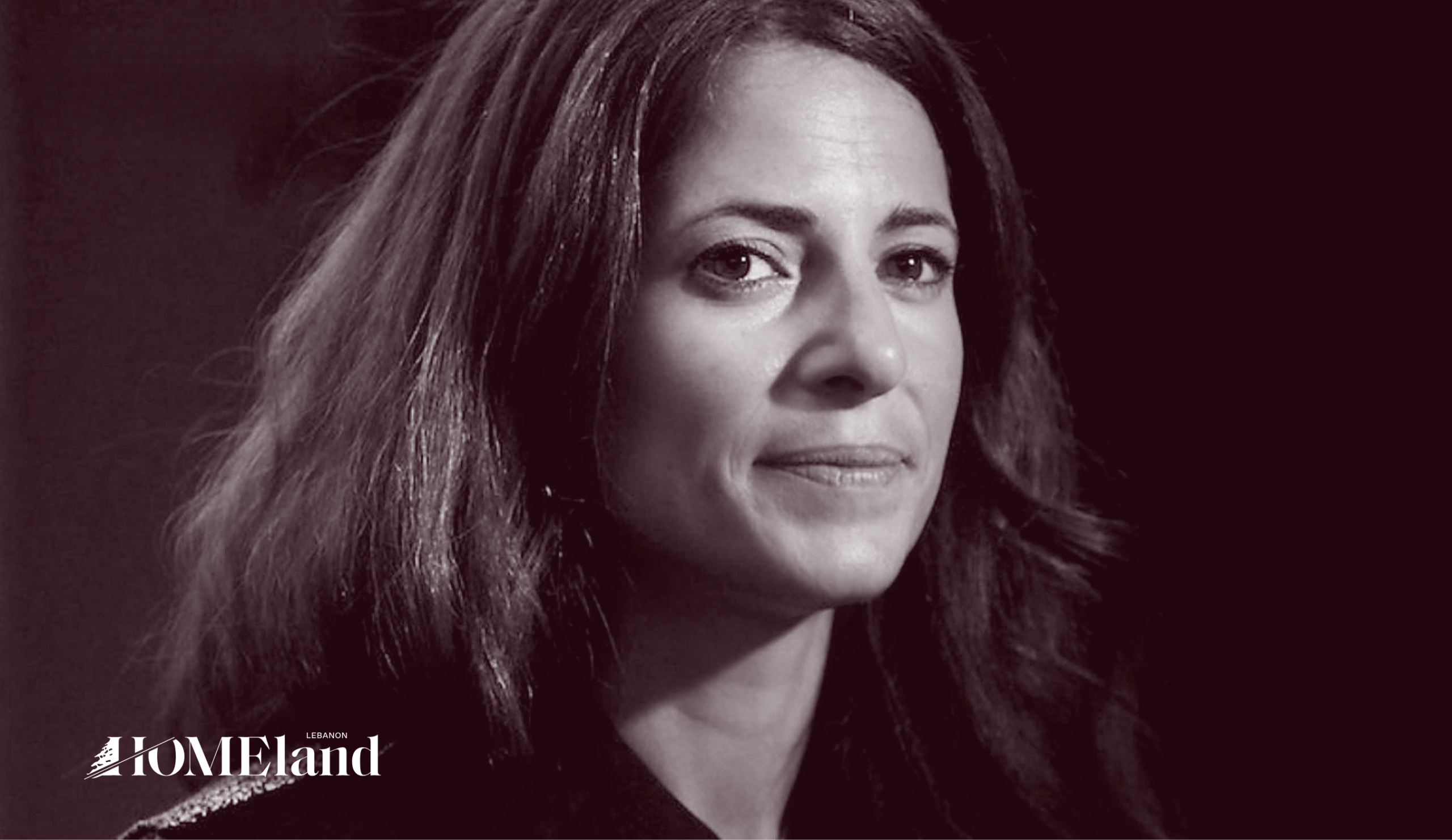
When she was 7, Rouba el Murr did not play dress up with her mother’s clothes; she painted on them and cut out the fabric to design her own. The 7-year-old devoured fashion magazines and studied runway shows. She announced to her parents: I want to be a fashion designer. Twenty-two years later, she is.
A colorful bohemian dress, inspired by my mother’s flowing, gypsy-like style. I have always loved her fashion sense.
My mother was supportive from the start; she bought me a child’s sewing machine so that I could make clothes for my Barbie. She said I should do whatever makes me happy, and that if that was fashion then she would do all that she could to help me.
My grandmother, who did craft work with her hands—sewing, embroidery— began teaching me her techniques. I learned a lot about art from her too.
My father struggled at first with the idea of a career in the arts. He would have preferred I become an engineer, a career path he considered safer. But when I began taking courses in graphic design and later fashion design, he saw how happy I was and how well I was doing and became my biggest supporter.
I was a young girl from Hadath Baabda with a lot of optimism, hard work and a scholarship!
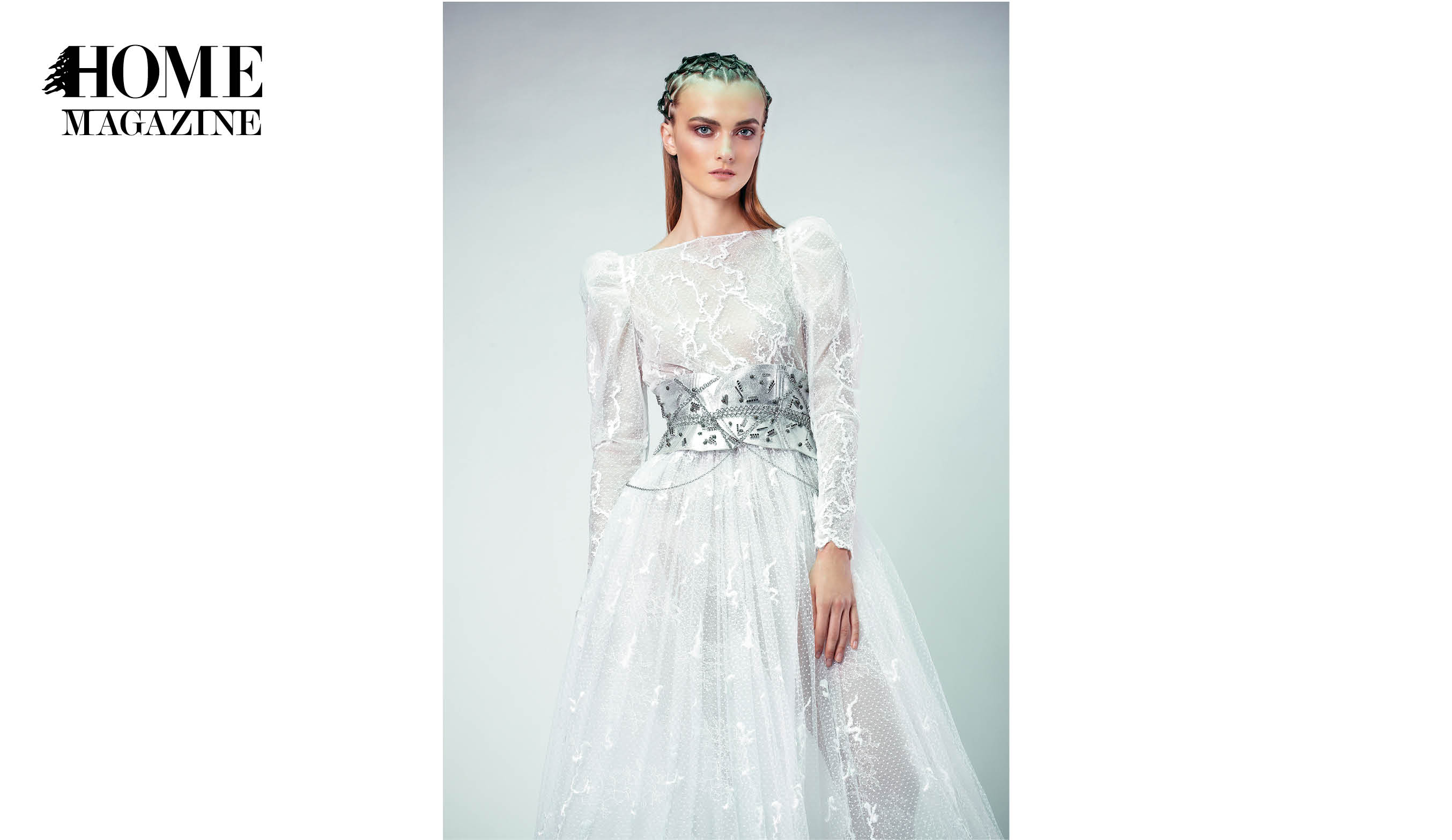
Failure is simply an experience. One cannot learn and succeed without passing through the ups and downs. Failure never scared me because I knew that if it ever happened, I would simply get up and start again. I knew I wanted to be in fashion.
Fashion is an artistic world by itself, and fashion design is my lifestyle. I create because it is what I love to do. It is the moment in which I am mindful. Fashion as a whole is a cycle of trends that come and go. However, a woman’s sense of individuality and oneness shall remain the same.
The word “international” is big for me. It comes with a lot of responsibilities. I am still at the earliest stages of becoming an international designer. But with regard to Lebanon, it is simply HOME. It always feels good to come HOME.
My country has had a great influence on me, both as a designer and in creating my brand. And Beirut in particular is where all the magic happens: the inspiration, the creation and the production. I think every person must honor and represent their country. It is a pleasure and duty to represent mine through my work.
My creative process is a reflection of whatever is happening in my life at that moment. Every new collection is born from a moment of inspiration that defines the initial theme. It could be a book, an exhibition, a documentary.
“I create because it is what I love.”
Then I do my research: I explore the major variables of the collection, such as colors, patterns, structures. At the same time, I work with these elements as the founding components to create my own fabrics. In the final two stages of my process, I work on structural design simulation through dedicated drawings and sketches, then, of course, I create the prototypes.
Fashion is a very competitive industry in which there is a lot of talent. My greatest challenge is constantly working on the brand and its identity, staying up to date and doing a lot of research to keep my inspiration flowing and my creations new.
The Rouba.G woman is proactive and daring. She expresses herself differently.
Well, I am a happy girl. I love my family and feel so lucky that they support my dream. My father is my role model; he is my greatest influence and best advisor. I admire him for the life he built for his family, working hard, never giving up.
I also feel that I am defined by what I love. My tastes and interests are reflected in my personality and my work. I love all colors but my favorites are Fog Grey and Metal Grey, for fabrics, wool and leather. My favorite styles tend to be more ethnic.I admire many designer brands, such as Alexander McQueen, Vivienne Westwood and Yves Saint Laurent.
I would tell her to keep going and take the risks, no matter what people and the odds say. I would tell her not to be afraid of failure or of being herself.
In five years, I would like to be doing something to ease the suffering I see around me in the world. I would like my collections to speak for causes I believe in and serve to raise awareness and inspire positive change.
For instance, my latest collection is called EARTH, and its purpose is to raise awareness of just how beautiful our planet is and the gravity of the damage we are doing to it.
Whenever it is time to eat!
HOMEland Magazine
We firmly believe that the internet should be available and accessible to anyone, and are committed to providing a website that is accessible to the widest possible audience, regardless of circumstance and ability.
To fulfill this, we aim to adhere as strictly as possible to the World Wide Web Consortium’s (W3C) Web Content Accessibility Guidelines 2.1 (WCAG 2.1) at the AA level. These guidelines explain how to make web content accessible to people with a wide array of disabilities. Complying with those guidelines helps us ensure that the website is accessible to all people: blind people, people with motor impairments, visual impairment, cognitive disabilities, and more.
This website utilizes various technologies that are meant to make it as accessible as possible at all times. We utilize an accessibility interface that allows persons with specific disabilities to adjust the website’s UI (user interface) and design it to their personal needs.
Additionally, the website utilizes an AI-based application that runs in the background and optimizes its accessibility level constantly. This application remediates the website’s HTML, adapts Its functionality and behavior for screen-readers used by the blind users, and for keyboard functions used by individuals with motor impairments.
If you’ve found a malfunction or have ideas for improvement, we’ll be happy to hear from you. You can reach out to the website’s operators by using the following email
Our website implements the ARIA attributes (Accessible Rich Internet Applications) technique, alongside various different behavioral changes, to ensure blind users visiting with screen-readers are able to read, comprehend, and enjoy the website’s functions. As soon as a user with a screen-reader enters your site, they immediately receive a prompt to enter the Screen-Reader Profile so they can browse and operate your site effectively. Here’s how our website covers some of the most important screen-reader requirements, alongside console screenshots of code examples:
Screen-reader optimization: we run a background process that learns the website’s components from top to bottom, to ensure ongoing compliance even when updating the website. In this process, we provide screen-readers with meaningful data using the ARIA set of attributes. For example, we provide accurate form labels; descriptions for actionable icons (social media icons, search icons, cart icons, etc.); validation guidance for form inputs; element roles such as buttons, menus, modal dialogues (popups), and others. Additionally, the background process scans all the website’s images and provides an accurate and meaningful image-object-recognition-based description as an ALT (alternate text) tag for images that are not described. It will also extract texts that are embedded within the image, using an OCR (optical character recognition) technology. To turn on screen-reader adjustments at any time, users need only to press the Alt+1 keyboard combination. Screen-reader users also get automatic announcements to turn the Screen-reader mode on as soon as they enter the website.
These adjustments are compatible with all popular screen readers, including JAWS and NVDA.
Keyboard navigation optimization: The background process also adjusts the website’s HTML, and adds various behaviors using JavaScript code to make the website operable by the keyboard. This includes the ability to navigate the website using the Tab and Shift+Tab keys, operate dropdowns with the arrow keys, close them with Esc, trigger buttons and links using the Enter key, navigate between radio and checkbox elements using the arrow keys, and fill them in with the Spacebar or Enter key.Additionally, keyboard users will find quick-navigation and content-skip menus, available at any time by clicking Alt+1, or as the first elements of the site while navigating with the keyboard. The background process also handles triggered popups by moving the keyboard focus towards them as soon as they appear, and not allow the focus drift outside it.
Users can also use shortcuts such as “M” (menus), “H” (headings), “F” (forms), “B” (buttons), and “G” (graphics) to jump to specific elements.
We aim to support the widest array of browsers and assistive technologies as possible, so our users can choose the best fitting tools for them, with as few limitations as possible. Therefore, we have worked very hard to be able to support all major systems that comprise over 95% of the user market share including Google Chrome, Mozilla Firefox, Apple Safari, Opera and Microsoft Edge, JAWS and NVDA (screen readers).
Despite our very best efforts to allow anybody to adjust the website to their needs. There may still be pages or sections that are not fully accessible, are in the process of becoming accessible, or are lacking an adequate technological solution to make them accessible. Still, we are continually improving our accessibility, adding, updating and improving its options and features, and developing and adopting new technologies. All this is meant to reach the optimal level of accessibility, following technological advancements. For any assistance, please reach out to