


HOMEland THEMES
Coming Soon
HOMEland Events & Collaborations
Coming Soon
 Signature Boutique

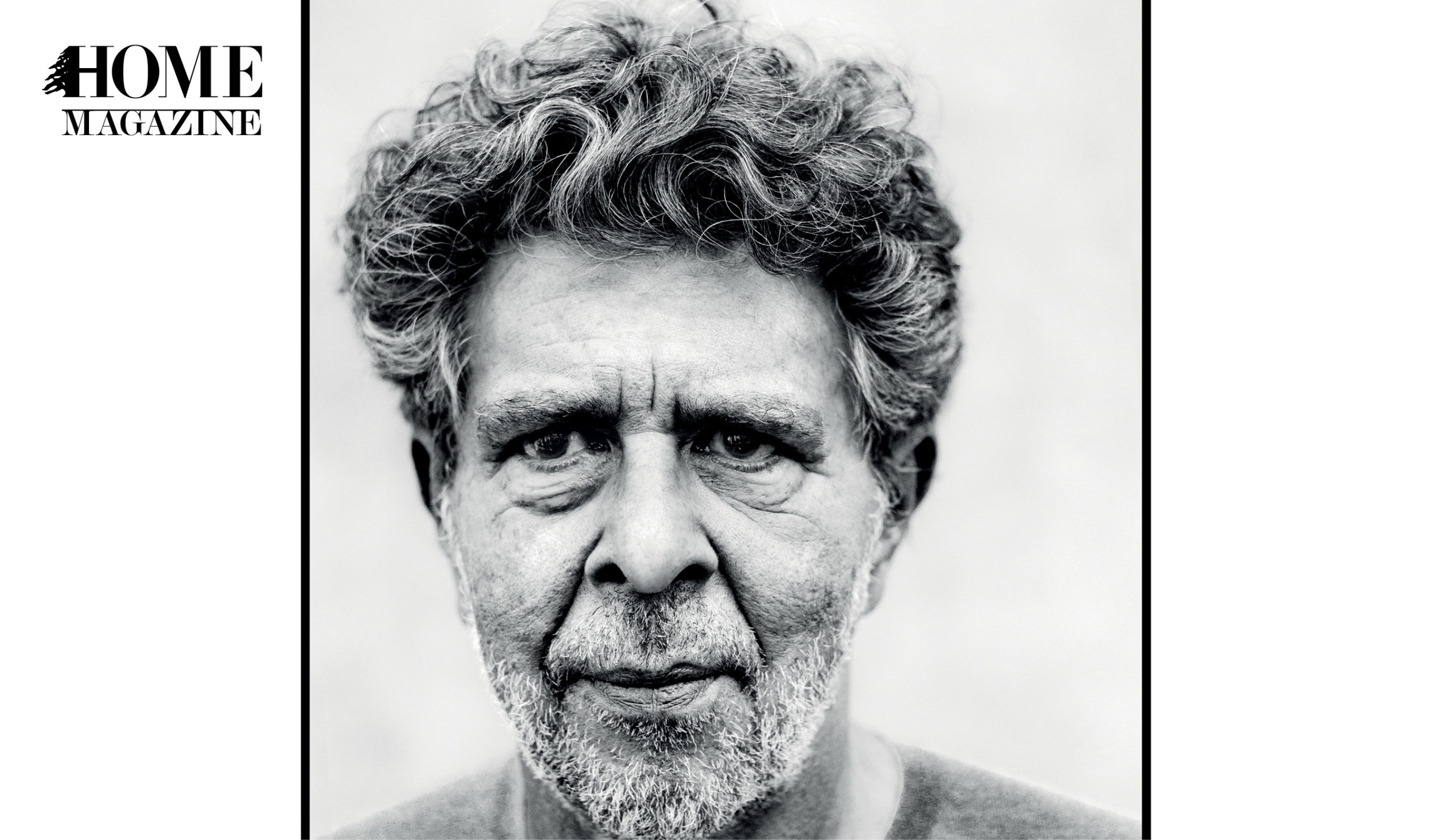
Photo by Milad Ayoub
The famous French writer Victor Hugo verbally illustrated the magic of music: “La musique exprime ce qui ne peut être dit et sur quoi il est impossible de rester silencieux.” In other words, music expresses that which cannot be spoken, and on which it is impossible to be silent. Decoding what transcends between the notes is undeniably always a challenge.
Jazz music, which so very often is associated with the African-American communities of New Orleans, has historical roots in the olive trees of the Middle East. This form of music has been swinging in the Arab world for more than 100 years. In fact, the Greater Arab Maghreb region greatly influenced Spain with its unmistakable oriental rhythm heard in flamenco. The eastern Mashriq, too, gave birth to many renowned musicians. The Beirutborn Rahbani Brothers nurtured and promoted the jazz trend throughout the country. Ziad Rahbani, the eldest son of Fairuz and Assi Rahbani, would later come to be known for his distinct and influential jazz contribution to the world.
In the musical landscape of Lebanon, many musicians have tapped into the evolving jazz scene and can be heard across the globe. They contribute to an impressive tradition of blending Middle Eastern tunes with the rhythmic genre. Montreal-based Lebanese jazz singer and songwriter Randa Ghossoub is making her mark in international jazz. With four albums and many concerts in New York, Beirut and Montreal, she operates smoothly and surely. Her music is strongly bred by her Arabic culture, yet enriched by every place she has lived or loved, such as Africa, Europe and Canada.
There is always a contemplative and mystical dimension in her songs, which takes the oriental-inspired melodies, blended with modern jazz, to a different level. Randa subtly evolves from the blue notes of an etherical world filled with sensual romance. She mixes oriental lyricism and jazz in her own way to offer a bouquet of multilingual creations. An enchanted enchantress, she leaps effortlessly between Orient and Occident.
Randa’s performances of “Bint El Chalabiah” and “Fragile” are quite the creation. She creates a melting pot with each song. The Lebanese jazz woman is known for being as “soothing and smooth as a caress! Randa has the voice of an angel whilst being sensuous and alluring.” Randa sings fluently in English, French, Arabic and Spanish. Interviewed for HOME Magazine in Montreal, she shared with us a special moment between the notes.
Indeed, music evolves from roots to branches. Every new version of it is an attempt to take it to a new place. In jazz, musicians take standards and spice them with their own signature during each performance. I do the same, blending it with my own colors, especially the oriental ones. It goes elsewhere with phrasing and tones.
My Lebanese heritage leaves traces in the writing of lyrics, of course. It appears as well when I challenge myself to sing in Arabic with jazz instrumentation.
It is undoubtedly Billie Holiday that dragged me into the world of jazz. The specific song was “Don’t Explain”. I found myself in this poignant, painful ballad with lyrics coming out of an achy heart.
I live my duality very well in the sense that once the best of each world is extracted, a perfect harmony is created. After having lived in and experienced many different places, I incorporate the feeling of belonging in multiple ways in both my writing and composing.
The biggest challenge was to remain disciplined at all times. I guess this is the secret of success for every project, whether in music or any form of art, like dancing, writing or painting.
Oh! Giving advice isn’t really my expertise. I believe each individual should follow their own path. There is a place for everyone and one shouldn’t give up by fearing anything. And in the end, talent—genuine talent— always pays off. No matter what.
Her career as a singer took off in 2002 when she recorded her first jazz album “Pillow Talk”. In 2006, she launched her second album “I Belong”, offering a mix between jazz and world music. She has since toured many places around the world.
In September 2011, she released “Moon Breeze” with the collaboration of world-acclaimed jazz pianist Cyrus Chestnut, bassist Michel Donato and drummer Jim Hillman. Finally, her latest album, “Subtle Thrills”, was released in 2015.
For more info:
https://www.youtube.com/user/randaghossoub
http://www.randamusic.com/
Signature Boutique 

HOMEland Magazine
We firmly believe that the internet should be available and accessible to anyone, and are committed to providing a website that is accessible to the widest possible audience, regardless of circumstance and ability.
To fulfill this, we aim to adhere as strictly as possible to the World Wide Web Consortium’s (W3C) Web Content Accessibility Guidelines 2.1 (WCAG 2.1) at the AA level. These guidelines explain how to make web content accessible to people with a wide array of disabilities. Complying with those guidelines helps us ensure that the website is accessible to all people: blind people, people with motor impairments, visual impairment, cognitive disabilities, and more.
This website utilizes various technologies that are meant to make it as accessible as possible at all times. We utilize an accessibility interface that allows persons with specific disabilities to adjust the website’s UI (user interface) and design it to their personal needs.
Additionally, the website utilizes an AI-based application that runs in the background and optimizes its accessibility level constantly. This application remediates the website’s HTML, adapts Its functionality and behavior for screen-readers used by the blind users, and for keyboard functions used by individuals with motor impairments.
If you’ve found a malfunction or have ideas for improvement, we’ll be happy to hear from you. You can reach out to the website’s operators by using the following email
Our website implements the ARIA attributes (Accessible Rich Internet Applications) technique, alongside various different behavioral changes, to ensure blind users visiting with screen-readers are able to read, comprehend, and enjoy the website’s functions. As soon as a user with a screen-reader enters your site, they immediately receive a prompt to enter the Screen-Reader Profile so they can browse and operate your site effectively. Here’s how our website covers some of the most important screen-reader requirements, alongside console screenshots of code examples:
Screen-reader optimization: we run a background process that learns the website’s components from top to bottom, to ensure ongoing compliance even when updating the website. In this process, we provide screen-readers with meaningful data using the ARIA set of attributes. For example, we provide accurate form labels; descriptions for actionable icons (social media icons, search icons, cart icons, etc.); validation guidance for form inputs; element roles such as buttons, menus, modal dialogues (popups), and others. Additionally, the background process scans all the website’s images and provides an accurate and meaningful image-object-recognition-based description as an ALT (alternate text) tag for images that are not described. It will also extract texts that are embedded within the image, using an OCR (optical character recognition) technology. To turn on screen-reader adjustments at any time, users need only to press the Alt+1 keyboard combination. Screen-reader users also get automatic announcements to turn the Screen-reader mode on as soon as they enter the website.
These adjustments are compatible with all popular screen readers, including JAWS and NVDA.
Keyboard navigation optimization: The background process also adjusts the website’s HTML, and adds various behaviors using JavaScript code to make the website operable by the keyboard. This includes the ability to navigate the website using the Tab and Shift+Tab keys, operate dropdowns with the arrow keys, close them with Esc, trigger buttons and links using the Enter key, navigate between radio and checkbox elements using the arrow keys, and fill them in with the Spacebar or Enter key.Additionally, keyboard users will find quick-navigation and content-skip menus, available at any time by clicking Alt+1, or as the first elements of the site while navigating with the keyboard. The background process also handles triggered popups by moving the keyboard focus towards them as soon as they appear, and not allow the focus drift outside it.
Users can also use shortcuts such as “M” (menus), “H” (headings), “F” (forms), “B” (buttons), and “G” (graphics) to jump to specific elements.
We aim to support the widest array of browsers and assistive technologies as possible, so our users can choose the best fitting tools for them, with as few limitations as possible. Therefore, we have worked very hard to be able to support all major systems that comprise over 95% of the user market share including Google Chrome, Mozilla Firefox, Apple Safari, Opera and Microsoft Edge, JAWS and NVDA (screen readers).
Despite our very best efforts to allow anybody to adjust the website to their needs. There may still be pages or sections that are not fully accessible, are in the process of becoming accessible, or are lacking an adequate technological solution to make them accessible. Still, we are continually improving our accessibility, adding, updating and improving its options and features, and developing and adopting new technologies. All this is meant to reach the optimal level of accessibility, following technological advancements. For any assistance, please reach out to