Josyane Boulos: Between the Events she Shaped and the Events that Shaped her
Josyane Boulos reflects on her career in events, TV and theatre, her father's legacy, motherhood and finding purpose in Lebanese culture today.

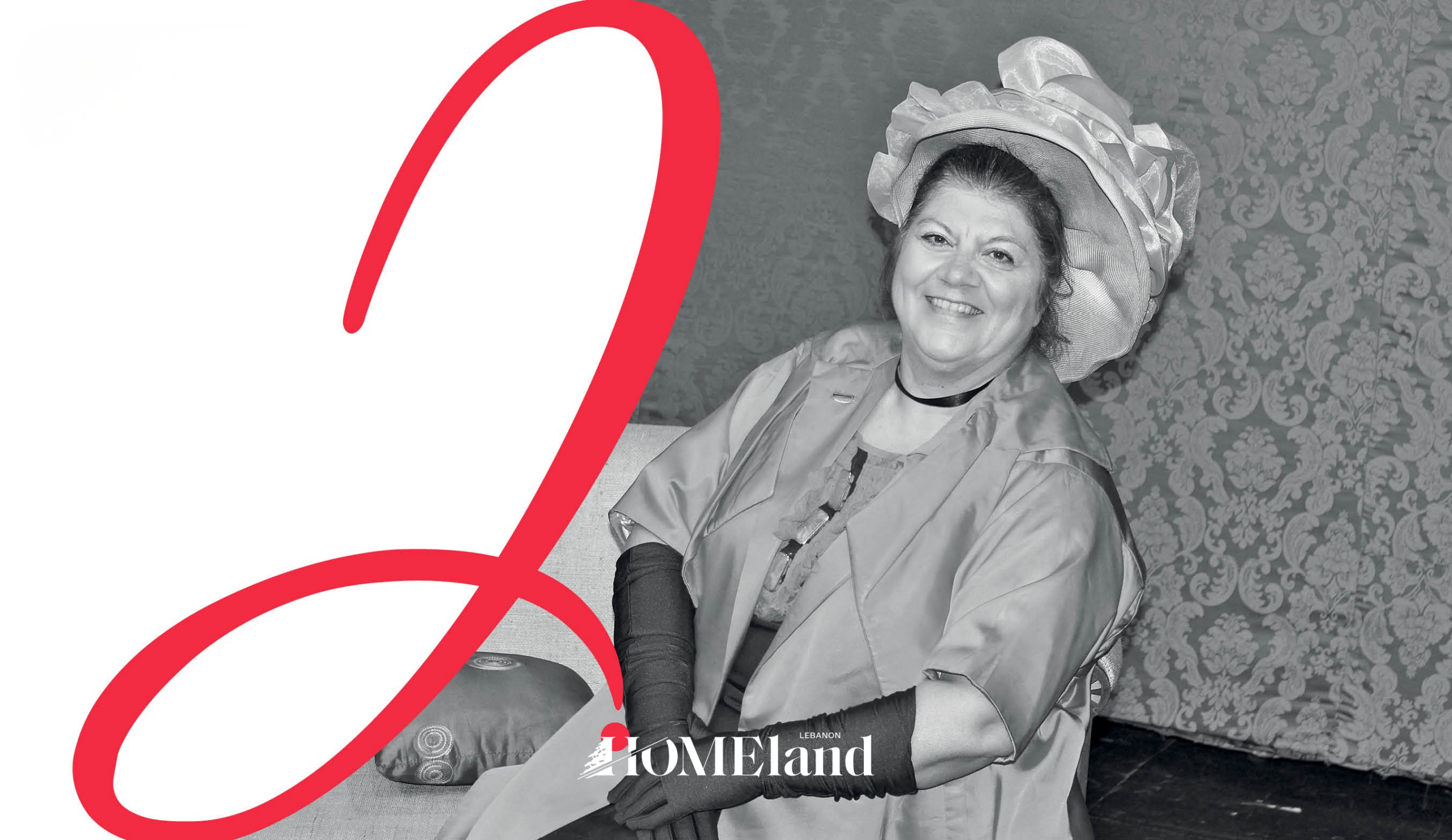
Interviewed by: Patricia Bitar Cherfan, Editor-in-Chief
With more than 25 years of culture, art and theatre production under her belt, Josyane Boulos left a lasting mark on the field with her distinctive character and large-scale projects, upholding the legacy of her late father Jean-Claude Boulos, one of Lebanon’s most influential television and advertising figures of all time. In an unplugged interview with HOME Magazine, Boulos tells of her seasoned creative journey between the countless events she brought to life and the pivotal events that shaped her.
A polyvalent, fun and dynamic woman by nature, Boulos took on a number of creative roles in the course of her career. She started out at Tele Liban alongside her father—who helped establish the station in 1958 and served as its program director until 1970 before becoming its chief executive officer in 1996—where she nurtured her passion for production and TV presenting.
“At Tele-Liban, I used to produce the programs I presented with my late father Jean-Claude Boulos and when I started having more experience, he passed me the torch. It was a passion for me, so when I stopped doing TV, I started producing events.”
Her understanding of production would lead to another path. With unquivering determination, she co-founded the event management company Urban Art in 2000, which she managed until its dissolution in 2015, producing hundreds of cultural and artistic events in Lebanon including theater performances, street festivals, corporate events, exhibitions, conferences and congresses among others.
“Nobody did such big events before, from la fête de l’été in Faqra, which was a pierre blanche (notable milestone) in the Lebanese events scene that many tried to imitate, to One Lebanon and more recently la fête de la musique in Gemmayzeh,” she explained. “We also started the trend of European-style Christmas markets in Lebanon by putting together the first Christmas Market in Zaitunay Bay in collaboration with Leo Burnett. I personally went to Estonia to pick out wood houses.”
As a manager, Boulos describes herself as demanding but very fair at the same time.
“I can be very demanding because I want everything to be perfect. As the French expression goes: Une main de fer dans un gant de velours (hand of iron in a velvet glove). That’s how I was able to do very large-scale events, especially since I am a woman and a woman needs to do double the work of a man to prove herself,” she noted.
Since her early days, she developed a passion for observing the world around her, which opened the door to writing and comedy. Her first satirical article from 1996 titled Ces Conducteurs Qu’on N’épousera Pas (The Drivers We Won’t Marry) was based on her daily observation of fellow drivers while stuck in traffic. She also published her first book Carton Rouge in 2004 and runs an ongoing French blog under the name of Mon quotidien dans un chaos organisé: Beyrouth (My Daily Life in the Organized Chaos of Beirut).
“I love to write dialogue. I write about people I meet, things I see and stories I lived through with a lot of romance and humor. My favorite thing is to make people laugh. That’s why I use a lot of irony and satire.” Her previous playwriting reflects this point, in addition to a new script in the works: صبحية (Sobhieh), عجقة سير (Traffic), Online and Les Gens de la Fontaine (The People of Fontaine).
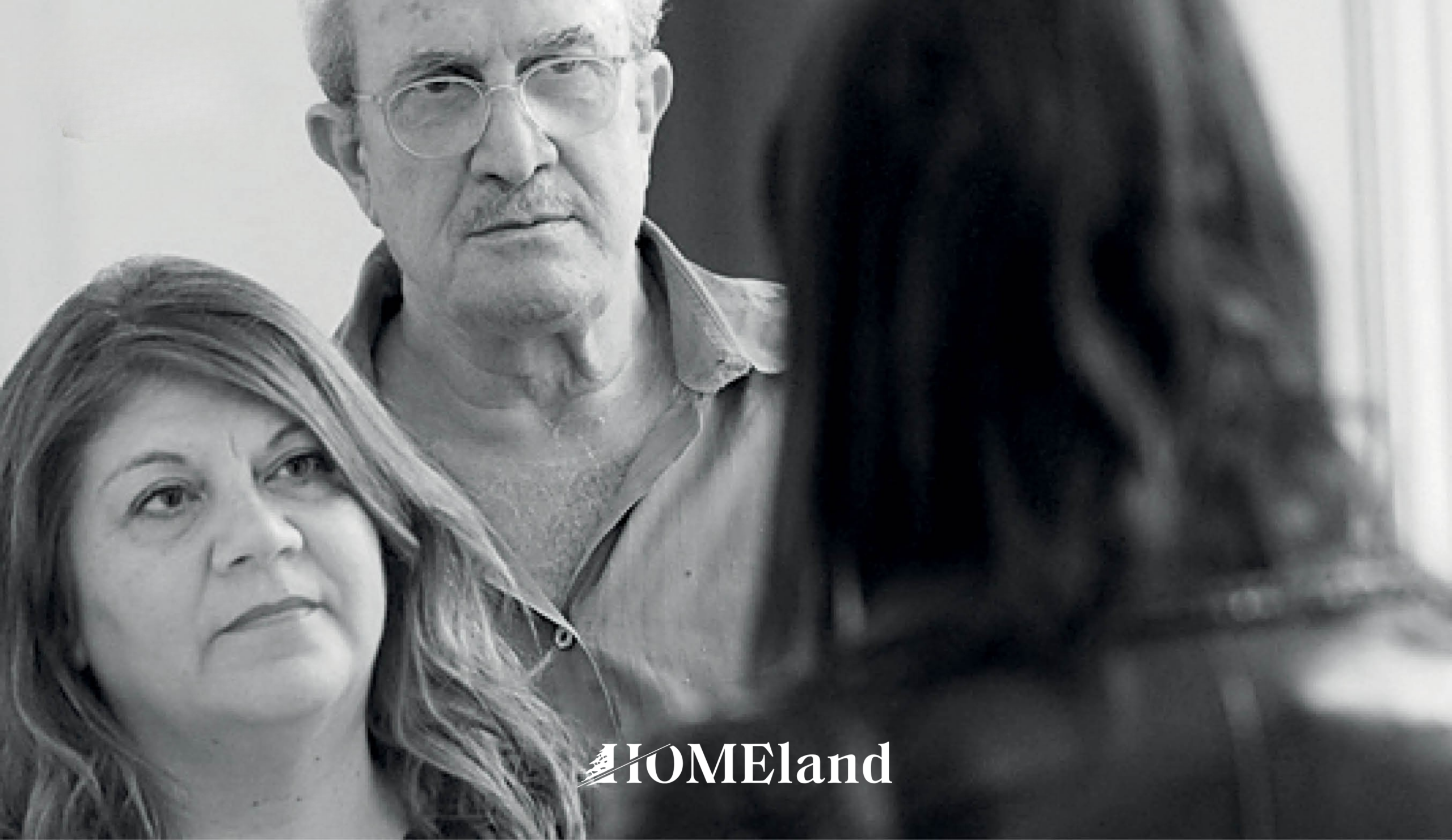
In 2017, Boulos ultimately bid farewell to events and shifted her entire career focus to theatre production, launching her own theatrical production company called 62 Events by Josyane Boulos. “I do not miss events at all. I did everything I had to do in the field and left my mark. At some point it became less fun and more of a burden due to the lack of budgets and sponsors’ reluctance to spend on culture, so I had to stop,” she explained. “Fortunately,” she says, “I have loyal people and admirers who believe in my work.”
“I have been passionate about theatre since I was a little girl, when I used to dress in costumes and act out scenes with my brother and sister at HOME. I was also in TV for almost 10 years, which for me was like acting; you are not yourself, even if you are angry, you have to look happy. So, when I started having more time for myself, realizing that I only have a few more active years, I decided to follow my passion. That’s theatre.”
Her portfolio currently counts more than 68 stage productions, whether it be dance, music or theatre. “When I’m in theatre—on stage or behind the scenes— I’m really alive,” she gushed.
Through her solo company she has brought some of France’s best plays to Beirut and conversely produced Lebanese plays in France, namely Venus in Paris and Mashekil Jensiyye (Nationality Problems) in Nice, both of which scored great success with the French public. “Even though producing local plays abroad is more complicated, I really want to help the Lebanese scene as much as I can in the future. We have many talented actors, directors, light designers and stage managers,” she told HOME.
As someone who produces French theatre in Lebanon, Boulos regrets the fact that Francophonie has been gradually fading away in the country. “On est les derniers dinosaures (We are the last remaining dinosaurs),” she laughs. “Francophonie is not just about the language, but an open spirit, a culture, a way of living. It is so sad to see that we’ve replaced theatre, books and museums with argileh.
“A nation is nothing without culture, because culture stays: people will always remember figures like Gibran Khalil Gibran, Molière or Abu Nuwas. Even in times of war, the first thing people protect is culture, just like Italians hid all their important paintings so that their culture would remain if they were to die in battle. The same was seen when people scrambled to protect sarcophagi at the National Museum during the Lebanese Civil War.”
“It’s funny that people say there are too many cultural events happening in Lebanon but do not complain about having too many restaurants, for instance.”
Boulos feels that people nowadays do not fully realize the importance of culture in shaping society. “We are surrounded by culture all the time. Culture is fashion, architecture, reading, street art… culture is everywhere!” she observed. “It’s funny that people say there are too many cultural events happening in Lebanon but do not complain about having too many restaurants, for instance.
Being the daughter of Jean-Claude Boulos, she surely had large shoes to fill and worked hard to forge her way to the top. “Working with him was an incredible experience. We shared great moments and I benefited tremendously from his life,” she recalled. “When he passed away, I lost a friend, a father and a grandfather to my children, yet he left an incredible legacy and it is amazing and rewarding to see how people still remember him or tell me I look like him.”
Her father gave her valuable career advice and life lessons. “He taught me something I will keep for the rest of my life when he said: ‘Si ton public est du niveau A, tu dois lui donner A+. Ton public doit monter vers toi et non-pas toi descendre vers lui (If your audience is level A, you need to give A+. It is your audience that has to come up to your level and not vice versa).’
“He always told me: ‘No matter how big you get in life, you and a garbage man will always be the same.’ Meaning all people are the same and no one is better than the other, and this taught me to be humble.”
Originally a nurse by profession, her mother briefly stopped working after giving birth to three children and moving into social work, rehabilitating inmates at Lebanon’s Roumieh prison. When her husband opened his own advertising agency called Inter Régies in 1973, she worked with him up until the agency was merged into the Memac Oglivy network in 2003. “She loved people and I remember her saying: ‘tout le monde est beau, tout le monde est gentil, jusqu’à preuve du contraire (everyone is beautiful, everyone is kind, until they are not).’”
Growing up with her two siblings in a healthy, loving family truly helped shape her into the positive soul she is today. “They were very liberal and quite different from other families,” she reminisced.
“We could do everything we wanted and because we had this liberty, we never did anything wrong. My brother, sister and I all stayed true to our upbringing. We all look alike and have always been on good terms with each other, which is a rarity in today’s society.”
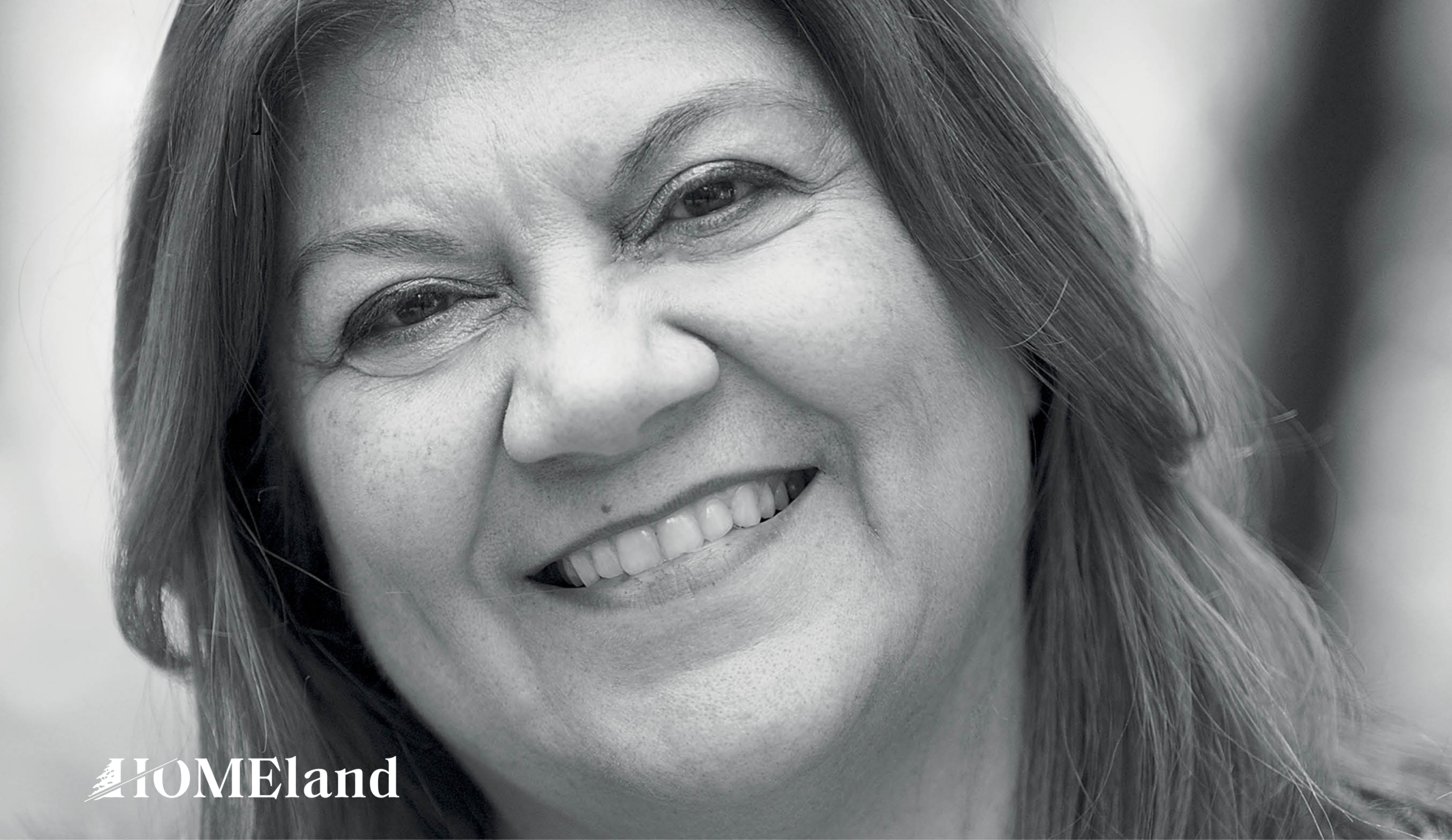 Photo by Elie Bekhazi
Boulos is a mother to two children: 29-year-old Christophe who is currently based in France where he works in the digital marketing field, and her 27-yearold Valerie, her “little sunshine,” who was born with dyspraxia (a developmental disorder) but was able to challenge doctors’ expectations and acquire outstanding skills with the dedication of her mother.
“My daughter today speaks three languages, knows how to use the computer, writes and reads a bit and can manage herself perfectly. She is a lively and happy person who is open to people,” she proudly noted. “I raised my children to be independent, to make their own choices and to be free spirits and I refused for them to say ‘I can’t’ but gave the freedom to say ‘I don’t want to.’”
She was not the kind of mother who would sit and supervise her kids doing HOMEwork. “When my son had an exam, I’d take him to the beach so that he could be relaxed. He’d tell me I was crazy, but I’d say that if you hadn’t learned anything all year long, then you wouldn’t the day before the exam,” she recalled. “When he finished school, I told him: ‘Do not get into the system. Take your backpack and explore the world.’ But he eventually completed a dual master’s degree and is happy with his job.”
In honor of her experience with her daughter, Boulos was inspired to start a nongovernmental organization by the name of Al Majal, which started in 2001 as an afternoon activity center for children with special needs to come and have fun. It grew into a full-fledged institution that helped those children-turned-adults to learn skills, such as baking, in order to sustain themselves growing up. “This association is something that I hope will last after me,” she admitted.
“It is so sad to see that we’ve replaced theatre, books and museums with argileh.”
Despite her extensive experience in the television industry, she currently no longer watches TV and would rather watch movies on Netflix. “I am definitely a romantic and I have a tendency to tell myself a lot of stories. It’s funny now thinking about it, but my daughter is quite similar. She tells stories out loud all the time while I perpetually invent them in my head,” she observed.
Whenever she wants to recharge, Boulos goes for a swim, gets some good sleep and loves spending time in her garden. “When I have nothing to do, which happens very rarely, I can sleep for really long hours. Gardening also helps me relax. Now that I work from HOME, I can take care of my small garden and I love to watch the birds.”
“When I really need to unplug, I travel. I go as far as possible to my favorite Caribbean island Antigua. I have family there. It is truly paradise: small, quiet, green and blue, and the people are so lovely and nice. I dream of buying a house there someday,” she told HOME. “You are HOME when you are with the people you love. At the end of the day, life is all about the relationships you build and the people you love,” she concluded. “It is sad to see many friends and family members leave Lebanon. I hope that many will return. And if they cannot, that they take our culture with them and spread it across the world.”
For more info:
http://josyaneboulos.blogspot.com/
Facebook: Josyane Boulos
Insta: Josyane Boulos and 62events by Josyane Boulos
Twitter: @62eventsbyJB
 Signature Boutique



Speaking Truth to Power: Pierre Sadek Foundation