
Every year, more than 700 babies in Lebanon are born with Congenital Heart Disease (CHD), a birth defect resulting from the abnormal development of the heart. About 400 of them will require some form of surgical intervention or newly available non-surgical procedures. Provided with the appropriate resources and treatment options, no less than 98% of these children can be saved and will ultimately grow up to lead normal, healthy lives.
Driven by the firm belief that no child should die of heart disease due to a lack of funds, a number of Lebanese families affected by CHD joined forces in 2003 to establish the Brave Heart Fund, a charitable fundraising initiative affiliated with the Children’s Heart Center at the American University of Beirut Medical Centre (AUBMC), which covers the medical expenses of underprivileged children suffering from the disease.
“Driven by the firm belief that no child should die of heart disease due to a lack of funds”
“Brave Heart was initiated 13 years ago by three people, two of us being parents of children born with CHD and the third being our attending doctor, after we realized that many families did not have the means to cover their share of the cost of heart surgery that would save their child’s life,” Brave Heart Co-founder Joumana Ghandour Atallah told HOME.
Since then, the NGO has been able to support around 350 surgeries and interventional procedures per year- partially or fully – with an average of $3,000 to $4,000 per case and while some treatment costs could go up to $30,000 and even $60,000.
The Dangers of CHD
“CHD is not like any other disease or sickness. It stems from a malformation to the heart with which a baby is born, and becomes critical because it affects the heart which is a vital organ,” Atallah explained. “The problem is that if the heart is not functioning/ pumping blood properly, then the child’s brain and lungs may be subject to a lack of oxygenation, which could lead to life-threatening health problems and mental difficulties later in life.”
There are at least 35 types of heart defects that could range from simple to complex malformations and require some form of corrective intervention, ranging from non-surgical catheter-based procedures to full-fledged open-heart surgeries.
“CHD is the leading killer in the first year of life, more than all cancers combined, but luckily we are advanced enough in medicine to handle it and the progress over the past 30 years has been enormous,” Atallah noted. “Some conditions that required open-heart surgeries 20 years ago are now being cured through catheters and implantable devices like coils and stents.”
Increasing Efficiency Through Unity
One thing that is often disregarded in Lebanon according to Atallah is that in order to excel in medical care, patients should be referred to specialized centers. “When we concentrate our forces in one center of excellence, the results are always better. This is how we can reach our best potential, with the best available ressources,” she observed.
“This is one of the main reasons why we chose to establish our patient fund in the heart of the Children’s Heart Center at American University of Beirut Medical center (AUBMC), which has been operating for over 20 years now and is rated among the top heart centers in the region, with outcomes comparable to the best medical centers in New York,” she added, emphasizing the importance of combining skill and experience in order to provide the best cure for children suffering from CHD.
Funded entirely through donations solicited by dedicated Brave Heart volunteers, the patient fund is internally audited by AUBMC and made available to needy patients regardless of their gender, religious affiliation or nationality. Eligibility is also assessed by the institution following the same non-discrimination policy in order to help everyone benefit from the best medical care.

The Growing Need for Philanthropic Support
“We recently celebrated our 3,000 patients milestone which is our most important milestone to date,” Atallah told HOME. “But the financial challenge has grown bigger not only for us but for all other NGOs due to the current crisis we’re facing.”
She went on to explain that a Lebanese child with CHD is not abandoned by the state as the government covers part of the medical intervention costs. However, the financial burden imposed on patients has been growing due to increasing hospital costs while governmental and third party reimbursements have not increased accordingly.
“We also support many non-Lebanese children including Syrian, Iraqi and Palestinian refugees in addition to children born to Lebanese mothers but who do not have the nationality and are thus not supported by the government,” Atallah explained. “This is our little fight, we can’t leave these women alone.”
However, the ratio is much bigger nowadays and donors have to service a large population in need, which has lead them to prioritize primary care issues such as vaccines and deliveries. Furthermore, with local corporations often looking to support multiple causes to serve their marketing goals, impactful fundraising is increasingly more difficult.
“We need to maintain extremely low overheads and learn how to budget i.e. fundraise for what we need, without leaving a stone unturned,” Atallah added.
“NGOs can make a better impact with the sustainable and continuous support of corporations who select a cause to support based on the NGO’s performance and transparency, the Lebanese diaspora can also be of huge help.”
Promoting a Culture of Giving
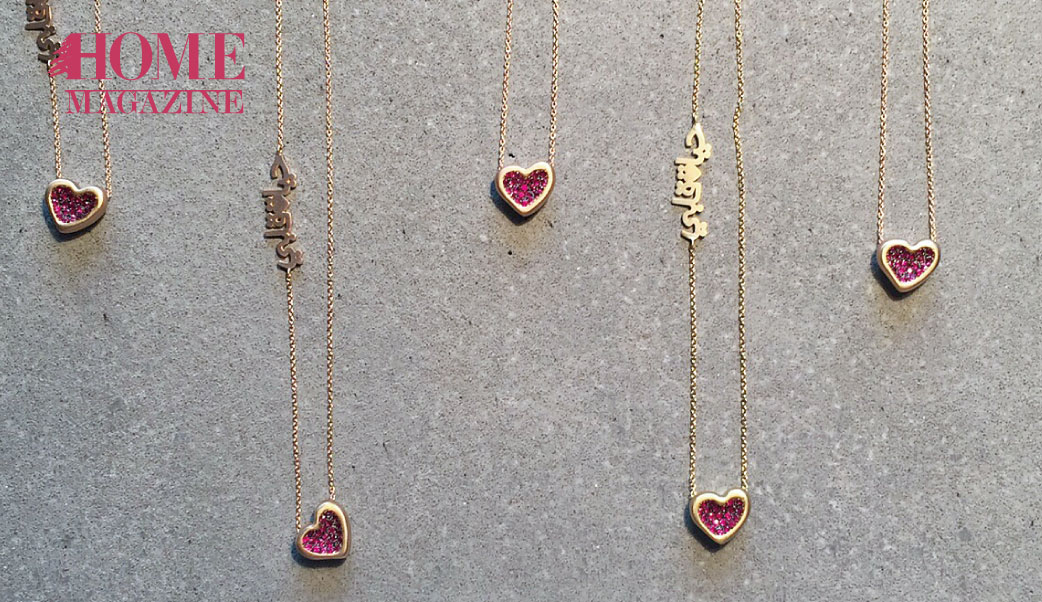
Brave Heart started as a small fund and grew bigger and bigger over the years, collaborating of associations with a number and local designers including Rouba Mouzannar and Mourtada, Alia Mouzannar and Sarah Beydoun to produce special edition accessory and handbags designs where all proceeds would go to the fund as part of its newly launched online platform ‘Hayet Albi’ which translates as ‘Life of My Heart’.
“Hayet Albi”
“The Lebanese are not just entrepreneurial but also extremely generous,” Atallah told HOME. “The readiness of the community to help and offer their services free of charge is remarkable as the people who have not donated funds have donated their time and skills, thereby allowing us to give every single penny to surgeries while maintaining our operating costs as low as four to six percent.
But in addition to raising funds, the NGO aims to increase awareness about CHD with the help of celebrity ambassadors such as filmmaker Nadine Labaki and DJ Rodge, and promote a culture of giving in the community, especially among the young generation. “By teaching and encouraging children to donate to other children, we are promoting a culture of giving and proving that we can do a lot through group work,” she noted.
In line with its fundraising activities, Brave Heart was one of the first Lebanese NGOs to team up with the Beirut Marathon Association. It all started with the parent of a child with CHD enlisting to run in the first Beirut marathon in order to raise money for the cause.
“There are many energies to tap into and the energy of a young child is so giving, it’s incredible. Children love to help other children and once they realize they were able to make a difference, even by contributing with a small amount of money or running in the marathon, you can be sure these children will grow up and give back to their society.”
Last but not least, what keeps Brave Heart going is both the immediacy of the cause and the energy of the people who are ready to sacrifice and offer their help.
“It takes so little to save a life, this is the best return on investment you can get, as the child will immediately recover after surgery, sometimes just a smile or one word of encouragement is enough to keep you going and I hope we inspire other community funds to follow suit,” Atallah concluded.
For more information:

HOMEland
Coming Soon
HOMEland Events & Collaborations
Coming Soon
 Signature Boutique



Speaking Truth to Power: Pierre Sadek Foundation