Former Caritas General Director Rita Rhayem, Phantom Female No More
Rita Rhayem shattered expectations as Caritas Lebanon's first female director, proving quiet resolve and faith can move mountains.


Interviewed by: Patricia Bitar Cherfan, Editor-in-Chief
Brilliance combined with humility, ambition with tactfulness, and charisma with sincerity make for a gifted leader. HOMEland had the pleasure of sitting down with Rita Rhayem, who embodies these very qualities. Rhayem’s appointment as the first female director of Caritas Lebanon marks a milestone for the organization’s 47-year history. At age 34, she will be impacting the lives of more than 200,000 beneficiaries nationwide and emboldening other women to follow in her footsteps.
While serving as the chief of the health department at Caritas, the president of the Lebanese chapter, Fr. Paul Karam, nominated Rhayem for the position of director. Not only would she be handling 650 employees and nearly 2,000 volunteers, but she would also be representing 15 Caritas Organizations in the MENA region at the humanitarian committee at Caritas Internationalis – Vatican City. Although hesitant at first, she explains the logic she follows: “When someone offers you a place on a rocket, you don’t ask where that rocket is headed. You just go!” Her parents, who she calls anything but old fashioned, always encouraged her to take learning seriously as it would open doors for her in the future. In her youth, she received a francophone education before pursuing a higher education at the Université Saint Joseph (USJ) where she earned a doctorate degree in pharmacy and a diploma in hospital and clinical pharmacy.
USJ and the prestigious university of Paris, known as the IAE Pantheon- Sorbonne, granted her a master of business administration in health management, awarding her the Prix du projet professionnel MBA Liban prize upon graduation. Rhayem turned her project into a book that was published in Lebanon. At present time, she manages to pursue a master of arts in interdisciplinary gender studies at the Lebanese American University (LAU) while meeting the demands of a full-time job at Caritas.
In her HOMEtown of Jezzine, Rhayem’s childhood was far from peaceful. “The sound of bombs didn’t bother me. I grew up with them,” says Rhayem with an unexpected casualness.
While working for Doctors Without Borders during the 2006 war, Rhayem discovered her calling for humanitarian work, leaving pharmacy behind. “This experience changed the course of my life,” says Rhayem with eagerness. Living through the war conditioned her to enter emergency situations without fear.
“The feeling of being on the ground and impacting people in real time was a major eye-opener for me. I had not heard of the concept before.”
Finding an NGO to work for was challenging at first. People in her surroundings discouraged her from following what they viewed as a dead-end path. A person with her education and qualifications should not waste their talent dabbling in humanitarian work, they believed! “They didn’t notice that this was exactly where I should put my degree. This kind of work is more satisfying than sales and the bottom line. It is about the lives of people,” says Rhayem.
The brutality and inhumanity of war strengthened bonds between civilians, and even amongst strangers. Rhayem discovered that times of crisis call for increased compassion and care for the community. “Our Christian values really came to the fore. We lived by them, especially the core Christian value of love. Everybody felt concerned and looked out for each other,” she remembers. Working with vulnerable populations has only strengthened her belief in the Lord, whose work she can see most clearly in the lives of her beneficiaries. “Sometimes I’ll ask for a sign from above, then someone at the shelter, later that same day, will address it directly. I believe that God is speaking directly through them,” she says.
Two framed icons of Saint Rita, the 14th century nun known for assisting vulnerable people during difficult situations, decorate her office wall. “She is with me and supports me wherever I go,” says Rhayem. “If you leave space for divine providence in your life, it will manifest.”
“Behind every service there is a life, a story we support. And behind every life is an immediate need which we match with resources and compassion. We understand that behind every screaming man is not just an angry man, but a man in pain, a lot of pain.”
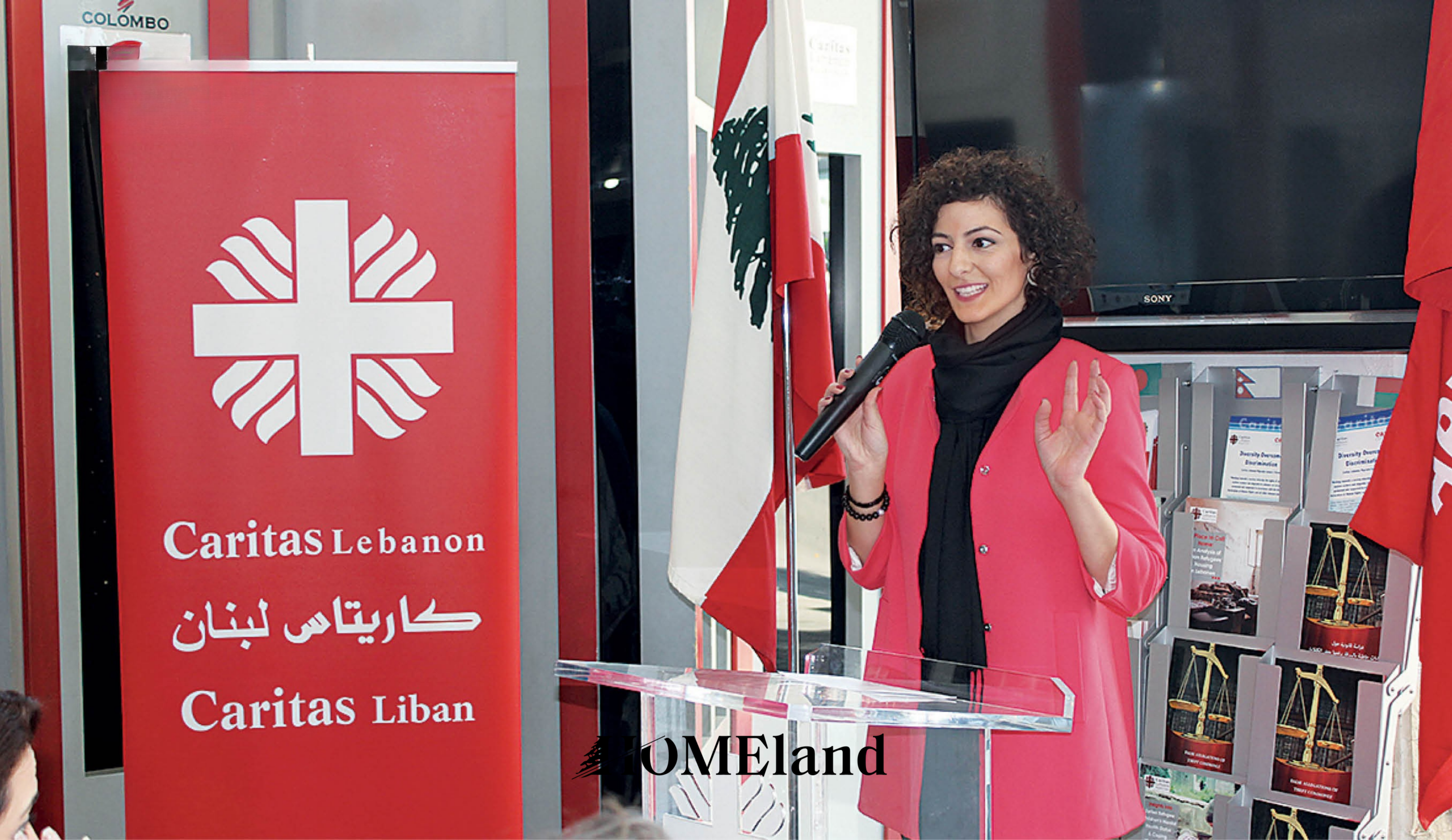
While Caritas anchors itself in Catholicism, Caritas extends a philanthropic hand toward “any vulnerable person regardless of race, creed, identity or beliefs.”
Caritas Lebanon is an off-shoot of Caritas Internationalis, a faith-based organization operating in 200 countries that works toward “ending poverty, promoting justice and restoring dignity” in the areas of health, development, education and emergency responses.
“The increasing number of people who need our help has made it more and more challenging for us to meet everyone’s needs,” Rhayem says. “We are not the government. It is impossible for us to carry their load.” With local and international donations dropping, the organization depends on individual contributions more than ever to sustain its benevolent mission.
Its centers can be found all across Lebanon, from East Bekaa to Baabda, Bint Jbeil to Akkar. Rhayem has learned a great lesson from those who benefit from Caritas: many live below the poverty line in horrible conditions, yet they still carry beautiful smiles. The resilience displayed in these tough situations is remarkable.
As a young woman disrupting four decades of male leadership, Rhayem’s position should be thought of as a major achievement, a milestone. Her age and gender seemed to be outweighing her capabilities and experience. At first, she was not taken seriously since authority figures at Caritas had not, until that point, looked anything like her.
“Whenever I stood at the decision table, they did not look at me but through me.”
“I experienced what it was like to be ‘une femme fantôme’ (the phantom female),” she says. “Whenever I stood at the decision table, they did not look at me but through me.” Patience and perseverance ultimately paid off, as evidenced by her peers’ attitudes shifting toward acceptance of her role as director. “Once you assert yourself and your ideas, then you fill your position, you gain respect and from then on you are taken seriously.
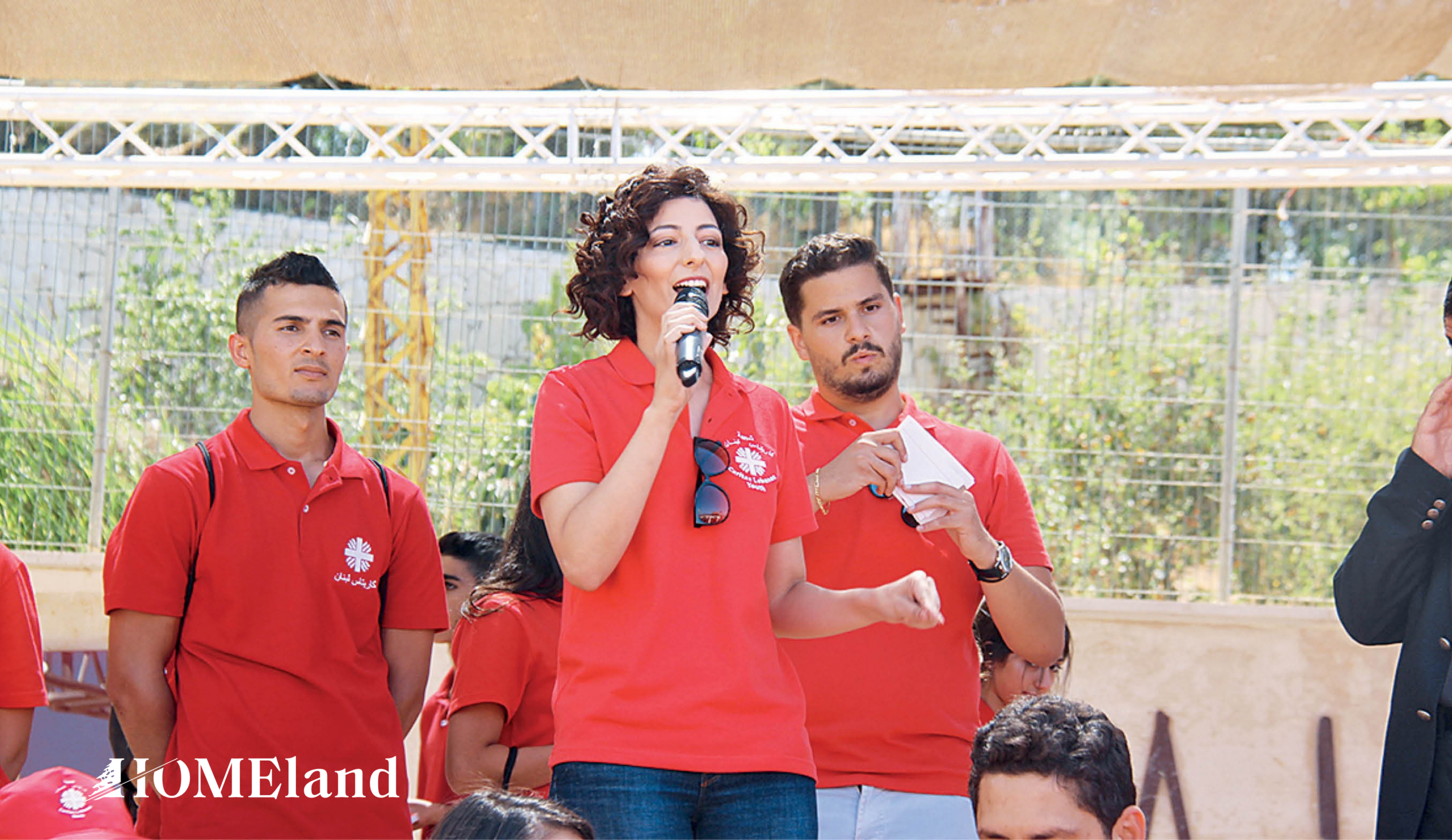
Leading by example, the former director has reconfirmed that women can and do belong in leadership positions. She has carved space for women to be in high-ranking roles by opening doors for them which had been bolted shut. In terms of appearances, she believes that a woman does not need to forsake her femininity to affirm herself.
She noted that females make up 80 percent of Caritas employees. “You should see the sacrifices they make. A woman will wake up at 1 a.m. to help a beaten Ethiopian woman. A nurse will sleep in a shelter to care for a suicidal woman,” she explains. “Women do this without the expectation of reward. They keep taking up new challenges without ever slowing down to savor their success.”
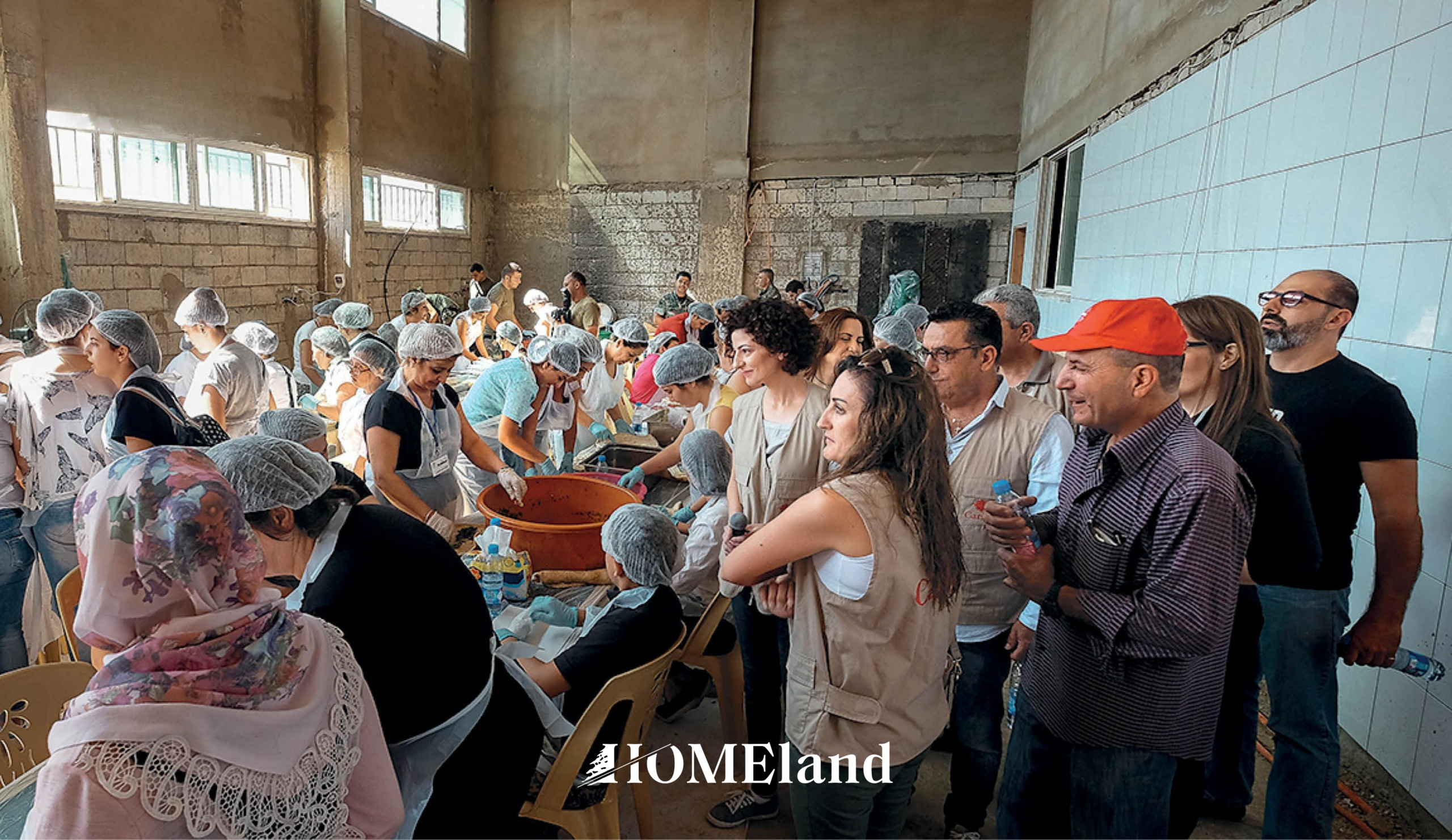
In addition to reading the Bible, the self-professed bookworm enjoys learning about leadership and management, as well as women’s rights. She credits Lean In: Women, Work, and the Will to Lead by Sheryl Sandberg and Nell Scovell, and expresses a genuine interest in learning about all religious texts, particularly the Quran, through a feminist lens. What is she reading now? Leadership: In Turbulent Times by Doris Kearns Goodwin. Every weekend, she visits her HOMEtown in the south of Lebanon where she enjoys jogging through the peaceful mountainside. “The sound of bells is the most beautiful voice,” she explains, a sound she frequently encounters on these runs. If she were given the opportunity to change anything in her life, she would not change a thing—not even her mistakes.
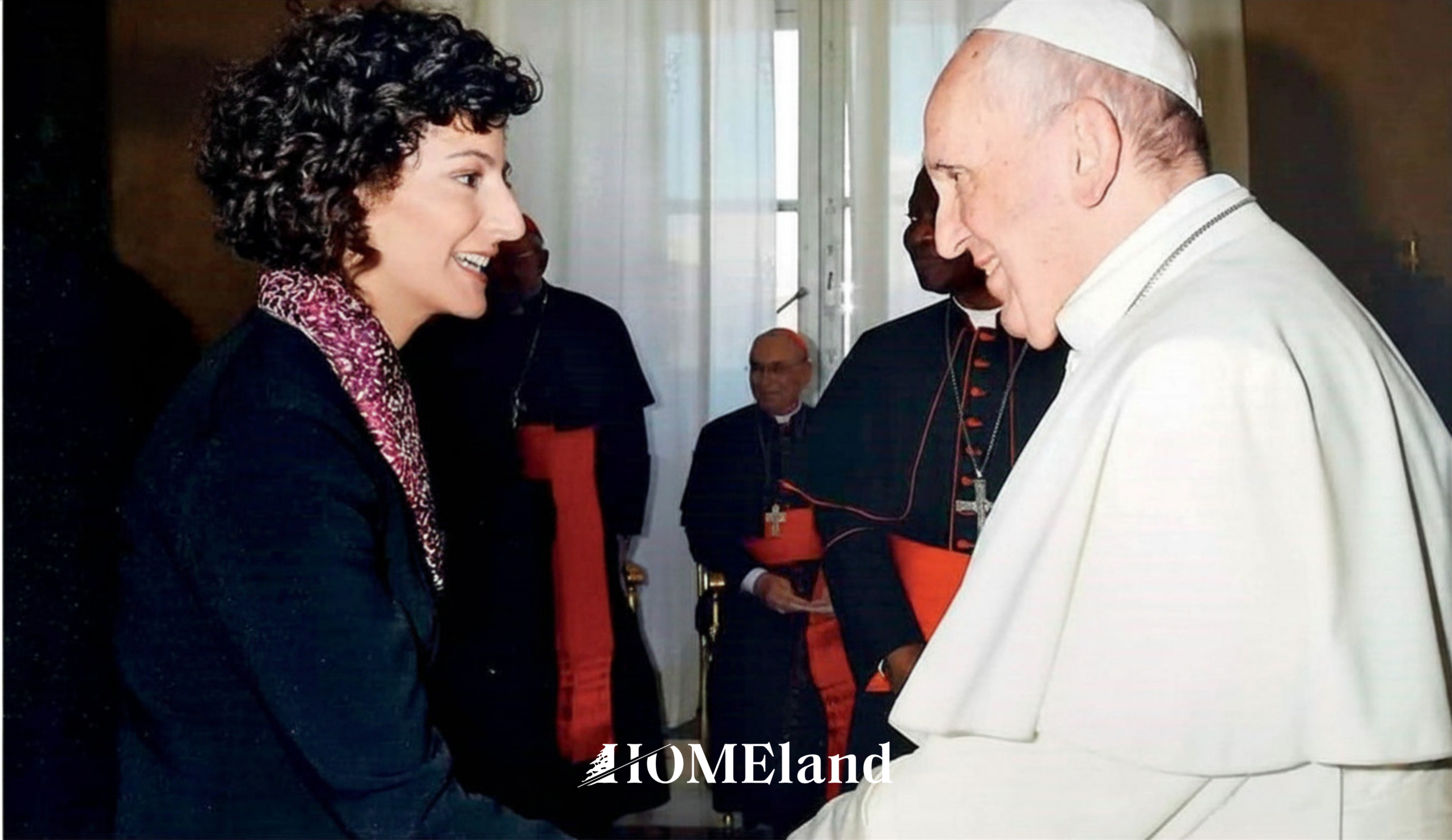
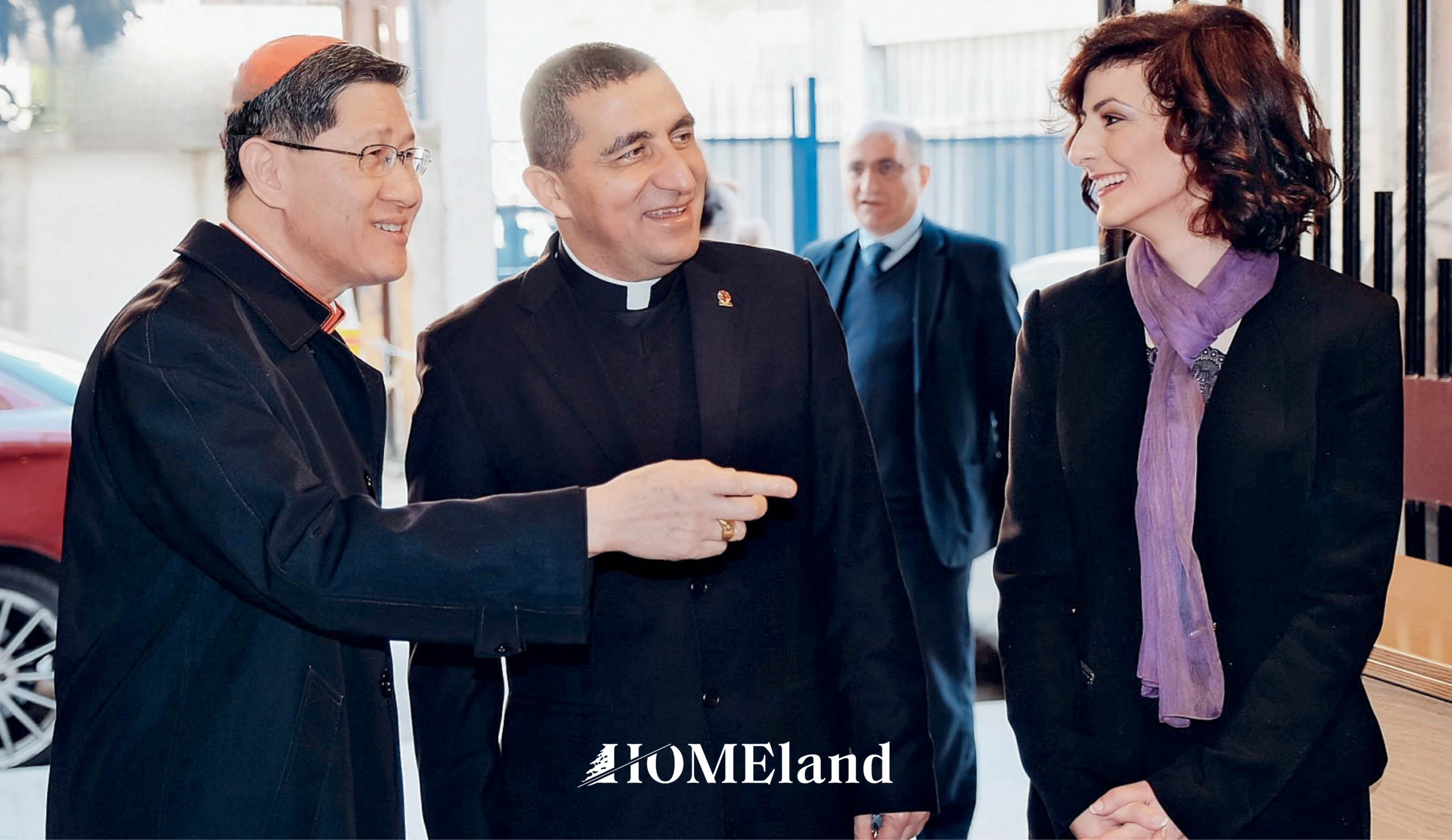 Cardinal Tagle, President of Caritas Internationalis, Fr Karam President of Caritas Lebanon
She has declined positions to work abroad. “Lebanon is a priority in many ways. My attachment to my HOME has impacted my life decisions in many ways,” says Rhayem. “I cannot live outside of this country.” Her parents play an important role in this decision. “They struggled so much so that I could be where I am today. Now is my time to give back to my parents and my country.”

 Signature Boutique