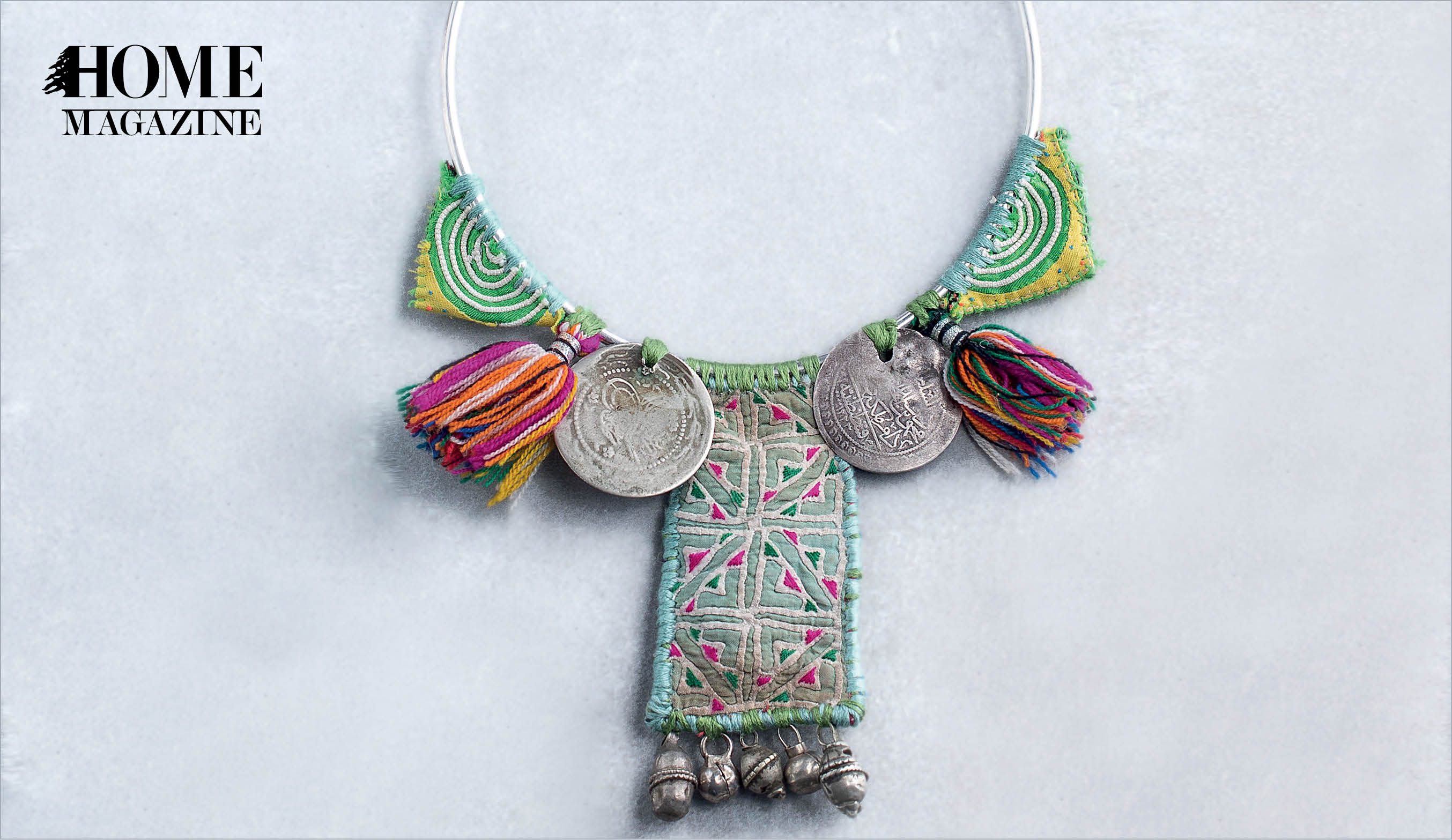
In a simple black dress, Yasmine Dabbous wears a colorful necklace. She has three silver rings on her fingers, all of which she handcrafted. She digs into her boxes and drawers very carefully to find the authentic vintage metals and textiles she has collected from around the world. She raises them to the light to show her visitor the treasures she owns. After narrating the story of every piece, which she knows by heart, she puts the pieces back exactly in place.
Dabbous’ passion to craft handmade necklaces, brooches and rings is deeply rooted in her heart. She left her job as a university professor at the department of communication arts at the Lebanese American University (LAU) in 2015 to pursue jewelry design and textile design, a decision spurred by a health issue that has affected her heart. She hasn’t given up storytelling and attempting to influence change, which she once pursued as a journalist. She just prefers to do it differently.
“My health situation was a catalyst for this decision. Symptoms I’ve experienced due to my heart problem have changed my perception of living and of what I value in life. That’s when I decided to stop teaching at LAU, a fixed and stable job with many guarantees in such an unstable country,” said Dabbous.
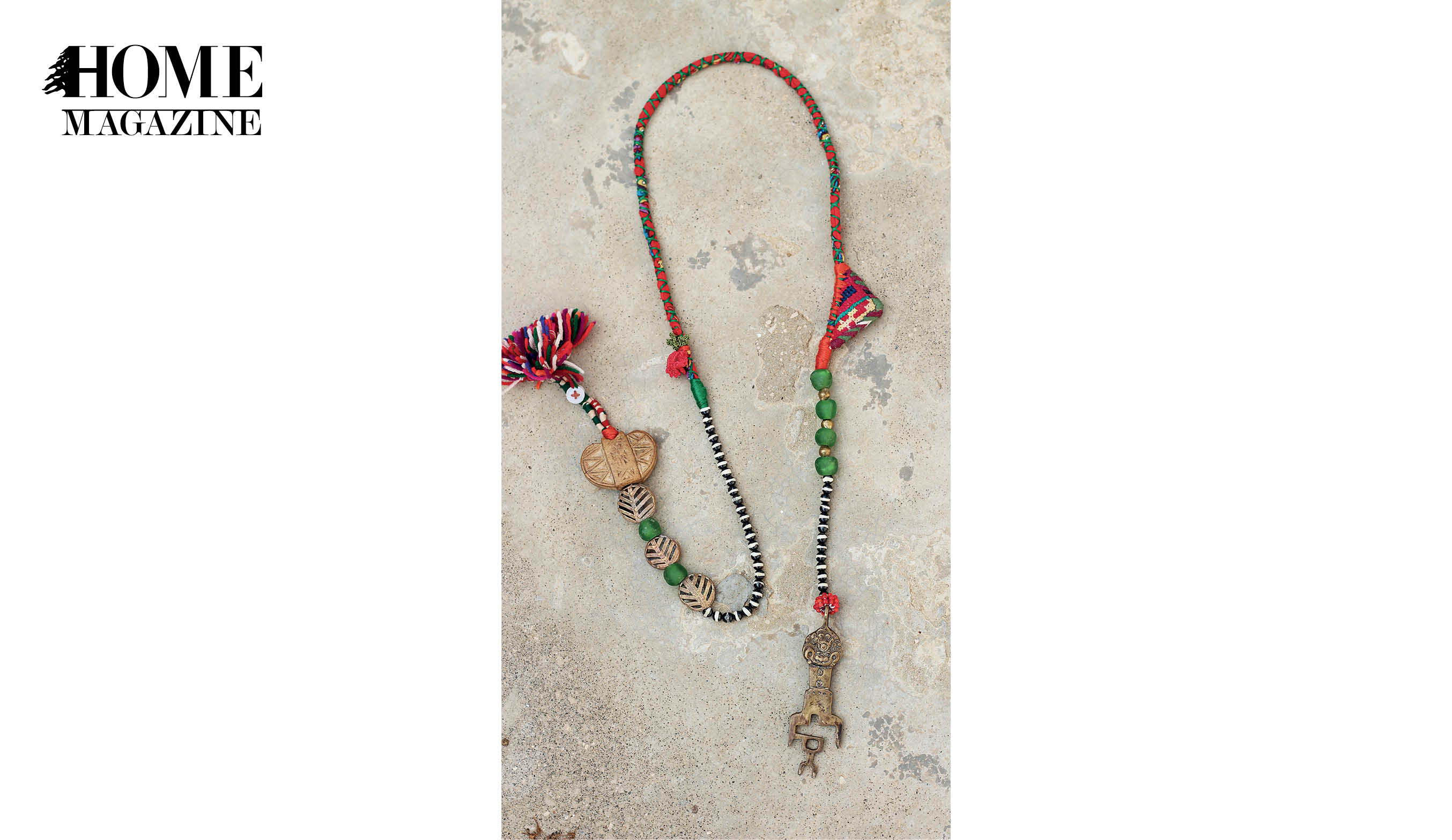
Although she has been developing traditional, unique pieces of jewelry art for years, her first step after quitting her job was to enroll in the Fashion Institute of Technology in New York. Today, Dabbous narrates stories from all over the world by collaging authentic textiles and vintage pieces from local communities to produce bewitching mixtures of colors, fabrics and metals that each represent the cultures and values from which they come.
Dabbous calls her style “tribal art.” She said it is the antonym of Greek standards of beauty and perfection, which are built on means and balances. “Instead, tribal art is imperfect. It is done by handwork like embroidery and carving. It’s an art where machines have no role, which has meaning, and that’s related to stories, to beliefs, to values, to identity, to gender, to age and nationality. For example, I have necklaces made from a belt that is worn by the Lu Tribe in Vietnam for weddings only . So, when you see a woman wearing it, you know she’s going to a wedding. You also know from which tribe she descends. In Palestine, the color of the cross stitching differs from one city to another,” she explained.
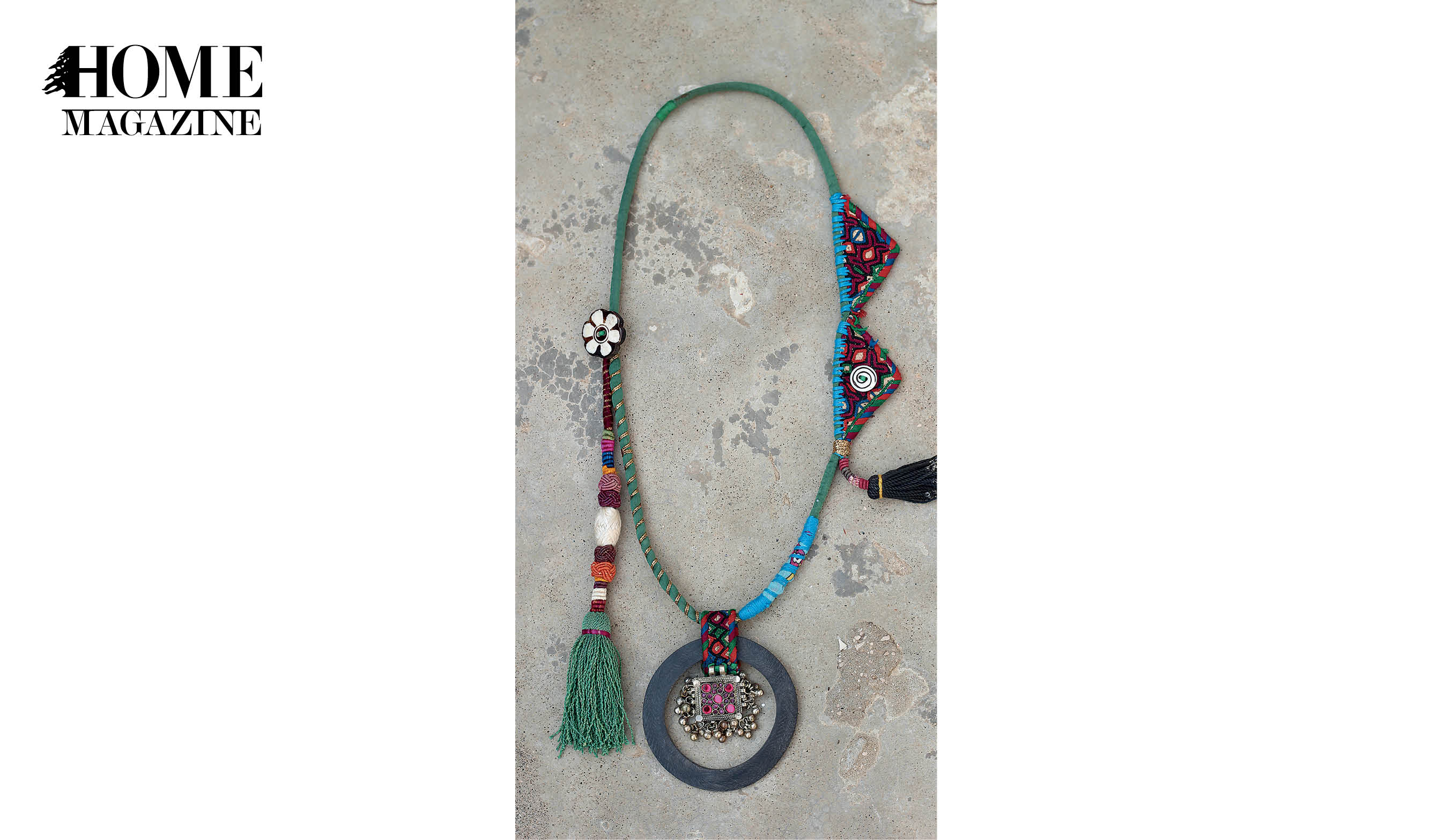
Dabbous initially discovered her passion for creating jewelry after attending a jewelry design course in Beirut in 2012. “It was when I had a big load of university courses to teach, in addition to research and publishing duties. I felt I needed something to get rid of my stress.”
“For example, I have necklaces made from a belt that is worn by the Lu Tribe in Vietnam for weddings only.”
The assignment to create a brooch fascinated her. “Something inside me exploded and I couldn’t stop. I was loving what I was doing. That’s when I discovered my passion for creating or crafting handmade brooches and accessories,” she said.
She created a startup business called Ethnic Tree, referring to the tree of life of several cultures and religions. The name was not well received in the United States, where it was linked to racism and ethnic segregation, so she changed the name to Kinship Stories.
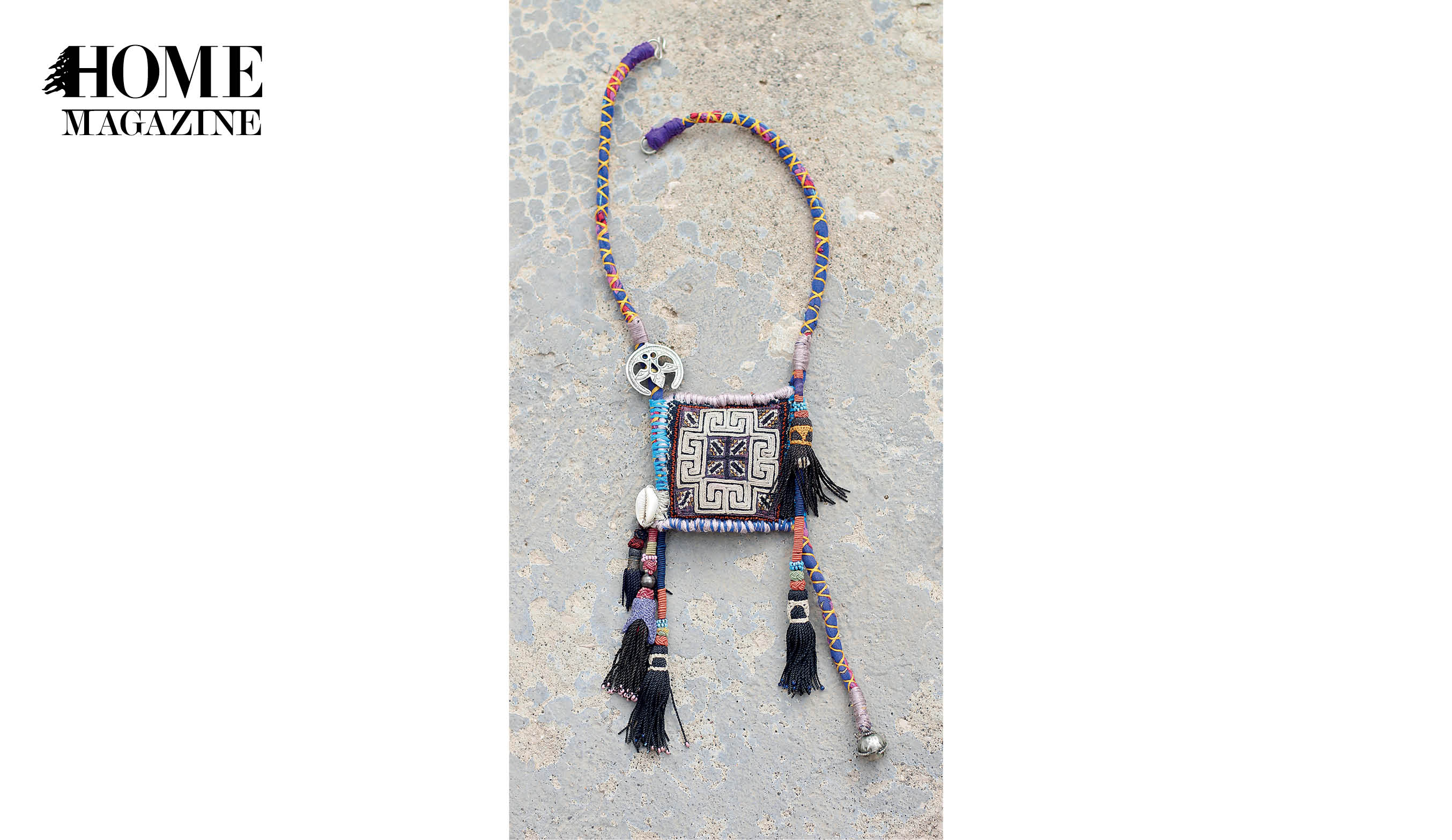
“Everything I use in my necklaces is usually transmitted through kin, a blood relation, from mother to daughter or from father to son, including the beliefs and values and skills. At the same time, every piece I collect tells a story about a local community. For me, I’m still working in journalism but in a different way,” said Dabbous.
Dabbous’ art allows her to tackle many issues. She listed them: “History, culture, human dignity in all its forms, and peace, since I am a child of the war. These are the morals that drive me.”
Dabbous uses her art with social media to disseminate her messages. For instance, she sometimes writes captions about stereotypes. “I’m a veiled woman, a female and an Arab, so in many ways, I’m a victim of stereotypes. I understand their harm on the individual and the group,” said Dabbous.
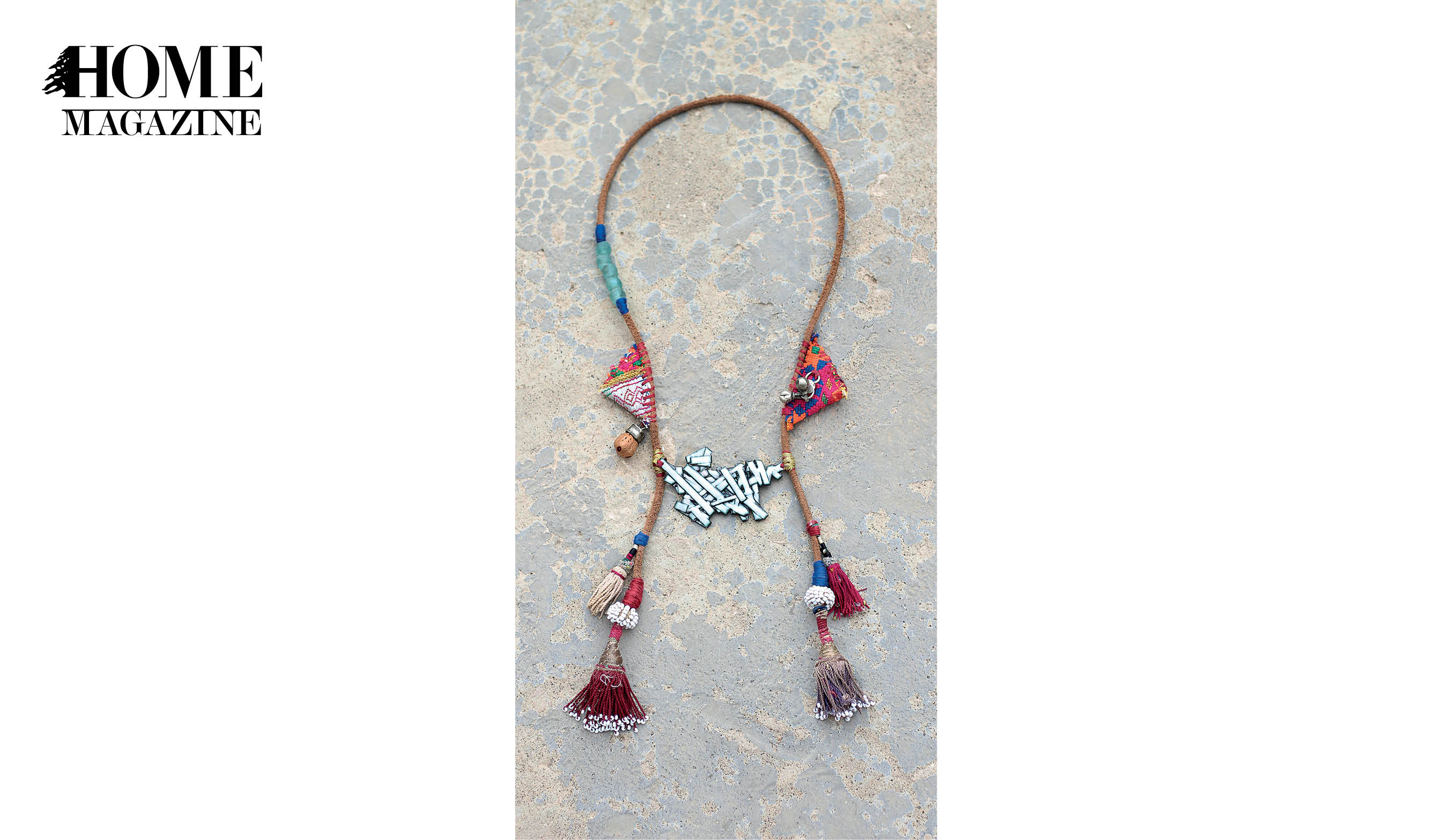
She also understands arbitrary concepts of beauty. The current international economy convinces people to appreciate particular material and products over others, she noted. “Diamonds, for example, are not scarce stones; the global appreciation of diamonds is a social construct. Silver is my favorite and I do not love gold,” she said with a laugh.
“My work has pieces with high value but they are not necessarily the ones that are widely appreciated in mass market or consumer societies,” said Dabbous.
“I’m always outside of the mainstream and I’m very comfortable at its fringes.”
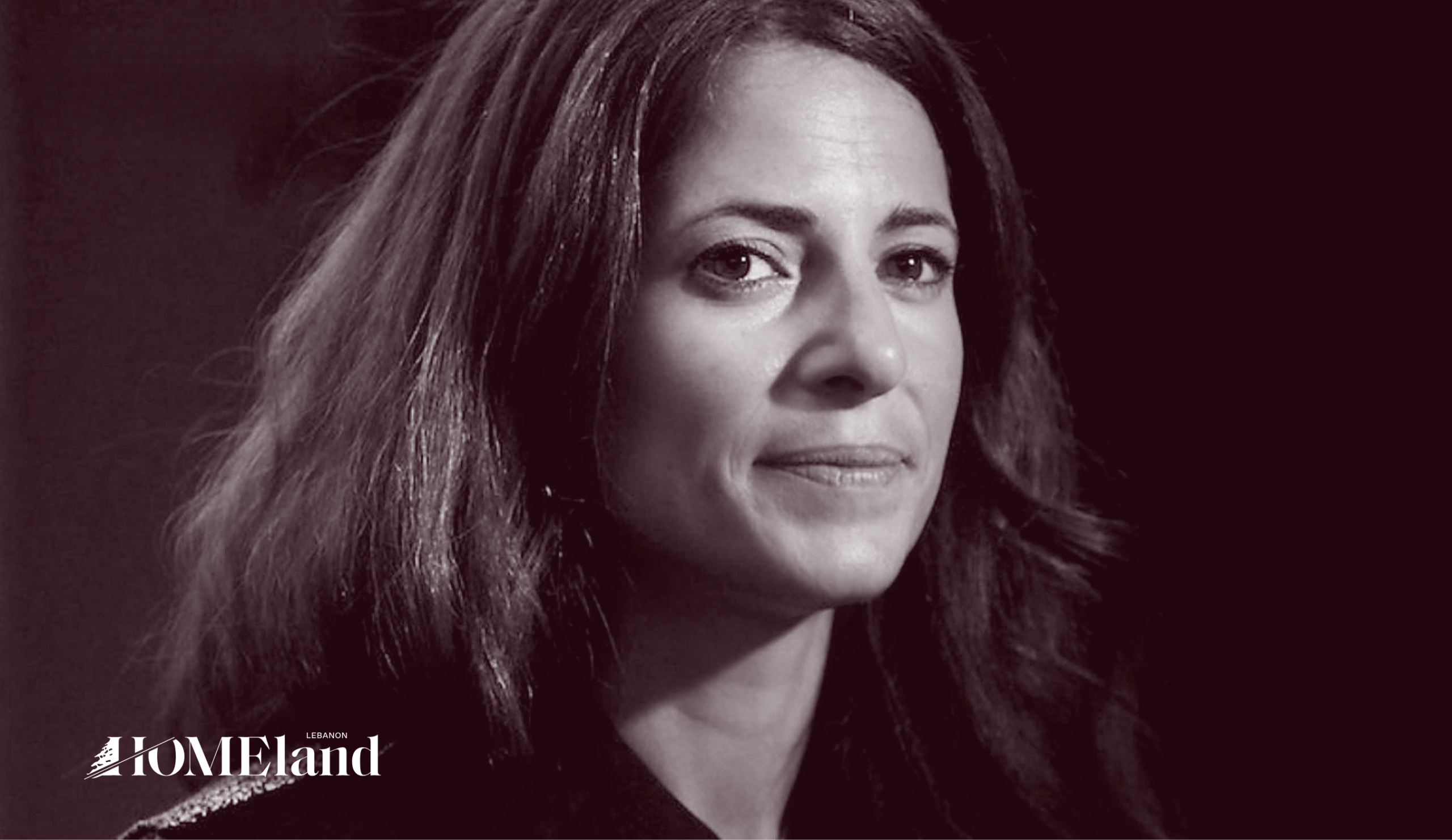
HOMEland Magazine
We firmly believe that the internet should be available and accessible to anyone, and are committed to providing a website that is accessible to the widest possible audience, regardless of circumstance and ability.
To fulfill this, we aim to adhere as strictly as possible to the World Wide Web Consortium’s (W3C) Web Content Accessibility Guidelines 2.1 (WCAG 2.1) at the AA level. These guidelines explain how to make web content accessible to people with a wide array of disabilities. Complying with those guidelines helps us ensure that the website is accessible to all people: blind people, people with motor impairments, visual impairment, cognitive disabilities, and more.
This website utilizes various technologies that are meant to make it as accessible as possible at all times. We utilize an accessibility interface that allows persons with specific disabilities to adjust the website’s UI (user interface) and design it to their personal needs.
Additionally, the website utilizes an AI-based application that runs in the background and optimizes its accessibility level constantly. This application remediates the website’s HTML, adapts Its functionality and behavior for screen-readers used by the blind users, and for keyboard functions used by individuals with motor impairments.
If you’ve found a malfunction or have ideas for improvement, we’ll be happy to hear from you. You can reach out to the website’s operators by using the following email
Our website implements the ARIA attributes (Accessible Rich Internet Applications) technique, alongside various different behavioral changes, to ensure blind users visiting with screen-readers are able to read, comprehend, and enjoy the website’s functions. As soon as a user with a screen-reader enters your site, they immediately receive a prompt to enter the Screen-Reader Profile so they can browse and operate your site effectively. Here’s how our website covers some of the most important screen-reader requirements, alongside console screenshots of code examples:
Screen-reader optimization: we run a background process that learns the website’s components from top to bottom, to ensure ongoing compliance even when updating the website. In this process, we provide screen-readers with meaningful data using the ARIA set of attributes. For example, we provide accurate form labels; descriptions for actionable icons (social media icons, search icons, cart icons, etc.); validation guidance for form inputs; element roles such as buttons, menus, modal dialogues (popups), and others. Additionally, the background process scans all the website’s images and provides an accurate and meaningful image-object-recognition-based description as an ALT (alternate text) tag for images that are not described. It will also extract texts that are embedded within the image, using an OCR (optical character recognition) technology. To turn on screen-reader adjustments at any time, users need only to press the Alt+1 keyboard combination. Screen-reader users also get automatic announcements to turn the Screen-reader mode on as soon as they enter the website.
These adjustments are compatible with all popular screen readers, including JAWS and NVDA.
Keyboard navigation optimization: The background process also adjusts the website’s HTML, and adds various behaviors using JavaScript code to make the website operable by the keyboard. This includes the ability to navigate the website using the Tab and Shift+Tab keys, operate dropdowns with the arrow keys, close them with Esc, trigger buttons and links using the Enter key, navigate between radio and checkbox elements using the arrow keys, and fill them in with the Spacebar or Enter key.Additionally, keyboard users will find quick-navigation and content-skip menus, available at any time by clicking Alt+1, or as the first elements of the site while navigating with the keyboard. The background process also handles triggered popups by moving the keyboard focus towards them as soon as they appear, and not allow the focus drift outside it.
Users can also use shortcuts such as “M” (menus), “H” (headings), “F” (forms), “B” (buttons), and “G” (graphics) to jump to specific elements.
We aim to support the widest array of browsers and assistive technologies as possible, so our users can choose the best fitting tools for them, with as few limitations as possible. Therefore, we have worked very hard to be able to support all major systems that comprise over 95% of the user market share including Google Chrome, Mozilla Firefox, Apple Safari, Opera and Microsoft Edge, JAWS and NVDA (screen readers).
Despite our very best efforts to allow anybody to adjust the website to their needs. There may still be pages or sections that are not fully accessible, are in the process of becoming accessible, or are lacking an adequate technological solution to make them accessible. Still, we are continually improving our accessibility, adding, updating and improving its options and features, and developing and adopting new technologies. All this is meant to reach the optimal level of accessibility, following technological advancements. For any assistance, please reach out to