
Lebanon in Chile: A Perpetual Existence
JOL Chile unites the country's small Lebanese diaspora, working to keep Lebanese identity and heritage alive for future generations.
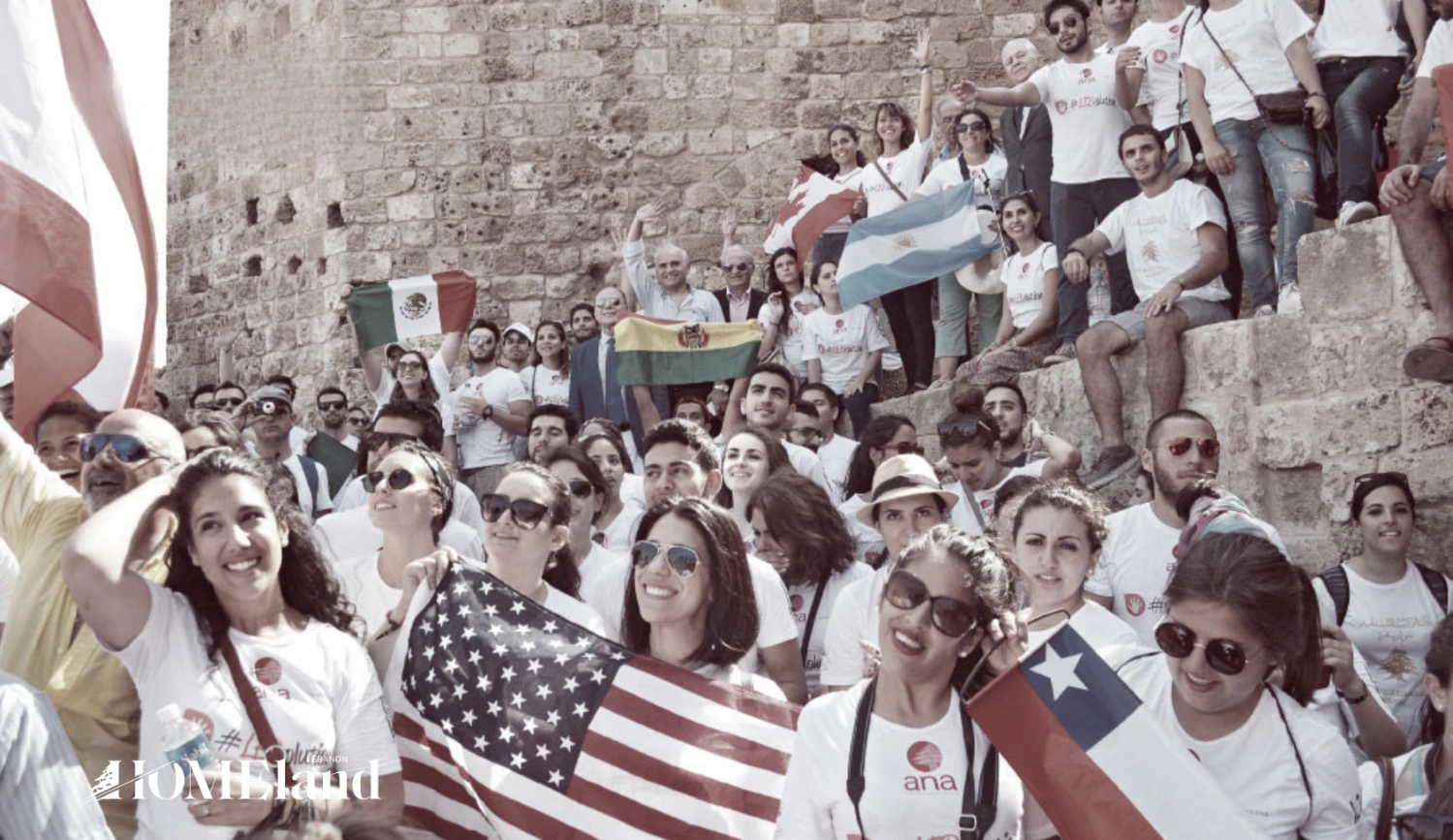
We are few, it is true. Lebanese descendants in Chile might not exceed 20 thousand, a small number when compared with neighboring countries such as Brazil. Nevertheless, our existence is more than a mere number. It’s about quality and value; the Youth of Lebanese Origins of Chile, “JOL Chile”, represents the hope for the continuity of Lebanon in our country.
I grew up on my mother’s stories of a “Lebanese Youth”, stories of the 70’s. Her friends today are the same as they were then and I consider them my uncles and aunts; their sons and daughters are my own friends nowadays. In this new group of youth, who since 2006 bears the name of “JOL Chile”: the Youth of Lebanese Origins of Chile.
As in all countries with a Lebanese diaspora, our community includes prominent personalities from politics and business life of Chile such as Carlos Massad, former Minister of Health and former President of the Central Bank.
Massad was assigned six years ago as the Honorary President of the Lebanese Community in our country. “This role requires recognizing Lebanon and uniting the Lebanese groups in Chile, all for the love of our motherland,” Massad reveals. However, it is crucial to emphasize the work of an entire community that, like true soldiers of a cause called “Lebanon”, has been formed to keep the Lebanese identity alive, while being aware that this “existence” could be endangered by the mere fact that Lebanon is a country with a great number of emigrants. Historically, the first veterans on the Chilean territory who fought to preserve the Lebanese identity were youth groups, organized under the umbrella of the “Círculo Libanés”.
In the capital, Santiago, JOL gathers every week in the social club, “Círculo Libanés”, founded in 1943, the year Lebanon proclaimed independence. Since the 70s, the youth have had the mission of uniting, spreading the culture, and reconciling Chileans of Lebanese descendants, always counting on the support of its Board of Directors and the Lebanese Ladies Association and under the umbrella of the “World Lebanese Cultural Union”, the WLCU. To achieve the goal of protecting our heritage, they give lectures, screen films or engage in social, charitable, and cultural activities.
The current President of JOL, Vanessa Butron Mujaes, believes that young people are always facing new challenges, depending on the generations. Despite this, what remains is preventing the Lebanese identity from disappearing and working as one real family.
Rafael Rosell Aiquel, President of the “Círculo Libanés” and of the World Council for Youth of the WLCU between 1988 and 1990, says:
“Youths generate a different perspective, often with greater passion for their origins. Energy and strength are the boost they use to prevent Lebanon from being dissolved in the Chilean territory.” A reflection of this strength is the work that we carried out silently with JOL to conquer youths from all regions of the Chilean territory, convincing them to join last year’s big cruise: #LEBolution2015.
This was a 10-day trip to Lebanon, which I had the honor to organize, being president of the World Youth for Council of WLCU for 2014-2016. Almost 200 young people from 20 countries worldwide participated in this trip not only focusing on tourism but also on other cultural activities, such as the “Day for Peace” in Tripoli.
To the surprise of our community in Chile, 38 young people of Lebanese origins coming from diverse corners of our country participated in the memorable trip, forming the second largest group after the Mexican delegation, which consisted of 40 young people.
Today, a year after this great success our community has witnessed, we are aware that we have a great mission ahead in organizing youth groups in all cities of Chile, encouraging them to raise the Lebanese flag and ensure the continuity of our identity.
 Signature Boutique
Lebanon, in your inbox

HOMEland Magazine
We firmly believe that the internet should be available and accessible to anyone, and are committed to providing a website that is accessible to the widest possible audience, regardless of circumstance and ability.
To fulfill this, we aim to adhere as strictly as possible to the World Wide Web Consortium’s (W3C) Web Content Accessibility Guidelines 2.1 (WCAG 2.1) at the AA level. These guidelines explain how to make web content accessible to people with a wide array of disabilities. Complying with those guidelines helps us ensure that the website is accessible to all people: blind people, people with motor impairments, visual impairment, cognitive disabilities, and more.
This website utilizes various technologies that are meant to make it as accessible as possible at all times. We utilize an accessibility interface that allows persons with specific disabilities to adjust the website’s UI (user interface) and design it to their personal needs.
Additionally, the website utilizes an AI-based application that runs in the background and optimizes its accessibility level constantly. This application remediates the website’s HTML, adapts Its functionality and behavior for screen-readers used by the blind users, and for keyboard functions used by individuals with motor impairments.
If you’ve found a malfunction or have ideas for improvement, we’ll be happy to hear from you. You can reach out to the website’s operators by using the following email
Our website implements the ARIA attributes (Accessible Rich Internet Applications) technique, alongside various different behavioral changes, to ensure blind users visiting with screen-readers are able to read, comprehend, and enjoy the website’s functions. As soon as a user with a screen-reader enters your site, they immediately receive a prompt to enter the Screen-Reader Profile so they can browse and operate your site effectively. Here’s how our website covers some of the most important screen-reader requirements, alongside console screenshots of code examples:
Screen-reader optimization: we run a background process that learns the website’s components from top to bottom, to ensure ongoing compliance even when updating the website. In this process, we provide screen-readers with meaningful data using the ARIA set of attributes. For example, we provide accurate form labels; descriptions for actionable icons (social media icons, search icons, cart icons, etc.); validation guidance for form inputs; element roles such as buttons, menus, modal dialogues (popups), and others. Additionally, the background process scans all the website’s images and provides an accurate and meaningful image-object-recognition-based description as an ALT (alternate text) tag for images that are not described. It will also extract texts that are embedded within the image, using an OCR (optical character recognition) technology. To turn on screen-reader adjustments at any time, users need only to press the Alt+1 keyboard combination. Screen-reader users also get automatic announcements to turn the Screen-reader mode on as soon as they enter the website.
These adjustments are compatible with all popular screen readers, including JAWS and NVDA.
Keyboard navigation optimization: The background process also adjusts the website’s HTML, and adds various behaviors using JavaScript code to make the website operable by the keyboard. This includes the ability to navigate the website using the Tab and Shift+Tab keys, operate dropdowns with the arrow keys, close them with Esc, trigger buttons and links using the Enter key, navigate between radio and checkbox elements using the arrow keys, and fill them in with the Spacebar or Enter key.Additionally, keyboard users will find quick-navigation and content-skip menus, available at any time by clicking Alt+1, or as the first elements of the site while navigating with the keyboard. The background process also handles triggered popups by moving the keyboard focus towards them as soon as they appear, and not allow the focus drift outside it.
Users can also use shortcuts such as “M” (menus), “H” (headings), “F” (forms), “B” (buttons), and “G” (graphics) to jump to specific elements.
We aim to support the widest array of browsers and assistive technologies as possible, so our users can choose the best fitting tools for them, with as few limitations as possible. Therefore, we have worked very hard to be able to support all major systems that comprise over 95% of the user market share including Google Chrome, Mozilla Firefox, Apple Safari, Opera and Microsoft Edge, JAWS and NVDA (screen readers).
Despite our very best efforts to allow anybody to adjust the website to their needs. There may still be pages or sections that are not fully accessible, are in the process of becoming accessible, or are lacking an adequate technological solution to make them accessible. Still, we are continually improving our accessibility, adding, updating and improving its options and features, and developing and adopting new technologies. All this is meant to reach the optimal level of accessibility, following technological advancements. For any assistance, please reach out to
