The Diplomatic Bridge: Stéphane Dion on Canada’s Long-Standing Ties With Lebanon
Stephane Dion reflected on Canada's bond with the Lebanese diaspora, from Quebec's 'Saint-Liban' to diplomacy in Beirut.

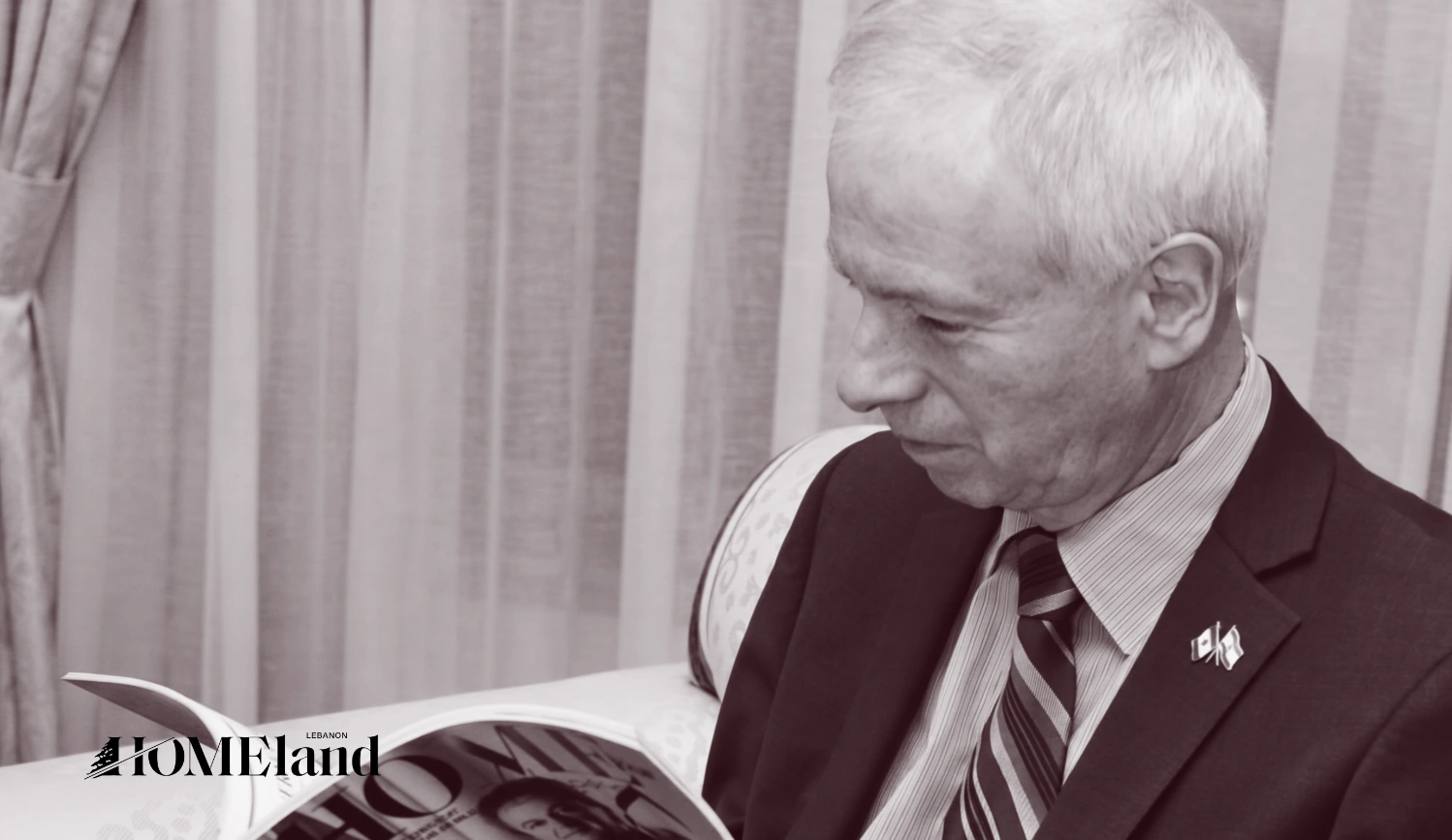
Interviewed by: Patricia Bitar Cherfan, Editor-in-Chief
Since the Universal Declaration of Human Rights, which was drafted by a team involving the Canadian scholar and human rights activist John Peter Humphreys and the Lebanese diplomat and philosopher Charles Malek, Canada and Lebanon have had a long standing relationship of common projects and mutual interests. Today, at approximately 200,000 members, the Lebanese community in Canada account for the largest ethnic Arab group, which has led to strong ties and solidarity between the two nations. Canada established diplomatic relations with Lebanon in 1954, when Canada deployed an “Envoy Extraordinaire” to Beirut. Today, Canada continues to show unwavering support for Lebanon and considers Lebanese to be model citizens of peace and acceptance of diversity, as Canada’s Minister of Foreign Affairs Stéphane Dion explains to HOMEland Lebanon in an exclusive interview during his recent diplomatic mission to Lebanon.
Prime Minister Trudeau said recently that Lebanon is an important part of Canada’s regional strategy. What role can Lebanon play alongside Canada to bring more stability and peace to the region?
Minister Dion: Lebanon must succeed – for the people of Lebanon but for the world as well. If your country does not succeed it is a tragedy for Lebanon, but for the region it will mean destabilization that will extend further. I say for the world because the world has a disease, which is distrust or xenophobia. It’s a negative mood you have everywhere now; communities that used to be friendly look to each other as a threat.
Canada proved to be a model of inclusion and diversity.
Minister Dion: Well, Canada succeeded by bringing together people of different religions and languages, different cultural references and so forth. Canada has a kind of responsibility to support Lebanon but we cannot do it for you; it is for you to do, the very definition of Canada is a country stronger because of its diversity. Prime Minister Trudeau has been elected with this message. He said, ‘Canadians if you elect us, you will not have less refugees, you will have more. If you elect us, we will say to the world that diversity is a strength, not a threat.’ The proof? Look at Canada. We want the same for Lebanon. If Lebanon can show that, it can prove that Canada was right! The world should follow the same path: no to xenophobia, no to distrust and yes to embracing diversity.
Is this your first time in Lebanon?
Miniter Dion: Yes. I have been in politics since twenty years and each time I thought I would visit it did not work out. It was not possible for me to come as Minister of Foreign Affairs before you have a president.
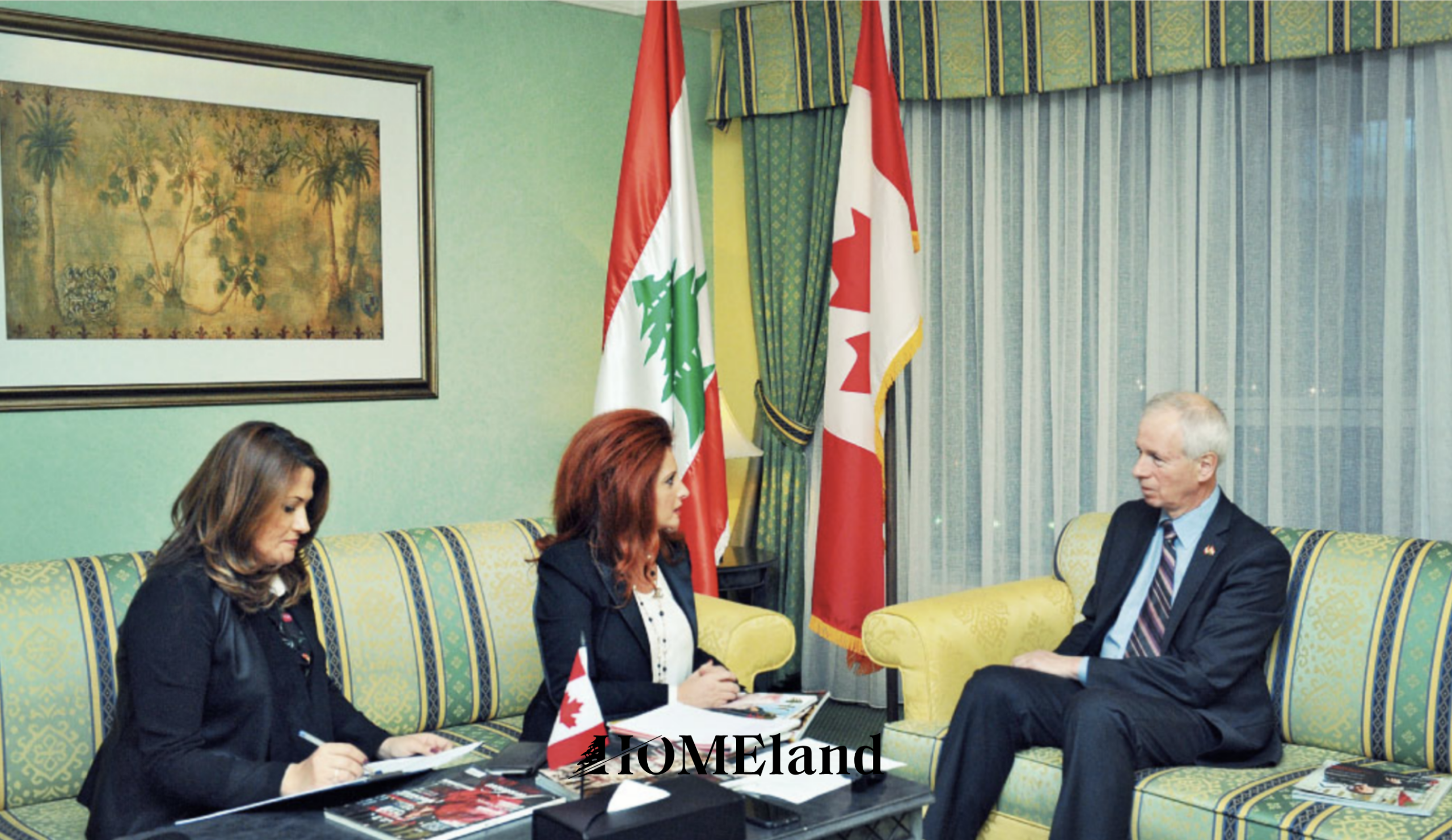
You have been a Member of Parliament of Canada for the constituency of Saint Laurent in Montreal. We also hear people calling it ‘Saint Liban.’
Minister Dion: Yes, it’s a nickname, because many Lebanese settled there initially. Actually, many Lebanese moved to Laval, a city on the other side of the river. I have with my delegation two Members of Parliament from Laval of Lebanese origin. We also have four Members of Parliament who have a Lebanese background, Mr. Marwan Tabbara, Mr. Ziad Aboultaif, Mrs. Eva Nassif and Mr. Fayçal El-Khoury.
You are elected in an electoral district with many Lebanese, was it emotional for you to make this journey to Lebanon?
Minister Dion: Yes, indeed. You had a very difficult history and precisely because of it, I think your youth is resisting the messages of hatred and mistrust. We need to support them. That is why some of the programs we are launching are about radicalization and empowering the youth.
Regarding women empowerment, we are very far behind in Lebanon. We have only four percent of MPs as women of which they are mostly ‘women in black’ replacing a lost husband or a family member who was once a politician.
Minister Dion: You know Prime Minister Trudeau is a feminist and has appointed half of his cabinet with women. I think it is the right thing to do. There is a sociological law, which says when women reach a third of an assembly or group you see a positive change in the culture of the group.
We will always be grateful to the way Lebanese were received in Canada, especially during the war. What have been the major contributions of the Lebanese diaspora to Canadian society, in your opinion?
Minister Dion: They have contributed tremendously. They are successful and many are bilingual and tri-lingual and are very well educated. They mix with the society and don’t create their own isolated ghetto. Lebanese have everything to be good Canadians.
In terms of practicality, do you see a direct flight available between Canada and Lebanon anytime soon?
Minister Dion: Yes, we would like that to have the Montreal to Beirut route back; we had discussion concerning the flights around six years ago and we were very close to signing the agreement but unfortunately it was canceled. It’s a matter of security where in North America the context is more difficult than in Europe for example. In due time the security issue will be resolved and we will have Montreal to Beirut flights back again. It will be a tremendous success.
There is a number of encouraging events and initiatives in Canada and Lebanon varying in size, seniority and impact, such as the ‘Cercle des écrivains libanais au Québec’ bridging the gap between Lebanese and Canadian writers or 331 Circular – initiative of the Central Bank of Lebanon. Do you see more roles like these between the two nations?
Minister Dion: Yes, for sure. In general, we want to strengthen the exchanges between Lebanon and Canada to support Lebanon, but also to support Canada through stronger relationship with Lebanon.
Thank you for taking out time from your short and busy diplomatic mission in Lebanon to speak to HOME.
Minister Dion: Thank you for the interview. I am happy to speak to your readers about the friendship between Canada and Lebanon.


 Signature Boutique