Dr. Moise Khayrallah’s Story
of HOMEcoming
08:45 PM
08:45 AM
RDU
North Carolina
21 Hours 25 Minutes
BEY
Kesserwan
Date
15NOV
Fight Code
NK042
Seat
32A
How a Diaspora Pioneer Reimagines
H O M E
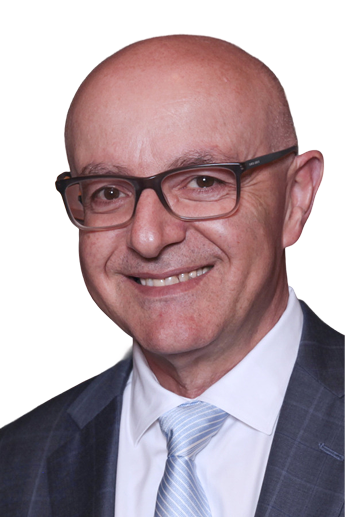
Dr. Moise Khayrallah did not retire, he revitalized by coming back HOME. Born in Lebanon and shaped in North Carolina.
Dr. Khayrallah built a formidable career in pharmaceutical innovation: six drugs on the market and a portfolio rich with entrepreneurial breakthroughs. From his days in Chapel Hill to leadership across biotech ventures like Emergo Therapeutics and Neuronex, he amassed wisdom and returned HOME with a mission.
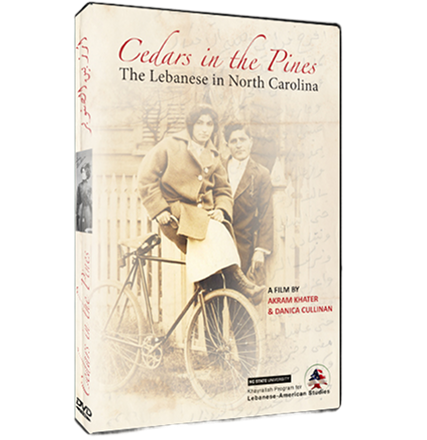
As founder of Lebanon & Beyond, Dr. Khayrallah expanded on his legacy with the Moise A. Khayrallah Center for Lebanese Diaspora Studies at NC State, a hub for diaspora research, exhibitions and digital archives. In 2012, the Khayrallah Center produced “Cedars in the Pines,” a documentary that aired on PBS stations * across the United States, chronicling more than a century of Lebanese immigration to North Carolina.
Yet, the heart of Dr. Khayrallah’s journey lies in the hills of Ghbaleh, Kesserwan, where he always called HOME. Here, he’s planting more than roots, he’s cultivating a community, Jouzouris: one where Lebanese abroad feel bonded to their heritage, and youth in Lebanon feel both empowered and connected to a global family.
On emigration, he reflects: “It’s okay for Lebanese to leave. What matters is that they remain connected. It’s fine to leave Lebanon not out of desperation, but for opportunities.”
He believes, education, not politics or economy, stands at the center of Lebanon’s renewal. His faith isn’t in his generation, it’s in the next. “I’ve given up on our generation; even the most enlightened, we are still trapped in boxes … but my HOPE remains in the youth,” he tells HOME Magazine.
Dr. Khayrallah always believed in the Lebanese Diaspora and regarded it as a source of fascination everywhere he encountered it. On a visit to Argentina, he was struck by the depth of Lebanese roots there. Even in Patagonia, the southern region famed for its glaciers and sweeping landscapes, he discovered towns where Lebanese families had settled more than a century ago.
In Ushuaia – el fin del mundo, the southernmost city on earth – he found traces of Lebanese heritage. Some family HOMEs have been preserved as museums, testimony to a community that carried its identity to the very edge of the world.

In 2024, Dr. Khayrallah returned to Lebanon to nurture that identity. He founded Lebanon & Beyond, an initiative rooted in the conviction that the bond between Lebanon and its diaspora can be more than nostalgic. It can be transformative.
Lebanon & Beyond’s mission is clear: to strengthen the ties between Lebanon and its global diaspora for the betterment of both. Its work extends to education, equipping the next generation with the skills and educators with a vision for tomorrow. It also safeguards the land and fosters opportunities across the Keserwan region.
Too often, the diaspora has been seen as a source of remittances or short visits, its ties to Lebanon framed in transactional terms, valued only as financial lifelines. Dr. Khayrallah challenges that view. “Banking on the diaspora,” he says, “misses the point.” For him, the diaspora is not a ledger of exchanges but a network of roots, jouzour, connections that reach deep, sustain communities, and endure across generations.
For HOMEland Magazine, the diaspora has always been more than a source of remittances or short visits. Too often, ties have been framed in transactional terms, useful only as financial lifelines. Dr. Khayrallah challenges that narrative “Banking on the diaspora,” he insists. For him, the diaspora is not a ledger of exchanges but a network of roots “Jouzour”: connections that grow deep, sustain communities, and endure across generations.


Jouzour: Roots in Action
If Lebanon & Beyond is the vision, Jouzour is the flagship program that puts it into practice.
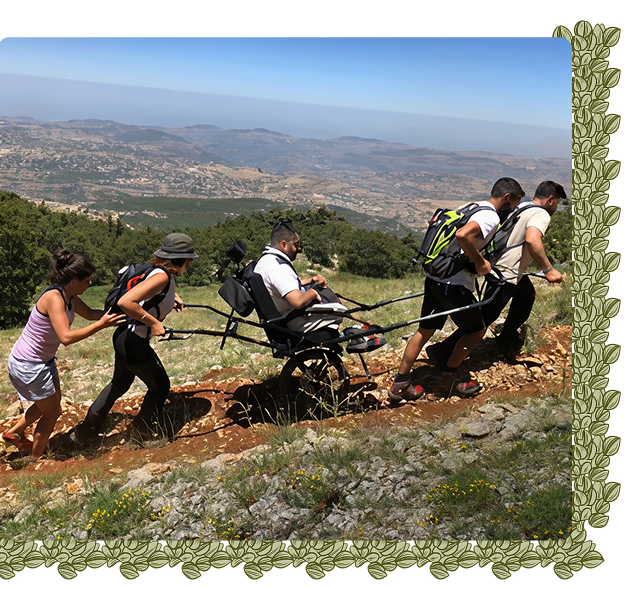
The idea was simple, but radical: invite young people from the diaspora, ages 20 to 28 to Lebanon not as tourists but as active participants in the country’s daily life.
For five immersive weeks, they would work alongside NGOs, experience the academic setting of AUB, LAU and University of Balamand, and witness firsthand the major challenges shaping Lebanon today. They would live in the country, connect with its communities, and take part in projects that touch on Lebanon’s most pressing challenges: environmental conservation, historical preservation, sustainable agriculture, human rights education, women’s issues, disability rights, rural development and social work.
The program was built on the conviction that by stepping into the country’s realities, participants would discover a Lebanon beyond the clichés.
This is not about rooftop parties, seaside sunsets, or kibbeh tastings. It is a different way of connecting with the country. It is to be introduced to Lebanon’s complexities in an honest, layered and lasting way. It is to create an alumni community, the Jouzouris, that lifetime connection between Lebanon and its diaspora across years and generations.
Interest in the inaugural year was remarkable. More than 100 young men and women from 12 different countries applied. The team interviewed about 70 candidates before selecting 30 finalists, of whom 20 confirmed their participation. For months beforehand, they were meeting virtually every other week, preparing, exchanging, and nurturing a bond with one another and with Lebanon itself. Then war struck ,
Interest in the inaugural year was remarkable. More than 100 young men and women from 12 different countries applied. The team interviewed about 70 candidates before selecting 30 finalists, of whom 20 confirmed their participation. For months beforehand, they were meeting virtually every other week, preparing, exchanging, and nurturing a bond with one another and with Lebanon itself. Then war struck ,
Ultimately, Jouzour is about rekindling love for Lebanon in a way that is honest, layered, and lasting. As Dr. Khayrallah says,
“We are doing this, and Lebanon will do the rest. They will fall in love.”
The program’s goal is not a one-time visit but a lifetime connection. Dr. Khayrallah sees Jouzouris
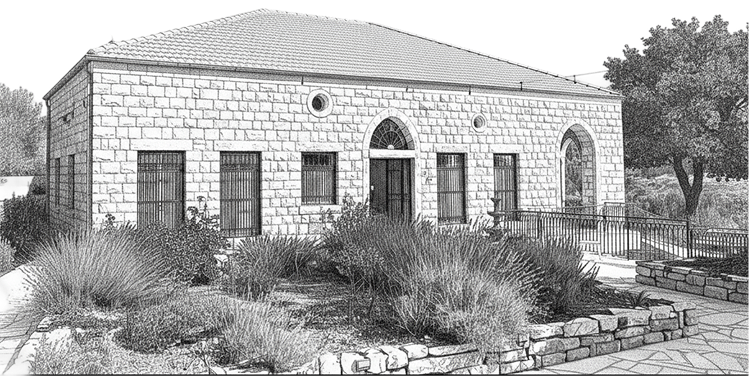
The HOMEland for Dr. Moise Khayrallah is Ghbaleh village, turned into a project of its own, perched on the mountainside of Keserwan, is a living metaphor for what roots Jouzour stand for: heritage preserved and renewed. Nestled in a traditional stone house overlooking the valley, this place is more than his family HOME, it is a sanctuary resisting the concrete invaders.
With every new acquisition of land, the mission is clear: protect the view, safeguard the village, and honor nature’s balance.
Several endeavors are already taking shape here. An oil press, the first of its kind in the Keserwan area, is completed. More than a facility, it represents a step toward circular economy: “the hope is that having a local press will encourage others to plant olive trees, knowing the cycle can remain close to HOME,”
Dr. Khayrallah says.
Other initiatives are still in earlier stages, like the vision of an education center that would welcome children from three to eighteen, serving as a living museum of the environment. And in the Ghbaleh quarter known as Raoudes, an open-air theater of stone seats shaded by trees, will one day welcome 120 people in the cool mountain breeze. Dr. Khayrallah hopes to call it Angela’s Stage.
The name of Raoudes has no certain etymology, whether echoing Rhodes in Greece or something more local, what matters is what it has become: a place where everything converges.
The philosophy guiding Raoudes is simple yet profound: to teach respect for the land, to resist exploitation, to understand its possibilities, and to refuse practices that poison its future. Composting replaces dumping. Rivers are kept free from debris.
Waste oil, zibar, the dark residue from olive pressing, is never thrown into the streams because,
to poison the land is to invite it to poison us in return.
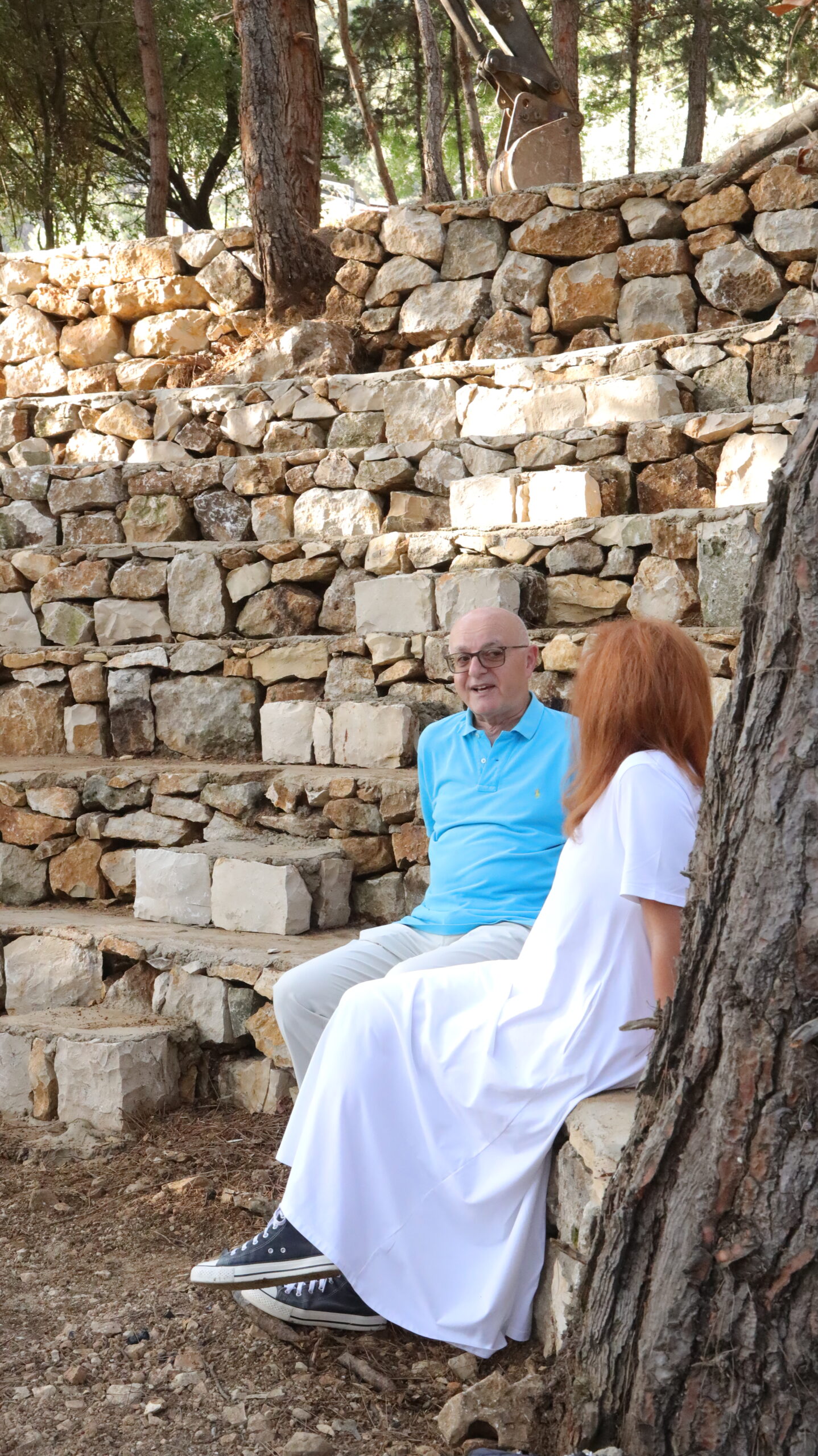
As we spoke, I suggested how meaningful it could be if the village school paused classes during the olive harvest, letting children join their families in the groves.
He smiled, the idea resonated.
Such rhythms once shaped life in the Koura region, famed for its olives. Reviving them here would return learning to its truest form: knowledge rooted in experience, where the soil teaches as much as the books.
Jana Education Conference in November
This local philosophy, that education must be rooted in life, in community, and in respect for the land, extends outward from Ghbaleh to the national stage. In November, Dr. Khayrallah is convening the Jana Education Conference at the American University of Beirut, a gathering devoted to rethinking the future of education in an age of artificial intelligence.
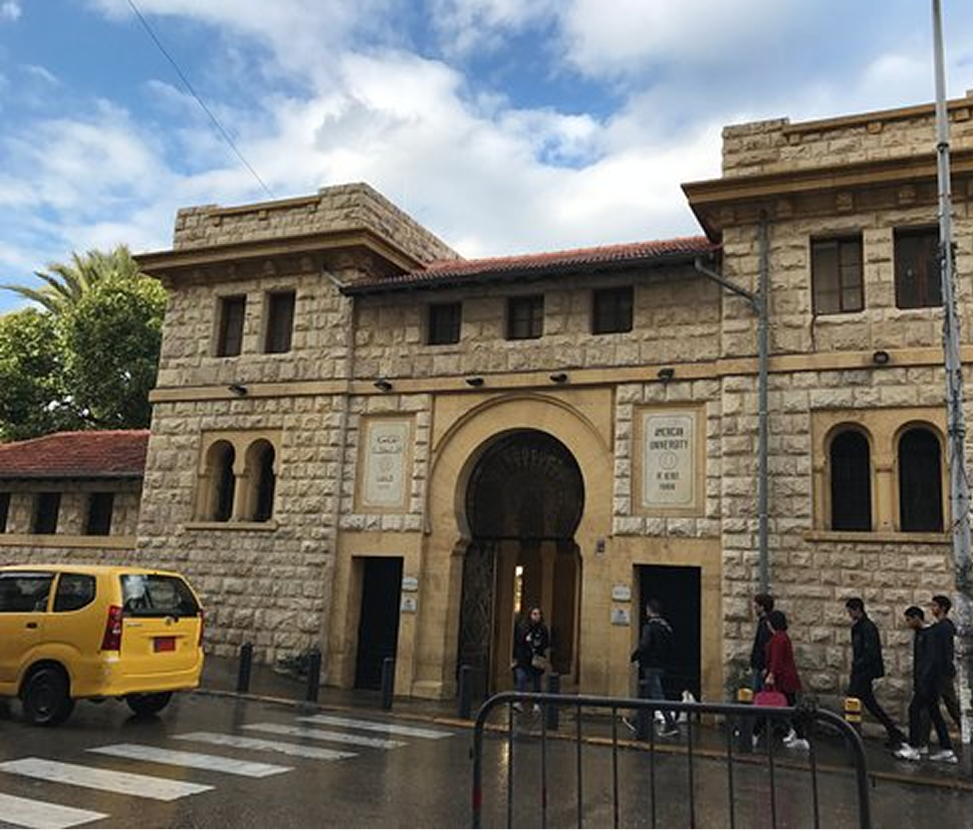
The idea is both urgent and ambitious: to bring together around 70 to 80 people — philanthropists, educators, and officials to ask fundamental questions. What will a school look like in 2060? How can disadvantaged schools be supported in a system where inequity runs deep?
The goal is clear: to ensure schools are not bound by their limited resources, especially at a time when collaboration and technology can unlock new possibilities. Already, Dr. Khyarallah points to examples: Ghazir’s public school students or Madrasat al-Rehban al-Telyan in his own village, with its 250 students striving for a fair chance, potentially using the labs of LAU.