When I was young, flowers seemed to play a big part in my life.
In the small village in northern Lebanon where my family is from, they were everywhere in the spring and summer. I loved the wild flowers that covered all the empty fields. One of my favorite things to do when I was very little was go on a trip to pick flowers with my godmother.
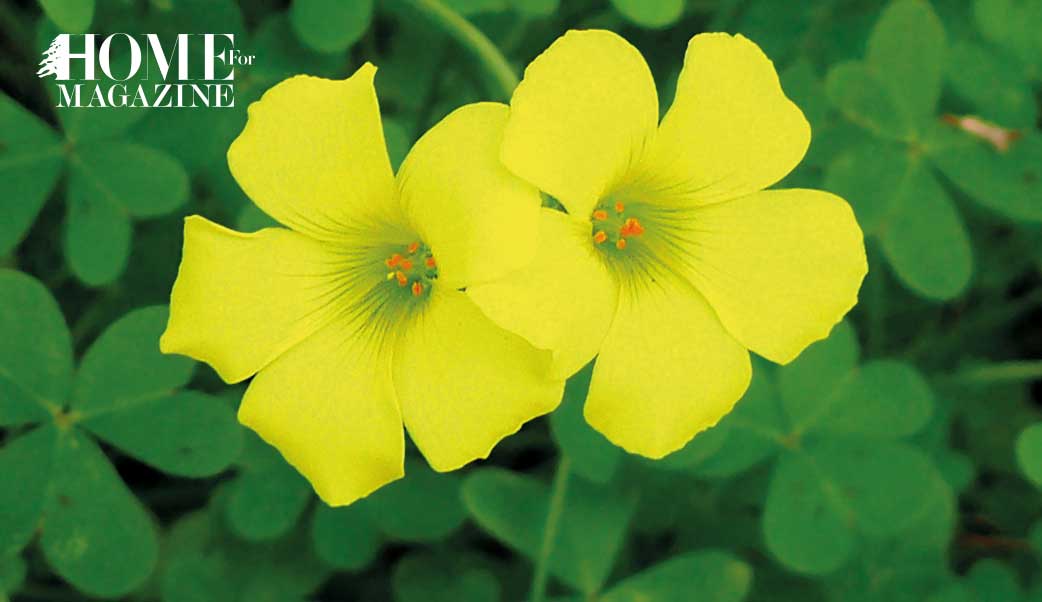
There were the wild corn poppy, the yellow sour “hamaydah,” that you could drink the nectar out of, and the purple “Virgin Mary,” all growing and spreading freely in between olive and pine trees.
On our stone balcony was my grandmother’s favorite flower. I don’t know if I came up with this conclusion myself as a young child, since she passed away when I was 7, or if I later learned it from my father who made sure that the flower shrub always remained intact.
I loved those flowers too. They were quite small, each smaller than my pinky, long and hollow, like miniature test tubes made of one round petal that swirled out at the top. It became a game to put one flower inside the other, making long lines of red. This game developed into a skill later on, though I don’t know who it was that taught me. I was given a needle and a piece of fine string and was told to thread my line of red flowers through them (being very careful with the needle), turning it into a beautiful necklace. Sometimes I made earrings and bracelets. I made them all the time. Or perhaps I only made them a few times, but the memory persists so strongly that I’ve come to think it was a more common event. I might have been 5 or 6 or 8 years old.
As I grew older, the house was remodeled, the plant was moved to protect it, and I eventually moved away to the United States, – those flowers became firmly implanted in the past.

It was like they didn’t exist anywhere else, and they certainly, in my mind, didn’t exist outside my family’s village.
Imagine my surprise when, around twenty or so years later, I would find the red flowers in a large cement pot in a parking lot in, of all places, the small city of Emeryville, California, just across the magnificent Bay Bridge from San Francisco.
It was a regular morning. I had just gotten married and moved out further west from my starting point in Beirut, leaving the east coast of the United States for San Francisco. I took our very American dog for a morning walk, and there they were: the tiny red flowers amidst the green leaves of their shrub, in a neat square cement flower pot that was filled to the rim with dark brown soil.
After one glance at the cement flower holder, I stopped dead in my tracks.
How could a “merjeneh” plant be here? I had forgotten about it, really, until the red tubular flowers jumped out at me, like a jack in a box.
This wasn’t just a similar flower, or a shrub that looked a lot like the one in my memories. This was my grandmother’s “merjeneh” plant, down to the last detail, and they had found me when I was very far away from HOME – almost as far as you can get geographically.
Some Google searching much later on would tell me it is the Russelia equisetiformis, more commonly known as the Firecracker Plant, a pretty common vine you can find across the U.S. and the world.
A few months later, after moving to Santa Monica, just outside of Los Angeles, a similar phenomenon happened. At first, the environment seemed so foreign to me, as I adapted to the trees that looked like they were from outer space and plants that I had never seen from the Far East. But when the newness of it all settled, I began to discover remarkable things every morning while I walked my dog – or they would find me.
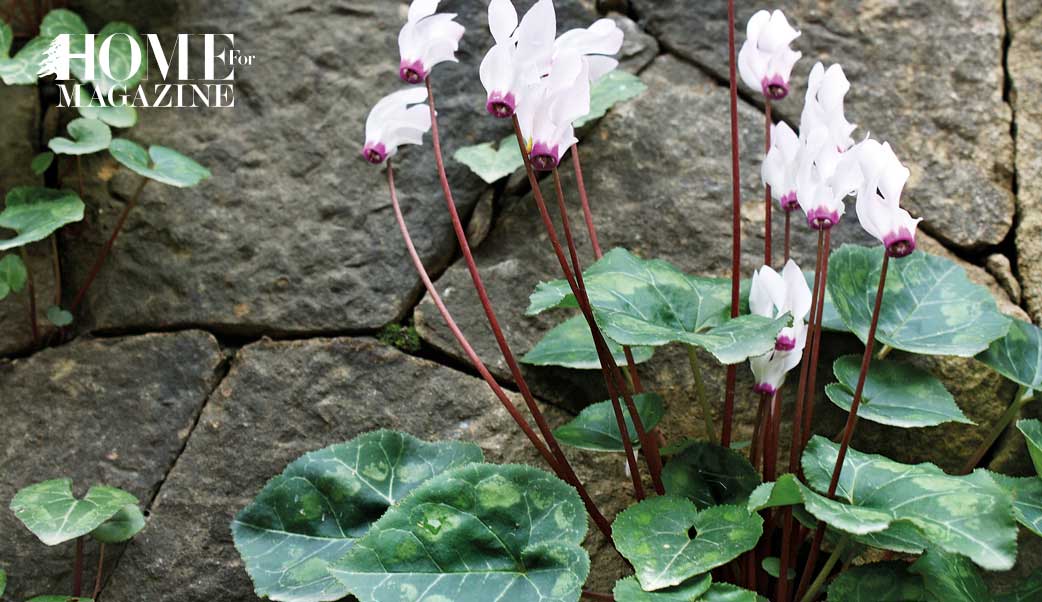
In February, the sidewalks in my neighborhood were lined with the yellow “hamayda.” Why had I assumed those only existed in northern Lebanon too? Then, in neat planters outside of picturesque HOMEs, I found my “Virgin Mary” purple flowers, not to mention the pine trees that lined the park next to my new HOME. It wasn’t a foreign land, it was all familiar.
After the initial surprise of finding these things in two very different places – Lebanon and California – it actually made perfect sense. HOME, just like the firecracker plant, doesn’t exist in just one place, or one plot of land, it spreads around the world, and you can find it anywhere.

HOMEland Magazine
We firmly believe that the internet should be available and accessible to anyone, and are committed to providing a website that is accessible to the widest possible audience, regardless of circumstance and ability.
To fulfill this, we aim to adhere as strictly as possible to the World Wide Web Consortium’s (W3C) Web Content Accessibility Guidelines 2.1 (WCAG 2.1) at the AA level. These guidelines explain how to make web content accessible to people with a wide array of disabilities. Complying with those guidelines helps us ensure that the website is accessible to all people: blind people, people with motor impairments, visual impairment, cognitive disabilities, and more.
This website utilizes various technologies that are meant to make it as accessible as possible at all times. We utilize an accessibility interface that allows persons with specific disabilities to adjust the website’s UI (user interface) and design it to their personal needs.
Additionally, the website utilizes an AI-based application that runs in the background and optimizes its accessibility level constantly. This application remediates the website’s HTML, adapts Its functionality and behavior for screen-readers used by the blind users, and for keyboard functions used by individuals with motor impairments.
If you’ve found a malfunction or have ideas for improvement, we’ll be happy to hear from you. You can reach out to the website’s operators by using the following email
Our website implements the ARIA attributes (Accessible Rich Internet Applications) technique, alongside various different behavioral changes, to ensure blind users visiting with screen-readers are able to read, comprehend, and enjoy the website’s functions. As soon as a user with a screen-reader enters your site, they immediately receive a prompt to enter the Screen-Reader Profile so they can browse and operate your site effectively. Here’s how our website covers some of the most important screen-reader requirements, alongside console screenshots of code examples:
Screen-reader optimization: we run a background process that learns the website’s components from top to bottom, to ensure ongoing compliance even when updating the website. In this process, we provide screen-readers with meaningful data using the ARIA set of attributes. For example, we provide accurate form labels; descriptions for actionable icons (social media icons, search icons, cart icons, etc.); validation guidance for form inputs; element roles such as buttons, menus, modal dialogues (popups), and others. Additionally, the background process scans all the website’s images and provides an accurate and meaningful image-object-recognition-based description as an ALT (alternate text) tag for images that are not described. It will also extract texts that are embedded within the image, using an OCR (optical character recognition) technology. To turn on screen-reader adjustments at any time, users need only to press the Alt+1 keyboard combination. Screen-reader users also get automatic announcements to turn the Screen-reader mode on as soon as they enter the website.
These adjustments are compatible with all popular screen readers, including JAWS and NVDA.
Keyboard navigation optimization: The background process also adjusts the website’s HTML, and adds various behaviors using JavaScript code to make the website operable by the keyboard. This includes the ability to navigate the website using the Tab and Shift+Tab keys, operate dropdowns with the arrow keys, close them with Esc, trigger buttons and links using the Enter key, navigate between radio and checkbox elements using the arrow keys, and fill them in with the Spacebar or Enter key.Additionally, keyboard users will find quick-navigation and content-skip menus, available at any time by clicking Alt+1, or as the first elements of the site while navigating with the keyboard. The background process also handles triggered popups by moving the keyboard focus towards them as soon as they appear, and not allow the focus drift outside it.
Users can also use shortcuts such as “M” (menus), “H” (headings), “F” (forms), “B” (buttons), and “G” (graphics) to jump to specific elements.
We aim to support the widest array of browsers and assistive technologies as possible, so our users can choose the best fitting tools for them, with as few limitations as possible. Therefore, we have worked very hard to be able to support all major systems that comprise over 95% of the user market share including Google Chrome, Mozilla Firefox, Apple Safari, Opera and Microsoft Edge, JAWS and NVDA (screen readers).
Despite our very best efforts to allow anybody to adjust the website to their needs. There may still be pages or sections that are not fully accessible, are in the process of becoming accessible, or are lacking an adequate technological solution to make them accessible. Still, we are continually improving our accessibility, adding, updating and improving its options and features, and developing and adopting new technologies. All this is meant to reach the optimal level of accessibility, following technological advancements. For any assistance, please reach out to