
LDE Lebanese Diaspora Forum
Over 1,350 expatriates, 73 countries, one Beirut Pact: inside the 2015 Lebanese Diaspora Energy Conference — and the new push for Lebanese schools abroad.
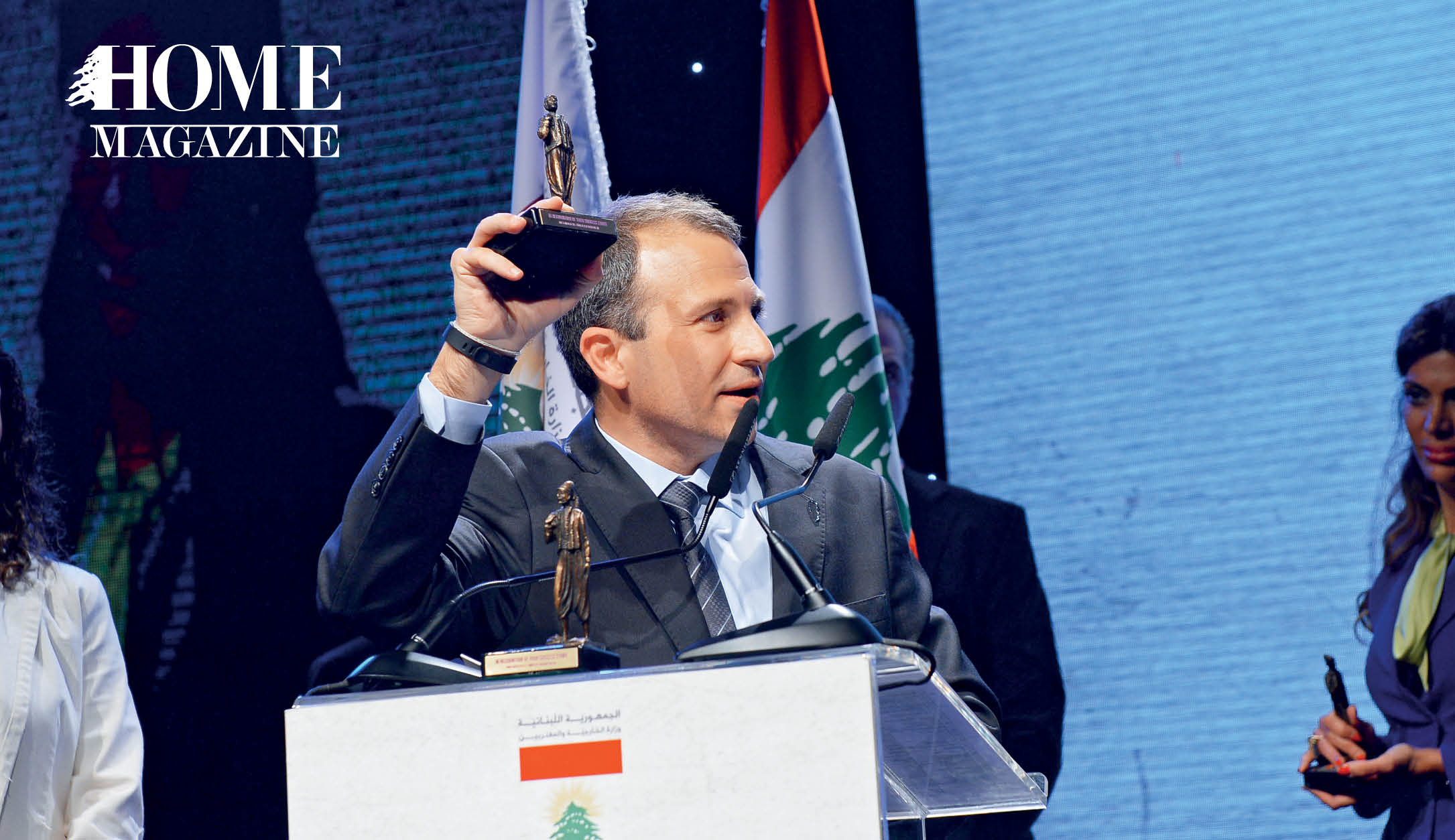
Hosted by the Lebanese Foreign Affairs and Emigrants Ministry, the 2015 Lebanese Diaspora Energy (LDE) Conference was held, for the second consecutive year, from May 21 to May 23 to strengthen the bonds between Lebanese residents and emigrants, who praised, worldwide, their successes in all fields.
The LDE is for these expatriates an opportunity to return to their roots and develop a valuable cultural and social connection with their HOMEland, allowing them to take part in the foreign policy-making and economic welfare of the country.
This forum being the initiative of Foreign Minister Gebran Bassil, LDE was held under his high patronage. Minister Bassil delivered an opening speech confirming that our passion for Lebanon is the key to our success, in this yearly summit that gathered this year more than 1,350 expatriates from 73 countries – community leaders in numerous sectors from all over the world. Bassil stressed the idea that Lebanese expatriates are Lebanon’s apostles abroad, and they are now meeting all together, in order to live their “Lebanity,” a word that narrows down their civilizations and cultures. Moreover, he promised that diaspora issues would remain outside of any political and sectarian matters. “We are the Lebanese doers,” he said while urging the Lebanese Parliament to draft a law that grants nationality to additional members of the diaspora, as well as to introduce e-registration and e-voting.
The opening ceremony was hosted by many personalities such as Mr. Thomas Barrack, an American real estate investor and chief executive officer of Colony Capital, a New York Stock Exchange Company. He expressed his belonging to Lebanon by saying, “We have extraordinary DNA. Each one is a pearl. Now it is time for us all to make a beautiful necklace”. Dr. Nassim Taleb, who is a researcher in practical, mathematical and philosophical problems in probability, and who is currently a professor at New York University’s school of engineering, also expressed his commitment to Lebanon and said that our strength is in our ability to deal with mess. Thus, the conference was crowded by many other touching speeches, like the one of Mr. Michael Louis who said, “The future is not dictated, it is invented.
As politicians, we should listen more and speak less. We are born with the instinct to love but we learn to hate.” Louis, who at the start of South Africa’s Nelson Mandela era in 1994 became an MP in the Western Cape Parliament and assisted in drafting the national and provincial constitutions, preceded Dr. Philip Salem, a world- renowned oncologist in Houston and recipient of many awards worldwide for his contributions to cancer research. “We came from all over the world to embrace Lebanon,” he said while delivering his speech, adding that we deserve Lebanon only when we consecrate it. Moreover, Hon. Mac Harb, who moved to Canada in 1973 where he served as a member of parliament and as a senator is now working as a parliamentary expert in capacity building, trade and investment.
He voiced his attachment to his mother country saying “Lebanon is our HOME, it is nice to be HOME.” After the keynote speakers delivered their opening speeches, four sessions were held on the first day, including one about success stories of Lebanese abroad in which Mr. Samer Khoury, executive vice chairman of Consolidated Contracters Company CCC expressed his heartfelt devotion to Lebanon by saying: “Ana moutayyam bi baladi, meaning “I’m in love with my country.” The three other sessions covered diaspora projects by the Foreign Ministry, diaspora facts (studies and information, opportunities and possibilities), diaspora diplomacy (the restoration of the Lebanese nationality and registration) and finally economic diplomacy (expatriates and the economy).
On the second day, the LDE Conference was split up into 12 sectorial meetings, including health care, banking, engineering, agriculture, media, arts, education, industry, oil, information and communication technology, tourism, politics, international organizations and diaspora institutions. At the closing ceremony, Hon. Steve Bracks, a former Australian politician, party leader and Victoria’s 44th premier, said that prosperity could not be achieved without peace and security, and peace and security could not be achieved without unity. Last but not least, Hon. Fernando Capez, holder of a PhD in law, justice attorney in the prosecutor office and writer of several books about criminal law, expressed his great emotions for visiting his mother country for the very first time.
Finally, at the conclusion of the sectorial meetings, an evening gala was held at Casino du Liban, featuring the Lebanese-Canadian guest singer Massari and many others. On the third day was a field trip to Batroun, which included a visit to the old markets of the coastal town and a reception at the House of Lebanese Emigrant which was launched during last year’s LDE Conference (page 197).
Finally, the conference ended with the announcement of the Beirut Pact, pledging loyalty and allegiance to Lebanon. “We are Lebanon in the world, we are the world in Lebanon. We are Lebanon.”
Thus, the purpose of the LDE is forging deeper ties between Lebanon and its expatriates, who have spread an intellectual and prestigious image of their country worldwide. Every year, the commitment to the LDE’s purposes is renewed by continuous efforts to regather Lebanese expatriates in conferences.
Lebanon’s emigrants will be fulfilling their pledges next year on May 5, 6 and 7 in the third LDE Conference held by the Foreign Ministry. The LDE is the incarnation of an annually renewed promise for a “blossoming” Lebanon.
The French have had great success with establishing the lycee across the globe. Its educational system is found in most countries and capitals of the world. It plays a major role in spreading the culture, language and values of France, as well as supporting the mobility of French communities and the international development of companies.
Now it’s Lebanon’s Turn.
Lebanon’s Education Ministry and Foreign Ministry have established a process to create Lebanese Schools in the Diaspora (LDS). Like its French counterpart, the LDS system will be an asset to Lebanese in the diaspora and at HOME alike. It will promote the learning of Lebanese language, culture and values, while creating opportunities for Lebanese citizens.
At the same time, it will promote high quality education.
This plan grew from recognition of the needs of Lebanese living outside Lebanon, said Mr. Elie Naim, advisor to the Education Minister in an interview with HOME for Summer magazine. “We started with the idea that we need to help third- and fourth-generation Lebanese abroad to sustain Lebanese culture and Arabic language, and give their children a sense of Lebanese identity,” said Naim. “We also recognized that for some of these families, having the Lebanese baccalaureate would have practical benefits.”
How it Works
The new mechanism for certifying LDS schools provides three tracks for school certification:
Certification for private schools offering the Lebanese curriculum.’A “twin school” program for schools both inside and outside Lebanon to partner in providing both international and Lebanese certificates
Establishing Lebanese cultural centers.
For each of these three scenarios, the two ministries have promised a short and easy process, establishing a legal and sustainable path for acquiring Lebanese certification, said Naim.
An Asset for Diaspora Families
When Lebanese families migrate to the Americas – Canada, the United States and Latin America – they almost never come back, said Naim.
Still, they want their children to know about Lebanese culture and customs.
For some parents, making sure the children learn Arabic is important.
“Once children are three or four, and start school, they are completely immersed in the local culture. Lebanese language and culture become much harder to pass on to them,” he said.
Schools can play a big role in maintaining a cultural identity. In school, children as young as three sing simple songs that instill pride in their heritage and carry cultural values.
They begin reading the alphabet. In a Lebanese school, they would be exposed to the language, history, heroes and norms of Lebanon that they may otherwise miss.
By providing means for acquiring the national certificate, students have an incentive to learn the Arabic language and the general curriculum in order to enter the Lebanese University. “By learning a little bit more than they would in another school system, they can gain the valuable national certificate,” said Naim.
“Many countries in the world recognize the Lebanese certificate as an indicator of high quality education, giving its holders advantages in the job market,” said Naim.
Creating Opportunities for Lebanese Abroad
Another group of beneficiaries of the LDS will be Lebanese teachers. The LDS schools will create new jobs and career opportunities for educators interested in working abroad. Graduates in education will find more jobs available to them as the LDS system develops.
For Lebanese who work abroad, or those who would like to, the absence of a strong school system, particularly a Lebanese system, could make them think twice about taking their families with them.
Should they return to Lebanon, their children will struggle with the transition.
Or, even worse, they may have to settle for an education of lower quality. The development of LDS schools in various countries, particularly in Africa, will make it easier for Lebanese to pursue job opportunities outside Lebanon and allow families to stay together.
As hubs for Lebanese communities around the world, LDS schools will also serve to bring Lebanese together, wherever they are. Schools become a networking center for the community as Lebanese parents meet each other at school functions. Through the schools, they will strengthen their ties, not only to their culture and language, but to each other.
 Signature Boutique
Lebanon, in your inbox


HOMEland Magazine
We firmly believe that the internet should be available and accessible to anyone, and are committed to providing a website that is accessible to the widest possible audience, regardless of circumstance and ability.
To fulfill this, we aim to adhere as strictly as possible to the World Wide Web Consortium’s (W3C) Web Content Accessibility Guidelines 2.1 (WCAG 2.1) at the AA level. These guidelines explain how to make web content accessible to people with a wide array of disabilities. Complying with those guidelines helps us ensure that the website is accessible to all people: blind people, people with motor impairments, visual impairment, cognitive disabilities, and more.
This website utilizes various technologies that are meant to make it as accessible as possible at all times. We utilize an accessibility interface that allows persons with specific disabilities to adjust the website’s UI (user interface) and design it to their personal needs.
Additionally, the website utilizes an AI-based application that runs in the background and optimizes its accessibility level constantly. This application remediates the website’s HTML, adapts Its functionality and behavior for screen-readers used by the blind users, and for keyboard functions used by individuals with motor impairments.
If you’ve found a malfunction or have ideas for improvement, we’ll be happy to hear from you. You can reach out to the website’s operators by using the following email
Our website implements the ARIA attributes (Accessible Rich Internet Applications) technique, alongside various different behavioral changes, to ensure blind users visiting with screen-readers are able to read, comprehend, and enjoy the website’s functions. As soon as a user with a screen-reader enters your site, they immediately receive a prompt to enter the Screen-Reader Profile so they can browse and operate your site effectively. Here’s how our website covers some of the most important screen-reader requirements, alongside console screenshots of code examples:
Screen-reader optimization: we run a background process that learns the website’s components from top to bottom, to ensure ongoing compliance even when updating the website. In this process, we provide screen-readers with meaningful data using the ARIA set of attributes. For example, we provide accurate form labels; descriptions for actionable icons (social media icons, search icons, cart icons, etc.); validation guidance for form inputs; element roles such as buttons, menus, modal dialogues (popups), and others. Additionally, the background process scans all the website’s images and provides an accurate and meaningful image-object-recognition-based description as an ALT (alternate text) tag for images that are not described. It will also extract texts that are embedded within the image, using an OCR (optical character recognition) technology. To turn on screen-reader adjustments at any time, users need only to press the Alt+1 keyboard combination. Screen-reader users also get automatic announcements to turn the Screen-reader mode on as soon as they enter the website.
These adjustments are compatible with all popular screen readers, including JAWS and NVDA.
Keyboard navigation optimization: The background process also adjusts the website’s HTML, and adds various behaviors using JavaScript code to make the website operable by the keyboard. This includes the ability to navigate the website using the Tab and Shift+Tab keys, operate dropdowns with the arrow keys, close them with Esc, trigger buttons and links using the Enter key, navigate between radio and checkbox elements using the arrow keys, and fill them in with the Spacebar or Enter key.Additionally, keyboard users will find quick-navigation and content-skip menus, available at any time by clicking Alt+1, or as the first elements of the site while navigating with the keyboard. The background process also handles triggered popups by moving the keyboard focus towards them as soon as they appear, and not allow the focus drift outside it.
Users can also use shortcuts such as “M” (menus), “H” (headings), “F” (forms), “B” (buttons), and “G” (graphics) to jump to specific elements.
We aim to support the widest array of browsers and assistive technologies as possible, so our users can choose the best fitting tools for them, with as few limitations as possible. Therefore, we have worked very hard to be able to support all major systems that comprise over 95% of the user market share including Google Chrome, Mozilla Firefox, Apple Safari, Opera and Microsoft Edge, JAWS and NVDA (screen readers).
Despite our very best efforts to allow anybody to adjust the website to their needs. There may still be pages or sections that are not fully accessible, are in the process of becoming accessible, or are lacking an adequate technological solution to make them accessible. Still, we are continually improving our accessibility, adding, updating and improving its options and features, and developing and adopting new technologies. All this is meant to reach the optimal level of accessibility, following technological advancements. For any assistance, please reach out to
