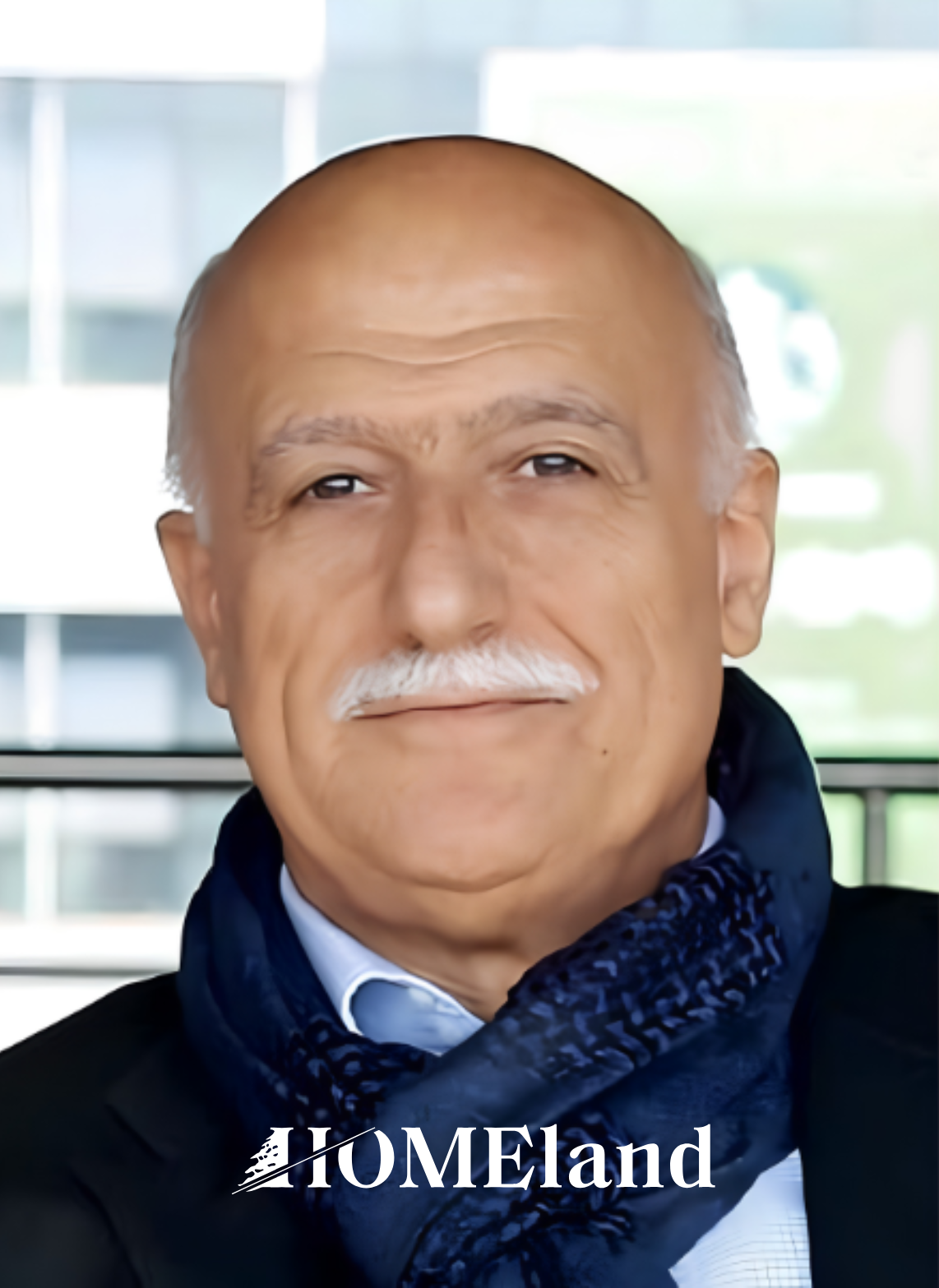
From Chakra to the world, Arab Hoballah, chief of the Sustainable Consumption and Production branch of UNEP, has become a global citizen. Hoballah left HOME with a collection of cultural values.
“I left Lebanon with a group of values and a sense of community; we didn’t differentiate between a Muslim and a Christian back then; we were Lebanese before anything else,” says Hoballah.
“Today, I am a world citizen: I am Lebanese, Senegalese, French, Columbian… I don’t feel like a tourist wherever I go, but still put Lebanon first in all my projects and try to grab every opportunity to do something for HOME.”
“Our greatest weakness is that we tend to look at Lebanon as a sum of communities rather than a country with a firm commitment to Lebanese citizenship”
WORKING WITH THE UNITED NATIONS
Hoballah joined the United Nations Environment Program in April 1999. According to him, working with the U.N. is bidirectional. “The UN. offers you a platform where you learn how to serve others at a global level and thus you become an international public servant. On the other side, you become an added value to the UN. with your multidisciplinary and multicultural package,” says Hoballah. “Born in Lebanon, raised in Senegal and educated in France allowed me to understand some issues more than other colleagues because it was very easy for me to work with almost all cultures and religions without finding any difficulties, while others had to put an effort to do it,” added Hoballah.
With Lebanon on his mind, Hoballah wanted to establish an institution in Beirut. “After meeting the public officials I decided that I cannot continue for their disillusion was: ‘Who is there for me and not for the country.’ So I decided to put the responsibility on myself and say that I failed.”
“I lost hope to do anything in Lebanon because my mentality doesn’t match the local mentality. When it comes to me, I wouldn’t even do a favor for my son if he’s not the most qualified for a job,” adds Hoballah.
NOTION OF LEBANESE CITIZENSHIP
Hoballah believes that the Lebanese lifestyle is unique and it’s the most comparative advantage Lebanese citizens have over other societies. “When we are together we have this common approach to life which we cannot find people coming from different regions of the world. So we should find a way to make this lifestyle the base of the Lebanese citizenship,” says Hoballah. “Unfortunately, our greatest weakness is that we tend to look at Lebanon as a sum of communities rather than a country with a firm commitment to Lebanese citizenship,” adds Hoballah.
Considering Lebanon a melting pot, Hoballah urges the diaspora to put back the different perspectives they obtained from various countries in this pot to transcend differences with the Lebanese way of life. For her [sic], the roots of Lebanese citizenship are still present, however they have to be strengthened by rising above sectarianism, as well as tribal and family mentality.
“Lately, after a presentation I had in Sao Paulo, people started queuing to ask me questions, three of them were running first, they were Lebanese, and you could see that they had something in common, they were eager to say that they are Lebanese,” says Hoballah.
ON SUSTAINABILITY
According to Hoballah, sustainability is not a notion but a process in which citizens can improve the quality of their lives by using the resources that are available in a more efficient manner. “Sustainability is oriented around resource efficiency: this means do more and better with less,” explains Hoballah.
“I am not telling people don’t consume or produce, but I am asking them to produce and consume more efficiently,” asserts Hoballah. When asked about his best project so far, Hoballah chose 10YFP (Ten Years Framework of Programs on Sustainable Consumption and Production). The aim of this project is to provide developing countries with practical and financial assistance to boost cooperation with other countries.
For more information visit theunep.org
HOMEland
Coming Soon
HOMEland Events & Collaborations
Coming Soon
 Signature Boutique