


HOMEland THEMES
Coming Soon
HOMEland Events & Collaborations
Coming Soon
 Signature Boutique

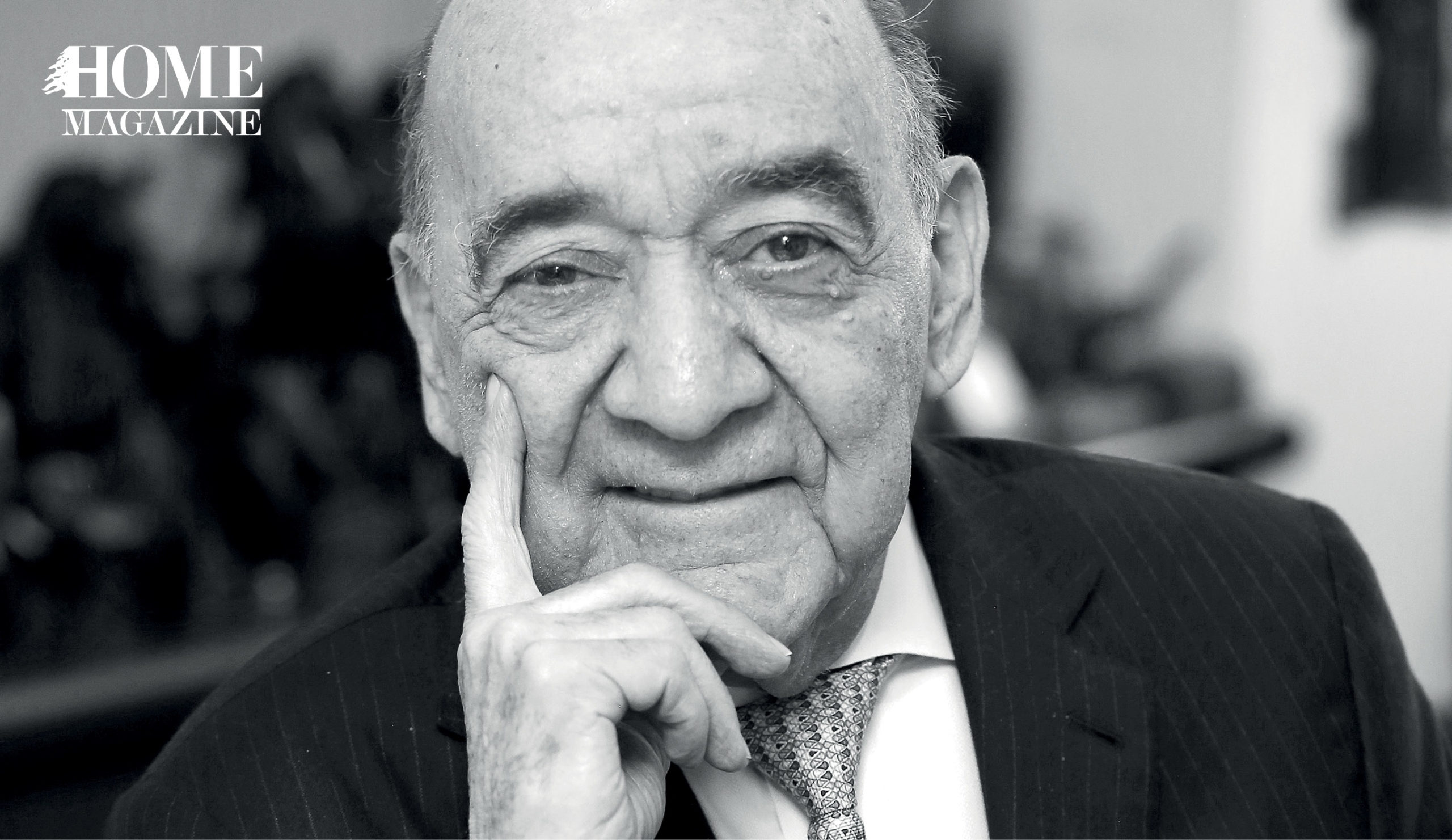
Gabriel Chalita was born in Cachoeira Paulista, 1969 in Sao Paulo. He has Lebanese roots, from the village Bkaa Kafra, North Lebanon. Chalita graduated in law, philosophy, and social science and did his PhD in law and communication at the Pontifícia Universidade Católica de São Paulo (PUC-SP) where he currently lectures, among other universities.
Chalita is a philosopher, professor, politician and was the Secretary of Education for Sao Paulo. He talks to HOME Magazine about his projects, the pride in his Lebanese roots and the launching of his book “Socrates and Thomas More: Imaginary Letters” which was published in Arabic at the last Beirut International Arabic Book Fair in December, 2015.
It is known that education is a priority of any government. The city of Sao Paulo alone has about 1 million students. How did it feel to be asked by Mayor Fernando Haddad to head such an important department?
I was honored to be asked to head such a complex educational network as it is in Sao Paulo. Sao Paulo is a rich and poor city at the same time, it is filled with opportunities and problems. I’ve worked under this title before and thank God, with a highly competent team, I was able to achieve good results. Our challenge is to assure a good education for all, to involve the teachers in the process, to elaborate a program that will work on students’ potential and engage the family into the academic life of their kids.If we dream of a peaceful society then investments should lay on education.
“If we dream of a peaceful society then investments should lay on education.”
We know that you have Lebanese roots, could you tell us about your family. How do you see the Lebanese influence on your career? How was it like to meet your relatives in Lebanon?
My grandparents are from Bkaa Kafra, the highest village in Lebanon. I was thrilled while crossing the Lebanese mountains to reach their town, in Saint Charbel’s region. Many others traveled to Brazil seeking the opportunity to live in peace, and there they wrote their stories. It impressive how brave emigrants are, they have no knowledge of the new land, nor do they speak the language nor do they understand the culture but yet through their determination they made it big in Brazil. My father used to tell me proudly the qualities of his parents, their values and what they taught him and I always say that a Lebanese has at least three remarkable qualities: hard work, courage and love, in addition to the parties, the generosity, the courage and the hospitality. I am proud of my Lebanese origin, and the land of my grandparents’ braveness and dreams.
How could we elaborate cooperation projects between these two nations, Brazil and Lebanon, in terms of education?
I was very impressed by the education in Lebanon, really impressed. I talked to students of public schools who speak Arabic fluently, English and French. In my work in Brazil I have worked hard to improve and insure the quality of the education for all the kids. Last year we created 90,000 new places for kids in the primary education, alongside other projects aiming at the same objective. Today, all our schools have music classes, for example.
It is important to expand the concept of education, we should focus on the non-cognitive skills. Learning is an ongoing process, working on the social and emotional dimensions guarantees the formation of better citizen. In my last trip I visited the Minister of Education Elias Abou Saab, Minister of Culture Raymond Araygi and Minister of Foreign Affairs Gebran Bassil. They were all very receptive and will facilitate the exchange of experiences between both countries. I am following up on the educational projects, since the important visit of the interim President Michel Temer in 2011.
“I have written 75 books that together have sold ten million copies Launching a book in Lebanon felt different.”
What was it like to launch a book in Lebanon?
I started to write when I was 12. I have written 75 books that together have sold ten million copies. I have launched books in other countries that were translated to other languages. But I must say that launching a book in Lebanon felt different. I was picturing the simplicity of my grandparents, their effort, the sad moments and also their dreams. I hope to launch other books in Arabic, it feels great to do so. As Lebanon’s son, I truly wish that this blessed land that has suffered from wars for so many years has finally reached peace.
Signature Boutique 

HOMEland Magazine
We firmly believe that the internet should be available and accessible to anyone, and are committed to providing a website that is accessible to the widest possible audience, regardless of circumstance and ability.
To fulfill this, we aim to adhere as strictly as possible to the World Wide Web Consortium’s (W3C) Web Content Accessibility Guidelines 2.1 (WCAG 2.1) at the AA level. These guidelines explain how to make web content accessible to people with a wide array of disabilities. Complying with those guidelines helps us ensure that the website is accessible to all people: blind people, people with motor impairments, visual impairment, cognitive disabilities, and more.
This website utilizes various technologies that are meant to make it as accessible as possible at all times. We utilize an accessibility interface that allows persons with specific disabilities to adjust the website’s UI (user interface) and design it to their personal needs.
Additionally, the website utilizes an AI-based application that runs in the background and optimizes its accessibility level constantly. This application remediates the website’s HTML, adapts Its functionality and behavior for screen-readers used by the blind users, and for keyboard functions used by individuals with motor impairments.
If you’ve found a malfunction or have ideas for improvement, we’ll be happy to hear from you. You can reach out to the website’s operators by using the following email
Our website implements the ARIA attributes (Accessible Rich Internet Applications) technique, alongside various different behavioral changes, to ensure blind users visiting with screen-readers are able to read, comprehend, and enjoy the website’s functions. As soon as a user with a screen-reader enters your site, they immediately receive a prompt to enter the Screen-Reader Profile so they can browse and operate your site effectively. Here’s how our website covers some of the most important screen-reader requirements, alongside console screenshots of code examples:
Screen-reader optimization: we run a background process that learns the website’s components from top to bottom, to ensure ongoing compliance even when updating the website. In this process, we provide screen-readers with meaningful data using the ARIA set of attributes. For example, we provide accurate form labels; descriptions for actionable icons (social media icons, search icons, cart icons, etc.); validation guidance for form inputs; element roles such as buttons, menus, modal dialogues (popups), and others. Additionally, the background process scans all the website’s images and provides an accurate and meaningful image-object-recognition-based description as an ALT (alternate text) tag for images that are not described. It will also extract texts that are embedded within the image, using an OCR (optical character recognition) technology. To turn on screen-reader adjustments at any time, users need only to press the Alt+1 keyboard combination. Screen-reader users also get automatic announcements to turn the Screen-reader mode on as soon as they enter the website.
These adjustments are compatible with all popular screen readers, including JAWS and NVDA.
Keyboard navigation optimization: The background process also adjusts the website’s HTML, and adds various behaviors using JavaScript code to make the website operable by the keyboard. This includes the ability to navigate the website using the Tab and Shift+Tab keys, operate dropdowns with the arrow keys, close them with Esc, trigger buttons and links using the Enter key, navigate between radio and checkbox elements using the arrow keys, and fill them in with the Spacebar or Enter key.Additionally, keyboard users will find quick-navigation and content-skip menus, available at any time by clicking Alt+1, or as the first elements of the site while navigating with the keyboard. The background process also handles triggered popups by moving the keyboard focus towards them as soon as they appear, and not allow the focus drift outside it.
Users can also use shortcuts such as “M” (menus), “H” (headings), “F” (forms), “B” (buttons), and “G” (graphics) to jump to specific elements.
We aim to support the widest array of browsers and assistive technologies as possible, so our users can choose the best fitting tools for them, with as few limitations as possible. Therefore, we have worked very hard to be able to support all major systems that comprise over 95% of the user market share including Google Chrome, Mozilla Firefox, Apple Safari, Opera and Microsoft Edge, JAWS and NVDA (screen readers).
Despite our very best efforts to allow anybody to adjust the website to their needs. There may still be pages or sections that are not fully accessible, are in the process of becoming accessible, or are lacking an adequate technological solution to make them accessible. Still, we are continually improving our accessibility, adding, updating and improving its options and features, and developing and adopting new technologies. All this is meant to reach the optimal level of accessibility, following technological advancements. For any assistance, please reach out to