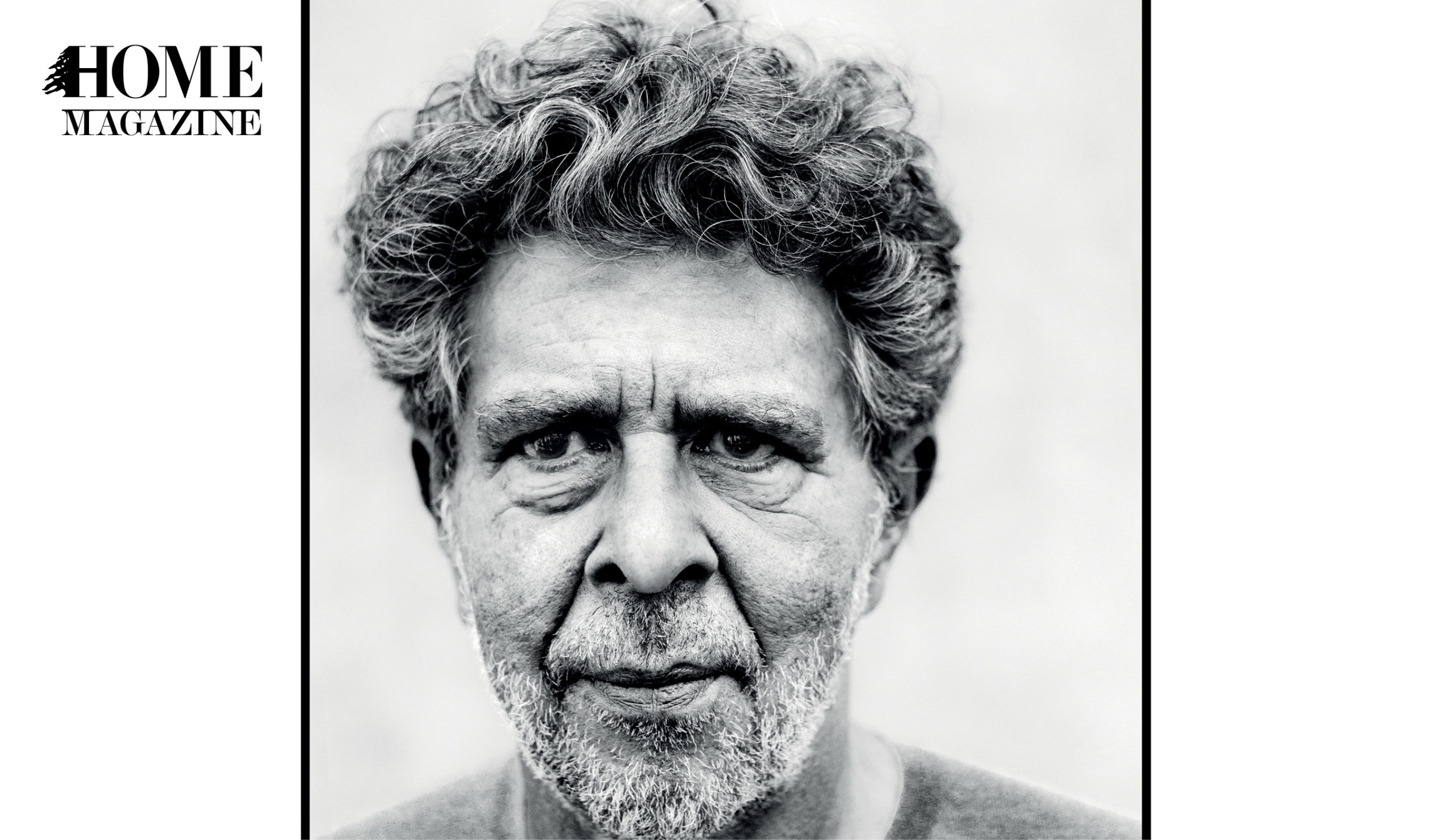
Photo by Marian Adreani
Interviewed by Editor-in-Chief Patricia Bitar Cherfan
Gabriel Yared’s ecstatically rich scores have provided the backdrop for some of our time’s most celebrated films. HOME interviewed him during a visit to Lebanon and discovered that the Oscar winner’s inspiring story is worthy of its own movie.
The voice of angels and richness of a full orchestra resonated through a crowded Saint Joseph Jesuit church in Achrafieh, giving goosebumps to everyone present. The air reverberated with Yared musical scores for major Hollywood films, such as the Golden Globe and Academy Award nominated soundtracks of The Talented Mr. Ripley (1999) starring Matt Damon and Cold Mountain (2003) with Nicole Kidman, as well as his Oscar-winning compositions for The English Patient (1996).
The talented Gabriel Yared
“I was born for music,” says Yared confidently as he reclines in the cigar lounge at Le Grey hotel. A natural born orator with an ear for poetry, the composer’s charisma intoxicates listeners into lending their ears to him and his stories.
Born in Lebanon, Yared began attending the Jesuit boarding school in Beirut starting at age four. His love story with music has all the hallmarks of prodigiousness. Since his earliest years, a voracious appetite for learning compelled him to devour anything that could advance his knowledge of music. At the precocious age of nine, the autodidact taught himself to read music by poring through classical works to help him understand the composition process. Luckily for Yared, his school’s piano rooms and music library helped satiate his ever-growing appetite. Once Yared’s piano teacher — who was also the school’s organist — passed away, the burgeoning talent replaced him on the organ at the unprecedented age of 14.
“When you compose, everything you receive comes from above,” says Yared. “I always felt like an angel was guiding me.
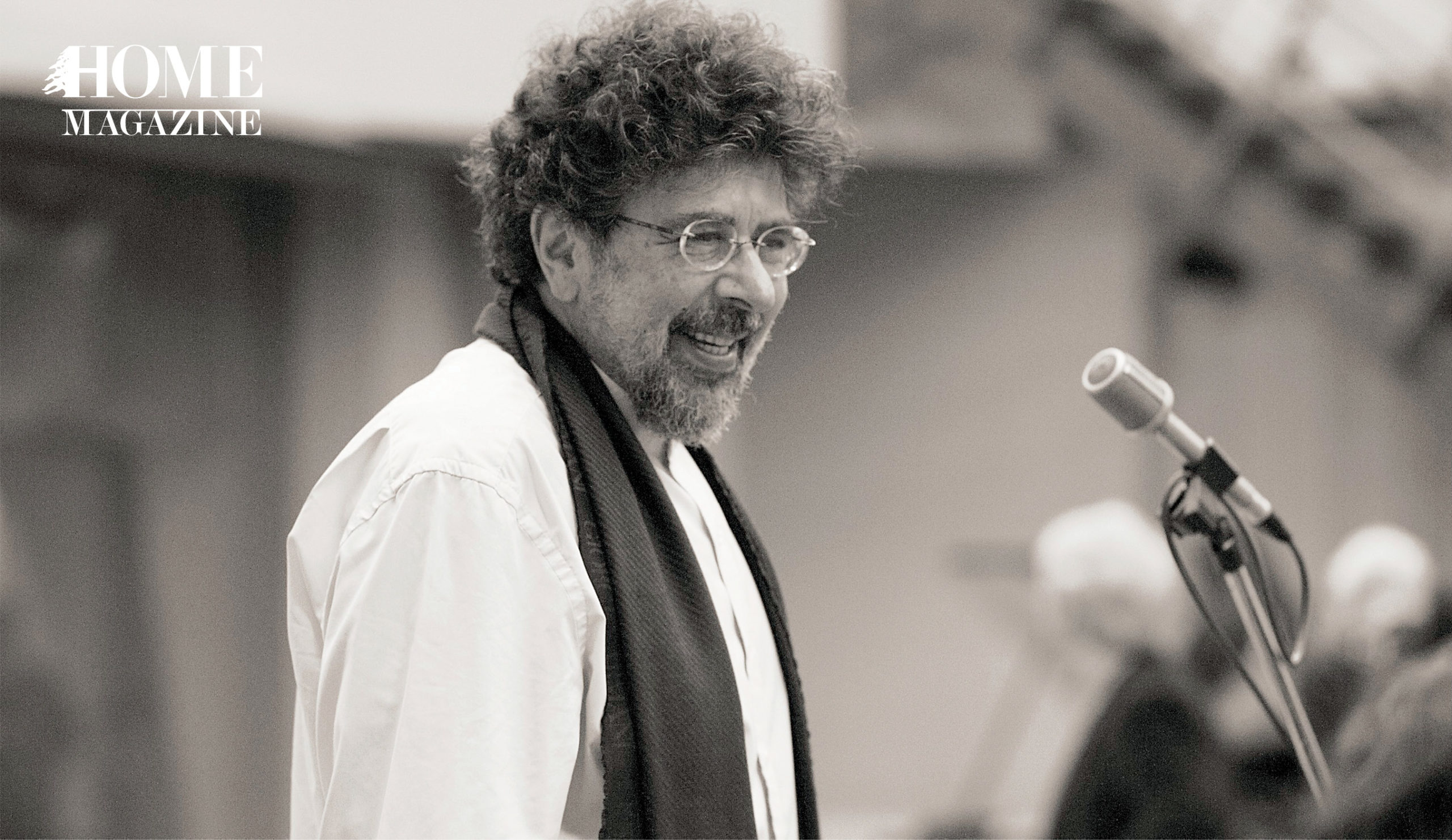 Photo by Peter Cobbin
Sometimes I reflect on the phrase from the French poet Georges Bernanos, ‘Ce que nous appelons hasard, c’est peut-être la logique de Dieu? ’ ‘And what if chance was actually the logic of God?’ Although religion has been injected into me since childhood, music is my primary religion, and in that sense, I am very religious.”
“I made peace with my past. Even if I was in pain in Lebanon, it has made me who I am today.”
Writing in both Arabic and French trained him to switch from right and left-handedness with ease. His ambidextrous abilities strengthened his piano-playing and opened up his mind. An interest in western music overshadowed other genres during his younger years. Classical western music, jazz, Brazilian music, Marvin Gaye, The Beatles — to name a few — appealed to his ear. An appreciation for Umm Kulthum, Mounir Bachir — among other artists — and the call to prayer of the muezzin hit him belatedly while living abroad.
An upbringing out of tempo
Despite an undeniable gift, the journey to his career’s peak was rife with challenges. “It has never been easy,” reveals Yared.
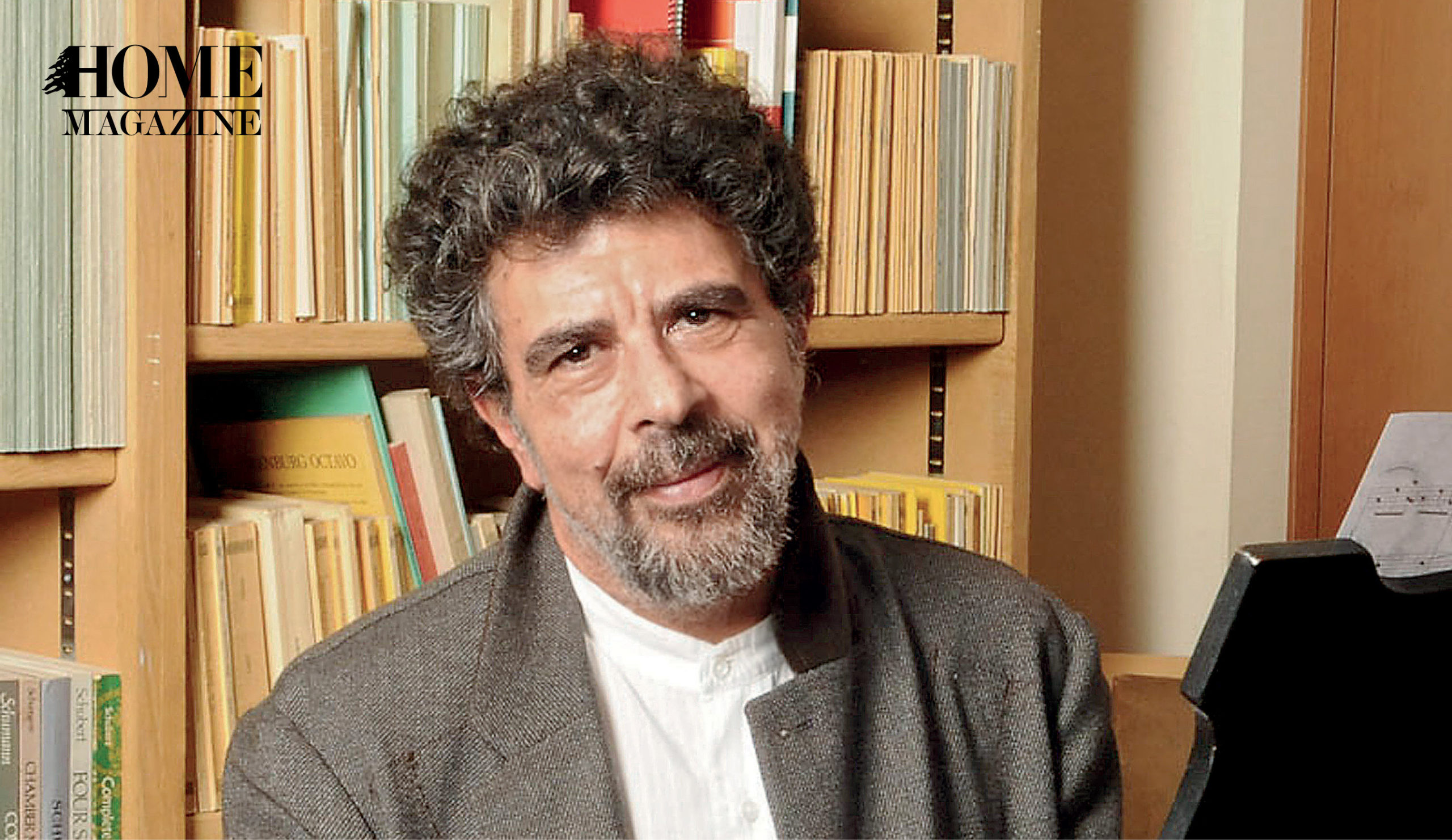 Photo by Ammar Abd Rabbo
Growing up in Lebanon did not suit him as his musical calling was at odds with the culture he grew up in — one that invalidated a career in the arts as superfluous and self-indulgent. In a hilariously inaccurate prediction, Yared’s former piano teacher once told his parents that this student had no future in music. His parents, who strictly viewed music as a hobby not a career, foresaw him opening a law firm with his cousin — a vision Yared temporarily entertained to appease them, all the while keeping music at the forefront of his mind when thinking of his future.
“Every morning, I would put a learning objective for myself and spend the day attempting to reach it. I would wake up and read a Bach cantata, analyze it with annotations regarding the harmony and counterpoint, then put on the CD player to listen to it as a whole.”
However, no number of obstacles could deter nor distract from his vocation. Yared chose the Université Saint-Joseph de Beyrouth to pursue law school specifically because the law building was just across from the Jesuit cathedral and the organ. “When I would go up the stairs toward the organ, it felt as if I was climbing to paradise,” says Yared. Although a skillful pianist, composing — rather than performing — proved to be his preferred creative conduit.
Overture
In 1969, a chance encounter would change his life. “In Aley, where I used to spend my summer holidays, I met a famous journalist and organizer of the Popular Song Festival in Rio , Augusto Marzagão, who asked me to represent Lebanon at his event that year,” says Yared. Accepting the challenge, the musician came in third place — a remarkable feat for the 20 year old, who was up against performers with years of experience beneath their belts. The people, music, and language charmed the composer into moving to Brazil — a major hub for the Lebanese diaspora — for two years. “I would compose during the day and perform in a Jazz club at night, an incessant activity,” says Yared. “This is how I learned and made it places.” When asked how he managed to become fluent in Portugese in a mere matter of three months, he coolly replies: “C’est une question d’oreille.” .
The artist traveled to France where an impromptu collaboration with Moroccan-born singers, Georges and Michel Costa (the Costa Brothers), put him on the map. After that album in English, Gabriel Yared’s name was on everyone’s lips, attracting the attention of prominent film director, Jean-Luc Godard, and legendary singers, Johnny Hallyday and Charles Aznavour. A brief foray into popular music and advertisement jingles preceded his career as a silver screen composer.
“All cultures exist embedded within Lebanese culture.”
He reminisces on composing the news jingle for French TV channel TF1 in 1984 — a tune still used by the channel 35 years later — as a formative experience for him. Ultimately, Yared’s relentless work ethic and talent for storytelling through music has made him one of the most sought-after living composers.
“I am not a millionaire, the way people think,” says Yared. “If I wanted to become more successful, I would have stayed in the United States after my Oscar. I could have completed four films per year and become filthy rich. However, staying in Europe and spending more time scoring each film was a better fit for me.”
“When I left in 1969, I thought to myself, ‘I’ll never come back to this country,’ as I always felt like a black sheep in a place that did not understand me,” says the composer of his stormy relationship with Lebanon. Yared briefly returned to mourn his brother who died in The Lebanese Civil War in 1976, and did not visit again until 1992. By then, his Arabic had eroded. On the brink of his 70th birthday, Yared says, “I made peace with my past. Even if I was in pain in Lebanon, it has made me who I am today.”
According to Yared, “The Lebanese have such a strong sense of individuality. All cultures exist embedded within Lebanese culture. If there’s anything that I learned from my time in Lebanon, it is to observe and assimilate as much as possible from all cultures.”
On perfectionism and the promises of travel
Without training, talent lags behind. “For everyone that is attracted to music, you need to work,” says Yared. “It’s not enough to have the ear — you need discipline. Music does not magically appear by divine inspiration.”
 Photo by Laurent Koffel
Even after the rising star had attracted the attention of industry big wigs, Yared’s insatiable urge to learn never came to a halt. “Every morning, I would put a learning objective for myself and spend the day attempting to reach it. I would wake up and read a Bach cantata, analyze it with annotations regarding the harmony and counterpoint, then put on the CD player to listen to it as a whole. After seven years of experience, I redirected toward studying counterpoint and fugue with a teacher,” explains the tireless talent.
According to Yared, dedicating one’s life to analyzing the works of great classical composers helps you evolve and, in some way, demystify what you admire.
“Demystify what you admire. You have to bring those you admire back down to earth through analysis.”
“You have to bring those you admire back down to earth through analysis,” he says of composers whom he admires, such as Bach, Mozart, Schumann, Debussy, Bartok and so on.
His best pieces of advice for aspiring musicians is precise: “Reject mediocrity by searching beyond what you think you have found. Go further and keep searching for more until you find a gem.”
Travel also comes highly recommended. “In Lebanon, there are immense talents, but they need to gain experience by traveling abroad and returning once they have achieved their fullest potential,” says Yared. “Staying in Lebanon could hold them back as there’s no competition to push them further. Plus, we become richer by being exposed to other cultures,” says Yared. From the Lebanese pool of talent, the composer, oud player, writer and poet, Marcel Khalife, stands out to Yared.
Ultimately, artistic exploration is but a means to better understand oneself. “What does it mean to discover?” he muses. “To uncover something you already knew. It’s more of an act of rediscovery. It is throughout this process that you can only uncover what’s within.”
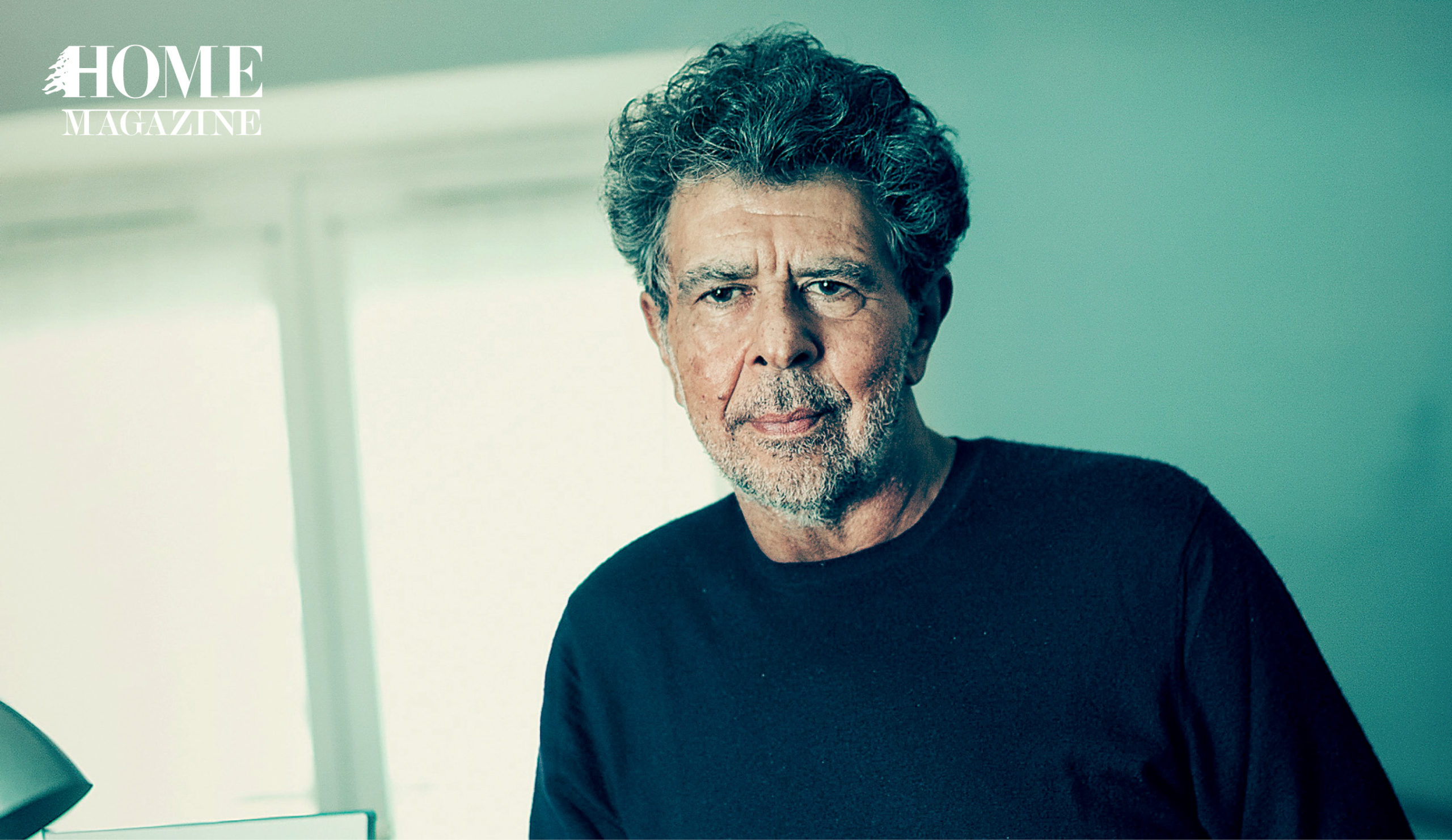 Photo by Laurent Koffel
The ethics of music-making
With a philosophy that is deeply-rooted in giving back, transmission of knowledge with aspiring composers has always flowed out naturally from him. “Ever since I began, I always kept my door open for anyone with musical questions. It is in my nature to transmit what I know,” says Yared. “I strongly believe in developing an ethic for music, in the sense that you should put your conscience in everything that you make.” Being raised in an environment that stifled his creativity rather than encouraged him to flourish left him wanting to serve as a lighthouse for others.
“What does it mean to discover? To uncover something you already knew. Uncover what’s within.”
From experience, the need for young talent to be led should not be neglected. This explains why Yared has selected 14-year-old Nicolas Salloum to perform two of his compositions for the Beiteddine Festival concert this summer. “Whenever I get the chance to help Lebanese artists, in whatever way I can, I do it,” says Yared. “I once was that person, and nobody gave me a chance, except for Augusto Marzagão.”
The sediment at the bottom of his coffee cup attracts his eye. In a reversal of roles, he jokingly asks HOME, “Do you know how to read someone’s fortune?” After a moment’s pause, he adds with a poetic touch characteristic of his way of speaking, “There is beauty in how nature accidentally creates things. No artist can imitate this.”
For more info:
[instalink id=”31″]
Facebook: https://www.facebook.com/GabrielYaredOfficial/
Twitter handle: @YaredGabriel https://twitter.com/yaredgabriel
Instagram: gabriel.yared https://www.instagram.com/gabriel.yared/
Hashtags: #gabrielyared



HOMEland THEMES
Coming Soon
HOMEland Events & Collaborations
Coming Soon
 Signature Boutique