Meet the man committed to revolutionizing Lebanese coffee
Sixty years ago, Michel Najjar became the first person to take an industrial approach to coffee production and distribution in the Middle East. Today, with his son Georges at the helm, his company, Café Najjar, aims to bring the Lebanese-style cup of coffee to the world.
“It took the Italian espresso 75 years to become known worldwide,” Georges Najjar says. He aims to achieve the same recognition for the “exquisite cup” of Lebanese-style coffee in two-thirds of that time.
Lebanese-style coffee, which is also described as Turkish coffee or Arabic coffee depending on where you are in the Middle East, has been brewed for some 500 years. Its traditional production in a lidless metal pot set directly atop a flame requires skill and instinct in the grinding, measuring and boiling of the coffee. It’s an art form handed down from generation to generation across the Middle East and the Balkans.
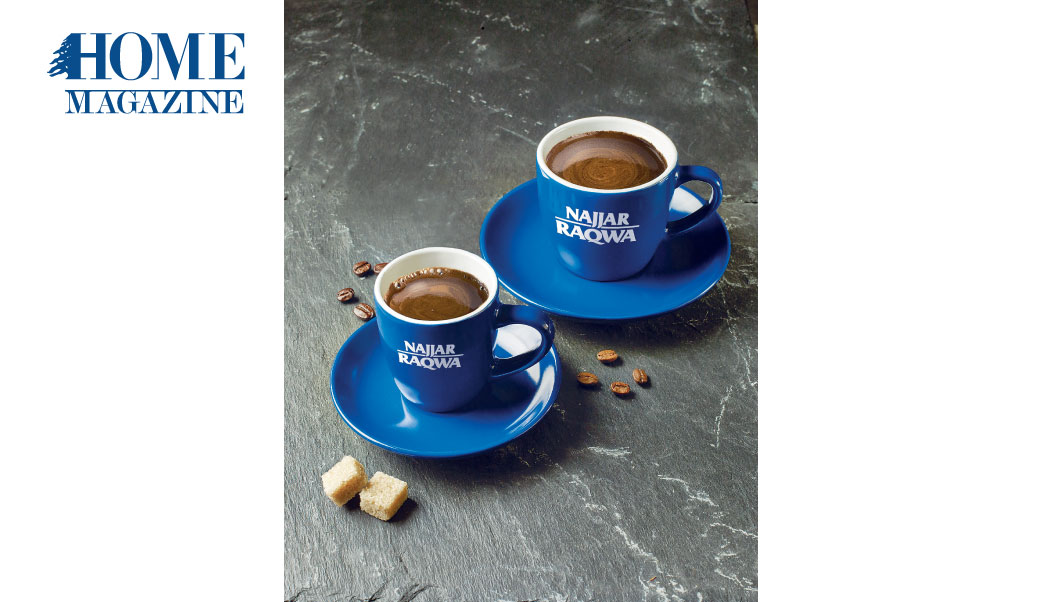
Café Najjar’s latest innovation, the NAJJAR RAQWA, removes the complexity of brewing the perfect cup of Lebanese-style coffee and makes it accessible to all. The NAJJAR RAQWA is the world’s first automated process for making Lebanese-style coffee.
Café Najjar is presently producing two types of capsule for the coffee maker – regular and cardamom flavoured. But the capsule system means the company can in time make blends that appeal to other regional tastes – for example, the lighter blend preferred by the Turks and Greeks, and the mix of green coffee preferred in Jordan.
“With the NAJJAR RAQWA we can have a cup for everybody,” Georges says. The coffee maker even comes with an option to add ashwe (cream).
“There is a global trend towards the Mediterranean diet,” he explains. “We are part of the Mediterranean diet, and our coffee helps to enhance your health.”

Heritage
The NAJJAR RAQWA is Georges’ latest effort to fulfill one of four qualities his father Michel insisted upon – excellence; the others being commitment, fairness and kindness.
Georges has given more than half his life to running the business his father founded. He wanted to be an engineer, but although most parents would strongly approve of such an ambition, it left Michel Najjar cold.
Instead, he offered his 18-year-old son, who was then enrolled in a Business Administration degree at the American University of Beirut, a car and a unit of the Café Najjar business, explaining that the time had come for Georges to pave his own way.
So, Georges found himself driving around Lebanon, selling a machine that used only one type of freeze-dried coffee, and obliged to make it a success.
The young man came away from the experience with a clear understanding that everything starts with sales. Today, Georges remains pragmatic about the company, describing it as “a heritage” that is “strictly business” and that has “excellence” as its target.
He is hugely proud of its accomplishments: “We were the first to make it (coffee production) an industry (in the region). It used to be a small shop where you roast the coffee behind the counter, you grind it and you sell it. We moved it into an industrial approach with excellence. We are committed to passing it on to the next generation.” For now, he is certainly on track. Café Najjar has grown to boast the largest coffee factory in Lebanon, at 15,000 square meters.
It produces 60 million packs of coffee annually and serves more than three million cups of coffee daily in Lebanon. Its exports reach 46 countries, with expansion to other lines such as Krikita Nuts, and more products to follow.

Resilience
Perhaps surprisingly, given the business’s size and success and Lebanon’s turbulent recent past, Georges says he has never been tempted to relocate operations from Lebanon. The Najjars’ company even remained fully operational during Lebanon’s 15-year civil war (1975–1990).
Georges defends his decision to keep operating with a simple sentence: “I am an optimist.” He goes on to marvel at his employees’ dedication. “During the war we had 84 employees, and they came to work every day,” he says. “Even during the bombardment, they came.” Georges also attributes some of his success to the protection of God, relaying a story of how, one afternoon during the war, four bombs landed to the rear of the factory, close to where its massive gas storage tanks were located. Georges believed it would be impossible for the explosions not to have damaged the tanks, but while everything around them had been affected, the tanks remained perfectly intact and safe.
The coffee industry also comes with another “blessing” he says: “During war or during peace, the consumption is still there.”

Passion
Georges exudes cool pragmatism in relation to his business, but when it comes to people he is passionate. “I can sit for hours and listen to different people talking,” he says, explaining the pleasure he derives from conversations that take place over a social cup of coffee or in a taxi across the city, when the events of the day are discussed and dissected.
Georges also relishes Lebanon’s diversity, calling the country “the land of liberty” and explaining that many of the various religious groups now present came to Lebanon in a quest for freedom. And, for the many people who like calling Lebanon HOME, he has a message: “Let’s get serious about what we do, together as a nation.”


HOMEland
Coming Soon
HOMEland Events & Collaborations
Coming Soon
 Signature Boutique
 Signature Boutique