Harry Nadjarian: Chairman of Industrial Motor Power Corporation
Harry Nadjarian, chairman of Industrial Motor Power Corporation, left Lebanon in the 1970s but has spent decades giving back to the homeland he loves.

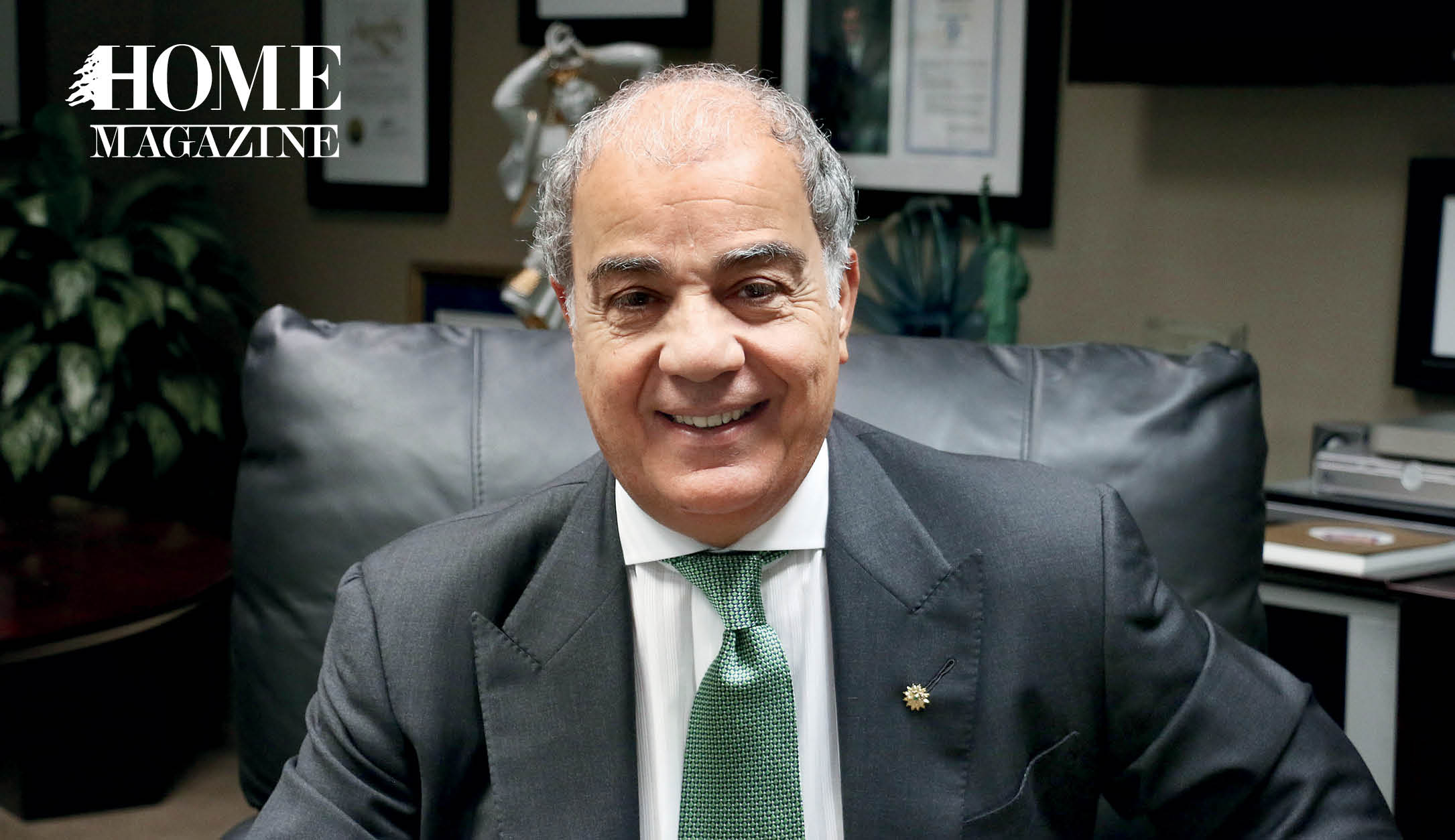
Photo by: Arka Photography
How the chairman of one of the largest privately held industrial power equipment trading companies in the world puts Lebanon first.
At first glance, Harry Nadjarian’s corner office verifies the most curious conjectures of the popular imagination: impeccable floor-to-ceiling glass windows, coveted views, a seemingly endless adornment of accolades, and official medals so shiny you can’t help but notice. This very scene is what most people expect of the Chairman of Industrial Motor Power Corporation (IMP), one of the largest privately held industrial power equipment trading companies in the world. But if you take a moment, even a brief one, to look more closely, the character of Nadjarian begins to emerge in its own light.
Humbly displayed yet noticeably tucked away are pictures of Nadjarian with American presidents, religious leaders and foreign diplomats both near and far. Handshake snapshots at elegant events can be seen throughout the shelves. Yet these impressive moments only come second to Nadjarian’s favorite photographs. With unmistakable delight, he hands me a family portrait taken at his son Nicholas’ wedding. Pointing to his daughter Alexandra, he proudly describes her artistic aptitude, a nod to his own father’s craftsmanship as a master tailor and artist of sorts. He then spins around, highlighting a portrait that hangs above the black leather couch. Glowing, he shares the names and ages of the pictured toddlers, his two granddaughters.
Harry Nadjarian was born in Mar Mikhael, an area now widely known as Lebanon’s happening street scene. But what was happening in the area in the mid-1970s was far from desirable, and his experience was no exception. As a young man working in the tourism industry, Nadjarian had just returned to Lebanon from Egypt, where he was sent to open a regional office, and was scheduled for a meeting in Bourj Hammoud the next day. He headed from the Commodore Hotel, where he was living at the time, to East Beirut, and as protocol dictated when crossing the Green Line, his driver paid the patrolling guard a sum of money to guarantee safe passage. Nevertheless, their vehicle was shot at by snipers. Nadjarian was physically unharmed but the shock of a bullet traveling through his headrest was unshakeable. The very next day, at the insistence of his mother and with a bad taste in his mouth, he left Lebanon.
Nadjarian headed to Los Angeles, California, in the footsteps of his grandmother and aunt. “I had no choice,” he recalls. “I came here and the rest is history.”
The transition to Los Angeles was no easy task. As a young man who was thoroughly enjoying life in Lebanon — from the beautiful friendships to the world-famous nightlife — Los Angeles seemed bland. But Nadjarian set out to make the most of it.

While his work ethic served him well in his professional life, ultimately fostering a private company to international recognition, his creativity served him well in his personal life. In 1977, Nadjarian joined the Armenian cultural organization Homenetmen, which had been operating on a very limited budget out of a small grocery store in Hollywood, and wasted no time in creating the Social Group. Seeing the popularity of disco music explode, Nadjarian’s originality followed suit. He came to an agreement with a friend who owned a discotheque: every other Sunday night, the Social Group would invite its members and charge $10 at the door while the establishment profited from the bar. It didn’t take long for the bi-weekly parties to gain momentum and the Social Group, with Nadjarian leading the way, to raise upward of $30,000 each month for Homenetmen. “It was one of those Sunday nights Cheryl came in with her cousin,” Nadjarian fondly adds, smiling as he recalls how he met his wife.
It is this sort of entrepreneurial inclination, more so than careful calculation, that set Nadjarian on a philanthropic trajectory. From what started as a fun idea for Homenetmen decades ago to raising more than one million dollars per charity event in recent years, Nadjarian has deservingly earned a reputation of extraordinary generosity rooted in inimitable vision.
“With a bad taste in his mouth, he left Lebanon.”
As a pioneer of the non-profit world, he has certainly left his mark on dozens of organizations and worthy causes.
The late President Ronald Reagan was one of the firsts to recognize Nadjarian’s relentless commitment to community and in 1986 invited him to become a United States Citizen on Ellis Island. With the President as his witness, Nadjarian was sworn in by the Chief Justice of the Supreme Court of the United States, an incredible honor granted to very few.
While Nadjarian’s benefaction has no limit, it does have one condition: “I will only participate if I know that I can make a difference,” he states, with a sense of responsibility. “If I can make a difference, a true contribution, then I’ll commit.”
To celebrate the 60th anniversary of Haigazian University, for which Nadjarian was a Board of Trustee member, he planned preparations the only way he knew how: with imposing vision, this time of a night at the opera. The resulting performance by Grammy award-winning tenor and conductor Plácido Domingo was unlike any event before it, or after it for that matter, bringing in more than 1.9 million dollars and marking it the largest fundraising event in Haigazian history.
That same year, having dedicated much of his life to working for the greater good, he was asked to return to Ellis Island, this time to receive the Medal of Honor, a prestigious award given to select individuals who immigrated to America and made notable contributions to their country’s well-being.
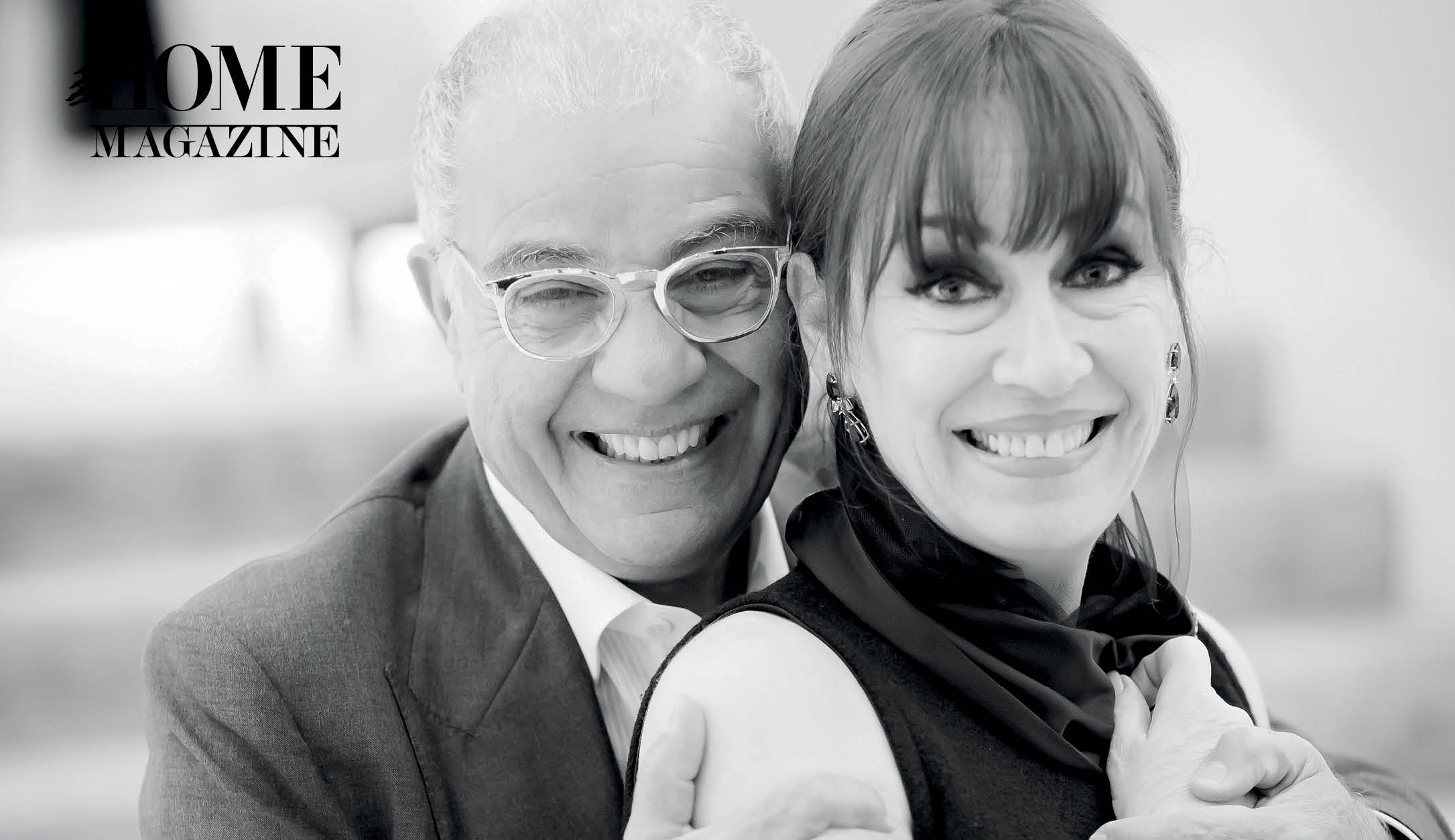
Photo by: Marc-Frenchy Photography
But he was only getting started. In 2011, Nadjarian joined the governing board of AMIDEAST. “I love the mission of the organization,” he explains with excitement, “to bring Lebanese students to study in the States, learn the American way of life and entrepreneurship, and return to the HOMEland with more understanding of the world and living harmoniously with the West.”
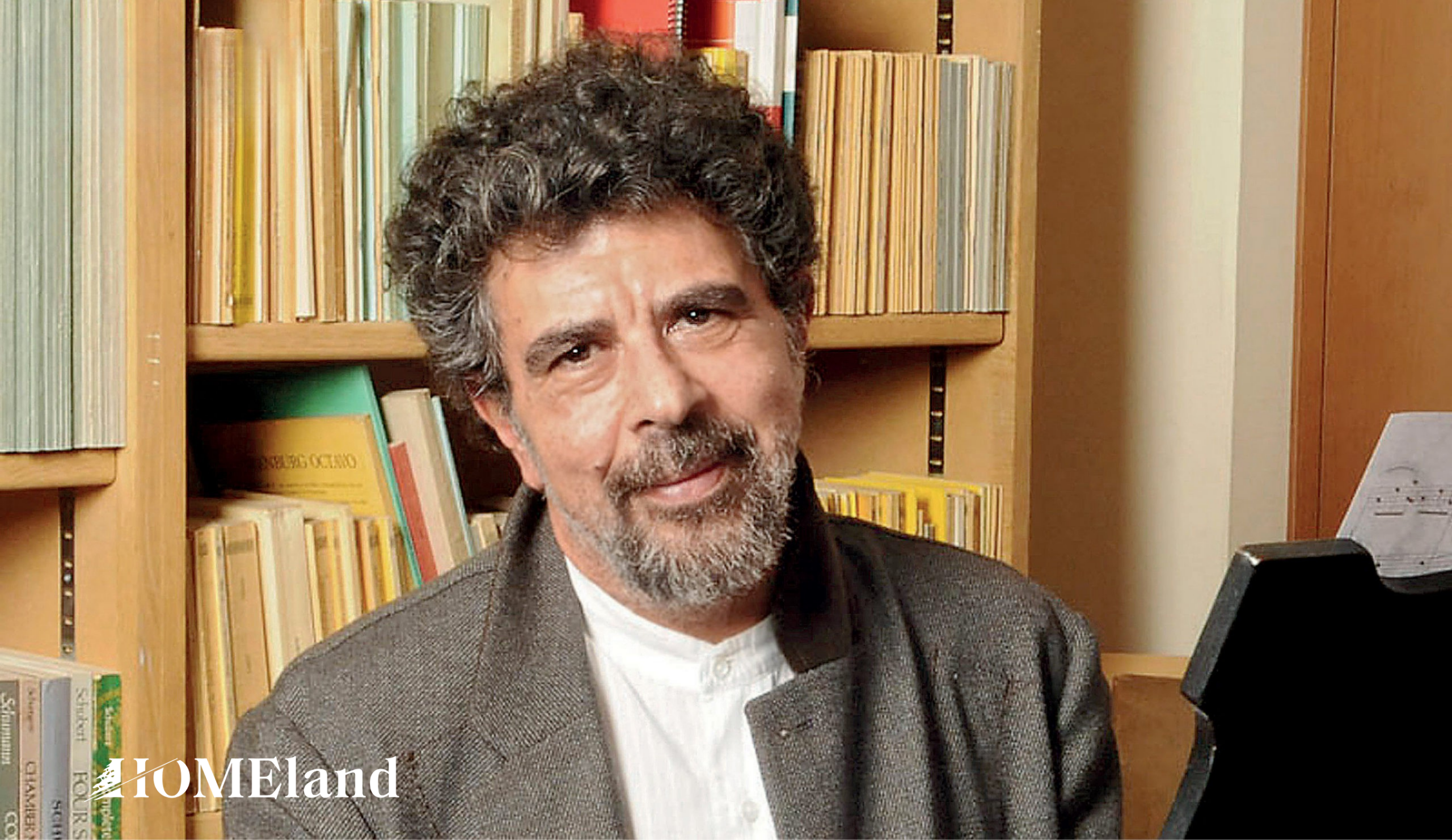
With the group’s mission in mind, he spearheaded the first ever AMIDEAST Education Hero Award Gala in Los Angeles, helping to expand the organization’s educational programs in Lebanon. The star-studded event included dozens of Lebanese icons, from journalist Ricardo Karam to awardwinning pianist Guy Manoukian and multi-platinum singer Najwa Karam.
Although his departure from Lebanon was abrupt, his bond to the country has only grown stronger with time and charity. When asked what he misses the most, without hesitation he replies: “the people of Lebanon, no question.” He firmly advocates for the Diaspora’s involvement in helping the HOMEland and personally strives to do more. AMIDEAST’s second annual gala is scheduled for the fall (November 22), this time in Lebanon, and with the support of Co-Chairs Mrs. Wafa Saab and Mr. Robert Tarazi, you bet Nadjarian — who is 7,000 miles removed — is helping lead the way.
His stories are endless and rightfully so. We pause in the hall outside his office to admire a final relic before exchanging our goodbyes: a black and white Los Angeles Times cover story from 1986. Pictured is a 33-year-old Nadjarian en route to Ellis Island. Younger, I notice, but just as determined. He stands alongside me, occupied in thought.
“Persistent,” he concludes, in reply to an earlier question. “That’s what I would like to encourage people to be.” Subtly shifting out of nostalgia, the inception of a new idea takes form. “I hope you write something that inspires someone to do good,” he says, in true Nadjarian fashion. “If the article motivates someone to do good, I’ll be happy.”

 Signature Boutique