
Between Two Homes: A Young Lebanese Woman in a Changing Saudi Arabia
I grew up in Jeddah, Saudi Arabia, yet my navy blue cedar passport never turned palm tree green.
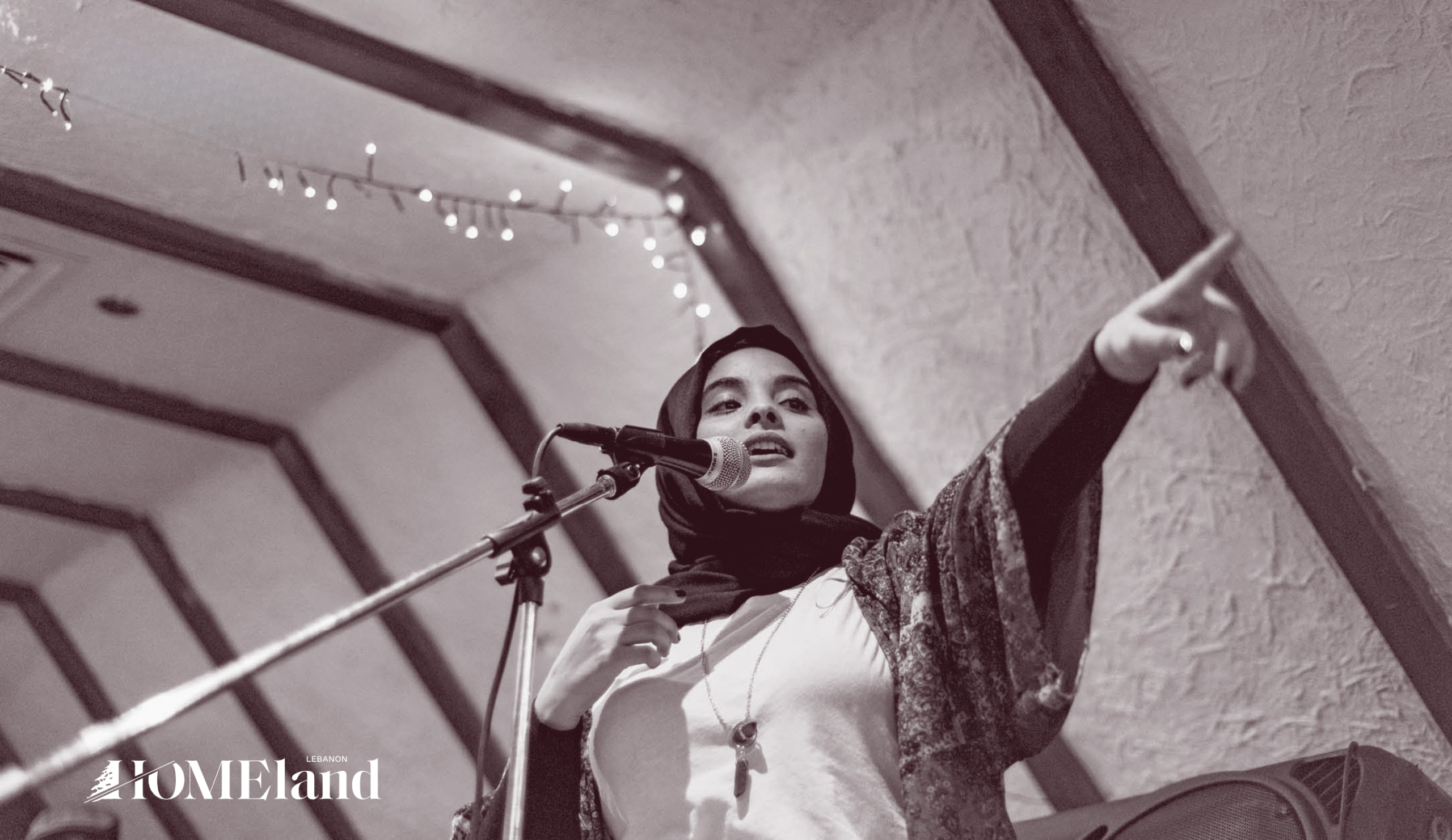
Photo by: Hussam El-Galad
At 21, I am back at my parent’s apartment, in the same room I grew up in. My bedroom walls contain evidence of my past, with graffiti from my school days and the Lebanese flag hanging above my bed. They paint a picture of my dorm days, Beirut’s expansive street art, and small shops with big stories. I moved to Lebanon when I was 17 to begin my journey toward higher education. It was my first real interaction with my motherland, following years existing on a soil that remained foreign. I grew up in Jeddah, Saudi Arabia, yet my navy blue cedar passport never turned palm tree green.
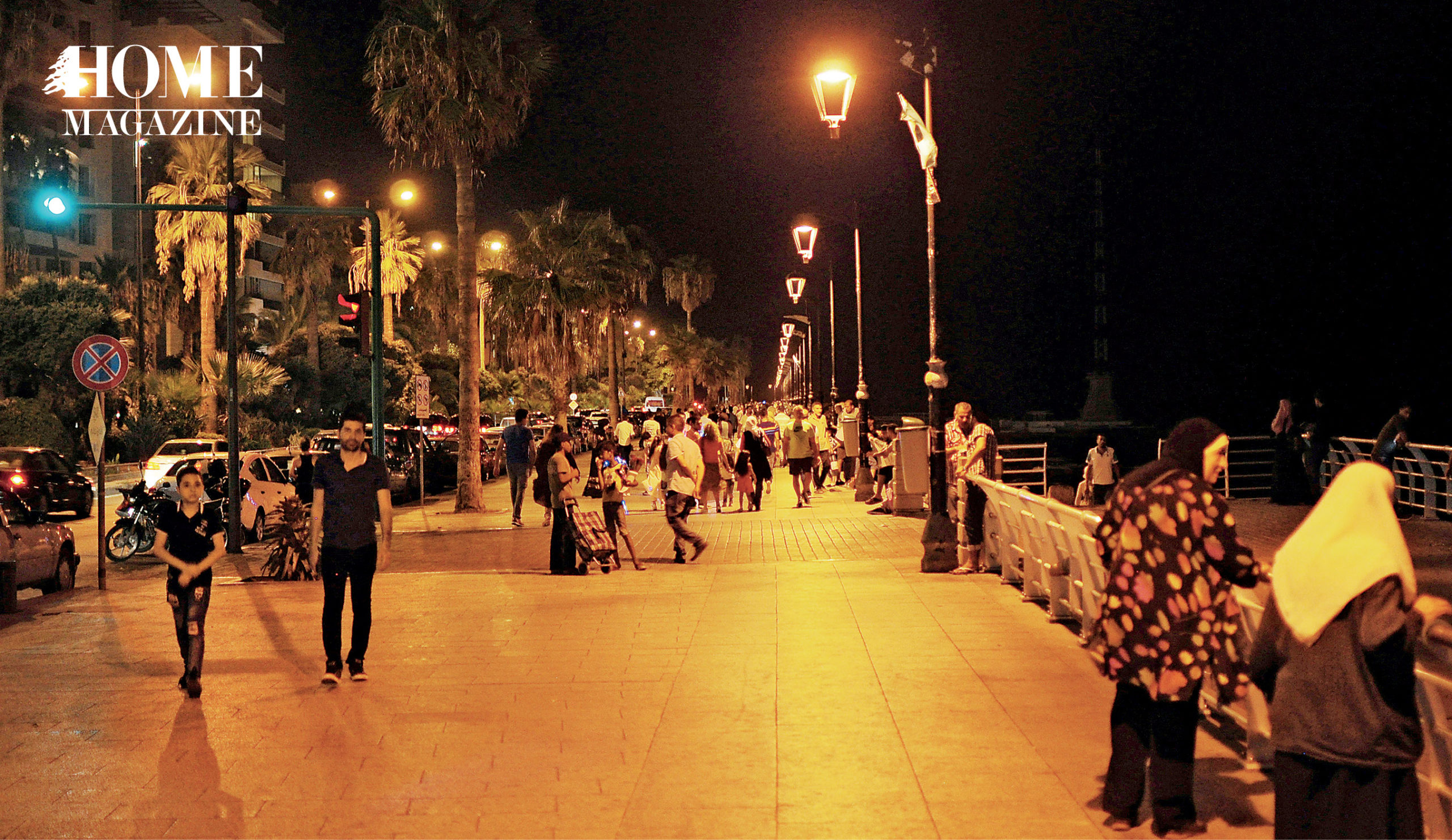
Saudi Arabia: stereotypes galore may crowd your impression of the country, from locals riding camels at every turn to women dressed from head to toe in black garb. The reality, however, is quite different, especially considering the changes that have occurred in the past few years. I returned to Jeddah three years later, a changed person. I missed the late night drives around Beirut and craved the early mornings by the Raouche seaside.
Jeddah was different, too, though the changes were subtle at first, increasing exponentially until the news about women driving emerged in September of 2017. I heard the news at a Toastmasters International meeting, which convenes people worldwide to become better public speakers and leaders; the audience paused and applauded, checked and rechecked to confirm the validity of the news. On our way HOME, our Uber driver grumbled and sighed at the idea of sharing the streets with women drivers. Suddenly, the country seemed to be split in half, between those for and those against female drivers. People took to Twitter to share their celebrations and condolences.
This sudden divide wasn’t all bad. It offered precisely the push I’d needed to host the very first Jeddah Spoken Word, a branch of a writing collective called The Poetry Passport, which I had initiated earlier that month. After a lot of planning and even more last minute improvisations, it finally came to fruition. Standing in front of a crowd of about 40 to 50 people sharing spoken word poetry on the turbulence of faith and encouraging a crowd of strangers, both men and women, to come up during the open mic and share whatever they wanted. The room came alive with enthusiasm. As the evening drew to a close, several people approached me to offer thanks and to marvel at how such an event could so successfully take place here in Jeddah.
“I grew up in Jeddah, Saudi Arabia, yet my navy blue cedar passport never turned palm tree green.”
The changes weren’t all unexpected or overwhelming, either. A simple lifestyle change comes to mind: for years, I would only leave the house draped in a black or a navy abaya, but after this development, I slowly began to add more color to my attire. I now feel comfortable leaving HOME wearing a florescent blue abaya as a cardigan. I’ve found the balance I’d craved and my hijabi outfits, which I loved wearing in Lebanon, finally got to see the light of day in Jeddah.
Today, I go to the mall and see women in long dresses, an act, which just a few years ago, would’ve been revolutionary, but today is just a typical style choice.
The Crown Prince Mohammad bin Salman, along with the long-planned 2030 vision, has contributed to the Saudi Arabia we are experiencing today. However, Jeddah possesses an inherent vibrancy that is absent in other Saudi Arabian cities, as well as a thriving art scene and public events.
Check out a few hashtags on Instagram, such as #Jeddahevents or #Jeddahnow, or accounts like @Destinationjed or @Jeddah.society in order to find information about dozens of exciting events. In March 2018, my male friend offered me a ride to the sixth Jeddah Spoken Word, and I experienced a flashback of a friend from high school telling me that she often got stopped by police when her brother drove her around. She was asked on numerous occasions to show identification to prove they were siblings. I often marvel at how far we’ve come.
As women officially began driving in June of 2018, following the updates via Instagram, while cruising with my aunt on Beirut’s streets, I felt saddened that I was missing such a milestone in Saudi Arabia’s history. Now, every time I see a photo or video of a female driver, an internal celebration incurs. I am in the process of applying to a driving school in Lebanon to receive my license and prepare to drive in Jeddah as soon as I return to my other HOME.
Dana Seif is the founder of The Poetry Passport, a poets’ organization that is virtually based on the web and tangibly based in Jeddah, Saudi Arabia. She is a graphic designer and writer, pursuing a master’s degree in media production.

 Signature Boutique
Lebanon, in your inbox


HOMEland Magazine
We firmly believe that the internet should be available and accessible to anyone, and are committed to providing a website that is accessible to the widest possible audience, regardless of circumstance and ability.
To fulfill this, we aim to adhere as strictly as possible to the World Wide Web Consortium’s (W3C) Web Content Accessibility Guidelines 2.1 (WCAG 2.1) at the AA level. These guidelines explain how to make web content accessible to people with a wide array of disabilities. Complying with those guidelines helps us ensure that the website is accessible to all people: blind people, people with motor impairments, visual impairment, cognitive disabilities, and more.
This website utilizes various technologies that are meant to make it as accessible as possible at all times. We utilize an accessibility interface that allows persons with specific disabilities to adjust the website’s UI (user interface) and design it to their personal needs.
Additionally, the website utilizes an AI-based application that runs in the background and optimizes its accessibility level constantly. This application remediates the website’s HTML, adapts Its functionality and behavior for screen-readers used by the blind users, and for keyboard functions used by individuals with motor impairments.
If you’ve found a malfunction or have ideas for improvement, we’ll be happy to hear from you. You can reach out to the website’s operators by using the following email
Our website implements the ARIA attributes (Accessible Rich Internet Applications) technique, alongside various different behavioral changes, to ensure blind users visiting with screen-readers are able to read, comprehend, and enjoy the website’s functions. As soon as a user with a screen-reader enters your site, they immediately receive a prompt to enter the Screen-Reader Profile so they can browse and operate your site effectively. Here’s how our website covers some of the most important screen-reader requirements, alongside console screenshots of code examples:
Screen-reader optimization: we run a background process that learns the website’s components from top to bottom, to ensure ongoing compliance even when updating the website. In this process, we provide screen-readers with meaningful data using the ARIA set of attributes. For example, we provide accurate form labels; descriptions for actionable icons (social media icons, search icons, cart icons, etc.); validation guidance for form inputs; element roles such as buttons, menus, modal dialogues (popups), and others. Additionally, the background process scans all the website’s images and provides an accurate and meaningful image-object-recognition-based description as an ALT (alternate text) tag for images that are not described. It will also extract texts that are embedded within the image, using an OCR (optical character recognition) technology. To turn on screen-reader adjustments at any time, users need only to press the Alt+1 keyboard combination. Screen-reader users also get automatic announcements to turn the Screen-reader mode on as soon as they enter the website.
These adjustments are compatible with all popular screen readers, including JAWS and NVDA.
Keyboard navigation optimization: The background process also adjusts the website’s HTML, and adds various behaviors using JavaScript code to make the website operable by the keyboard. This includes the ability to navigate the website using the Tab and Shift+Tab keys, operate dropdowns with the arrow keys, close them with Esc, trigger buttons and links using the Enter key, navigate between radio and checkbox elements using the arrow keys, and fill them in with the Spacebar or Enter key.Additionally, keyboard users will find quick-navigation and content-skip menus, available at any time by clicking Alt+1, or as the first elements of the site while navigating with the keyboard. The background process also handles triggered popups by moving the keyboard focus towards them as soon as they appear, and not allow the focus drift outside it.
Users can also use shortcuts such as “M” (menus), “H” (headings), “F” (forms), “B” (buttons), and “G” (graphics) to jump to specific elements.
We aim to support the widest array of browsers and assistive technologies as possible, so our users can choose the best fitting tools for them, with as few limitations as possible. Therefore, we have worked very hard to be able to support all major systems that comprise over 95% of the user market share including Google Chrome, Mozilla Firefox, Apple Safari, Opera and Microsoft Edge, JAWS and NVDA (screen readers).
Despite our very best efforts to allow anybody to adjust the website to their needs. There may still be pages or sections that are not fully accessible, are in the process of becoming accessible, or are lacking an adequate technological solution to make them accessible. Still, we are continually improving our accessibility, adding, updating and improving its options and features, and developing and adopting new technologies. All this is meant to reach the optimal level of accessibility, following technological advancements. For any assistance, please reach out to
